
Human body

CITE
We have made every effort to follow citation style rules, but there may be some minor differences. If in doubt, please refer to the appropriate citation style manual.
Nose. (2026). In Q-files Encyclopedia, Life, Human body. Retrieved from
https://www.q-files.com/life/human-body/nose
"Nose." Life, Human body, Q-files Encyclopedia, 23 Mar. 2026.
https://www.q-files.com/life/human-body/nose.
Accessed 6 Aug. 2026.
Nose 2026. Life, Human body. Retrieved 6 August 2026, from
https://www.q-files.com/life/human-body/nose
Life, Human body, s.v. "Nose," accessed August 6, 2026.
https://www.q-files.com/life/human-body/nose


Nose
The nose contains cells that form part of the olfactory (smelling) system which enables us to detect smells. Behind each nostril is an air passage, or nasal cavity, about as large as a thumb. Lining the roof is a membrane that contains around 25 million smell sensors. At the tip of each sensor are between 10 and 20 tiny, hair-like cilia. When the cilia are touched by breathed-in odours, their sensors send messages along neurons to the brain, enabling you to "experience" the smell. The nose can detect around one trillion odours. Sniffing draws extra air into the upper nasal cavity to make smelling more efficient.
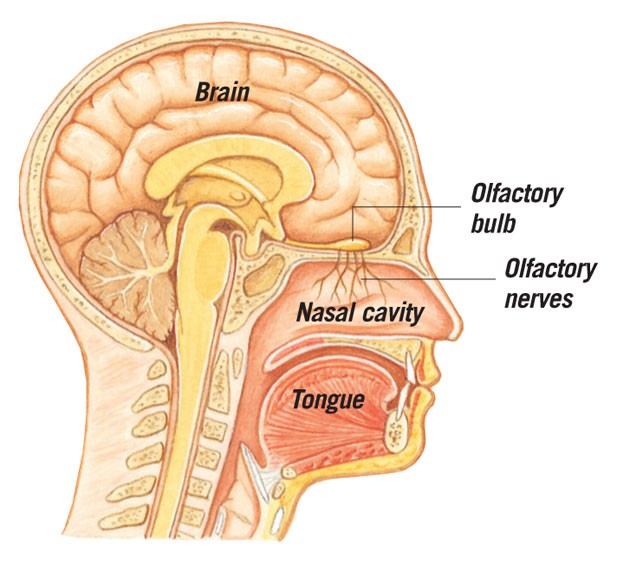
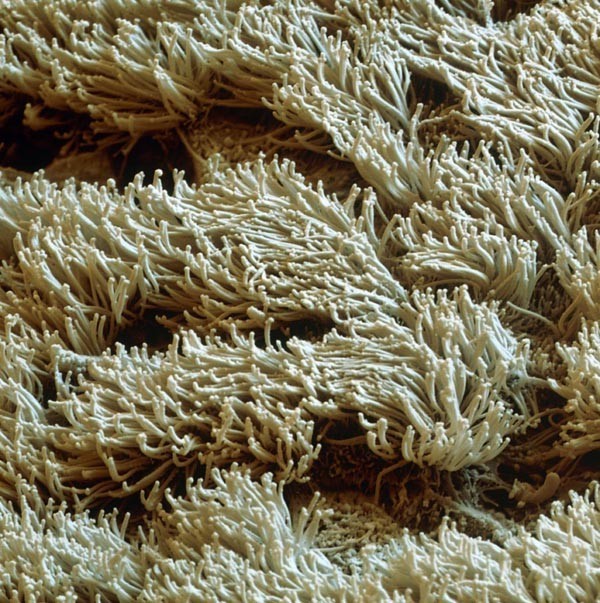
Inside the nose
As well as detecting odours, the nose also warms, moistens and filters breathed-in air before it travels to the lungs. Stiff hairs inside each nostril remove larger particles of dust from the air. Mucus, a thick, sticky fluid released by the mucous membrane, moistens the air and traps smaller particles, bacteria and viruses. Tiny cilia on the nasal cavity’s lining move dust- and germ-laden mucus to the throat where it is swallowed. Sneezing removes particles that irritate the mucous membrane.
Consultant: Richard Walker
pics
Without in any way limiting Q-files Ltd’s exclusive rights under copyright, any use of this publication to “train” generative artificial intelligence (AI) technologies to generate text is expressly prohibited. Q-files Ltd reserves all rights to license use of this work for generative AI training and development of machine learning language models.