
Micro-organisms

CITE
We have made every effort to follow citation style rules, but there may be some minor differences. If in doubt, please refer to the appropriate citation style manual.
Bacteria. (2026). In Q-files Encyclopedia, Life, Micro-organisms. Retrieved from
https://www.q-files.com/life/micro-organisms/bacteria
"Bacteria." Life, Micro-organisms, Q-files Encyclopedia, 1 May. 2026.
https://www.q-files.com/life/micro-organisms/bacteria.
Accessed 21 Sep. 2026.
Bacteria 2026. Life, Micro-organisms. Retrieved 21 September 2026, from
https://www.q-files.com/life/micro-organisms/bacteria
Life, Micro-organisms, s.v. "Bacteria," accessed September 21, 2026.
https://www.q-files.com/life/micro-organisms/bacteria


Bacteria
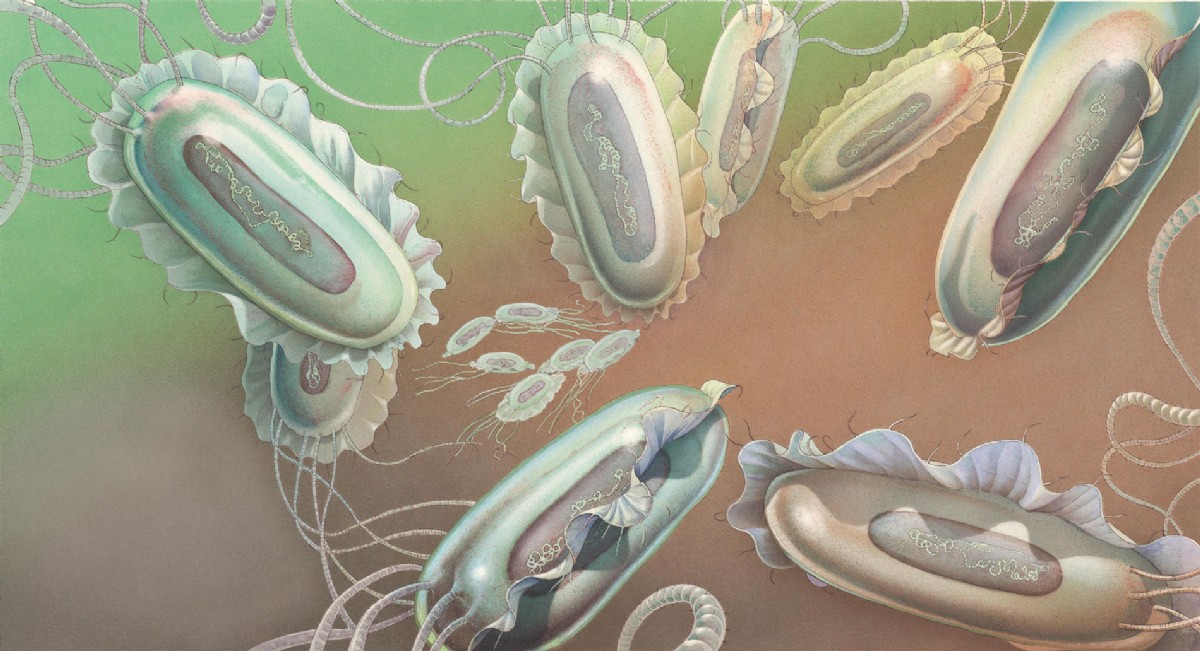
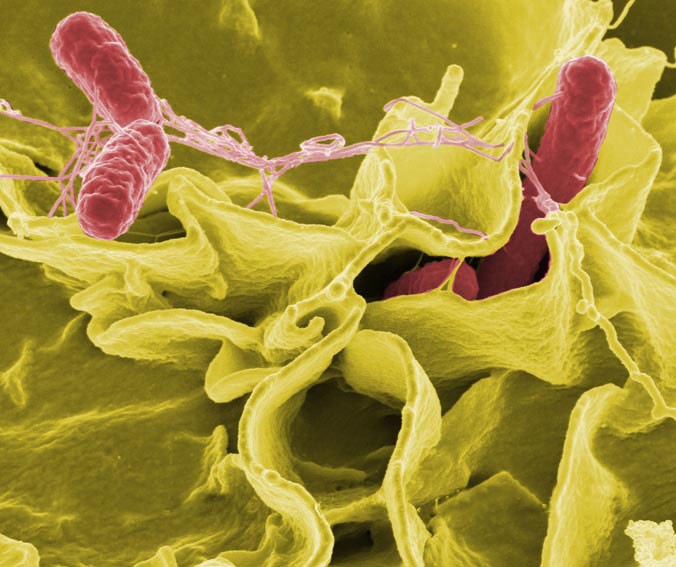
The commonest living things are bacteria. They are too small to see without a microscope. Bacteria are all around us in their billions. They are found in every habitat on Earth: soil, rock, oceans and snow. Vast numbers of bacteria live in the human body, especially on the skin and in the intestines. Most are made harmless by the immune system. In fact, we could not survive without bacteria, as we could not digest most foods or produce vitamins. However, a few kinds of bacteria can cause infectious diseases, such as tetanus and cholera.
Kinds of bacteria
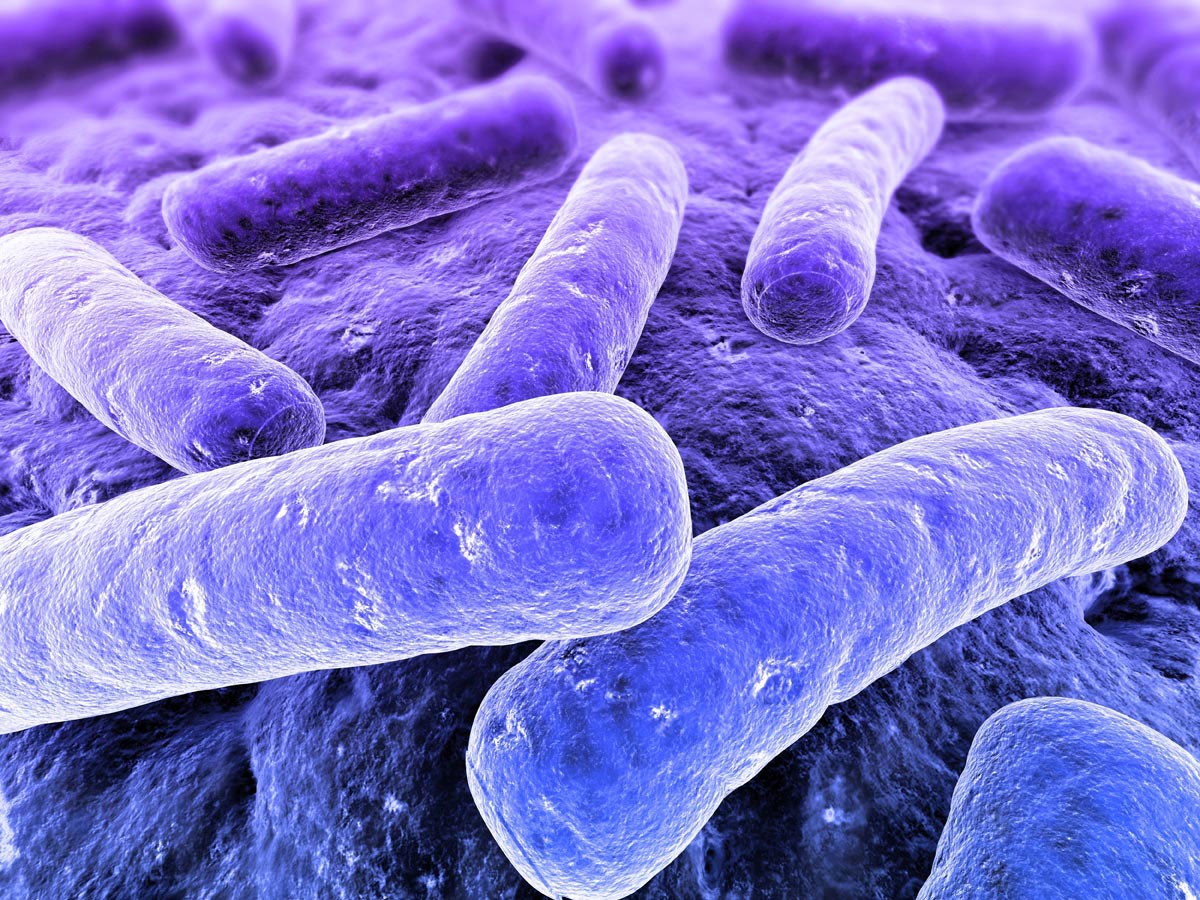
There are around 10,000 known kinds of bacteria, but probably many more yet to be identified. Most measure about one to five microns (0.001 to 0.005 millimetres) across. They vary in form but there are three main shapes. These are: spheres or balls known as cocci, cylinders or rods, called bacilli, and corkscrew-like spirilli.
Inside a bacterium
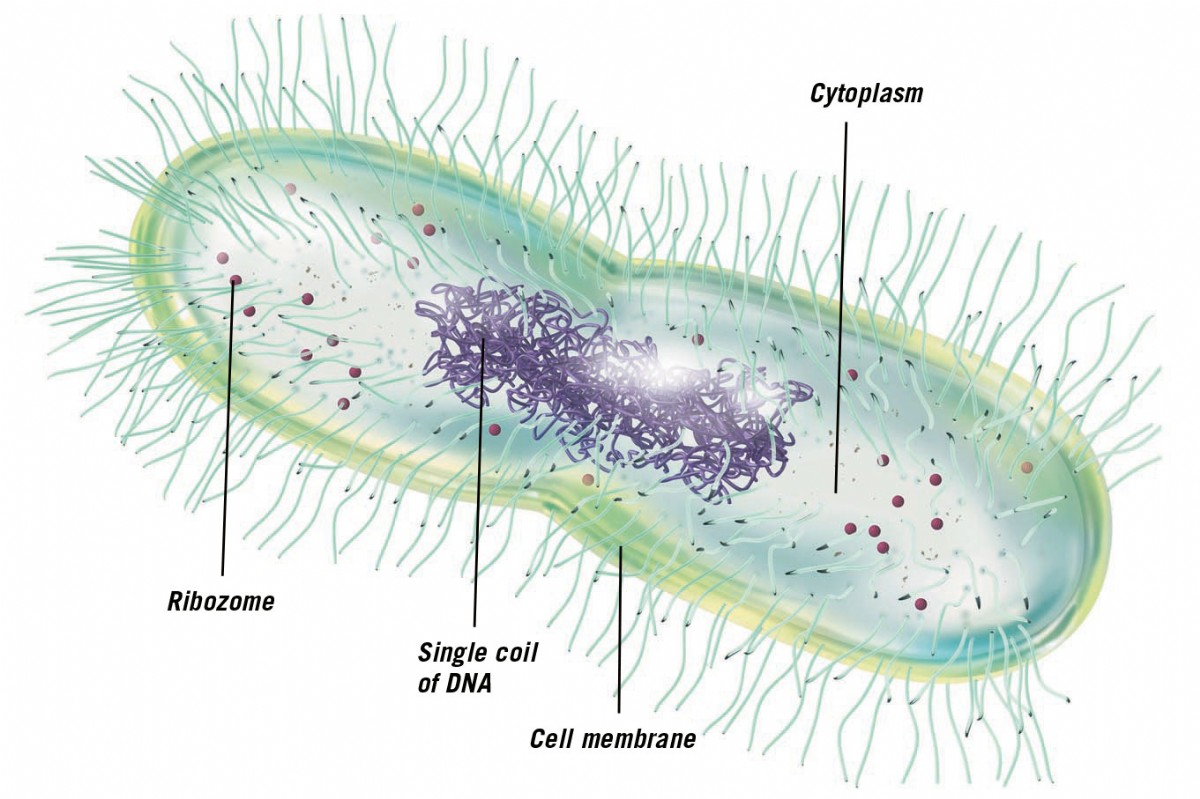
A typical bacterium has a tough outer skin, or cell membrane, which contains jelly-like cytoplasm. Tiny blobs, known as ribosomes, float in the jelly and make various substances for the bacterium’s life processes. Also floating in the cytoplasm is a long, coiled-up chemical called DNA, which, if unravelled, would be more than 1000 times longer than the bacterium itself. This is the bacterium’s genes, a “manual” containing every structural detail of the organism.
Most bacteria reproduce simply by splitting in two. Some bacteria get their energy from light, like plants. Others absorb nutrients through their cell membranes. Some kinds have a long, whip-like “tail” or flagellum to help them move. This they can do extremely quickly: a bacterium can swim at about 50–60 body lengths per second.

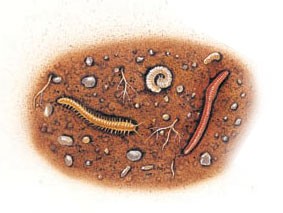
Bacteria in the soil
Many kinds live in the soil and play a vital role in nature because they cause the decay or rotting of dead plants and animals, allowing their nutrients to be recycled. These nutrients are taken up by plants, which provide food for animals. Soil-living bacteria, for example, carry out the vital task called nitrogen fixation. Nitrobacter, rhizobium and others convert nitrogen, a vital element which plants cannot absorb in its gaseous form, into nitrates, which plants are able to easily absorb.
Cyanobacteria
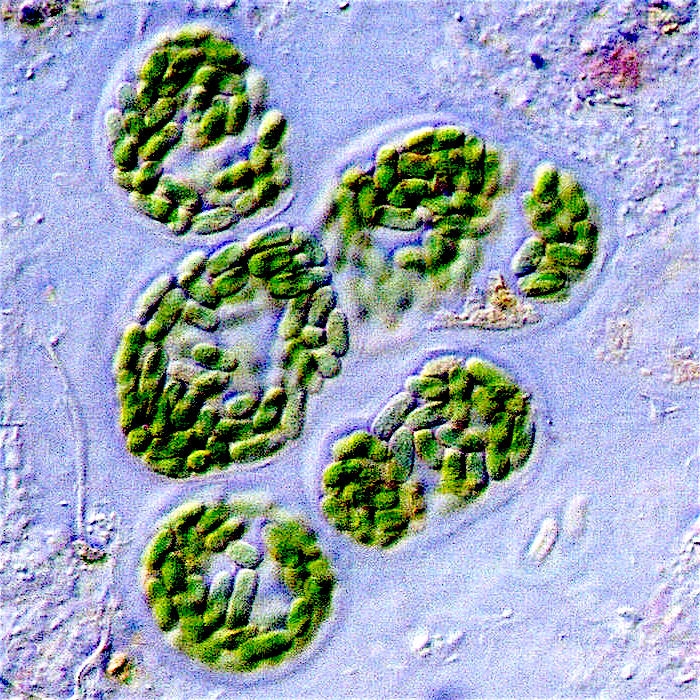
Cyanobacteria, also known as blue-green algae, are bacteria that produce their own food using photosynthesis. The name comes from their colour (cyan is a greenish-blue). Cyanobacteria can be found in almost every habitat: oceans, freshwater, soil and bare rock. They can survive extreme conditions such as hot springs or high concentrations of salt. Aquatic cyanobacteria may form blooms (rapid accumulations) in warm, still ponds or calm seas, appearing as a blue-green scum. A single species of marine cyanobacteria, Prochlorococcus, accounts for more than half of the photosynthesis of the open ocean.
Cyanobacteria were one of the earliest forms of life on Earth, probably in existence 2.7 billion years ago. By producing and releasing oxygen—a product of photosynthesis—cyanobacteria may have changed the composition of the Earth's atmosphere. Before 2.4 billion years ago, the atmosphere had only around 1% of today's oxygen levels. Scientists call this the Great Oxygenation Event. It had a dramatic effect on the evolution of life on Earth thereafter.
Consultant: Chris Jarvis
pics

Without in any way limiting Q-files Ltd’s exclusive rights under copyright, any use of this publication to “train” generative artificial intelligence (AI) technologies to generate text is expressly prohibited. Q-files Ltd reserves all rights to license use of this work for generative AI training and development of machine learning language models.