
Micro-organisms

CITE
We have made every effort to follow citation style rules, but there may be some minor differences. If in doubt, please refer to the appropriate citation style manual.
Moulds and yeasts. (2026). In Q-files Encyclopedia, Life, Micro-organisms. Retrieved from
https://www.q-files.com/life/micro-organisms/moulds-and-yeasts
"Moulds and yeasts." Life, Micro-organisms, Q-files Encyclopedia, 24 Mar. 2026.
https://www.q-files.com/life/micro-organisms/moulds-and-yeasts.
Accessed 13 Sep. 2026.
Moulds and yeasts 2026. Life, Micro-organisms. Retrieved 13 September 2026, from
https://www.q-files.com/life/micro-organisms/moulds-and-yeasts
Life, Micro-organisms, s.v. "Moulds and yeasts," accessed September 13, 2026.
https://www.q-files.com/life/micro-organisms/moulds-and-yeasts


Moulds and yeasts
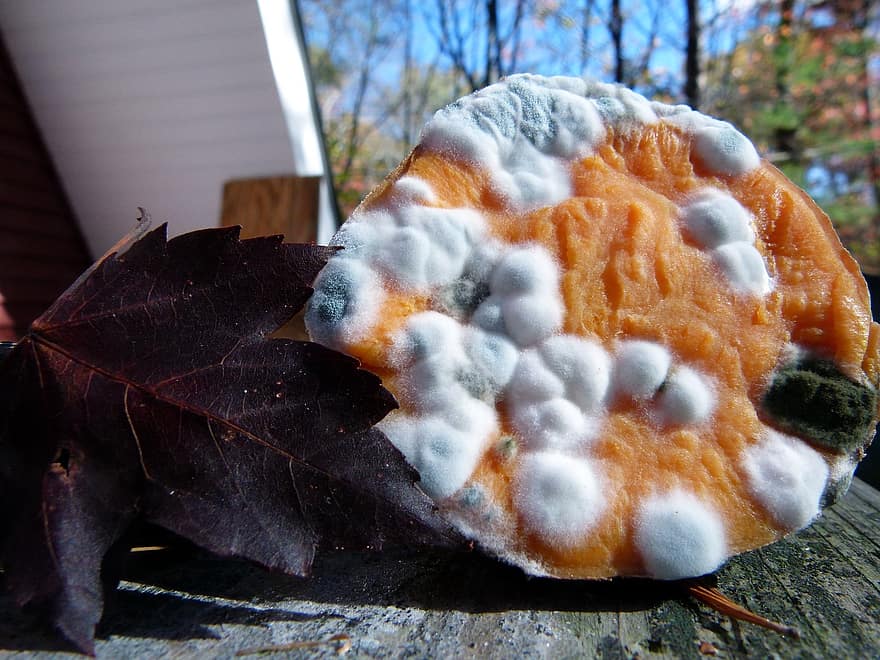
Moulds and yeasts are two groups of micro-organisms that belong to the fungi kingdom. Found in dark, damp environments, moulds grow thin, pale threads called hyphae forming a network known as a mycelium. They reproduce by producing spores, microscopic, dust-like particles, which are spread on the breeze, in water, on animals or on clothing. If their spores land in places where conditions are right—moist, not too cold and with a source of nutrients—the mould starts to grow. The mycelium they form is seen as a furry coating spreading across food or other surfaces. There are at least 100,000 species of mould, including some very colourful varieties. Penicillium and Aspergillus are both types of mould. Yeasts are single-celled micro-organisms, round or oval in shape. They do not grow hyphae, and reproduce not by producing spores but by budding "daughter cells" off from the original parent cell. Around 1500 species are known.


Penicillium
Penicillium moulds, a group of more than 350 species, are found wherever it is moist and there is organic material to feed on—especially in the soil where they recycle nutrients. Some types cause food spoilage, while others are very useful in the production of both medicines and certain foods. Their spores float in the air and dust both outdoors and indoors, and are often seen as the white moulds we see growing on rotting fruit or the blue fuzzy texture on the surface of old bread.
Penicillium moulds are actively used in cheesemaking, such as Penicillium roqueforti, seen in the blue veins appearing in Blue Stilton and Roquefort cheese, and Penicillium camemberti, used to make the white crust of Brie, Camembert and other cheeses.


A number of Penicillium species are used in the production of antibiotics. The antibacterial property of Penicillium was accidentally discovered by Scottish microbiologist Alexander Fleming (1881–1955) in 1928, when he observed the contamination of his culture of bacteria (Staphylococcus aureus). Fleming called the antibacterial substance—the fungal extract— penicillin. After Howard Florey and Ernst Chain purified and concentrated the substance, it was successfully used in saving the lives of soldiers in World War II suffering potentially fatal infected wounds. Penicillin is still widely used today, although, following its extensive use, many types of bacteria have developed resistance to it.
Athlete's foot
The common skin disease athlete's foot is caused by a number of different species of mould. Infection occurs by contact with the fungus's spores or from the dead skin particles on the wet floor of a shower or around a swimming pool. The fungi thrive in dark, warm, moist environments and the dead upper layers of skin between the toes of a sweaty foot inside a sock or shoe are ideal. Once the spores have found their way in, the hyphae start to burrow into the skin. They release enzymes to digest keratin (the substance of which skin, nails and hair are made). This irritates the nerve endings, causing an itch which the host cannot resist scratching. As a result fungi is transferred to the fingers and under the fingernails, and from there to other parts of the host's body. Scratching also damages skin layers, making it easier for the fungi to spread around the original infection.


Aspergillus
Aspergillus is a group of moulds, comprising around 350 species. Commonly seen growing on starchy foods such as bread and potatoes, or on damp walls (as one of the range of fungi that produce "mildew"), in nature it is found living on many plants and trees. Some species can cause diseases in plants and animals, including humans. Other species of Aspergillus are important in making alcoholic drinks, especially Japanese drinks such as sake and awamori, which are made from rice (Aspergillusbreaks down the starches into simpler sugars). Aspergillus is also used in the manufacture of acids, enzymes and medicines.
Yeasts
Yeasts are very common in the environment. They occur naturally on the skins of fruits and berries such as grapes, apples or peaches, and inside the digestive system of mammals and some insects. Several different species of yeast live on human skin. Yeasts are also found inside living things deep in the ocean.
Yeasts are ball-shaped or lemon-shaped, single-celled organisms. Kinds of yeast such as Saccharomyces convert carbohydrates to carbon dioxide (CO2) and alcohols in a process known as fermentation. They are used in the production of bread, brewing beer and in the production of wine and spirits. In bread, the production of CO2 causes dough to expand or rise as gas forms pockets or bubbles in the mixture. When the dough is baked, the yeast dies and the air pockets "set", giving the bread a soft and spongy texture.


Consultant: Chris Jarvis
pics

Without in any way limiting Q-files Ltd’s exclusive rights under copyright, any use of this publication to “train” generative artificial intelligence (AI) technologies to generate text is expressly prohibited. Q-files Ltd reserves all rights to license use of this work for generative AI training and development of machine learning language models.