
Aircraft

CITE
We have made every effort to follow citation style rules, but there may be some minor differences. If in doubt, please refer to the appropriate citation style manual.
Airliners. (2026). In Q-files Encyclopedia, Technology, Aircraft. Retrieved from
https://www.q-files.com/technology/aircraft/airliners
"Airliners." Technology, Aircraft, Q-files Encyclopedia, 2 Jun. 2026.
https://www.q-files.com/technology/aircraft/airliners.
Accessed 21 Sep. 2026.
Airliners 2026. Technology, Aircraft. Retrieved 21 September 2026, from
https://www.q-files.com/technology/aircraft/airliners
Technology, Aircraft, s.v. "Airliners," accessed September 21, 2026.
https://www.q-files.com/technology/aircraft/airliners


Airliners
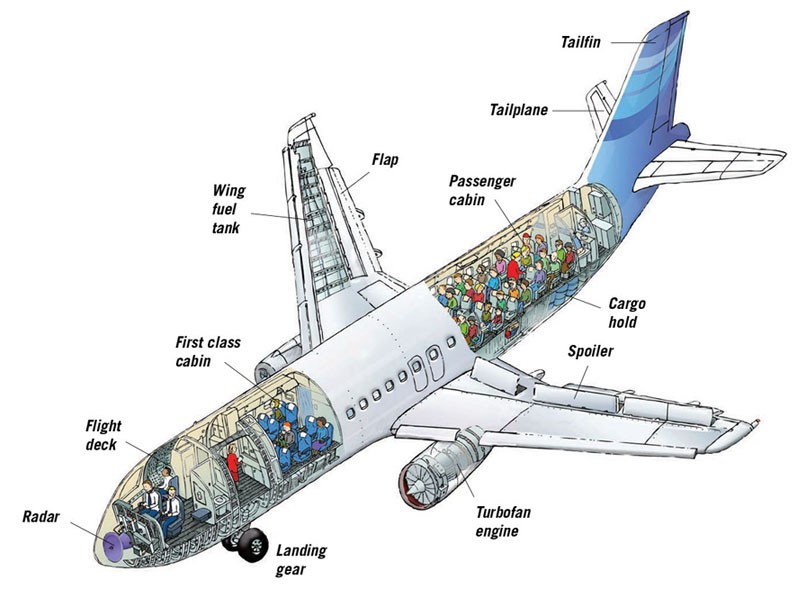
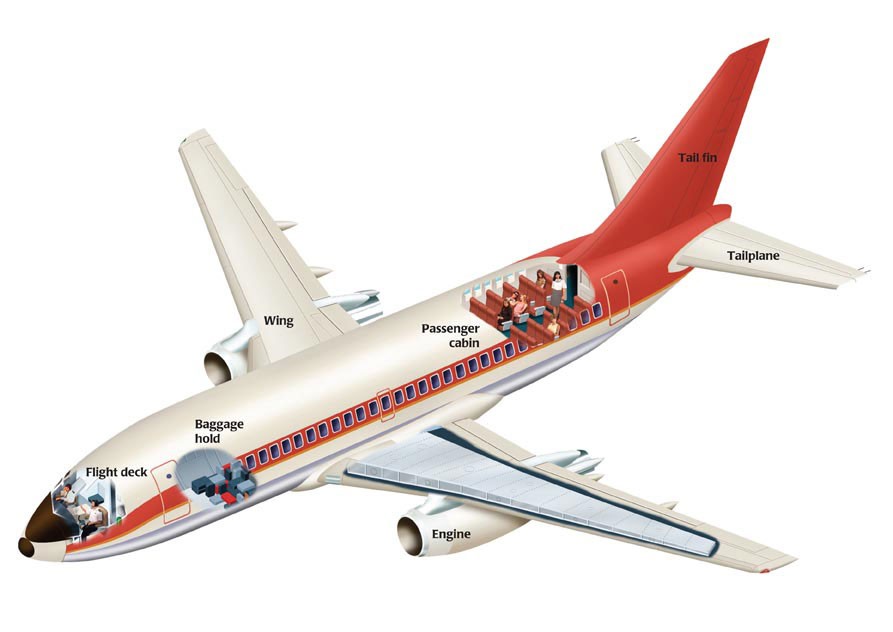
An airliner is a large aeroplane that transports passengers from one airport to another. It is designed to fly long distances without refuelling. An airliner’s engines, usually turbofan jet engines, are encased in pods often fixed to the underside of each wing. The fuel used by an airliner is stored inside each wing. The framework is covered with a very thin metal skin. Airliners have a large fuselage inside which the passengers, crew and baggage travel. The space where baggage is stored, the cargo bin or hold, is separate from the passenger cabin. The largest airliners, known as wide-bodies, have two aisles inside the passenger cabin. The Boeing 747 jumbo jet, the 777 and 787 Dreamliner, along with the Airbus A380 are all examples of wide-bodies.


Fuselage
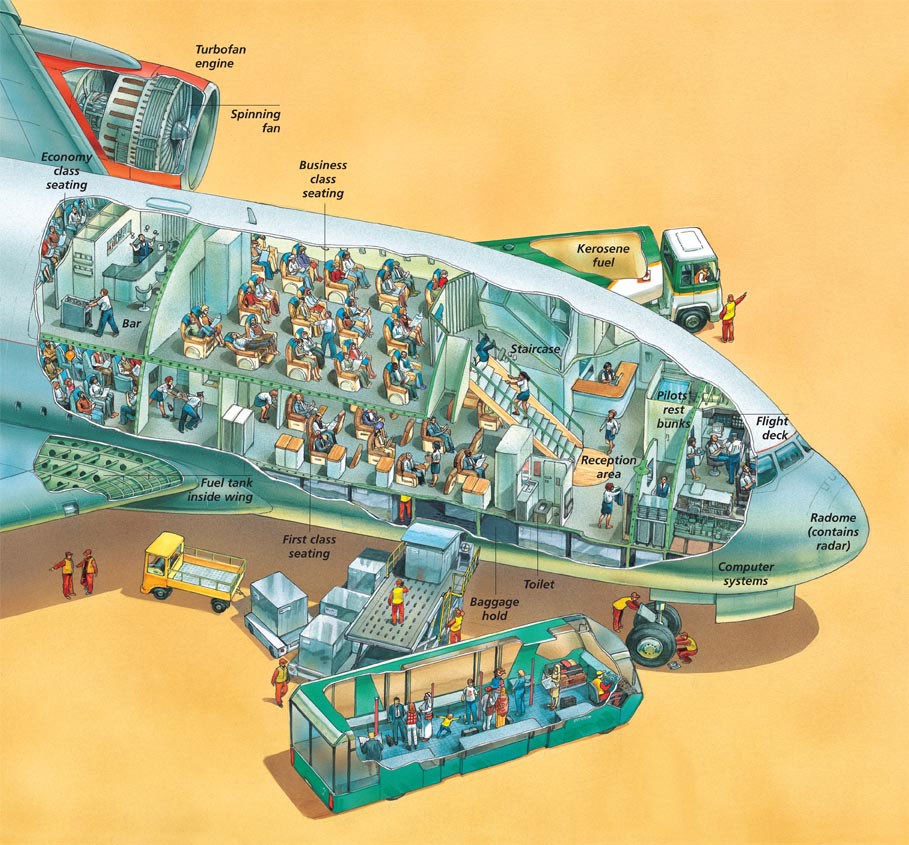
The main body of an aeroplane, called the fuselage, consists of ribs, beams and an outer skin. All the parts are made of lightweight aluminium alloys (aluminium mixed with other metals). Inside an airliner fuselage, air is pumped into the pressurized passenger cabin both to provide sufficient air to breathe and to keep air pressure at comfortable levels. There are overhead bins where carry-on items are stored, and toilets. Flight attendants ensure the safety and comfort of the passengers. Airliners normally have more than one class of seating. The seats in the more expensive classes are more spacious and more comfortable.
For each person there are fold-away tables, reading lamps, air vents and headsets that can be plugged into music programmes, or the soundtrack to films or TV programmes. Passengers’ seats can be adjusted to lean backwards.
Take-off
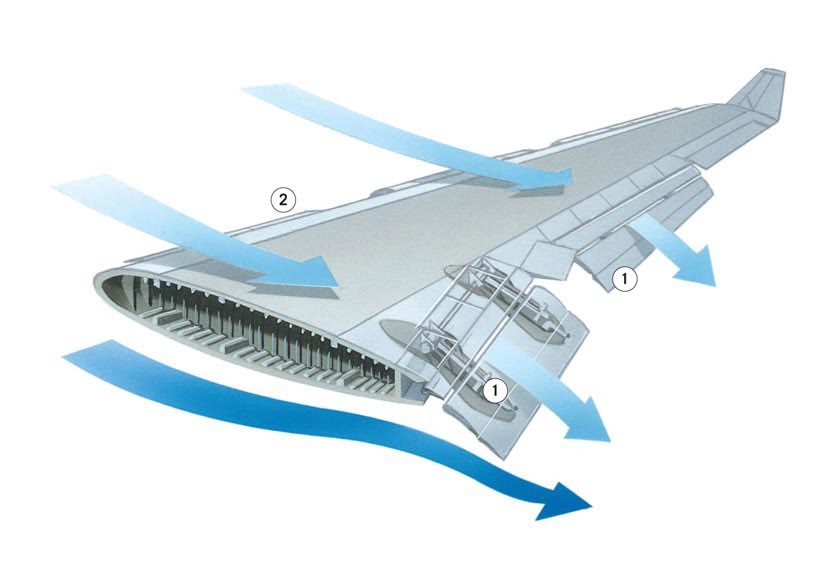
Flaps fitted to the wing are used to extend the airliner's wing surface and exaggerate its curved profile in order to provide extra lift when needed. When the plane takes off or lands, flaps, arranged as a layered "skirt" in three sections, extend outwards at the trailing (rear) edge of the wings. At take-off, they are not as fully extended as they are at landing. Hinged flaps at the leading (front) edges of the wings also project forwards to extend the wing surface further.

Landing
Spoilers, mounted on the upper side of the wings, are used to help bring the airliner to a halt after it has landed. When the plane touches down, they flip upwards, immediately adding to the drag force (air resistance). The air pressure is now higher above the wing than below it, putting the full weight of the plane on to its wheels, helping to prevent it from skidding. Spoilers can also be used like ailerons when making a rolling turn, or banking.
Landing gear
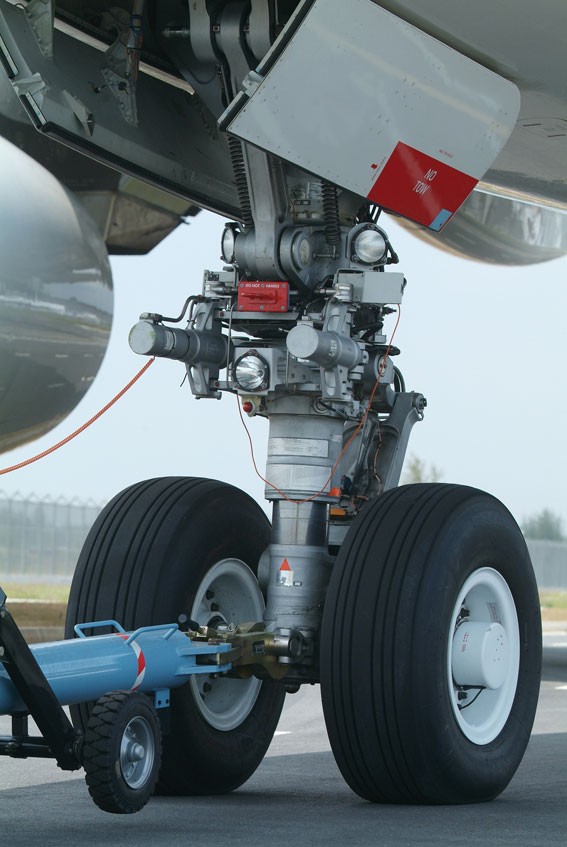
The airliner’s landing gear consists of a number of wheeled carriages, or bogies. One carriage is attached to the underside of each wing and one (or two) to the underside of the fuselage. Between them, the wheels support the plane’s great weight on the runway. The tyres are filled with nitrogen gas and fitted with anti-skid brakes. The impact of landing is borne evenly by all the carriages through their shock absorbers. On take-off, the wheel carriages retract into the body of the fuselage and wings, powered by hydraulic jacks. Hinged doors close behind them.

Flight deck controls
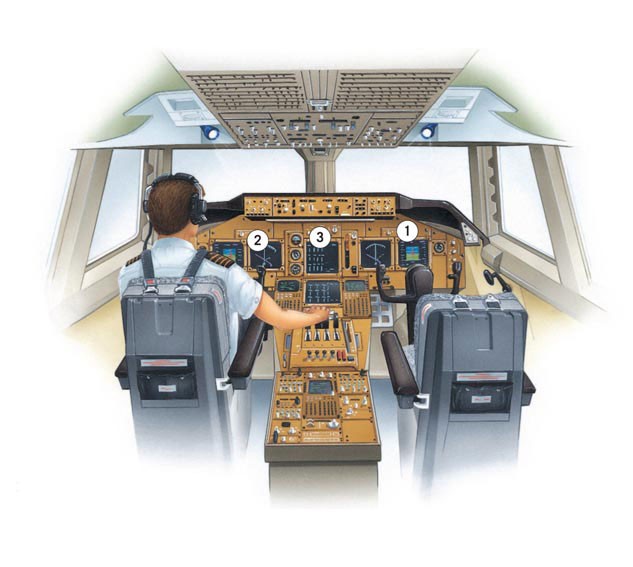
Seated at the controls on the flight deck are the pilot and co-pilot. For much of the journey, the controls are switched to an automatic control system, or autopilot. Computers sense outside conditions, such as wind speed, and manipulate the controls accordingly to travel along a pre-set route. All the crew have to do is to keep an eye on the monitors to check that all systems are functioning correctly. For safety reasons, airliners are equipped with a voice recorder and a flight recorder, sometimes known as the “black box” (it is actually bright orange). These instruments record every manoeuvre the aircraft makes. In the event of an incident, the recordings can be played back and provide evidence for what went wrong.
Display screens
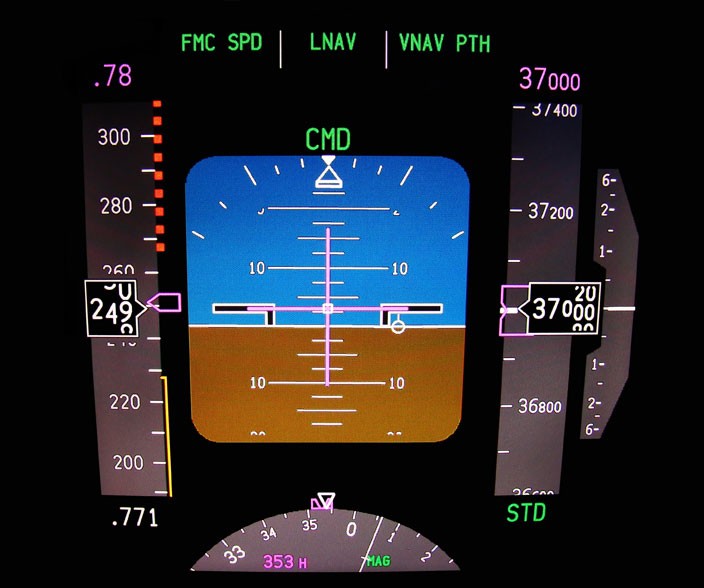
Six display screens—three for each pilot—give all the information needed to fly the plane. The Primary Flight Display shows the aeroplane’s attitude—the angle at which it is flying in relation to the Earth. It also indicates the plane’s course, its speed and the height of the plane above the land or sea. The Navigation Display plots the plane’s position on a map of the route. The Engine Indication and Crew Alerting System (EICAS) gives information about the operation of the aeroplane’s systems and engines.
Cutting emissions
Airliners of the 2030s may look very different from the standard “tube and wing” design that has existed for decades. Manufactures are looking for ways to cut carbon emissions from passenger aircraft, which are responsible for 2.5% of emissions globally. Neither battery technology (to provide enough electrical power for long flights) nor hydrogen technology (to replace fossil fuels altogether) is sufficiently advanced, meaning significant improvements in fuel efficiency are the only option. Redesigning the aircraft's basic shape in such a way that air resistance (drag) is minimized as the aircraft flies through the air is a likely solution. The less the drag, the less fuel required to power it forwards (in space, where drag is zero, no power is required at all).
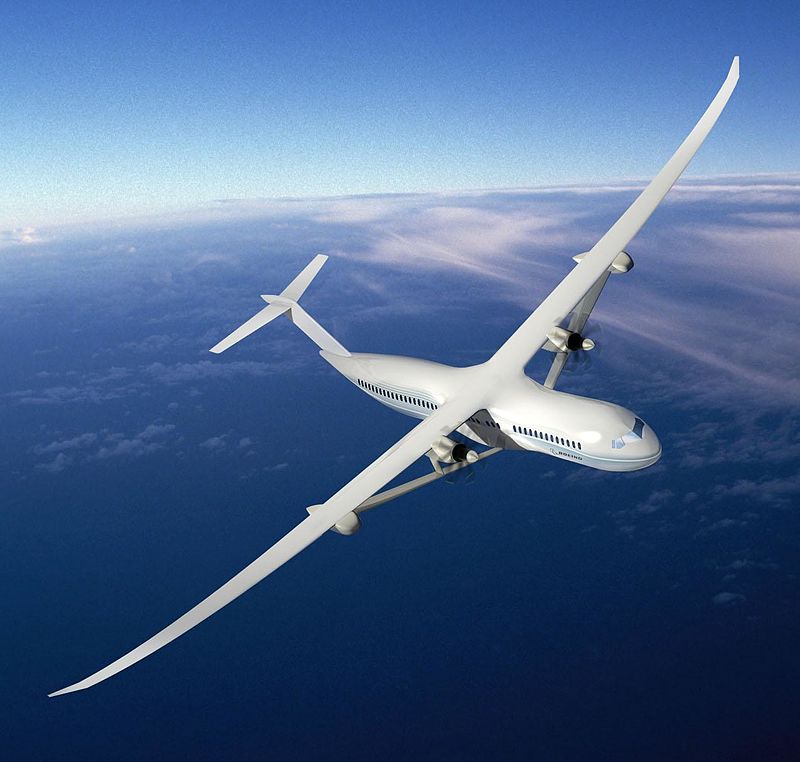
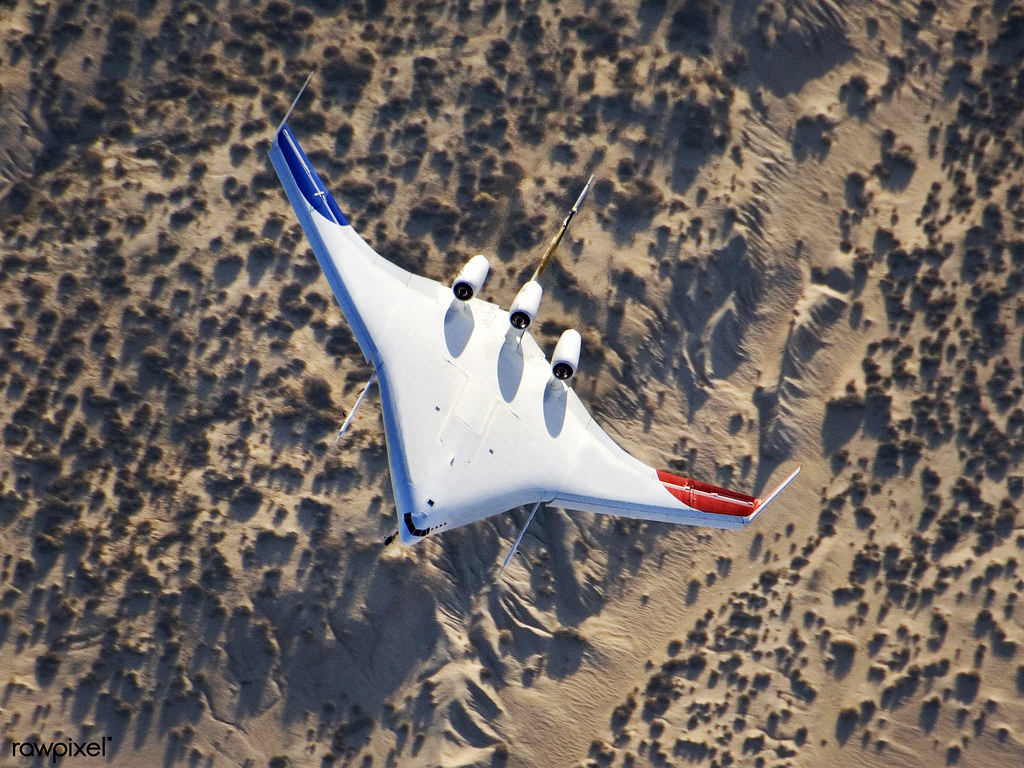
Boeing's truss-braced wing, which is being developed in partnership with the US space agency, NASA, is one possibility. The plane, which is designed to fly at “transonic” speeds (just below the speed of sound), has longer, much slimmer wings, held in place by a trusses. Airbus is experimenting with a design in which the main body of the aircraft is merged with the wings. The plane’s body itself contributes to lift, a function previously carried out by the wings alone. Known as “blended wing”, the design could cut fuel burn by half. Passenger discomfort is one of the drawbacks: those seated on the outside could find their stomachs lurching as they feel a greater turning force.
Consultant: Chris Oxlade
pics
Without in any way limiting Q-files Ltd’s exclusive rights under copyright, any use of this publication to “train” generative artificial intelligence (AI) technologies to generate text is expressly prohibited. Q-files Ltd reserves all rights to license use of this work for generative AI training and development of machine learning language models.