
Aircraft

CITE
We have made every effort to follow citation style rules, but there may be some minor differences. If in doubt, please refer to the appropriate citation style manual.
Story of flight. (2026). In Q-files Encyclopedia, Technology, Aircraft. Retrieved from
https://www.q-files.com/technology/aircraft/story-of-flight
"Story of flight." Technology, Aircraft, Q-files Encyclopedia, 13 Mar. 2026.
https://www.q-files.com/technology/aircraft/story-of-flight.
Accessed 21 Sep. 2026.
Story of flight 2026. Technology, Aircraft. Retrieved 21 September 2026, from
https://www.q-files.com/technology/aircraft/story-of-flight
Technology, Aircraft, s.v. "Story of flight," accessed September 21, 2026.
https://www.q-files.com/technology/aircraft/story-of-flight


Story of flight
The first manned flight took place in 1783 in a hot-air balloon. It took another 120 years before the Wright brothers made the first controlled, powered flight in an aeroplane. After this, aviation technology made rapid advances. In the 1920s, the first passenger airlines were formed, enabling people to travel quickly all over the world. Since the end of World War II, and the invention of jet aircraft, millions of people travel long distances each year by jet airliner.

Montgolfiers' balloon
The first aircraft to carry humans free of the Earth’s surface was a balloon. In 1783 the French brothers Joseph and Étienne Montgolfier discovered that an airtight bag filled with hot air would rise. They made a much larger bag, attached a wicker basket, and sent a sheep, a cockerel and a duck on a short flight before the astonished gaze of King Louis XVI. Later that year, on 21st November, Pilâtre de Rozier and the Marquis d’Arlandes became the first aviators in history when their paper-lined linen balloon lifted off to a height of 85 metres (279 feet). Powered by the rising hot air from a fire of burning straw, the Montgolfière drifted over Paris for 25 minutes before landing 8.5 kilometres (5.3 miles) away.
First airship
Later balloons used hydrogen instead of hot air, but all types lacked any means of steering. Changing the gas-bag to a cigar-shape design, fitting a rudder and adding an engine provided the answer—and so the airship was born. On 24th September 1852, Frenchman Henri Giffard took off in his steam-powered airship. The envelope was filled with lighter-than-air hydrogen gas. It travelled 28 kilometres (17 miles) at a speed no faster than a brisk walking-pace.


Gliders
The first heavier-than-air aircraft were gliders, built and flown in the 19th century by pioneers such as the German Otto Lilienthal. He made hundreds of controlled flights in his gliders, built between 1891 and 1896. He was the first to prove that people could fly in heavier-than-air machines.
It was Englishman George Cayley who designed the modern aeroplane, with wings and a tail like those flying today. In 1849 a glider built by George Cayley was launched from a hillside with a 10 year-old boy on board. It managed to travel about 500 metres (1600 feet). However, none of his machines ever flew for long: in the mid-19th century no engine yet invented was light enough to power a piloted flying machine.

First powered aeroplanes
Frenchman Félix du Temple built the first powered aeroplane, a small model with a clockwork engine, in 1857. A full-sized steam-powered plane took off from a steep ramp 17 years later: the first "hop" by a manned, powered aeroplane.
In 1884 the Russian Alexander Mozhaiski built a heavy steam-powered plane. It was launched from a sloping ramp and just cleared the ground on its short flight. In 1890, Clément Ader, the French engineer, managed to fly a distance of 50 metres (160 feet). But his steam-powered plane, Éole, which looked like a huge bat, had no controls.
The Aerodrome, built by American Samuel Langley in 1903, was equipped with a petrol engine. Twice he launched it by catapult from a houseboat on the Potomac River. Unfortunately, on both occasions it plunged straight into the river. Karl Jatho of Germany came near to claiming the record for the first flight, also in 1903. Although it lacked controls, his kite-like aeroplane made a number of flights of up to 18 metres (60 feet) at an "altitude" of just one metre (about three feet).

Wright brothers
Meanwhile, in the USA, two brothers, Orville and Wilbur Wright, were experimenting with kites and gliders. They made thousands of test flights in their gliders, gradually perfecting their controls, including incorporating a mechanism which enabled the pilot to twist or "warp" the wings, and thus roll the aircraft to the left or right. In 1903 they finally built an aeroplane, called Flyer I, with a petrol engine.

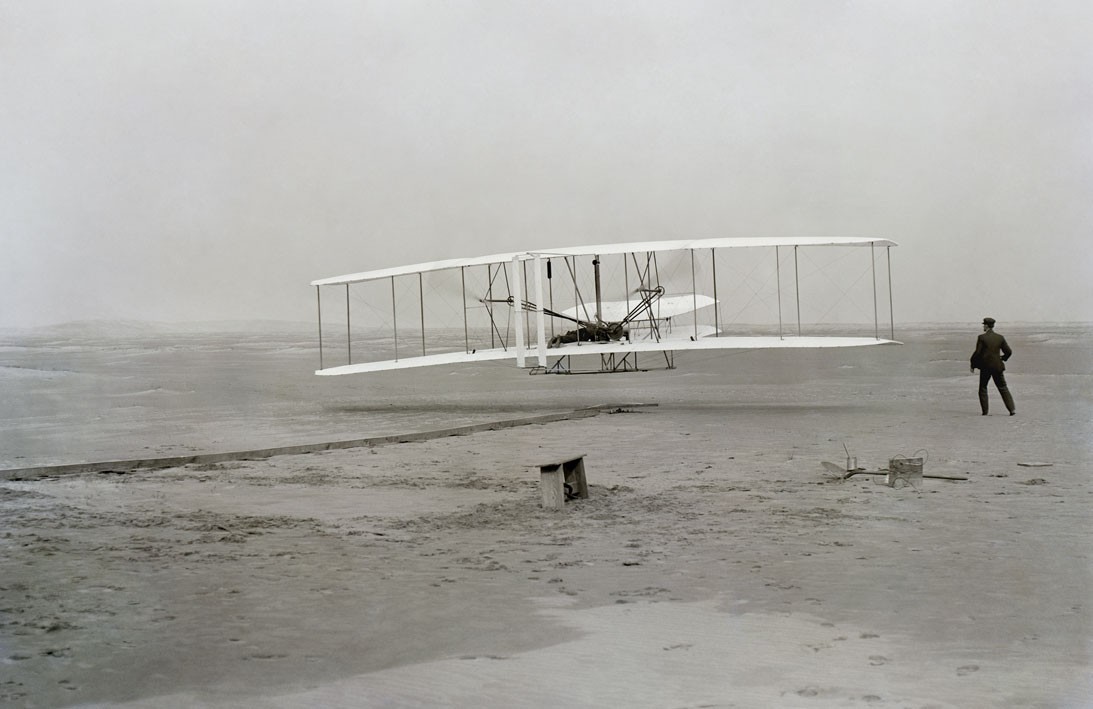
On 17th December 1903, on the sand dunes of Kitty Hawk, North Carolina, with Orville at the controls, Flyer I flew for 12 seconds before grounding 36.6 metres (120 feet) away—less than the wingspan of many modern airliners. They had made the first ever powered, controlled aeroplane flight.

The Wright brothers made three more flights in Flyer that day. Each successive flight gained further and further ground. This diagram shows the distances travelled. Their next two flights reached distances of between 50 and 60 metres (160–200 feet). The final flight lasted for 59 seconds and covered an impressive distance of 260 metres (850 feet). This flight, Wilbur’s second at the controls, proved beyond doubt that the Age of Aviation had truly arrived. After the end of her fourth flight, Flyer was damaged by a strong gust of wind, causing her forward elevator braces to snap. She would never fly again.
Louis Blériot
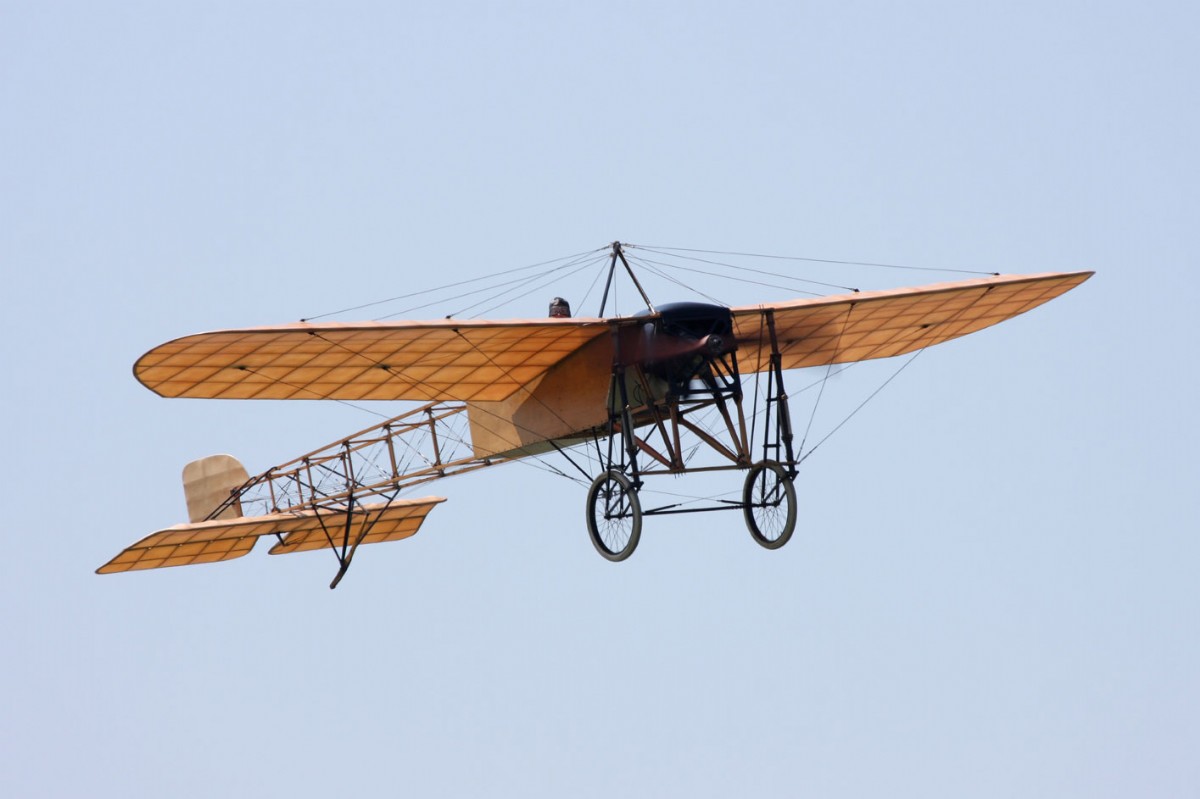
Just six years after the Flyer I’s first flight, in 1909 French aviator Louis Blériot flew across the English Channel, a distance of 35 kilometres (22 miles) in his monoplane. With no means of navigation, he set off into the mist and crash-landed above the cliffs of Dover 37 minutes later. Blériot became an instant celebrity and sold more than 100 of his monoplanes. The flight won him a prize of £1000 offered by the London Daily Mail.
Early developments
In the decade after the Wright brothers’ historic flight, aviation became a popular sport. Race meetings and airshows were held, and pilots made historic long-distance flights. Aircraft technology steadily improved. Aviators began to understand how to build stronger aircraft structures without increasing weight, wings that gave better lift and created less drag, and controls that made life easier for the pilot.
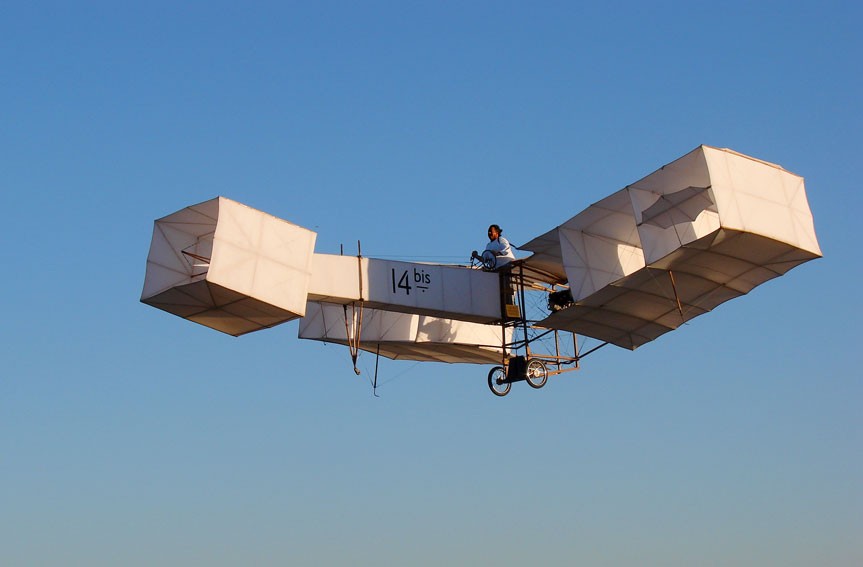
The standard aircraft shape, with a tail section supporting a fin and tailplane, began to become popular. More efficient and powerful engines and propellers gave aircraft greater speed, endurance and reliability. By 1913 the speed record was 203 km/h (126 mph), and the distance record 1021 kilometres (634 miles).
World War I
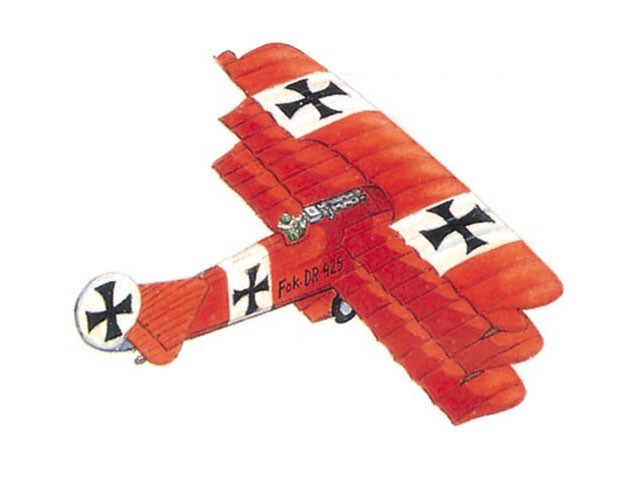
Very soon, planes became weapons of war. During World War I (1914–1918), biplanes and triplanes—planes with two or three sets of wings respectively—took to the skies. German aviator Manfred von Richthofen, the “Red Baron”, flew a Fokker triplane painted bright scarlet. The plane was fitted with a machine gun and an interrupter gear, a device that allowed the gun to fire forward without hitting the plane’s propeller.
During the war, aircraft became specialized for certain jobs, such as fast, manoeuvrable fighters and large, long-distance bombers. Large, flat decks were added to some battleships from which aircraft could now take off to attack enemy ships with torpedoes.

First airliners
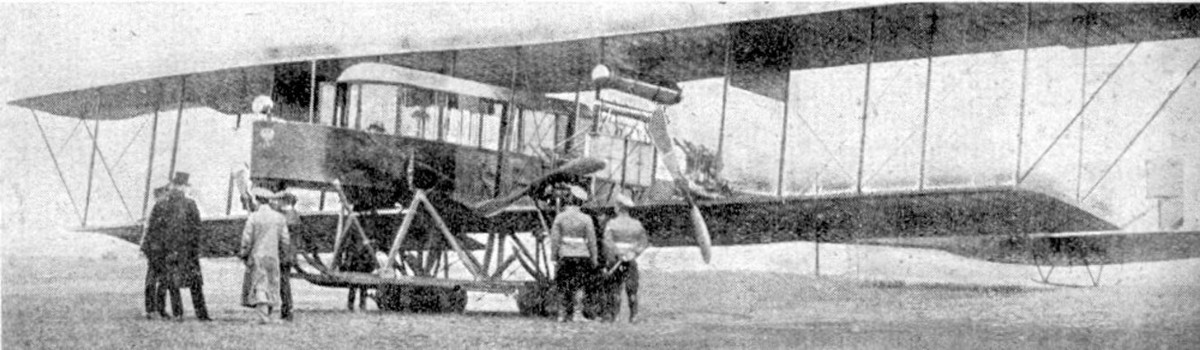
The first passenger airlines were formed in 1919, just after the end of World War I. Their airliners were converted wartime bombers, such as the Farman Goliath, which had seats for up to 14 passengers. It opened the first scheduled international passenger service in 1920. Flying in them was cold and bumpy, and there was noise and vibration from the piston engines. In the 1920s and 1930s aviation engineers began building in metal instead of wood, creating aircraft with strong tubular fuselages and monoplane wings, such as the Martin B-10 bomber.

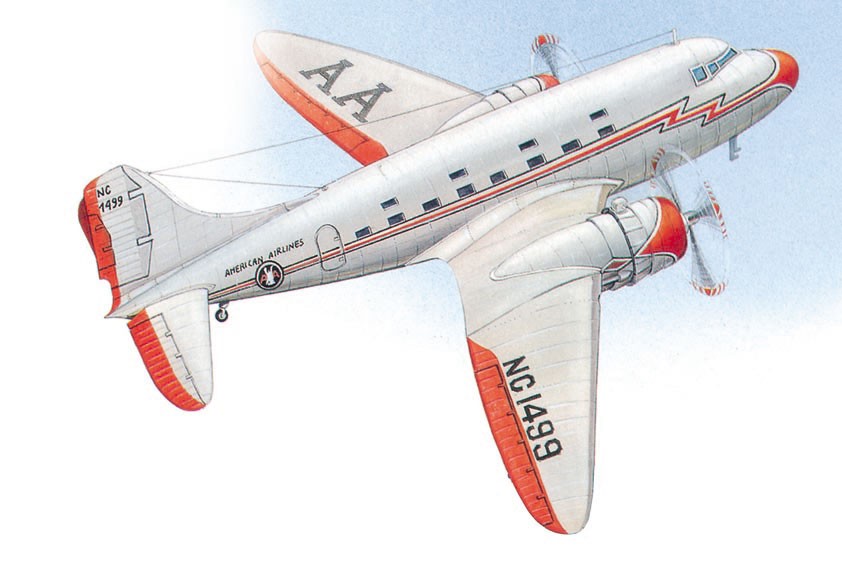
The first modern-style airliners, such as the Douglas DC-3, appeared in the mid-1930s. During World War II pilots needed heavy bombers, such as the American B-24 Liberator, and fast fighters, such as the Soviet Ilyushin Il-2.
World War II
During World War II, air combat took place on a larger scale than in any previous conflict. Fighters, such as the German Messerschmitt Bf 109 and British Hawker Hurricane and Supermarine Spitfire, were faster and had greater fire power than ever before. Aircraft were also designed to fill numerous specialist roles, such as dive-bombers, which dive at their target to drop their bombs with great accuracy (the Japanese Aichi D3A, for example) and fighter-bombers (including Britain’s Blackburn Skua).
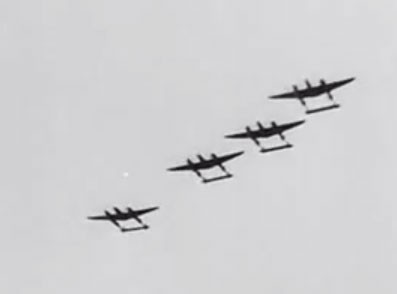
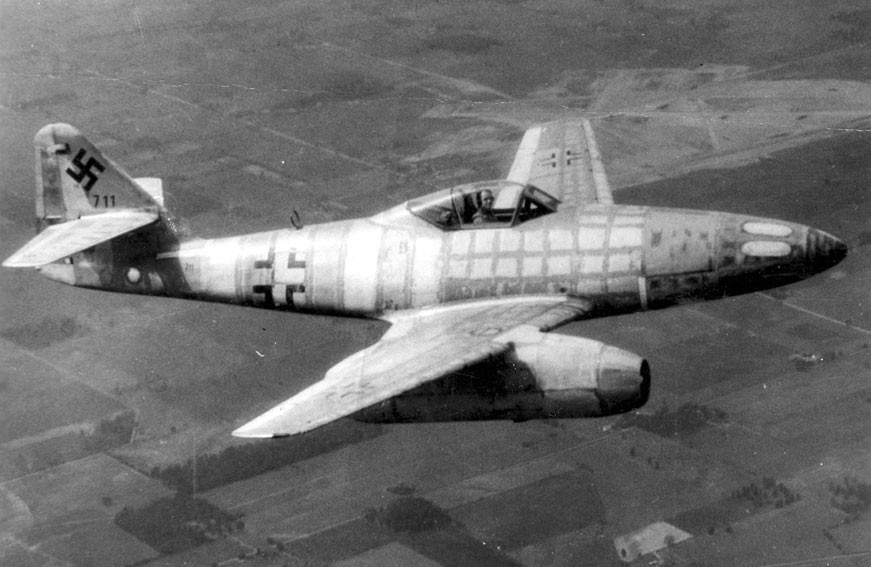
In 1944, jet fighter planes were put into service by both the Germans and the British for the first time. The British plane was the Gloster Meteor, primarily used for shooting down V-1 flying bombs; the German fighter was the Messerschmitt Me 262, which had a maximum speed of 870 km/h (540 mph). They were followed by the world’s first and only rocket-powered fighter, the Messerschmitt Me 163, which could reach 1130 km/h (700 mph).
First jet aircraft
The jet engine was developed in the late 1930s, both by Hans von Ohain in Germany and Frank Whittle in Britain. The first jet aircraft flew in 1939. After World War II, jet engines powered new jet fighters with swept-back wings, such as the MiG-15 and later the Mirage, as well as airliners. Rocket-powered aircraft, such as the X-15, were built for research into high-speed flight.
Jet airliners
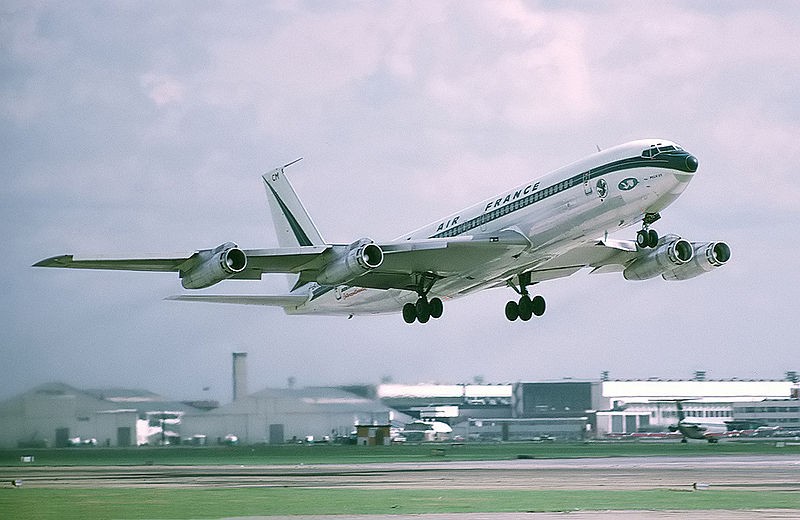
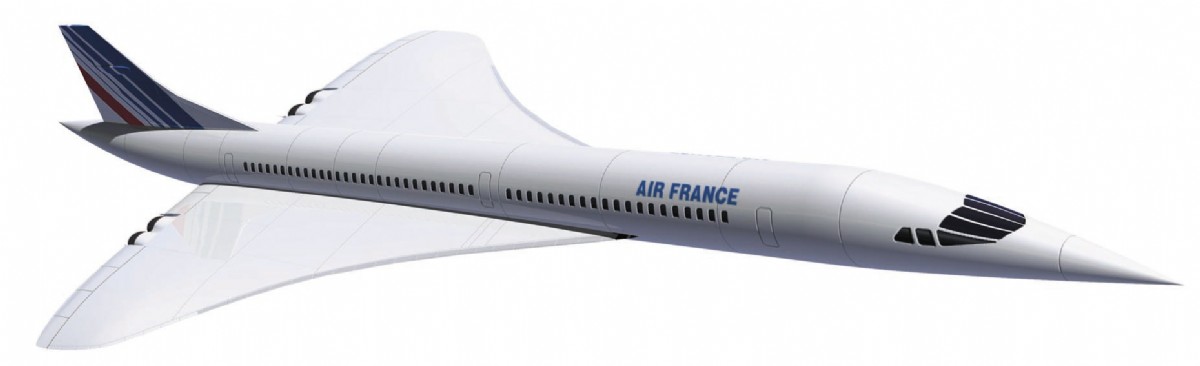
The introduction of long-range, economical, jet-powered airliners, such as the de Havilland Comet and the Boeing 707, the first “big jets”, led to a huge boom in airline travel. The first (and so far the only) supersonic airliner, the Concorde, was introduced in 1969, and the first wide-bodied airliner, the Boeing 747, came into operation in 1970.
Fly-by-wire
Modern airliners, fighters such as the Typhoon, and bombers such as the Northrop B-2, all have sophisticated control systems, such as fly-by-wire. In an aircraft with a fly-by-wire system, the pilot controls where the aircraft goes, but a computer actually flies the aircraft.

In an airliner, fly-by-wire can prevent the pilot making mistakes such as stalling. In a fighter, it allows the pilot to make manoeuvres that would be impossible if he or she were using a standard mechanical control system.
Consultant: Chris Oxlade
pics
Without in any way limiting Q-files Ltd’s exclusive rights under copyright, any use of this publication to “train” generative artificial intelligence (AI) technologies to generate text is expressly prohibited. Q-files Ltd reserves all rights to license use of this work for generative AI training and development of machine learning language models.