
Forces

CITE
We have made every effort to follow citation style rules, but there may be some minor differences. If in doubt, please refer to the appropriate citation style manual.
Friction. (2026). In Q-files Encyclopedia, Science, Forces. Retrieved from
https://www.q-files.com/science/forces/friction
"Friction." Science, Forces, Q-files Encyclopedia, 10 Mar. 2026.
https://www.q-files.com/science/forces/friction.
Accessed 21 Sep. 2026.
Friction 2026. Science, Forces. Retrieved 21 September 2026, from
https://www.q-files.com/science/forces/friction
Science, Forces, s.v. "Friction," accessed September 21, 2026.
https://www.q-files.com/science/forces/friction


Friction
When two objects which are touching try to move past each other, they rub against each other. This produces a force called friction which tries to stop the movement. If the surfaces of the objects are rough, like sandpaper, then friction is greater. If they are smooth and slippery, especially if lubricated with oil or grease, then friction is less.


Friction in machines
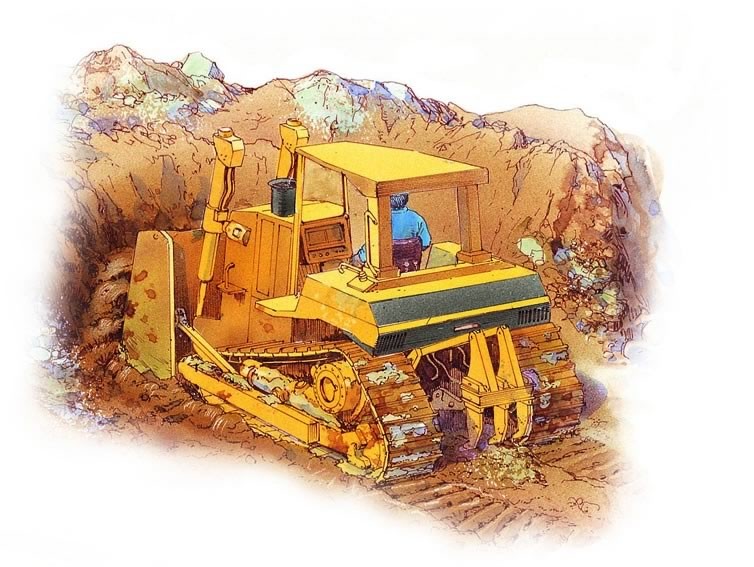
Friction is “the enemy of machines”: it opposes movement, causes wear and tear and changes useful energy into waste heat. But friction can also be helpful. A vehicle slows down suddenly because of friction provided by its brakes. A bulldozer’s tracks dig into the earth with so much friction that they cannot slip. So the bulldozer can push huge mounds of soil.
Air resistance

Even the molecules that make up the air can cause friction. This is known as air resistance, or drag. The faster an object travels, the greater the air resistance acting on it becomes. In space there is no air, so there is no friction to slow things down. This means that once a spacecraft is set in motion across space, it does not need an engine to propel it forwards. The gravity of large objects in space, like the Sun, Earth or Moon, will still act on it, however, causing it to slow down or speed up depending where it is and in what direction it is moving.
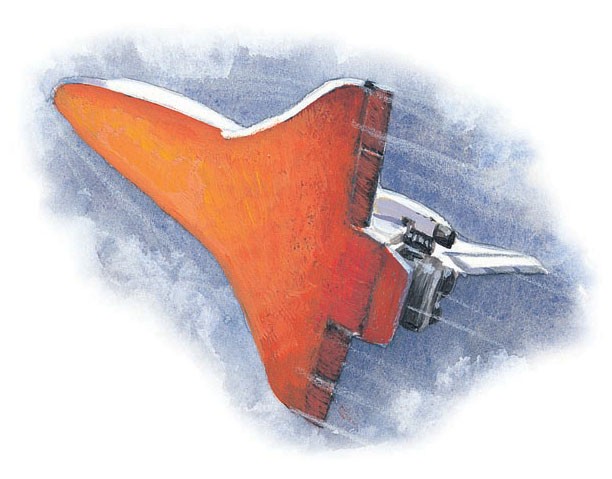
The Space Shuttle orbiter, a re-usable spacecraft, experienced enormous air resistance when it re-entered the Earth’s atmosphere. This generated some heat from friction, but a more significant effect was that the air in front of it did not have time to get out of its way. So the air was compressed (squashed) and heated up as a result. The orbiter travelled so fast that the compression and friction made its special protective tiles glow red hot.
Friction in
action: skiing
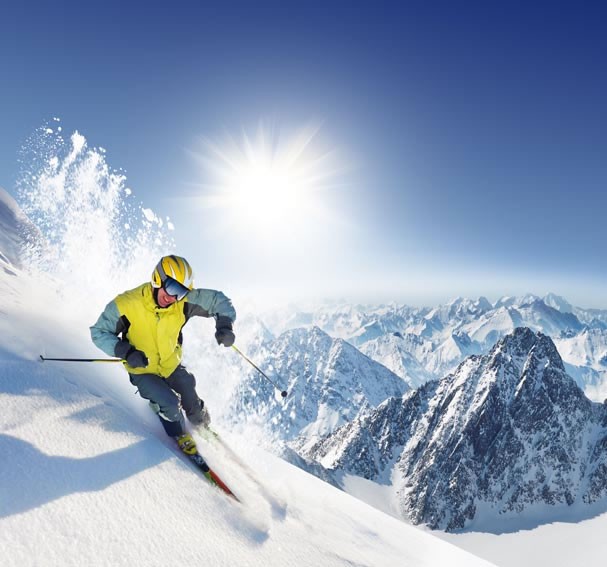
A skier slides easily over snow because the skis press down and rub hard on it. The friction makes the snow melt into water, which is very slippery with low friction. Skis are smooth on the underside, reducing friction even further. However, the skier can stop quickly by rubbing the sharp edge of the skis against the snow, creating friction by cutting into the snow.
Friction in action: cycling
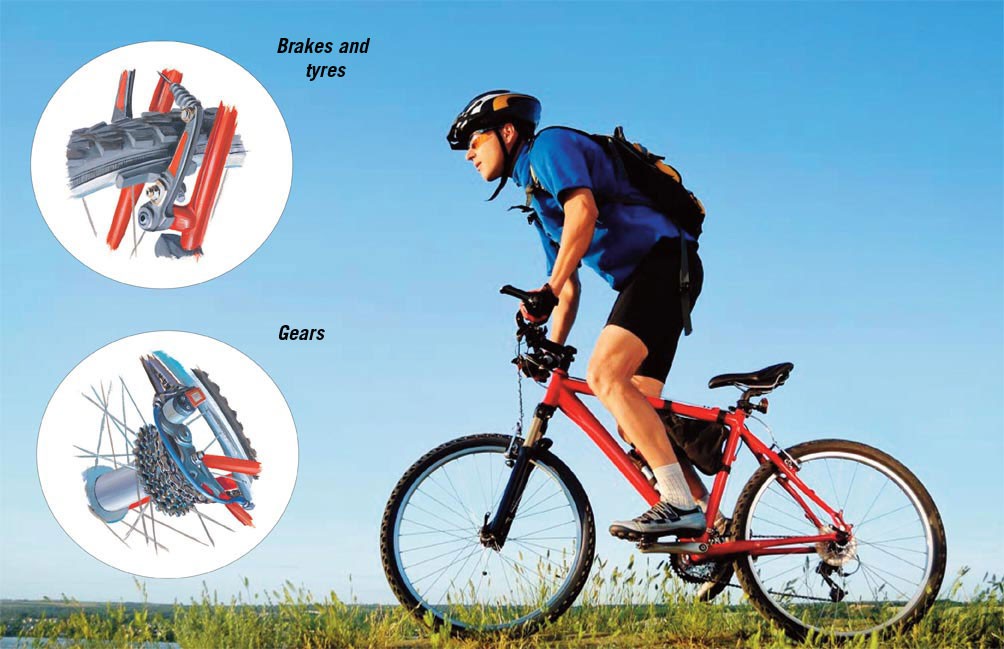
A cyclist’s “streamlined“ helmet and smooth lycra clothing help to reduce friction from air resistance, enabling him to move faster. To slow down, he squeezes the brakes, which grip the wheel rims, causing friction. The cogs and chains on a bike are lubricated (coated in slippery oil) to reduce friction. This keeps them running smoothly.
The grooved tread on a bicycle’s tyres increase grip when the road is wet, because water can escape from between them and the road surface by means of the grooves in the tyres. This allows the raised parts of the tyre to contact the road surface, where friction gives them grip. Under dry conditions, the tread means that the tyres grip less than a smooth tyre would, because the grooves reduce the amount of tyre surface in contact with the road. However, there is still enough grip for safe riding.
Consultant: Mike Goldsmith
pics

Without in any way limiting Q-files Ltd’s exclusive rights under copyright, any use of this publication to “train” generative artificial intelligence (AI) technologies to generate text is expressly prohibited. Q-files Ltd reserves all rights to license use of this work for generative AI training and development of machine learning language models.