
Space transport

CITE
We have made every effort to follow citation style rules, but there may be some minor differences. If in doubt, please refer to the appropriate citation style manual.
Space Shuttle. (2026). In Q-files Encyclopedia, Technology, Space transport. Retrieved from
https://www.q-files.com/technology/space-transport/space-shuttle
"Space Shuttle." Technology, Space transport, Q-files Encyclopedia, 13 Mar. 2026.
https://www.q-files.com/technology/space-transport/space-shuttle.
Accessed 21 Sep. 2026.
Space Shuttle 2026. Technology, Space transport. Retrieved 21 September 2026, from
https://www.q-files.com/technology/space-transport/space-shuttle
Technology, Space transport, s.v. "Space Shuttle," accessed September 21, 2026.
https://www.q-files.com/technology/space-transport/space-shuttle


Space Shuttle
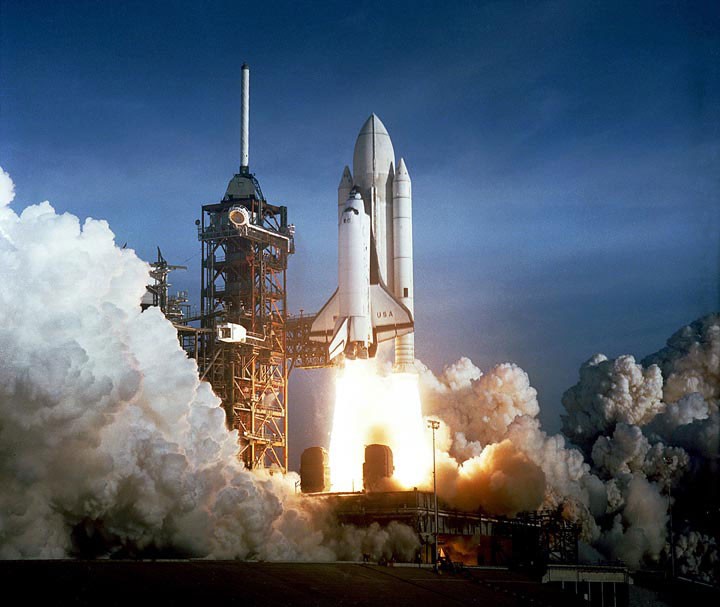
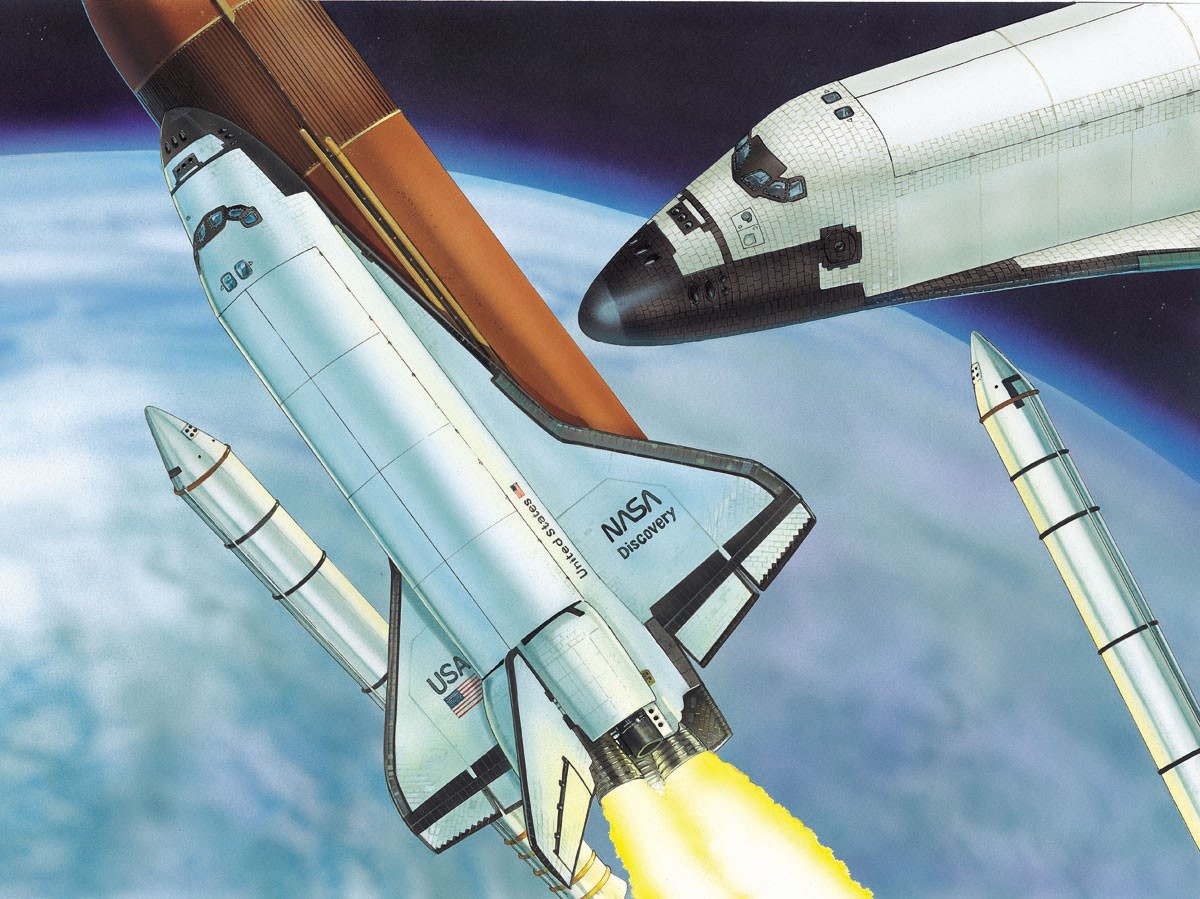
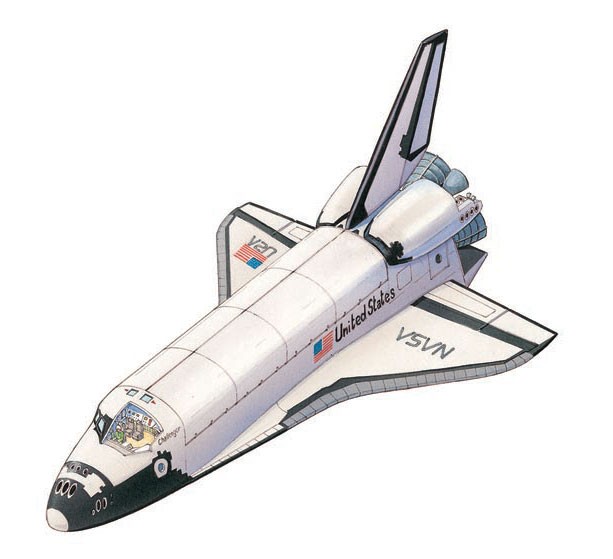
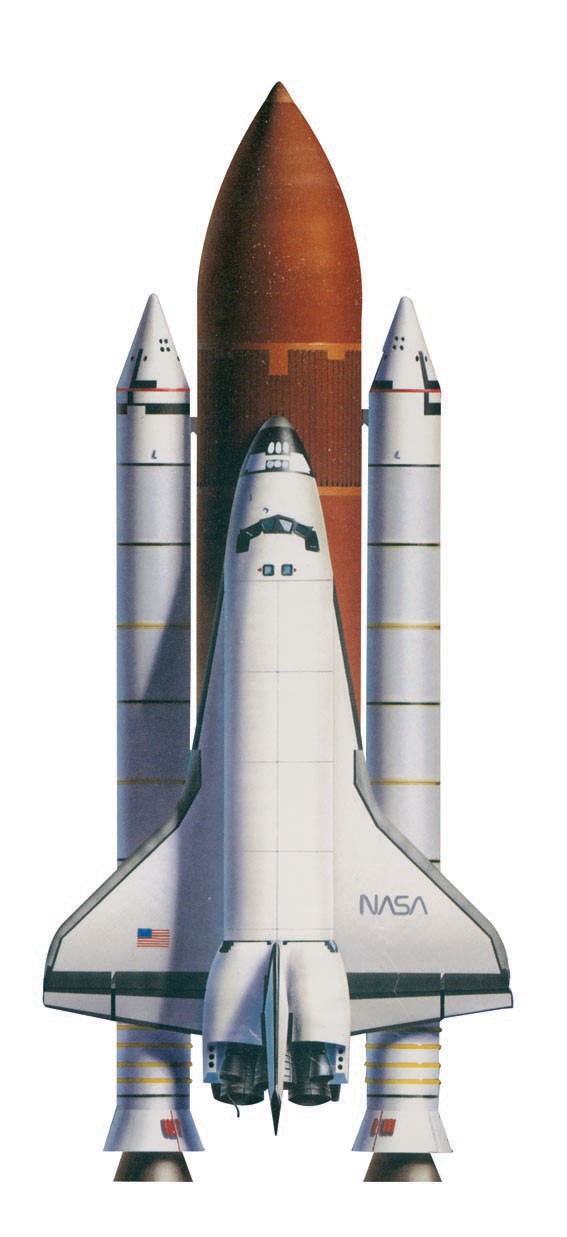
The Space Shuttle was designed as a re-usable spacecraft because of the huge cost of rockets, all the parts of which are completely destroyed during missions. The first Shuttle mission was flown by Columbia in 1981. The five Shuttle spacecraft, Columbia, Challenger, Discovery, Atlantis and Endeavour, flew 135 missions between 1981 and 2011 to launch or repair satellites, service space stations, and carry out scientific and military research. The Space Shuttle flew into space like a rocket, then glided back to Earth like an aeroplane. It consisted of four parts: the winged orbiter, where the astronauts travelled, a huge fuel tank, which supplied fuel to the orbiter’s three main rocket engines, and two booster rockets attached to the fuel tank. The fuel tank contained liquid oxygen and hydrogen. The booster rockets used solid fuel.


Orbiter
Once in space, the Shuttle’s engines were turned off. It kept its speed because there was no air to slow it down. The orbiter was, however, equipped with two small additional engines, called the Orbital Manoeuvring System (OMS), and clusters of gas-powered thrusters at the nose and tail. These enabled it to make small manoeuvres, and slowed the spacecraft on its descent to Earth. The orbiter was coated with heat-resistant ceramic tiles on its nose and underside. This was to protect it from the intense heat as it re-entered the Earth’s atmosphere.

Shuttle mission
During lift-off and ascent, the orbiter was powered by liquid oxygen and hydrogen fuel from the fuel tank. It burnt more than 200,000 litres of fuel a minute. The booster rockets gave the Shuttle sufficient thrust for it to enter Low Earth orbit. They worked like giant fireworks. Once ignited, they could not be switched off.
Soon after lift-off, the booster rockets separated and parachuted back to Earth for re-use. The fuel in the external tank ran out after 9 minutes, after which the orbiter jettisoned it. It fell back into the atmosphere, where it burnt up because of the intense heat created.
The orbiter was now on its own. The OMS engines were fired for a short time to accelerate the orbiter into its correct orbit, at an altitude of about 200 kilometres (125 miles). Here, the astronauts carried out their mission. This might be, for example (as pictured), launching a satellite from the “payload bay” (in the upper part of the orbiter’s fuselage) using the orbiter’s remotely controlled robot arm.


Payload bay
The cargo area in the main body of the orbiter was called the payload bay. It was used to carry satellites, parts of the International Space Station or space probes. Also fitted here was the remote manipulator arm. When the astronauts need to work outside the orbiter in space (for example, repairing or launching a satellite), they could use the arm as a secure platform.
Life aboard

The astronauts slept in enclosed bunk beds and ate food from secured trays. They spent about two hours a day on the running machine as their muscles would otherwise be underworked in the weightless conditions.
Mission profile

At lift-off (1), the Shuttle was made up of the orbiter, in which the astronauts travelled, a huge fuel tank and two booster rockets. Soon after lift-off (2), the Shuttle turned on to its back. The booster rockets lasted for 2 minutes, then separated from the fuel tank (3) and parachuted back to Earth. The fuel in the external tank ran out after 9 minutes, after which the orbiter jettisoned it (4). Less than 15 minutes after launch, the shuttle was in orbit at an altitude of about 200 kilometres (125 miles). The Shuttle carried out its mission: launching a satellite (5).
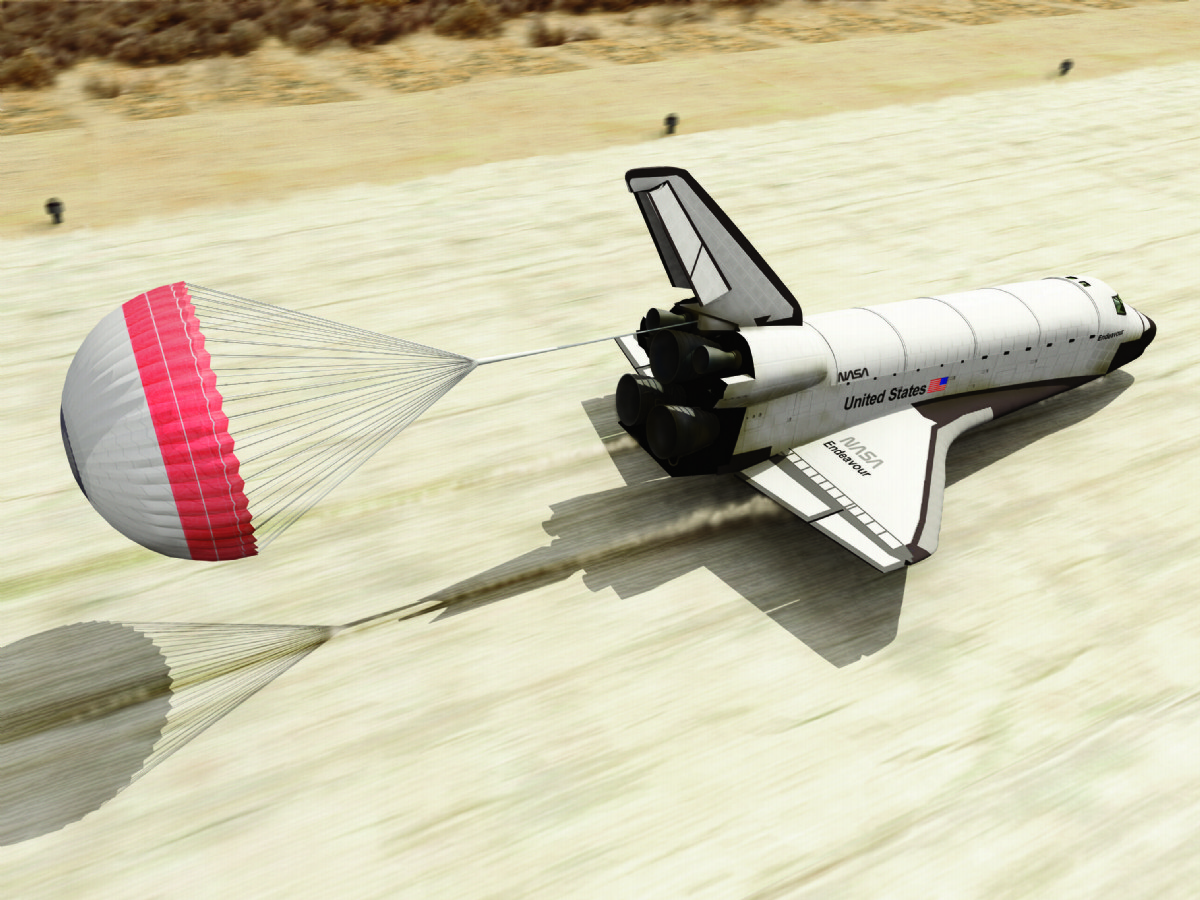
With the mission completed, the OMS engines slowed down the orbiter so that it began to fall back to Earth (6). During re-entry into the atmosphere, the heat-resistant ceramic tiles protected the orbiter from the intense heat. It gradually slowed as it descended, and finally glided back on to a runway like an aeroplane (7).

Consultant: Chris Oxlade
pics

Without in any way limiting Q-files Ltd’s exclusive rights under copyright, any use of this publication to “train” generative artificial intelligence (AI) technologies to generate text is expressly prohibited. Q-files Ltd reserves all rights to license use of this work for generative AI training and development of machine learning language models.