
Space transport

CITE
We have made every effort to follow citation style rules, but there may be some minor differences. If in doubt, please refer to the appropriate citation style manual.
Rocket launch. (2026). In Q-files Encyclopedia, Technology, Space transport. Retrieved from
https://www.q-files.com/technology/space-transport/rocket-launch
"Rocket launch." Technology, Space transport, Q-files Encyclopedia, 13 Mar. 2026.
https://www.q-files.com/technology/space-transport/rocket-launch.
Accessed 22 Sep. 2026.
Rocket launch 2026. Technology, Space transport. Retrieved 22 September 2026, from
https://www.q-files.com/technology/space-transport/rocket-launch
Technology, Space transport, s.v. "Rocket launch," accessed September 22, 2026.
https://www.q-files.com/technology/space-transport/rocket-launch


Rocket launch
There are 21 days to go before lift-off. The launch vehicle parts are assembled in the vehicle assembly building. A crawler-transporter vehicle then carries the rocket stack, along with the launch support tower and the launcher platform, out to the launch pad. Countdown to lift-off, now just six hours away, begins. The flight programme is loaded into the onboard computers and radio communication links are checked.
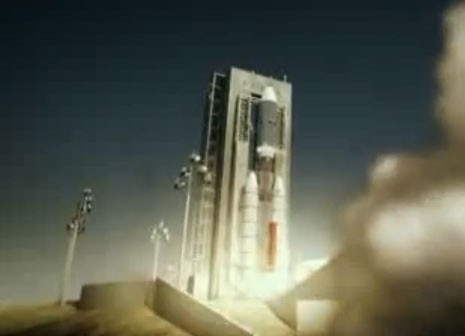

Five hours to go...
Five hours before lift-off, the ground crew have filled the first and second stages with liquid hydrogen and liquid oxygen fuel, as well as the solid-fuel rocket boosters. Engineers make the site ready for launch and personnel are evacuated from the area. The astronaut crew enters the spacecraft three hours before lift-off. Mission Control have been monitoring reports from the spacecraft itself, the tracking stations that will follow its ascent and weather satellites. When everything is satisfactory, the final stage of countdown begins.
Three minutes to go...
With three minutes to go, the ignition sequence is started. The flame trenches in the pad directly beneath the rocket engines are flooded with water both to cool the ground and to reduce noise; excessive vibrations can damage the spacecraft. Now the onboard computers are authorized to take over. The solid-fuel rocket engine is ignited. There are just a few seconds to go: "Ten, nine, eight..."
Lift-off!
Just before lift-off, the tower that has been supporting the rocket on the launch pad is detached from the rocket. Now the rocket’s engines fire, hot gases blast out, and the launch vehicle is propelled upwards. “We have lift-off!”
It begins by flying straight up, as it gains both speed and altitude (height above ground). Soon, the rocket engines are rotated slightly so that the spacecraft starts to lean. This is called a pitchover manoeuvre.


After lift-off
Two minutes later, the solid fuel is already used up and the first stage is jettisoned. It is re-usable, so parachutes open to slow its descent to the ocean (1) where it is later recovered. Now the liquid-fuelled second stage engine is ignited (2). About 30 seconds later, spring-operated latches open and the launch abort system is jettisoned (3).
Five minutes 30 seconds after lift-off, the second stage engine cuts off, and the spacecraft enters an initial entry orbit. About 45 minutes later, there is a second burn of the engines, after which the command module separates, leaving the second stage to burn up in the atmosphere.

Mission Control
A space mission such as the Apollo missions or any future mission to Mars is managed from lift-off to Earth landing by a Mission Control, a team of people based in a control room on Earth. The staff of Mission Control maintain contact with the crew at all times, providing advice and instructions and checking on their well-being. They monitor the computers that handle all the key manoeuvres, including landing, take-off, docking and separation.

Consultant: Chris Oxlade
pics
Without in any way limiting Q-files Ltd’s exclusive rights under copyright, any use of this publication to “train” generative artificial intelligence (AI) technologies to generate text is expressly prohibited. Q-files Ltd reserves all rights to license use of this work for generative AI training and development of machine learning language models.