
Space transport

CITE
We have made every effort to follow citation style rules, but there may be some minor differences. If in doubt, please refer to the appropriate citation style manual.
Rocket engines. (2026). In Q-files Encyclopedia, Technology, Space transport. Retrieved from
https://www.q-files.com/technology/space-transport/rocket-engines
"Rocket engines." Technology, Space transport, Q-files Encyclopedia, 13 Mar. 2026.
https://www.q-files.com/technology/space-transport/rocket-engines.
Accessed 22 Sep. 2026.
Rocket engines 2026. Technology, Space transport. Retrieved 22 September 2026, from
https://www.q-files.com/technology/space-transport/rocket-engines
Technology, Space transport, s.v. "Rocket engines," accessed September 22, 2026.
https://www.q-files.com/technology/space-transport/rocket-engines


Rocket engines
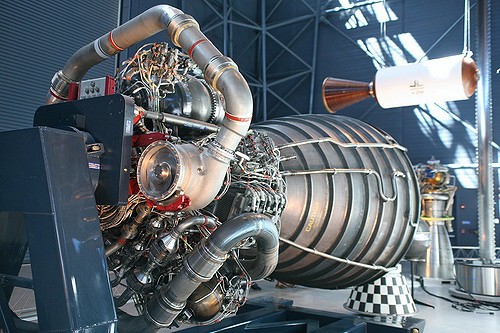
Although space starts just 100 kilometres (about 60 miles) above the Earth’s surface, it is very difficult to get there. Aeroplanes cannot reach space because the air gets thinner and thinner with altitude. Their wings begin to lose lift and their jet engines stop working through lack of oxygen. So spacecraft need rocket engines which work in space where there is no air: a vacuum. In a rocket engine, two different fuels mix and react together inside a combustion chamber. Hot gases are created, and they rush out of a nozzle at high speed. The engine, and the spacecraft, are pushed in the opposite direction.
Launch vehicles
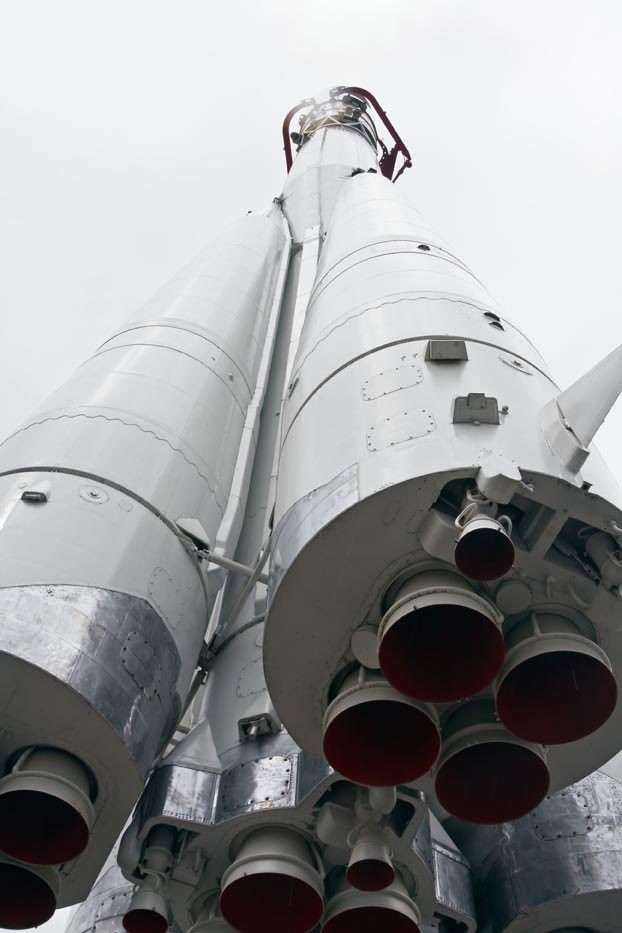
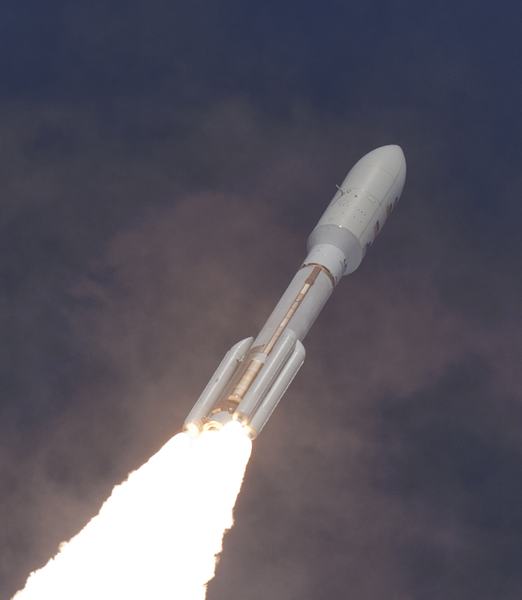
A rocket used to power a spacecraft beyond Earth's atmosphere and into orbit or from there into outer space, is known as a launch vehicle. These spacecraft usually carry a payload, for example, a satellite, a space probe or a crew of astronauts. A satellite launched into orbit, particularly Low Earth orbit, needs to be accelerated to a very high velocity. This is to ensure that, on release, the satellite will remain in orbit and not fall back to Earth. Launch vehicles are therefore fitted with powerful rocket engines that require a huge amount of fuel. They are frequently made up of more than one stage and may also carry solid fuel boosters.
Escape velocity
To travel out of Earth's gravity (as when travelling to the Moon or other planets), a launch vehicle must overcome its pull. To do this, it needs to reach a speed of at least 40,000 km/h (25,000 mph)—10 times the speed of a rifle bullet. This is called the escape velocity. Aeroplanes cannot achieve these speeds because their jet engines need oxygen to work, and there is no air in space. Only rockets can provide the necessary thrust. Once in space, the craft’s engines can be turned off. It maintains its speed because there is no air to slow it down.
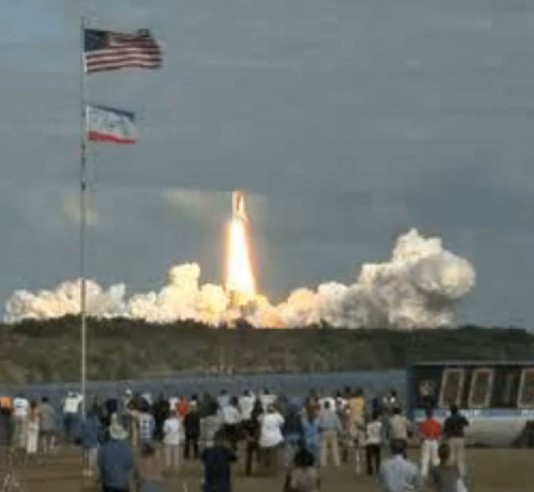
It is not practical for most launch vehicles to achieve those speeds. Normally, a spacecraft is first launched into what is called Low Earth orbit (160–2000 kilometres or 100–1200 miles above the Earth). It is then accelerated to the escape velocity from that altitude. The thrust needed is far less than at the Earth's surface.
How a rocket
engine works
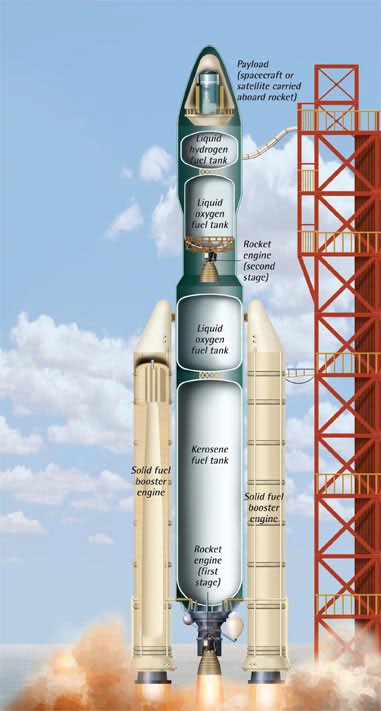
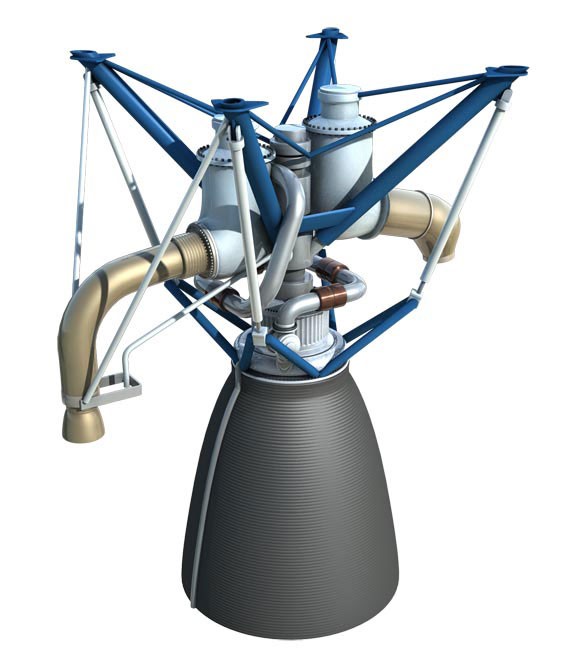
In a rocket engine, two different fuels (for example kerosene and liquid oxygen, or liquid hydrogen and oxygen) mix and react together inside a combustion chamber when ignited, creating hot gases that rush out of a nozzle at great speed, causing the spacecraft to travel in the opposite direction.
Rockets for launch vehicles usually consist of several stages (they are known as multi-stage rockets). When the fuel in one stage is burnt up, that stage is jettisoned (cast off) and the engines of the next stage fire. The rocket becomes lighter each time a stage is lost, allowing it to accelerate.
To give a spacecraft extra thrust at lift-off, solid fuel boosters fire as well as the first stage engine. After the boosters and the first stage are jettisoned, the second stage engine, fuelled by liquid hydrogen and oxygen, fires.
Uses for rockets
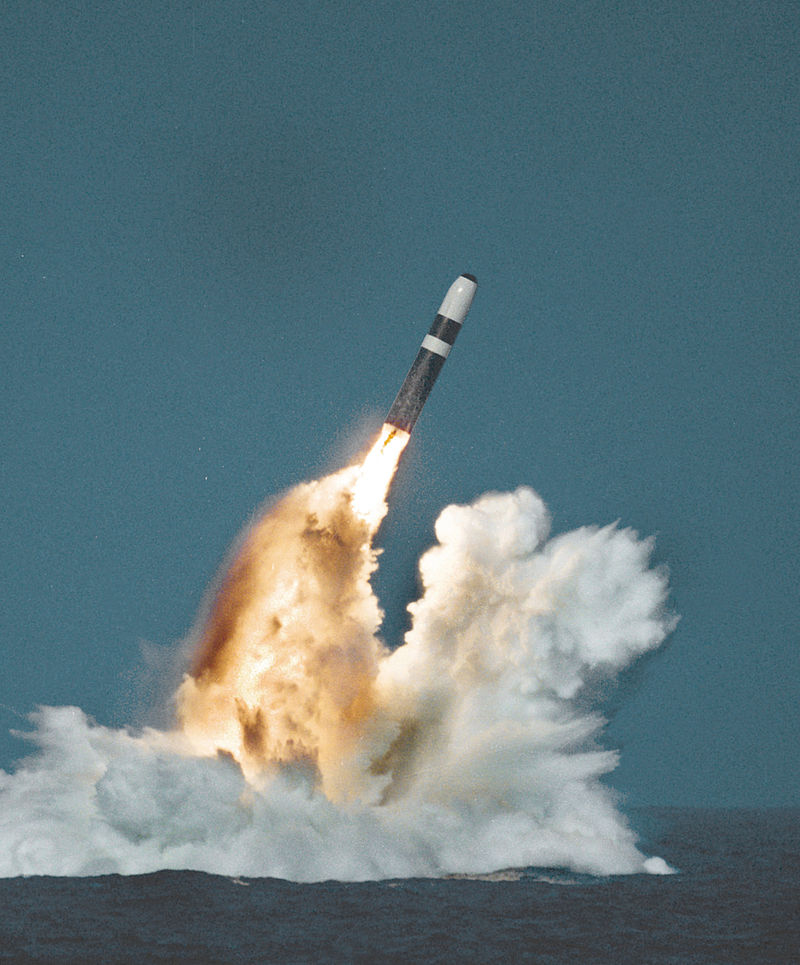
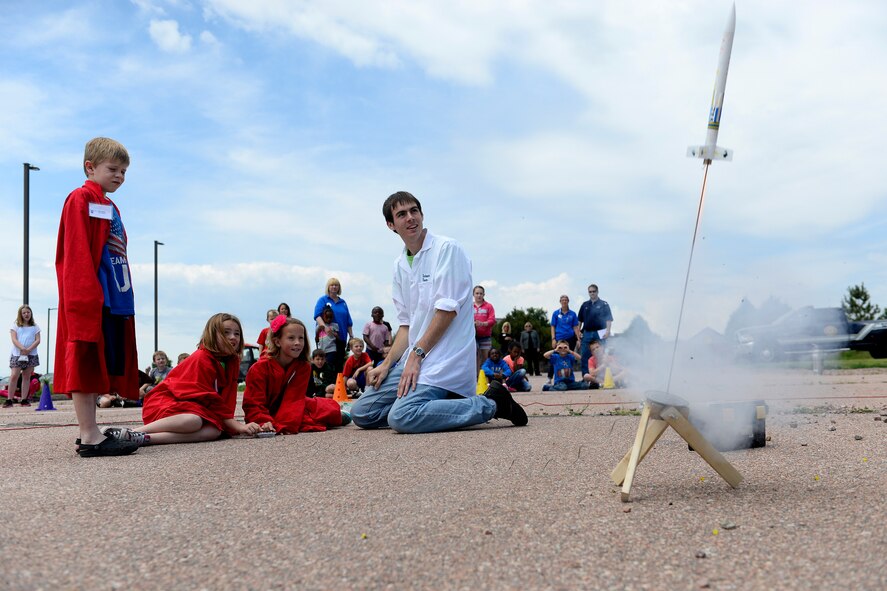
Rocket engines have a number of uses besides powering spacecraft. Some weapons use rockets to propel warheads towards their targets. A rocket and warhead combined and fitted with a guidance system is called a missile (some missiles use jet engines). Rocket engines have been used in road vehicles specially designed to set land speed records. They are also fitted to certain aircraft intended to fly at high speeds or at very high altitudes in the atmosphere, where there is insufficient oxygen for a jet engine to work. Much smaller rocket engines are used in model rockets, designed to reach low altitudes, say 500 metres (1600 feet), and in some fireworks.
Rockets in history
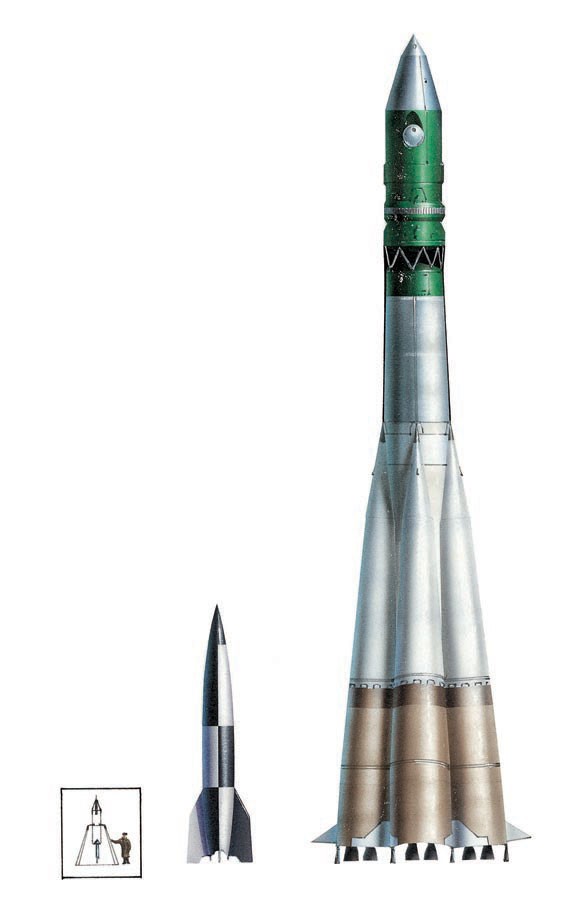
The first rockets, built by US inventor Robert Goddard in 1926, were only one metre (just over 3 feet) tall. The German V2 rocket missile, designed by Werner von Braun in 1942, was the first rocket capable of reaching space. It was 14 metres tall and had a range of 320 kilometres (200 miles). The Vostok rocket which put the first satellite, Sputnik 1, into orbit in 1957 was 35 metres (115 feet) high. Saturn V, which carried the Apollo astronauts into space, was more than three times as tall: 111 metres (364 feet).
Consultant: Chris Oxlade
pics
Without in any way limiting Q-files Ltd’s exclusive rights under copyright, any use of this publication to “train” generative artificial intelligence (AI) technologies to generate text is expressly prohibited. Q-files Ltd reserves all rights to license use of this work for generative AI training and development of machine learning language models.