
Road transport

CITE
We have made every effort to follow citation style rules, but there may be some minor differences. If in doubt, please refer to the appropriate citation style manual.
Land speed record. (2026). In Q-files Encyclopedia, Technology, Road transport. Retrieved from
https://www.q-files.com/technology/road-transport/land-speed-record
"Land speed record." Technology, Road transport, Q-files Encyclopedia, 13 Mar. 2026.
https://www.q-files.com/technology/road-transport/land-speed-record.
Accessed 6 Nov. 2026.
Land speed record 2026. Technology, Road transport. Retrieved 6 November 2026, from
https://www.q-files.com/technology/road-transport/land-speed-record
Technology, Road transport, s.v. "Land speed record," accessed November 6, 2026.
https://www.q-files.com/technology/road-transport/land-speed-record


Land speed record
Only a few years after the motor car was invented, people wanted to drive them as fast as possible. The land speed racers of the early 1900s were the fastest vehicles on Earth—faster even than the primitive aircraft that were taking to the skies at the time. Racing at speeds that we would consider even today as fast (more than 100 km/h) on bumpy road surfaces, many of the drivers risked their lives to achieve their goal: the land speed record-holder.

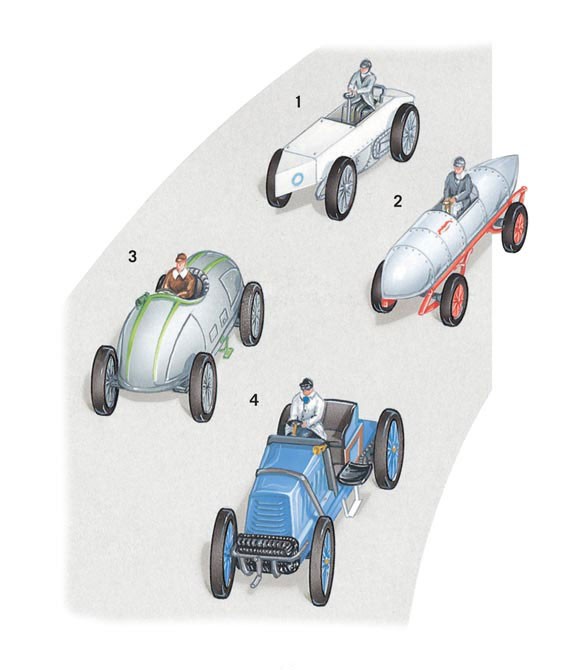
First record-holders
The first world land speed record was set at Achères near Paris in 1898, just 13 years after the motor car had been invented. Frenchman Count Gaston de Chasseloup-Laubat drove an electric car, the Jeantaud Duc, at a speed of 63.1 km/h (39.2 mph). Medical experts at the time declared it would be impossible to breathe at these speeds, and that the driver’s heart would surely stop. Chasseloup-Laubat improved on his own record a year later, taking it up to 93.7 km/h (58.2 mph). In the same year, Camille Jenatzy became the first motorist to exceed 100 km/h. His bullet-shaped electric car, called La Jamais Contente ("never-satisfied") held the record for three years. A spectator described the car as moving “with a subdued noise like the rustling of wings, scarcely seeming to touch the ground”.
Petrol engines
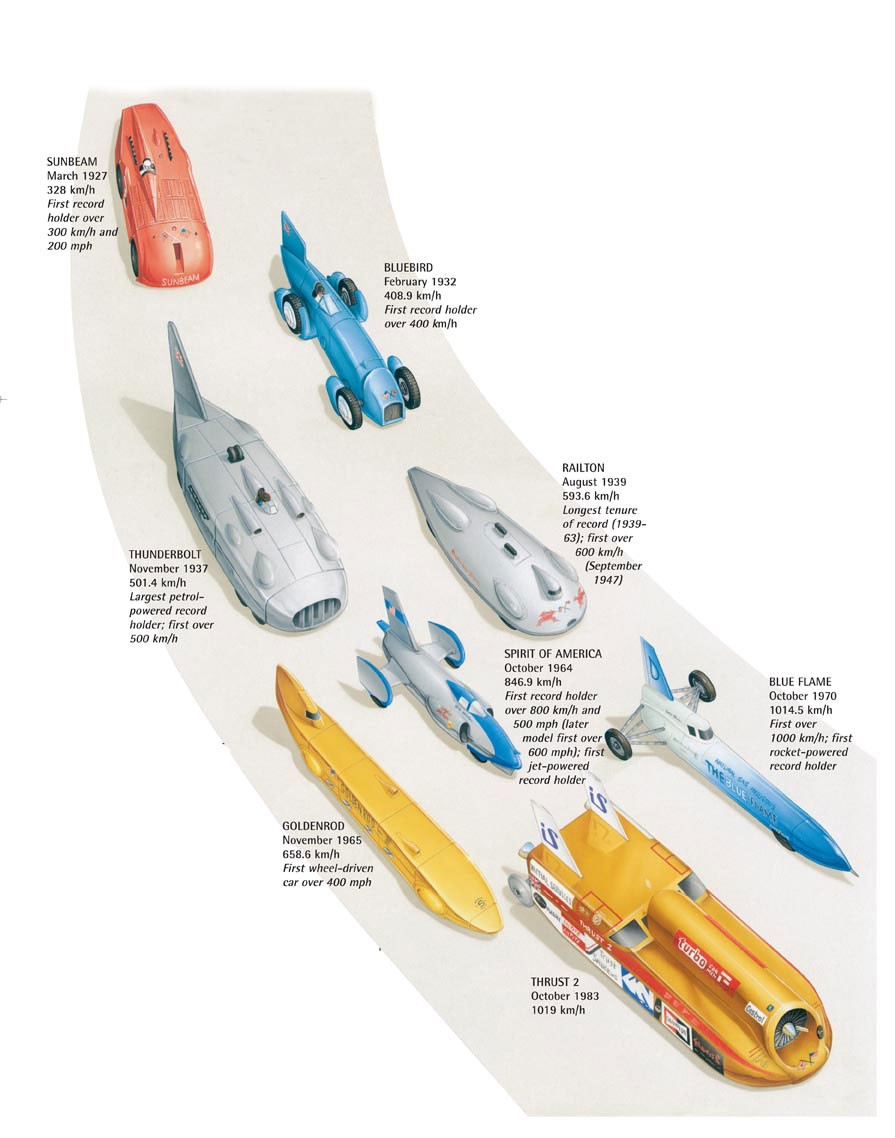
Steam-powered cars were among the early land speed record-holders. One reached a speed of 120 km/h (74.5 mph) in 1902 but they were soon to gave way to faster petrol-engined cars. The Mors, the first of the breed, broke the record in 1902. In 1927, the 300 km/h barrier was breached by the first car specially built for the record attempt, the Sunbeam. This streamlined vehicle, driven by Englishman Henry Segrave, was powered by two aircraft engines. The record was then pushed steadily higher by a series of cars with more and more powerful engines. The largest of these, the Thunderbolt, reached 555 km/h (344.7 mph) in 1939.
Jet and rocket power
In 1964, however, the petrol engine faced a new type of competition. Jet- and rocket-powered cars were allowed to enter the speed contest for the first time. A jet-engined car, the Spirit of America, soon took the record to over 800 km/h (500 mph) in that year. The first rocket-powered car, Blue Flame, driven by American Gary Gabelich shot past 1000 km/h (620 mph) in 1970.
Current record-holder
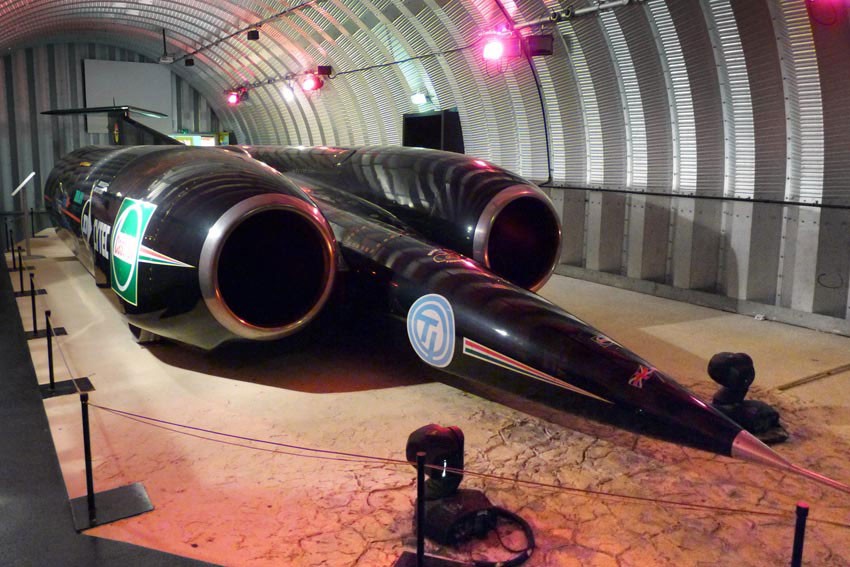
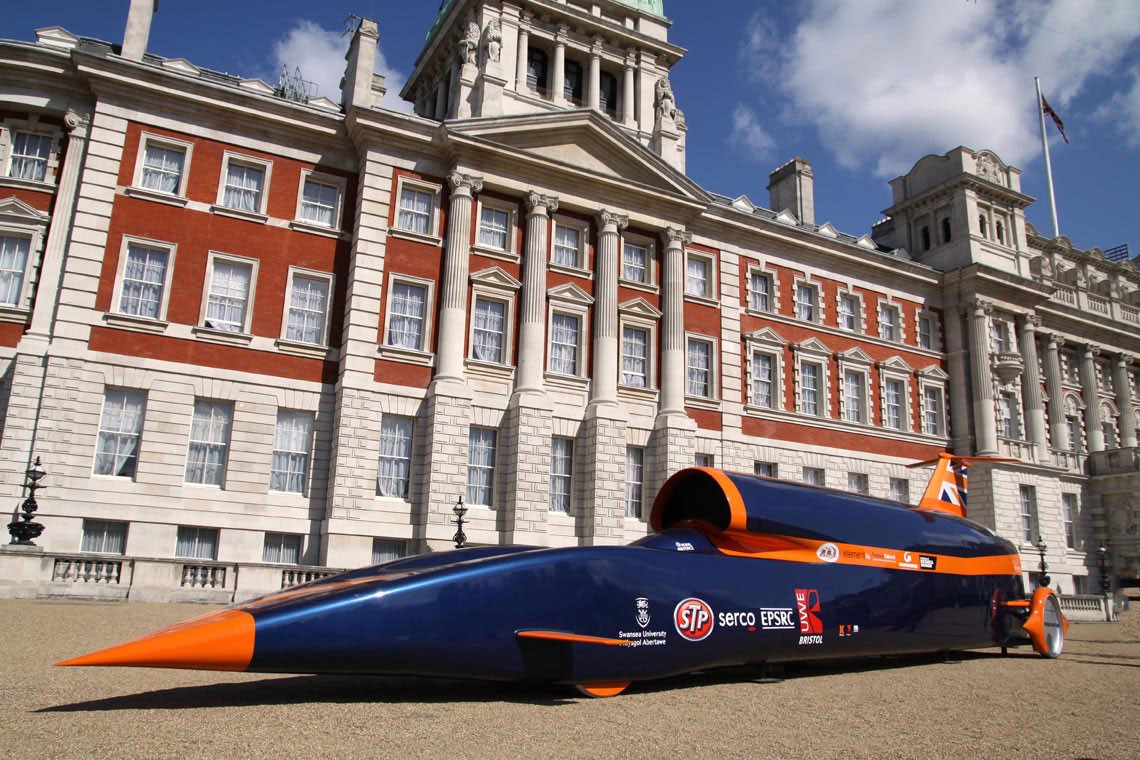
On 15th October 1997 a British team headed by Richard Noble once again broke the world land speed record. Driven by fighter pilot Andy Green, ThrustSSC (SuperSonic Car) was measured at a speed of 1227.723 km/h (about 763 mph). This meant that ThrustSSC was the first ever land vehicle officially to travel faster than the speed of sound. Although its two huge turbofan jet engines gave ThrustSSC the power of 145 Formula 1 racing cars, its progress was silent: the car was travelling faster than the sound of its engines.
Dragsters
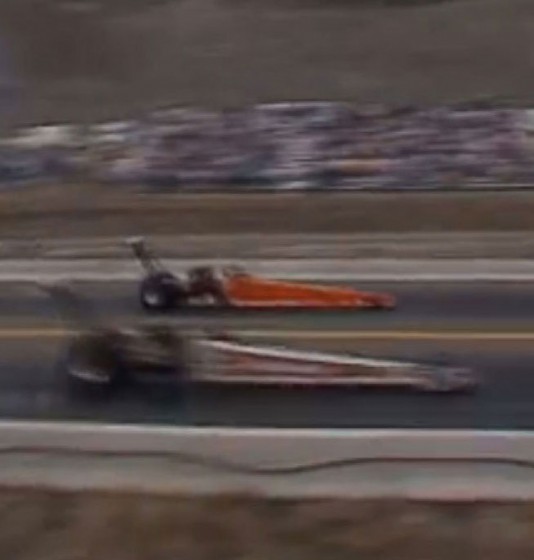
The top racing cars today reach speeds of up to 360 km/h (225 mph), but the fastest racers are probably the dragsters. Most drag races begin with a standing start and are just 400 metres (1300 feet) long. Races last only a few seconds, with finishing speeds sometimes exceeding 530 km/h (330 mph). Some kinds of dragsters are said to be the fastest accelerating vehicles in the world: they can go from 0 to 500 km/h (0–300 mph) in under 5 seconds—faster even than a spacecraft at launch or a catapult-assisted jet fighter. The high wing on these dragsters is to improve traction (their grip on the road) at high speed. The faster vehicles need a parachute to bring them to a stop.
Consultant: Chris Oxlade
pics

Without in any way limiting Q-files Ltd’s exclusive rights under copyright, any use of this publication to “train” generative artificial intelligence (AI) technologies to generate text is expressly prohibited. Q-files Ltd reserves all rights to license use of this work for generative AI training and development of machine learning language models.