
Road transport

CITE
We have made every effort to follow citation style rules, but there may be some minor differences. If in doubt, please refer to the appropriate citation style manual.
Fire engines and firefighters. (2026). In Q-files Encyclopedia, Technology, Road transport. Retrieved from
https://www.q-files.com/technology/road-transport/fire-engines-and-firefighters
"Fire engines and firefighters." Technology, Road transport, Q-files Encyclopedia, 13 Mar. 2026.
https://www.q-files.com/technology/road-transport/fire-engines-and-firefighters.
Accessed 6 Aug. 2026.
Fire engines and firefighters 2026. Technology, Road transport. Retrieved 6 August 2026, from
https://www.q-files.com/technology/road-transport/fire-engines-and-firefighters
Technology, Road transport, s.v. "Fire engines and firefighters," accessed August 6, 2026.
https://www.q-files.com/technology/road-transport/fire-engines-and-firefighters


Fire engines and firefighters
Firefighting is the job of extinguishing (putting out) fires. People who fight fires are called firefighters. The first thing firefighters do is to look for the origin of the fire (where the fire is coming from). They also search for trapped people and any damage to the building’s structure that could cause a collapse. A fire engine is a vehicle designed for firefighting operations. It transports firefighters to the scene, provides some water and carries equipment such as ladders, breathing apparatus, first aid kits and rescue tools.
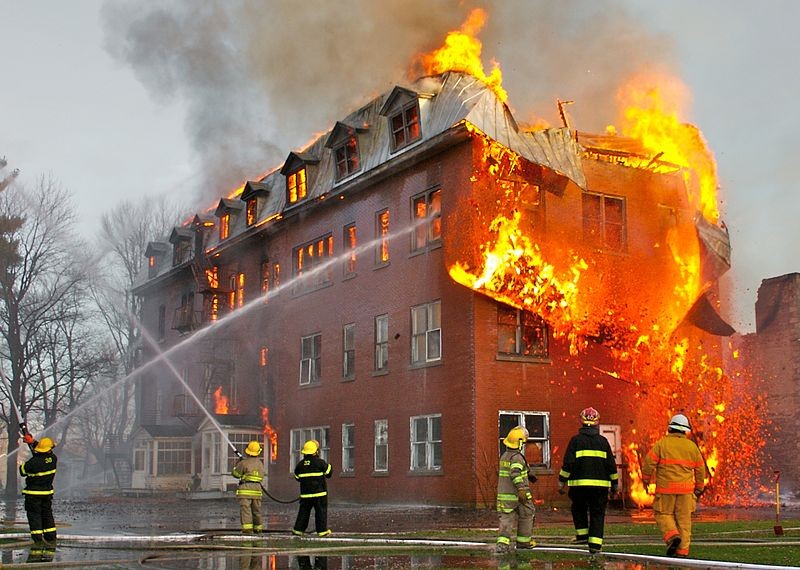

Firefighting with water
For a fire to burn, it needs to have heat, oxygen and fuel. In order to extinguish a fire, at least one of these needs to be taken away. One of the most common methods of firefighting is to spray the fire with water. The heat of the fire causes the water to heat up very quickly and turn to steam. This reaction uses a lot of energy, and it sucks away the heat (a form of energy) of the fire. The fire is left without enough energy to continue burning.
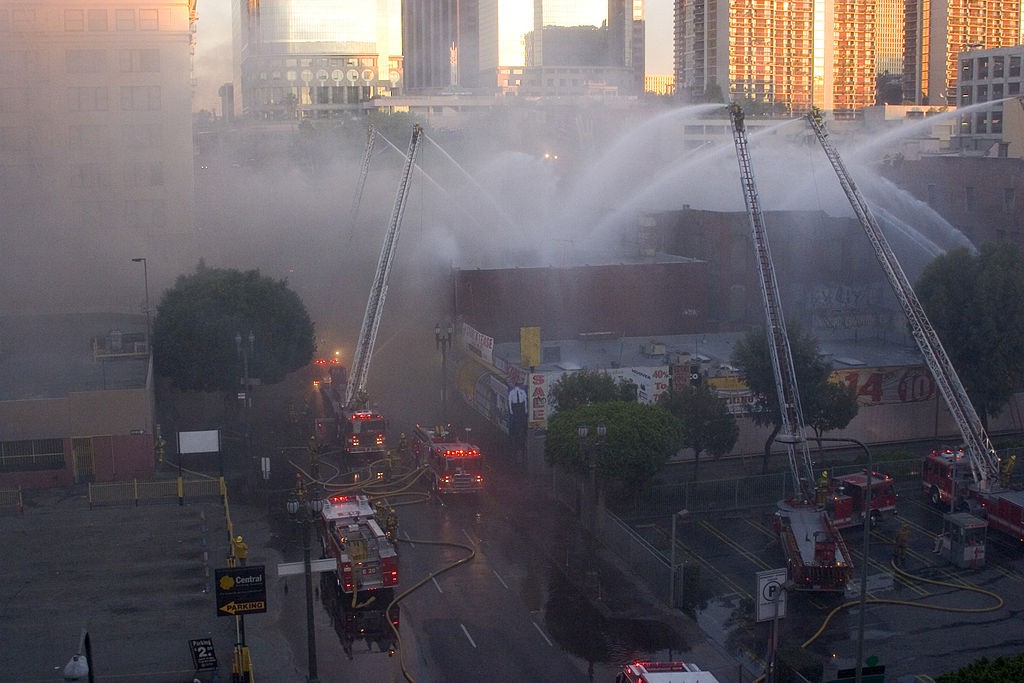
Fire crews fighting a fire need a lot of water very quickly. As well as the supply they carry with them in their fire rescue vehicles, they can tap into a water supply by connecting their hoses to fire hydrants, large, tap-like pillars in the streets. In the countryside, they can sometimes pump water from lakes or rivers to spray on the fire.
Other methods
In some cases, it is too dangerous to use water. When the fire has been started by burning chemicals, such as in a petrol station, water can spread the fire even further. This is because some chemicals, such as petrol and oil, float on the top of water. Water also cannot be sprayed on to electrical fires because water conducts electricity, putting people at risk of electrocution.

For these types of fires, fire crews spray a thick layer of fire-retardant foam on to the burning electrics or chemicals. This both cools the fire and cuts off the air to it, Without any fuel, the fire is extinguished.

Hazards
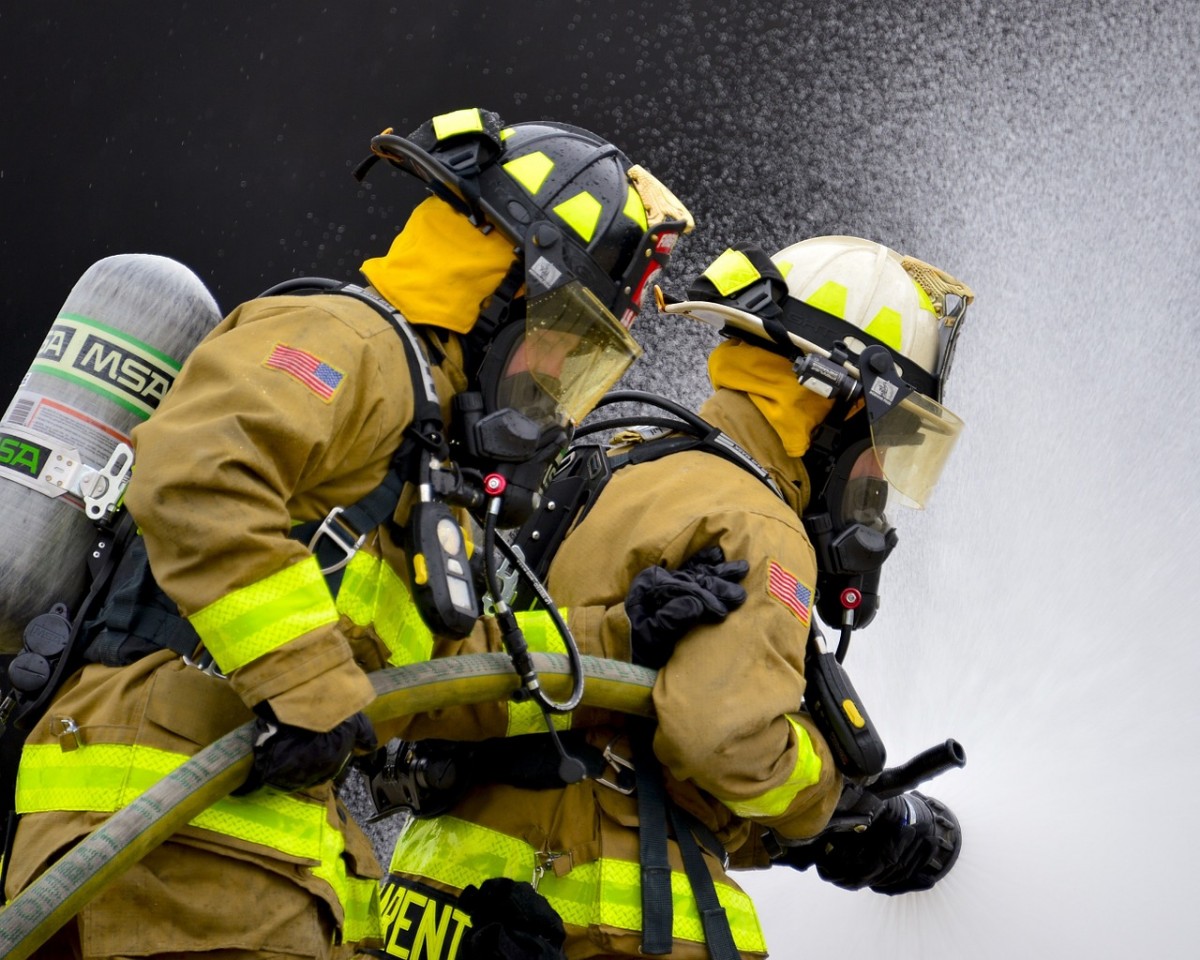
As fires burn, they give out smoke and toxic gases, creating a dangerous environment. To protect themselves from the intense heat, firefighters wear fire-resistant clothing. Coated with galvanized nickel, their helmets protect the wearers from falling objects and hot flames.
Smoke is one of the biggest hazards of firefighting. As well as making it difficult to breathe and see clearly, smoke can become very hot and help to spread the fire. It can even cause burns. In a smoke-filled room, there is less oxygen in the air than normal, so firefighters have to wear a breathing apparatus—a tank filled with compressed air with a breathing tube connected to the firefighter’s face mask.
Fire engines
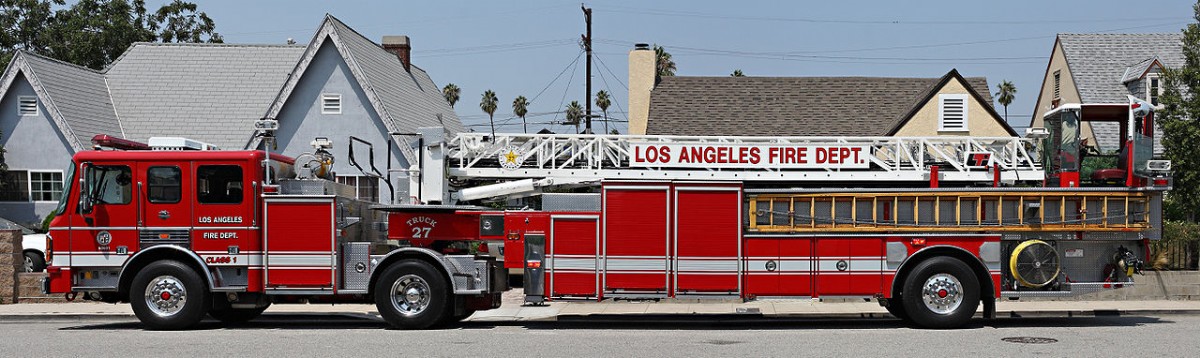
Fire engines (or fire trucks) are vehicles used to transport firefighters and their equipment to the scene of a fire. This equipment usually includes ladders, breathing equipment, floodlights and rescue tools such as cutters. Most fire engines have an onboard water supply with hoses attached, which allows firefighters to start putting out a fire as soon as they arrive on the scene.
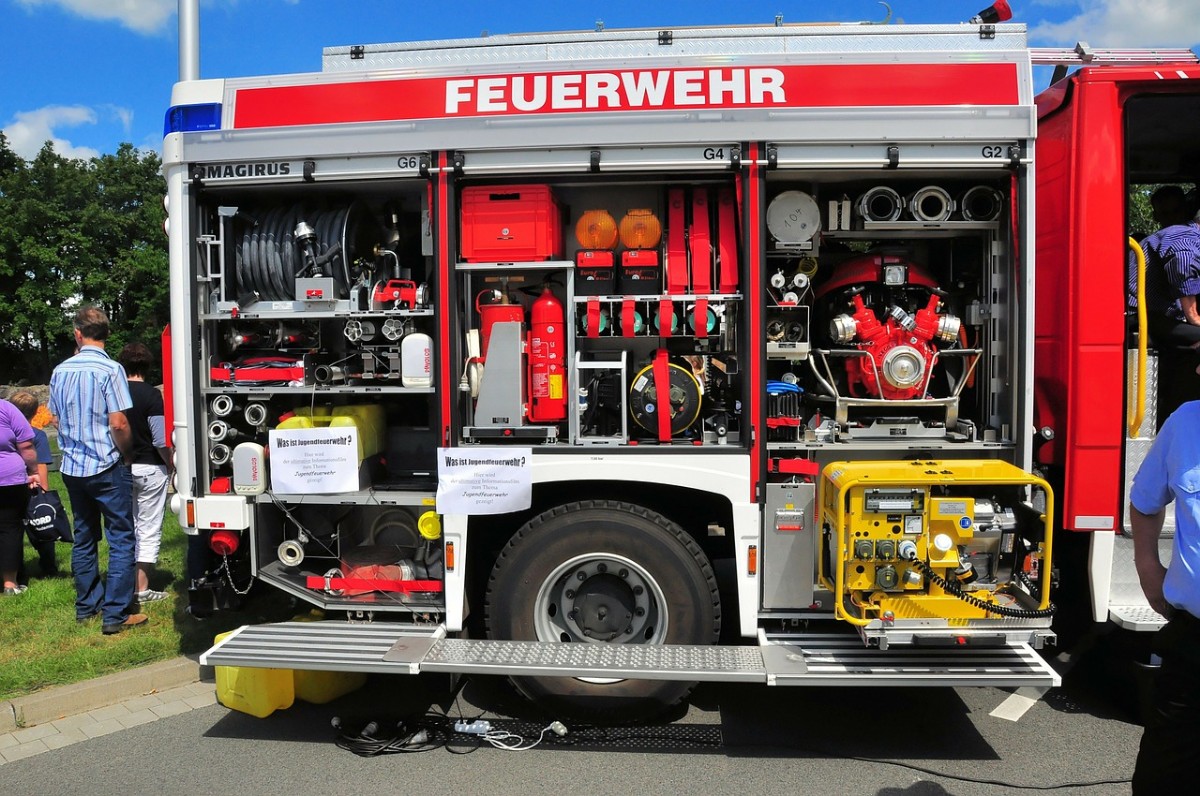
In some countries, such as the USA and Australia, they are supported by another type of fire engine: a water tender, which carries a greater supply of water on board. Water tenders also have the equipment to pump water from fire hydrants, rivers or lakes.
Wildfires
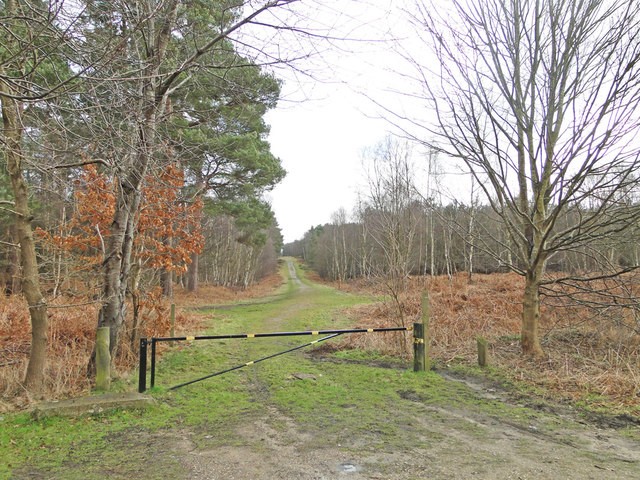
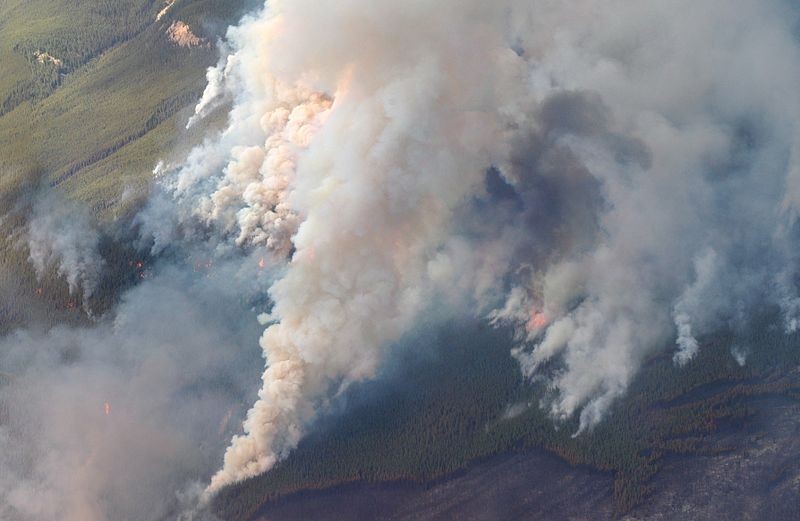
Wildfires, or forest fires, break out in the open and can destroy everything in their path. Some fires begin naturally and burn out by themselves; others are started by humans—often by accident—and need to be brought quickly under control to stop them causing damage both to property and to natural environments.
Firebreaks, a clearance in the vegetation cover, slow down the spread of wildfires because when the fire reaches the firebreak, it has no fuel to burn. Large areas of forest usually have a network of firebreaks, so that if the forest catches fire, only a small part of it will be destroyed.
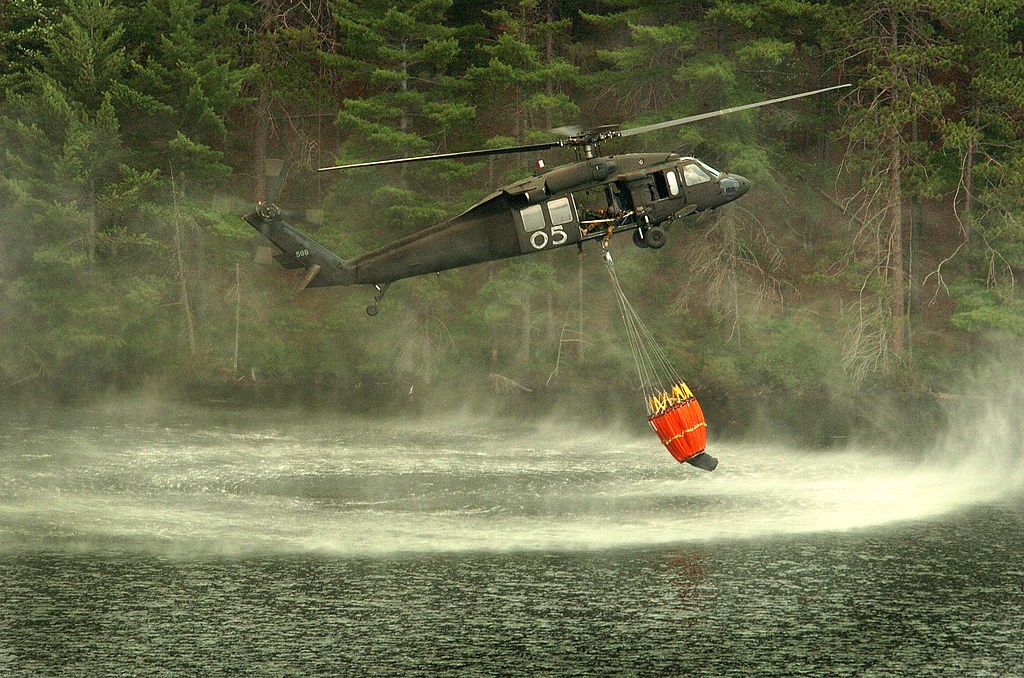
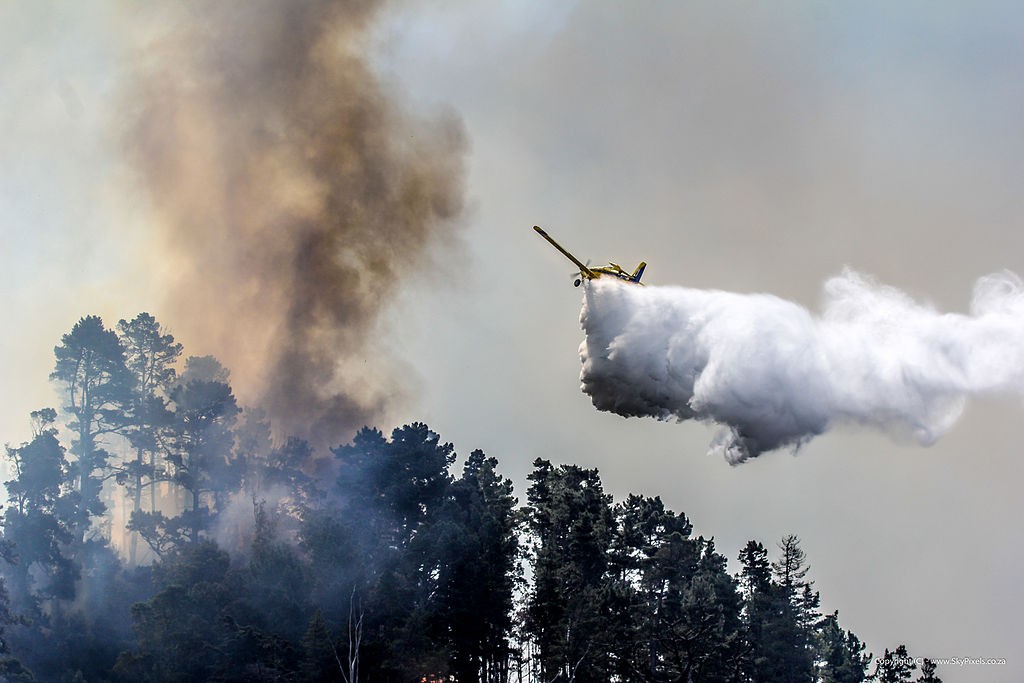
Wildfires may be difficult to reach by road, so one of the best ways of extinguishing them is from the air. Small firefighting helicopters carry buckets, which they fill by dipping them in lakes or rivers, and empty over the fire. Larger helicopters, called helitankers, or aeroplanes, have large tanks underneath them which can be filled with water from lakes using a water pump. They fly over the fire, spraying it with large quantities of water.
Firefighting in the past
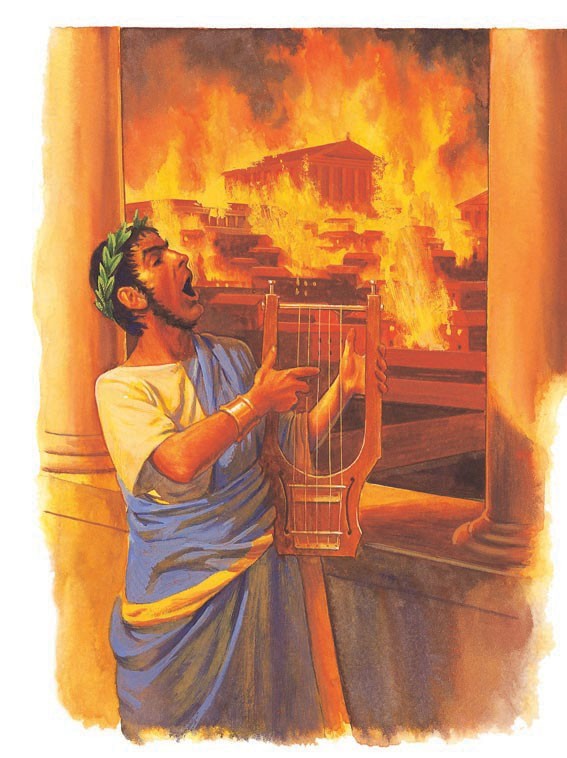
The earliest fire brigades were formed in 2000 years ago in Rome. Specially-appointed watchmen, known as the Vigiles Urbani, patrolled the streets, looking out for the early signs of a fire. To extinguish one, they formed human chains, passing buckets of water from person to person to pour on the flames. They also used axes to pull down the walls of burning buildings so that the fire could not spread from one to another.
For hundreds of years, firefighting methods remained much the same. Early firefighters’ helmets were made of leather, a naturally fire-resistant material.
Great Fire of London
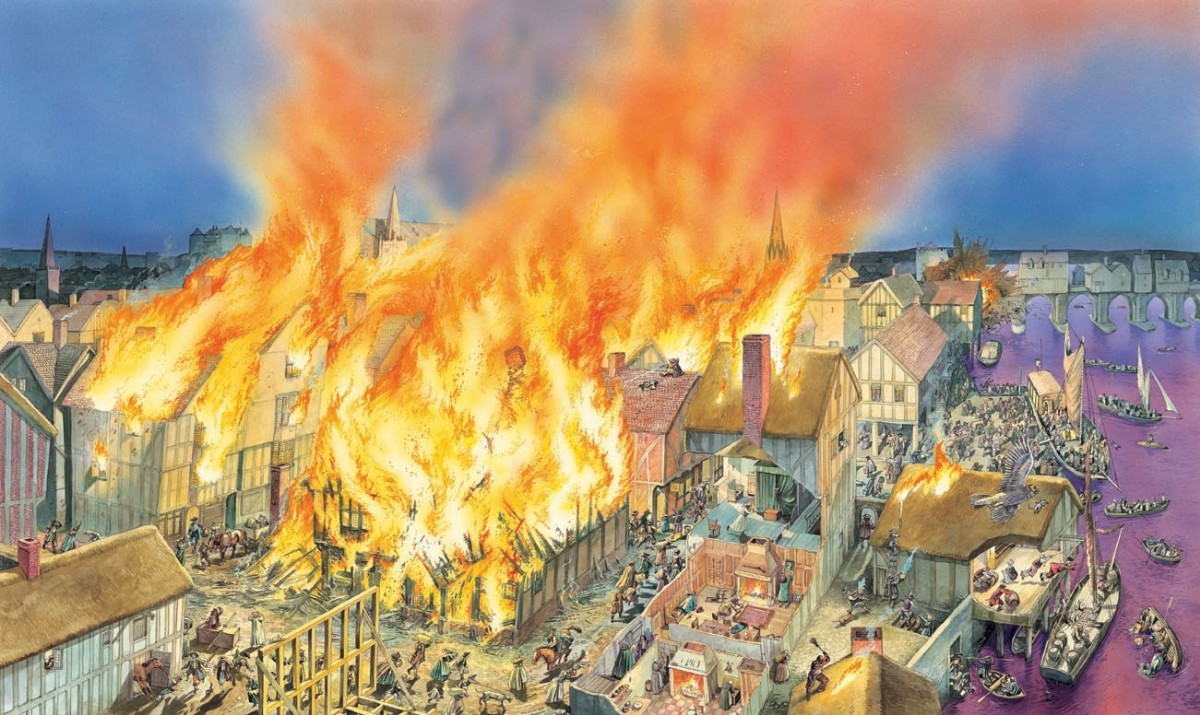
On 2nd September 1666 a fire began in a bakery in Pudding Lane, London. Fanned by a breeze, the fire quickly spread to nearby buildings. The Great Fire of London, as it became known, raged for four days until it finally burnt itself out. Attempts to fight it were futile. There were neither water pumps nor hoses—only buckets or squirting devices.
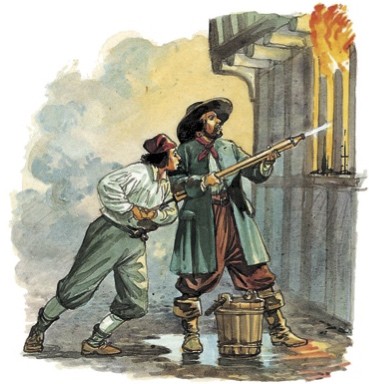
Fire squirts worked like large syringes. The nozzle was dipped into a bucket of water and the rod pulled out, sucking the water up. By pushing the rod back in, water could be squirted out on to the fire. But fire squirts were slow to operate and contained only a few litres of water.
The only effective way was to stop the fire spreading rather than put it out. Firebreaks were created by blowing up buildings ahead of the fire’s path using gunpowder, preventing the fire from spreading from house to house. Despite attempts to save them, more than 13,000 buildings burned down, including St Paul's Cathedral. Around 70,000 of London’s 80,000 citizens had lost their homes in the blaze. After the Great Fire, the first organized fire brigades were set up in Britain.
First fire engines
In 1672, a Dutch inventor, Jan Van der Heyden, invented the leather fire hose. In 1690 another Dutch inventor, John Lofting, developed his ideas to create a fire engine; he called it the “Sucking Worm Engine”. These earliest engines were hand powered. The water was supplied by people carrying buckets filling a tub from which an intake pipe lead to the pump.
By the early 19th century, steam fire engines appeared on the streets. Horses were used to pull the heavy equipment. In 1871, a British physicist, John Tyndall, invented a breathing mask for firefighters; it used a cotton filter to make the smoky air safer to breathe. By 1925, most steam fire engines had been replaced by motorized ones.

Consultant: Mike Goldsmith
pics
Without in any way limiting Q-files Ltd’s exclusive rights under copyright, any use of this publication to “train” generative artificial intelligence (AI) technologies to generate text is expressly prohibited. Q-files Ltd reserves all rights to license use of this work for generative AI training and development of machine learning language models.