
Environment

CITE
We have made every effort to follow citation style rules, but there may be some minor differences. If in doubt, please refer to the appropriate citation style manual.
Wildfires. (2026). In Q-files Encyclopedia, Geography, Environment. Retrieved from
https://www.q-files.com/geography/environment/wildfires
"Wildfires." Geography, Environment, Q-files Encyclopedia, 3 Jul. 2026.
https://www.q-files.com/geography/environment/wildfires.
Accessed 22 Sep. 2026.
Wildfires 2026. Geography, Environment. Retrieved 22 September 2026, from
https://www.q-files.com/geography/environment/wildfires
Geography, Environment, s.v. "Wildfires," accessed September 22, 2026.
https://www.q-files.com/geography/environment/wildfires


Wildfires
Wildfires (also called bushfires or forest fires), break out, often naturally, in grassland, scrubland, woodland and forests and can destroy everything in their path before dying down. Some fires escalate rapidly and need to be brought quickly under control to stop them causing damage both to property and to natural environments. Recent catastrophic wildfires in California and Australia have fuelled concerns that the climate emergency is leading to a dramatic increase in the extent and destructive power of the fires.
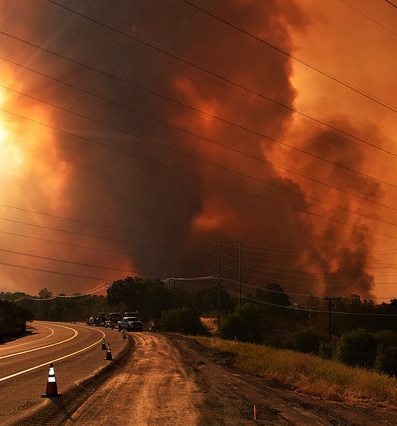


Ecosystem balance
Most areas of scrubland and some woodlands rely on occasional wildfires to keep the ecosystem in balance—stopping the vegetation growing too tall or dense. Fire helps to keep plants short and prevent shrubs from growing into spindly trees. It also provides ash to fertilize the soil. Scrubland plants can easily survive fire, re-growing from a deep underground stem even when the whole plant above ground has been destroyed. Some actually depend on fire as part of their life-cycle. Australian banksia plants, for example, are only able to shed their seeds when the pods are opened by the heat of a fire.
How do fires start?
Many fires begin naturally—most commonly set alight by lightning—and burn out by themselves. In woodland, the fires help clear the undergrowth and give the next generation of trees room to grow. Given dry conditions, favourable winds and the abundance of dead wood, fires can easily be ignited by people accidentally, from campfires, cigarettes and dropped matches. Sparks from overhead power lines are a common cause of wildfires.

How do fires spread?


The intensity and speed at which a wildfire spreads depends on the weather, the availability of fuel and the local topography. The larger the amount of fuel, such as fallen bark, leaf litter and small branches, the hotter and more intense the fire. Winds may blow the flames towards fresh fuel, provide a continuous supply of oxygen and ignite new fires by carrying burning embers through the air (called "spotting"). The higher the air temperature the more likely it is for a fire to start or continue to burn. Dry air makes a fire more intense than moist air. Fires accelerate when travelling uphill and decelerate travelling downhill. The steeper the slope, the faster the fire spreads.
Preventing wildfires
In regions vulnerable to wildfires, fire management, such as the carrying out controlled burnings to reduce the amount of fuel available when a wildfire breaks out, are practised. (Sometimes wildfires are caused by intentional fires flaring out of control.) Firebreaks, a clearance in the vegetation cover, slow down the spread of wildfires because when the fire reaches the firebreak, it has no fuel to burn. Large areas of forest usually have a network of firebreaks, so that if the forest catches fire, only a small part of it will be destroyed.


Fighting wildfires
Once a fire has taken hold, firefighters go into action. Wildfires may be difficult to reach by road, so one of the best ways of extinguishing them is from the air. Small firefighting helicopters carry buckets, which they fill by dipping them in lakes or rivers, and empty over the fire. Larger helicopters, called helitankers, or aeroplanes, have large tanks underneath them which can be filled with water from lakes using a water pump. They fly over the fire, spraying it with large quantities of water.

California
California is particularly vulnerable to wildfires because it has a dry, hot and windy climate and because it is a heavily forested state. The past five years in California have been the hottest on record: the state has recently experienced drought conditions lasting nearly six years, its second worst in history. This lack of rainfall along with diminishing groundwater increases the likelihood of tree death. Dead trees act as explosive fuel when wildfires start. There are millions of dead trees in California. Because of drought, rising temperatures and a growing epidemic of migrating bark beetles that prey on trees, nearly 129 million trees have died since 2010. Only 1.3 million of these trees have been removed: the rest litter the state's
forests with tinder.
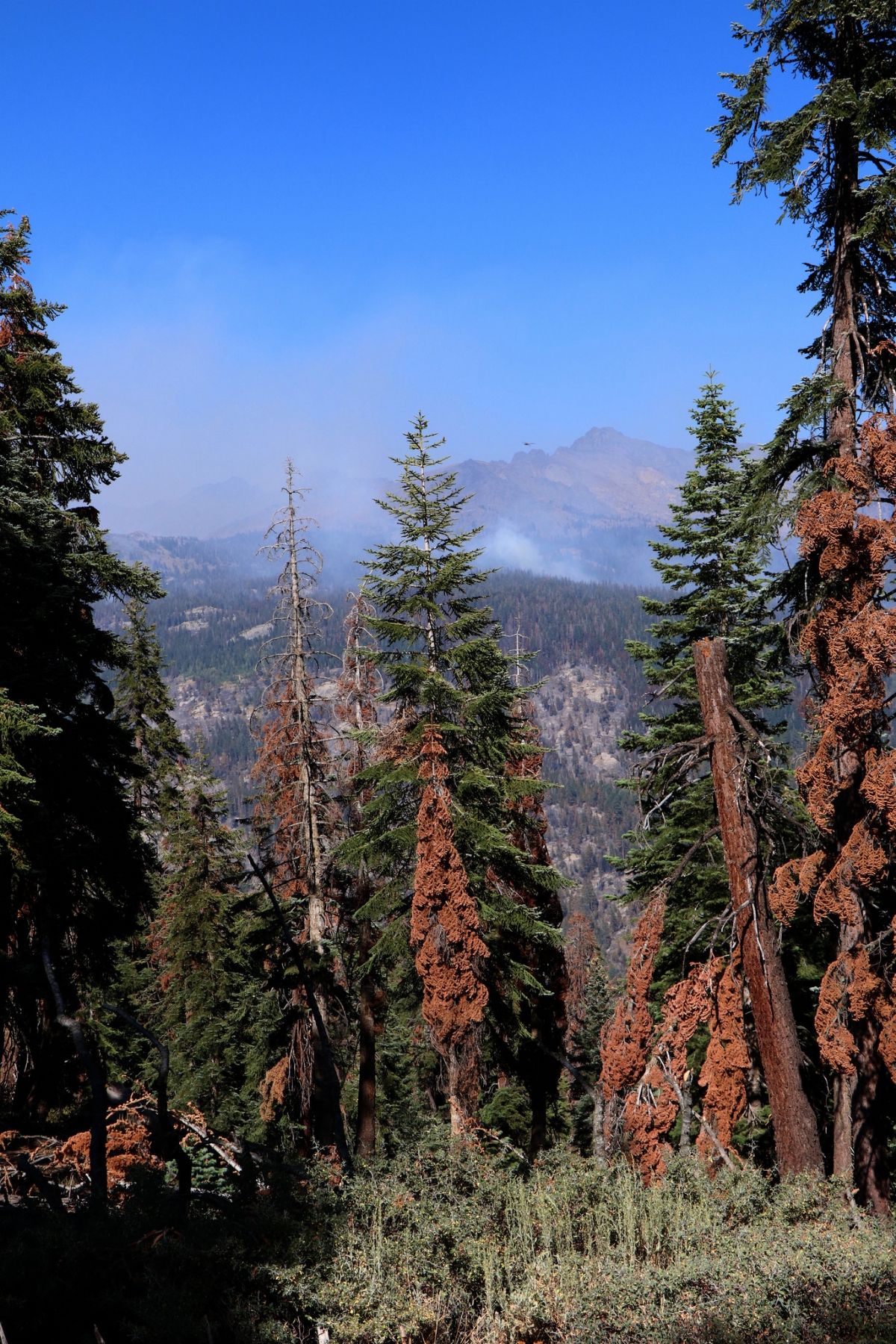

In September, winds bring hot, dry air westwards from the arid Great Basin region. They are known as the Diablo winds in northern California and the Santa Ana winds in the south. These winds tend to enlarge existing fires and spark new ones, driving a second fire season that last until rainstorms occur, usually in October and November. The wildfires that swept through Los Angeles in January 2025 were fanned by hurricane-force Santa Ana winds. They also carried burning embers to new areas, spreading the fires.

California’s population has been growing by more than 300,000 people a year since 2010, with many moving into new housing in or near forested areas where fires frequently break out. This increases the potential impact of wildfires on the local population.
During 2020, more than 9000 fires raged in California, burning more than 4 million acres (1.7 million hectares) of forest, an area equivalent to more than 4% of the state's total area. This made 2020 the largest wildfire season recorded in California's modern history. Many of California's fires were sparked by intense thunderstorms. The state normally experiences extensive wildfires each year between July and September as its forests dry out. But the extreme heatwave of summer 2020 made the trees more than usually tinder dry. Los Angeles County recently reached a record 121°F (49°C), while Death Valley recently hit a high of 130°F (54°C), the highest temperature ever reliably recorded on Earth.


Australia
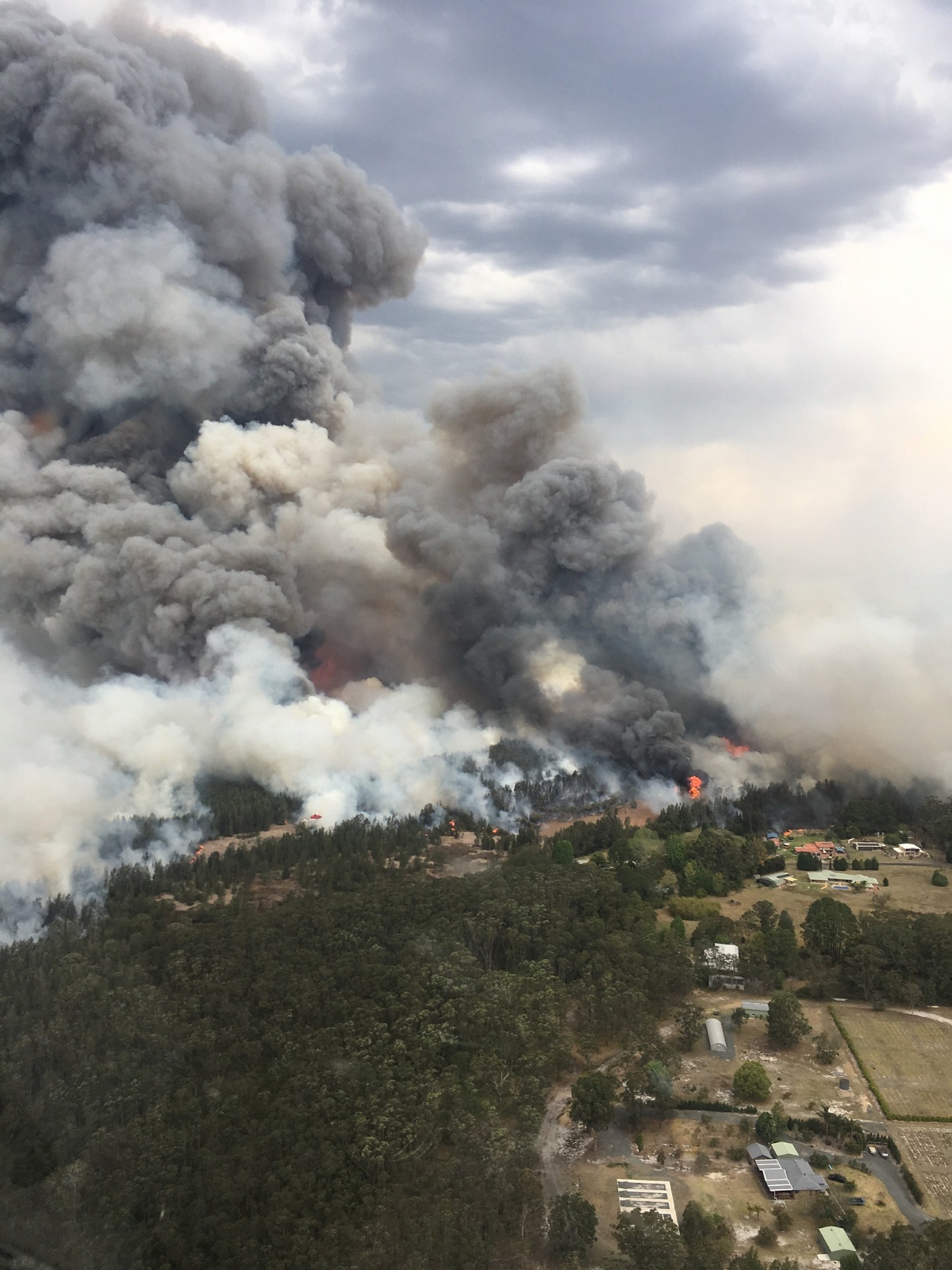
Bushfires (as wildfires are known in Australia) are common and widespread in Australia, where many parts have a climate that is hot, dry and prone to drought. While bushfires can cause damage to property and loss of life, they are also important for the local environment. Certain native plants, such as eucalypts, can easily survive bushfires, and even rely on them as a means of reproduction. For thousands of years indigenous Australian peoples used bushfires to clear forests and create grasslands for hunting. Today, it is common practice to use controlled fires to clear land for farming and protect properties from bushfires.
Bushfires tend to occur when eucalypt forests have dried out, usually following periods of low rainfall. The natural oil within eucalypt trees makes them burn easily. Most loss of life and damage to property occurs around the fringes of cities, where homes typically lie close to flammable vegetation.
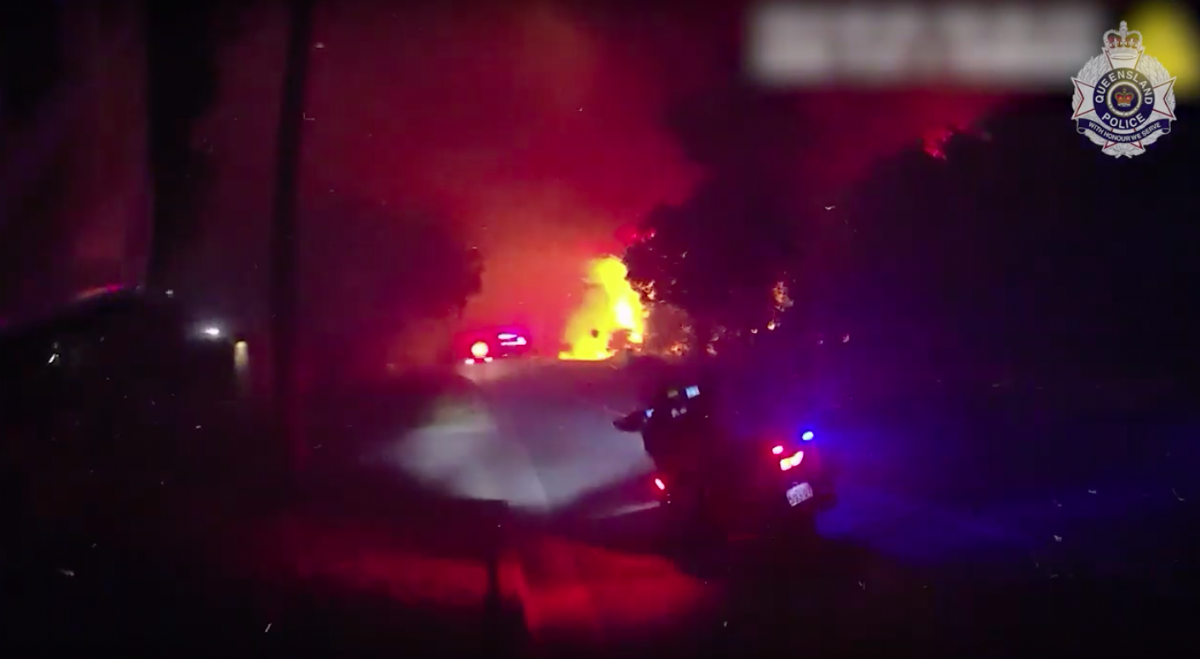
In the summer of 2019–20, scores of bushfires raged across Australia, particularly along the coasts of New South Wales (NSW), Queensland and Victoria. As a result of a combination of strong winds, low humidity and record high temperatures, fire danger warnings in several parts of NSW—including, for the first time ever, the greater Sydney area—reached the highest category: "catastrophic". At various times, a smoke haze blanketed Sydney. The blazes in NSW and Queensland had never before occurred on such a scale and so early in the bushfire season, making the 2019–20 season one of the worst in living memory. It came to be known as the Black Summer.

Effect on Australia's wildlife
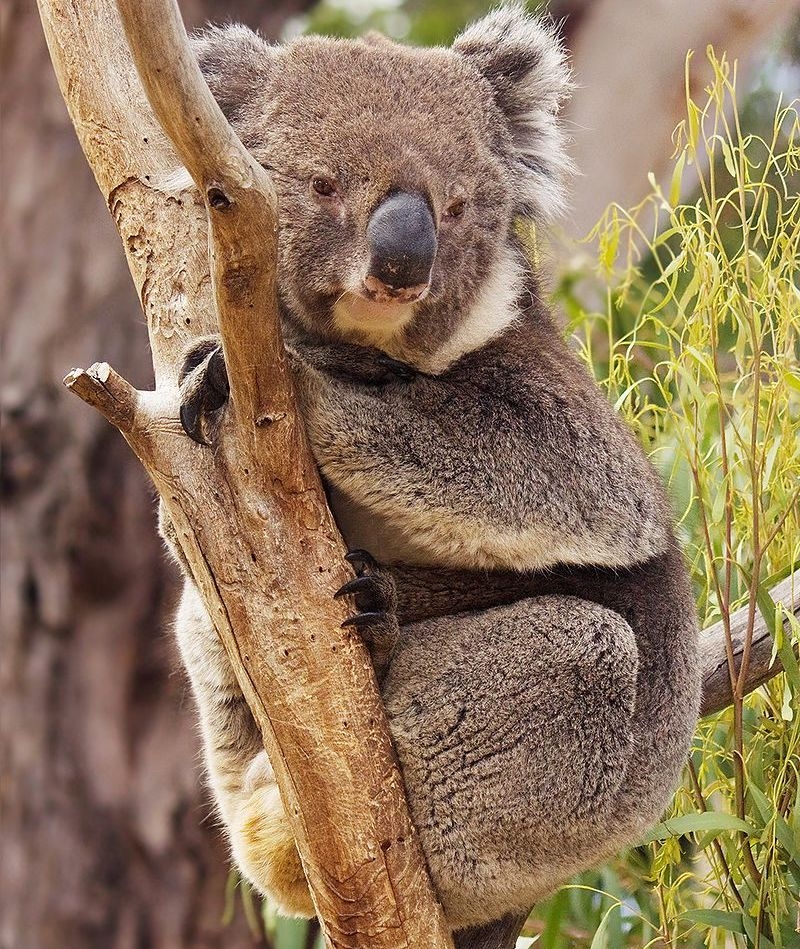
Nearly three billion animals, most of them reptiles, were affected by the 2019–20 bushfires, with some endangered species believed to have been driven to extinction. In normal circumstances, extensive areas of forest would be left unburned, helping animals to escape from the flames and survive. But the severe conditions of the latest season led to many deaths amongst those animals, such as koalas and greater gliders, that could not fly or run away.

The impact on Australia's wildlife in the longer term is more serious even than the individual deaths. The habitats of many animals have been devastated, leading to fears that even if the animals somehow survive the blaze, they may not be able to find food—for example, fruit, leaves or small invertebrates—in the burned landscape.
Wombats and other ground-dwelling mammals may survive in underground burrows (soil is a very good heat insulator). But smaller species may emerge to find an open landscape with nowhere to hide from predators, such as foxes and feral cats (domestic cats that have escaped to the wild). There are concerns about the survival of critically endangered species, such as the long-footed potoroo the mountain pygmy possum and the silver-headed antechinus.


Climate emergency
The enormous, out-of-control fires that occur increasingly in the American West and Australia are driven by climate change. Experts describe the situation as a climate emergency. Rising temperatures and prolonged droughts cause vegetation and soils to lose moisture. As fire-prone, forested regions such as America's Pacific West and southeast Australia's eucalpyt woodlands become warmer and drier more frequently, larger fires become much more likely, more frequent and more intense. The trend is likely to worsen as the world continues to heat up due to the release of greenhouse gases from human activity.
pics


Without in any way limiting Q-files Ltd’s exclusive rights under copyright, any use of this publication to “train” generative artificial intelligence (AI) technologies to generate text is expressly prohibited. Q-files Ltd reserves all rights to license use of this work for generative AI training and development of machine learning language models.