
Oceania

CITE
We have made every effort to follow citation style rules, but there may be some minor differences. If in doubt, please refer to the appropriate citation style manual.
Australia. (2026). In Q-files Encyclopedia, Geography, Oceania. Retrieved from
https://www.q-files.com/geography/oceania/australia
"Australia." Geography, Oceania, Q-files Encyclopedia, 1 Apr. 2026.
https://www.q-files.com/geography/oceania/australia.
Accessed 13 Sep. 2026.
Australia 2026. Geography, Oceania. Retrieved 13 September 2026, from
https://www.q-files.com/geography/oceania/australia
Geography, Oceania, s.v. "Australia," accessed September 13, 2026.
https://www.q-files.com/geography/oceania/australia


Australia
The island continent of Australia, though first populated by humans 50–60,000 years ago, lay undiscovered by the rest of the world until the 17th century. Today, it has become a new home to people from nearly every country in the world. Its landscapes range from high mountains and tropical rainforests to scorching central deserts. Off its northeastern coast lies the Great Barrier Reef, often described as the largest living thing on Earth. Most Australians live in cities on the eastern, southern and southwestern coasts, where the weather is warm and sunny for much of the year.
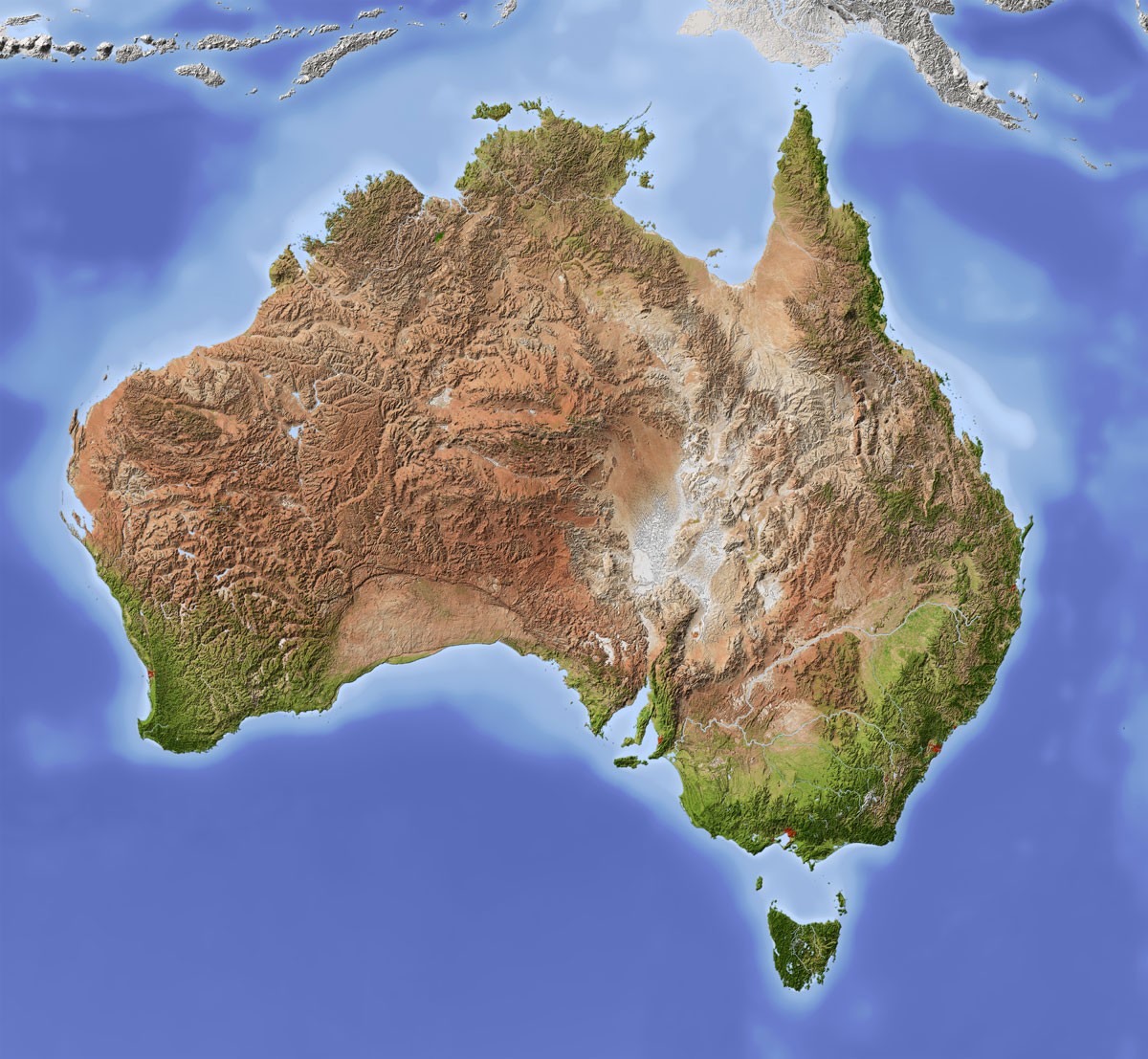

East and southeast coast
A narrow strip of flat land with a warm climate runs down Australia’s eastern coast. Most of Australia’s cities are located on this coastal plain, and most of the country's inhabitants lives here: the cities of Sydney and Melbourne, alone, account for more than a third of the population.


Rising steeply inland from this plain is a chain of mountains, the Great Dividing Range. This highland region is cut through by deep gorges and covered by forest. In the last 50 years, large areas of these forests have been cleared to make more room for farmland or for the cities to expand.

Great Barrier Reef
The Great Barrier Reef is the world's largest coral reef system. Consisting of more than 2900 individual reefs and 900 coral islands, it stretches for over 2300 kilometres (1430 miles) in the Coral Sea, running parallel to the coast of Queensland. It is the world's biggest single structure made by living things—billions of tiny animals known as coral polyps. The reef supports an enormous diversity of life, including sharks and many other species of fish, whales, dolphins, sea snakes, turtles and other marine life. The reef itself is home to 400 different coral species. Attracted by the incredible biodiversity, the reef is a popular tourist destination, especially for scuba divers and snorkellers.


The Great Barrier Reef is vulnerable to pollution (from fertilizers and pesticides used on Queensland's farmland and washed into the sea by rivers), ship grounding, fishing (which can disrupt vital food chains), crown-of-thorns starfish, which prey on corals, and whose numbers soar when agrochemicals build up in the seawater. But the major threat to the reef's survival is climate change, which, through warming the seas, triggers mass coral bleaching. This occurs when, as sea temperatures rise, the algae inside the corals become toxic to the coral, which then expel the algae, before eventually dying. According to a 2020 study, more than half of the Great Barrier Reef's corals were lost between 1995 and 2017.
Interior
Australia’s vast, flat interior, known as the “outback”, is virtually empty of people. Much of this region consists of dry scrubland. The distinctive red colour of its sands have earned it the nickname, “Red Centre”. Here, enormous rocks, called inselbergs—such as Uluru—rise out of the flat landscape; they are outcrops of rock that have survived while surrounding rocks have been eroded away. To the west, the outback merges with the Great Sandy and Gibson deserts.


Life in the outback
Although few people live in Australia’s desert outback, those that do often face an isolated, rural lifestyle. Most villages are too small to have a school and children are educated at home by the School of the Air: they communicate with their teachers and classmates (who can be hundreds of kilometres away) via videolink and the internet. Flying is the quickest way to get around in this region; helicopters are even used by some farmers to herd their animals across huge areas. In some places, mail is delivered by air.

Western Australia
The western part of Australia sits on the Western Plateau, a flat area of land broken up by low mountains, the Hamersley and Darling ranges, that rise near the west coast. Much of western Australia is covered by deserts, such as the Great Victoria Desert, or by gravelly, scrubland plains.
Over 90% of the region’s people live in the southwest corner, in and around the city of Perth. Here, the climate is much less severe than it is inland: it is Mediterranean-like, with hot summers and warm winters.


Tropical north
Parts of the Northern Territory and Queensland in the north of Australia reach into the tropics, where it is extremely hot and humid all year round. Between December and March, a wet season brings monsoon rains and cyclones (tropical storms). Rainforests in this region contain more species of flowering plant than anywhere else on earth. At the coast, saltwater crocodiles lurk in swampy mangrove forests. Northern Australia is sparsely populated; its largest city, Darwin, has a population of just over 150,000.
Tasmania
The island state of Tasmania, known locally as "Tassie", is located 240 kilometres (150 miles) off the coast of Victoria. A mostly unspoilt environment, Tasmania's climate is cooler than the rest of Australia's. Apart from the high, jagged peaks of the Central Highlands and the lowland farming areas, most of the island is covered by heathland and forest, including wide areas of tall, evergreen eucalypt trees. Isolated from the rest of the world, many of Tasmania's plant and animal species are found nowhere else—including the Tasmanian devil, the largest marsupial carnivore in the world.


Multicultural Australia
The first people to live in Australia were the Aboriginal Australians. They have been living in the country for around 50,000 years. In the 18th and 19th centuries, hundreds of thousands of migrants—many of them British and Irish—made the long journey from Europe to settle in Australia. To begin with, nearly all were convicts and their gaolers from Britain. But they were soon followed by "free settlers".

Today, around a quarter of Australia’s population was born overseas. Australian cities are culturally diverse; their food, art and festivals have been influenced by the Asian, Greek and Middle Eastern peoples who have made their homes there. After English, the most commonly spoken languages in Australia are Italian, Greek, Cantonese (the language of southeastern China), Arabic and Vietnamese.


Sacred Sites
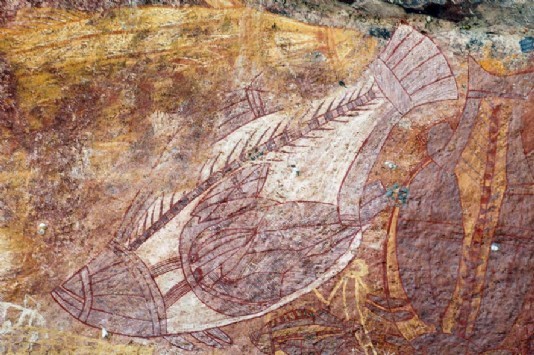
Each of Australia’s Aboriginal peoples have places—for example, hills, rocks, grasslands and rivers—which are sacred to them. Protecting the land is central to their beliefs. Some sites are used for traditional ceremonies or rituals, and some are meant to be used only by women or by men.
Some of these sacred sites, such as Uluru, are visited by thousands of tourists each year. In 1985, the Australian government returned ownership of Uluru to the local Aboriginal people and today, it is a protected National Park. Aboriginal guides help to run the park, informing tourists about their culture.


Farming
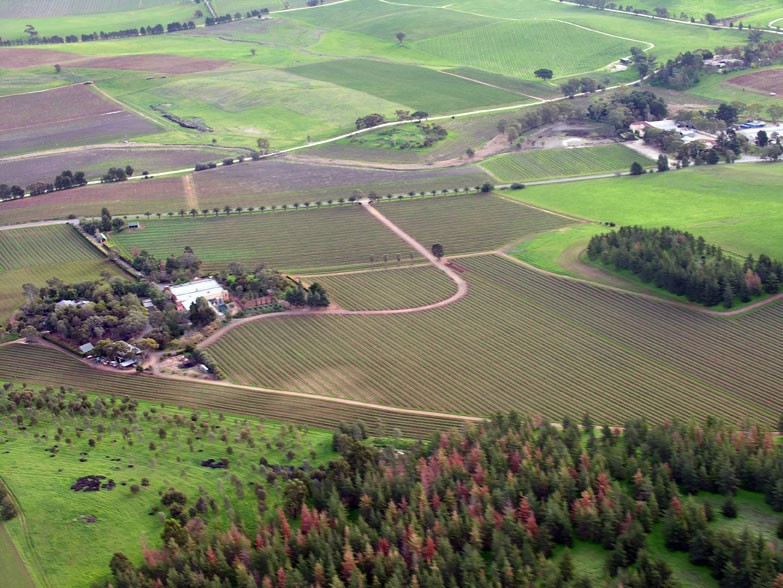
Although much of Australia’s land is too hot and dry to grow crops, some areas are well-suited to raising livestock such as sheep and cattle. The eastern grasslands are home to Australia’s sheep and cattle ranches, known as stations. With its millions of sheep, Australia is the world’s largest producer of wool. In the south, where the climate is cooler, crops such as wheat and tropical fruits are grown for export, and vineyards produce wines.

Great Artesian Basin
The Great Artesian Basin is the largest and deepest artesian basin (a layer of rock containing groundwater) in the world. Lying beneath nearly a quarter of Australia's entire land area, the Basin provides the only source of fresh water throughout much of inland Australia. The water of the Basin is held in a layer of sandstone (the aquifer), stored in the tiny spaces between the sand grains in the rock, and is trapped by layers of impermeable rock above and below it. Groundwater emerges through a number of natural springs, such as Witjira-Dalhousie Springs, South Australia.
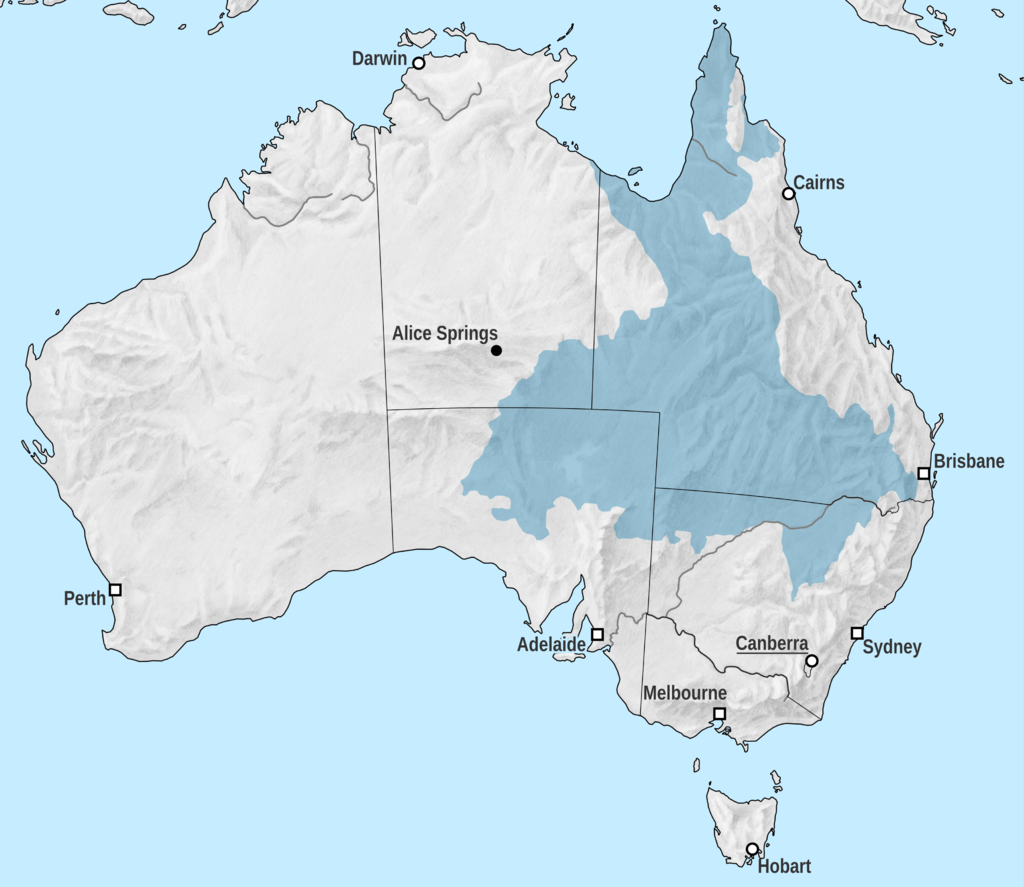

First discovered in 1870s and 80s, the Great Artesian Basin has become an important water supply for cattle stations, crop irrigation and domestic use. To tap it, boreholes are drilled in the ground; the pressure of the water often forces it up without the need for pumps. The supply of groundwater has allowed people to settle in places that would otherwise be too dry for stock raising.
Economy
Mining is responsible for much of Australia’s wealth. At the end of the 19th century it was a major exporter of gold, lead, copper, silver and tin. Australia's mining industry remains vital today; the land is rich in coal, gold, copper and iron. Manufacturing, concentrated around the southeastern cities, also makes up a large part of Australia’s national income. Most Australians work in services, such as education, finance, healthcare and tourism. Australia has a large tourist industry, attracting over 4 million foreign tourists every year.


States and territories
Australia is made up of six states (Queensland, New South Wales, Victoria, Western Australia, South Australia, Tasmania) and two territories (Australian Capital Territory—the small area containing Canberra, Australia's capital—and the Northern Territory). Each state has its own parliament responsible for education, transport and healthcare. The territories do not have their own parliaments; they are governed by the central Australian government.
Central government makes laws on national affairs including defence, foreign affairs and trade. The Parliament of Australia has two houses: The House of Representatives, whose members are elected on the basis of each state's population, and the Senate, made up of 12 Senators from each state.
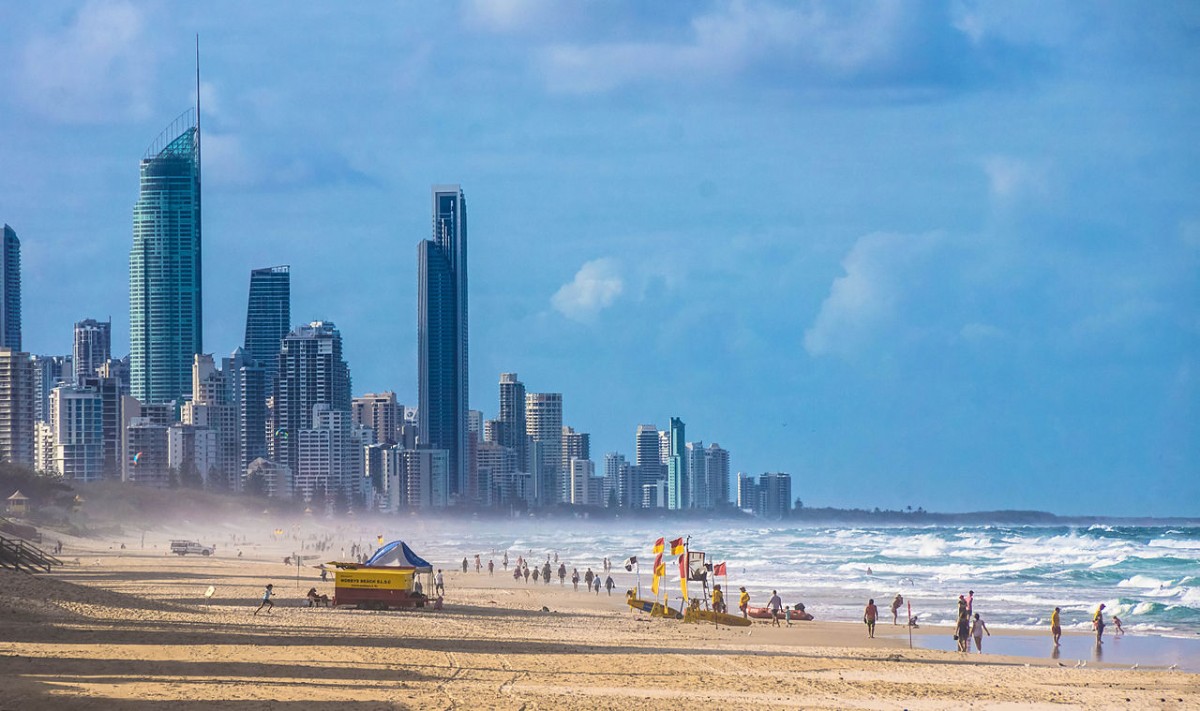
Consultant: Nicholas Harris
Facts about Australia
Population 27,204,809 (2024 estimate)
Area 7,682,300 sq km
Highest point Mount Kosciuszko 2228 m (7310 ft)
Capital Canberra, population 466,566
Other major cities Sydney (pop. 5,450,496), Melbourne (5,207,145), Brisbane (2,706,966), Perth (2,309,338), Adelaide (1,446,380) (populations are for metro areas)
Language English
Religion Christian (Protestant) 29%, Christian (Catholic) 25%, other Christian 7%, Buddhist 2.5%, Muslim 2%, others and none 34.5%
Ethnicity white (European ancestry) 92%, Asian 7%, aboriginal and others 1%
Currency Australian dollar (AUD)
Chief exports meat, wool, coal, gold, iron ore, wheat, machinery, alumina (aluminium ore)


History of Australia
50–60,000 years ago
First Aboriginal Australians arrive in Australia from Southeast Asia
20,000 BC
Aboriginal Australians are settled throughout the mainland and Tasmania
17th century
Dutch explorers map the western and northern coastlines of Australia. They name it “New Holland” but do not settle there.
1770
Captain James Cook sails up the east coast of Australia and claims the land for Great Britain
1788
The British set up the Botany Bay penal colony (a settlement for prisoners) in what is now Sydney
1829–36
Colonies of Western Australia and South Australia are founded
1850s
Gold rush: the discovery of gold all over the country attracts thousands of people, including many Chinese, and the Australian population triples
1901
The Commonwealth of Australia, a unified federal country (one made up of states), a self-governing Dominion of the British Empire, comes into being. The Immigration Restriction Act (White Australian Policy) prohibits non-white immigration
1911
Canberra is founded and designated as Australia’s capital
1914
Hundreds of thousands of Australian troops fight in World War I alongside Britain
1915
Gallipoli landings: Australian and New Zealand armed forces (ANZAC) take heavy casualties; the event helps cement a sense of identity in Australia
1931
Statute of Westminster: an Act of Parliament of the United Kingdom is passed establishing the legislative independence of the self-governing Dominions of the British Empire. It is adopted by Australia in 1942, backdated to 1939
1939–45
Australia fights in World War II on the side of the Allies
1948
Australia begins a programme to attract immigrants from Europe; more than 2 million people arrive within 30 years
1975
Australia passes laws to restrict the number of unskilled workers moving to live in the country
1975
Political crisis: the Governor-General (representative of the monarch, Queen Elizabeth II), Sir John Kerr, dismisses the government of Gough Whitlam; a caretaker administration under Malcolm Fraser is installed
1986
Australia Act: Australia becomes independent of the British government, but remains part of the Commonwealth (with the Queen as Head of State)
1992
A High Court ruling formally recognizes Aboriginal ownership of large parts of rural Australia
2000
Australia hosts the Summer Olympics in Sydney
2002
Eighty-eight Australian citizens are killed in a nightclub bombing in Bali, Indonesia, allegedly by al-Qaeda-linked Islamists
2010
Julia Gillard becomes the first woman prime minister in Australian history; she is ousted in 2013
2011
Queensland hit by severe flooding
2014
Islamist Man Haron Monis takes 18 people hostage in Sydney cafe; two hostages, along with the gunman, die when police storm premises
2016
Australia agrees to close a controversial asylum-seeker detention centre on Papua New Guinea's Manus Island
2019–20
Record-breaking temperatures and months of severe drought fuel a series of massive bushfires across Australia. An estimated 10 million hectares (100,000 sq km or 15.6 million acres) of bush and forest are destroyed. New South Wales, Victoria and Kangaroo Island, South Australia, are worst affected, with smoke from the fires a major hazard
2022
(February and onwards) Major flooding is suffered in southeast Queensland and parts of coastal New South Wales. Cities badly affected include Brisbane—which received around 80% of its annual rainfall in three days—Gympie, Maryborough, Lismore and metropolitan Sydney.
2023
(October) Australian Indigenous Voice referendum: voters are asked to approve an alteration to the Australian Constitution that would recognize Indigenous Australians by setting up an Aboriginal and Torres Strait Islander Voice, an advisory body to represent the views of Indigenous communities. The proposal is rejected nationally and by a majority in every state
2025
(14th December) Two gunmen shoot at a crowd of around 1000 people attending a Jewish Hanukkah celebration at Archer Park beside Bondi Beach in Sydney, killing 15 people. A further 38 people are wounded.
pics






Without in any way limiting Q-files Ltd’s exclusive rights under copyright, any use of this publication to “train” generative artificial intelligence (AI) technologies to generate text is expressly prohibited. Q-files Ltd reserves all rights to license use of this work for generative AI training and development of machine learning language models.