
Ocean life

CITE
We have made every effort to follow citation style rules, but there may be some minor differences. If in doubt, please refer to the appropriate citation style manual.
Mangroves. (2026). In Q-files Encyclopedia, Life, Ocean life. Retrieved from
https://www.q-files.com/life/ocean-life/mangroves
"Mangroves." Life, Ocean life, Q-files Encyclopedia, 24 Mar. 2026.
https://www.q-files.com/life/ocean-life/mangroves.
Accessed 30 Oct. 2026.
Mangroves 2026. Life, Ocean life. Retrieved 30 October 2026, from
https://www.q-files.com/life/ocean-life/mangroves
Life, Ocean life, s.v. "Mangroves," accessed October 30, 2026.
https://www.q-files.com/life/ocean-life/mangroves


Mangroves
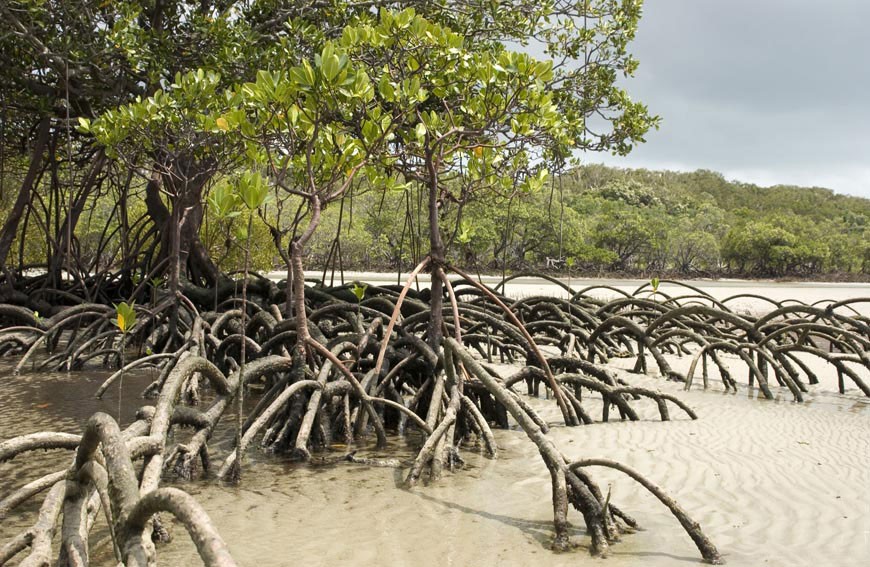
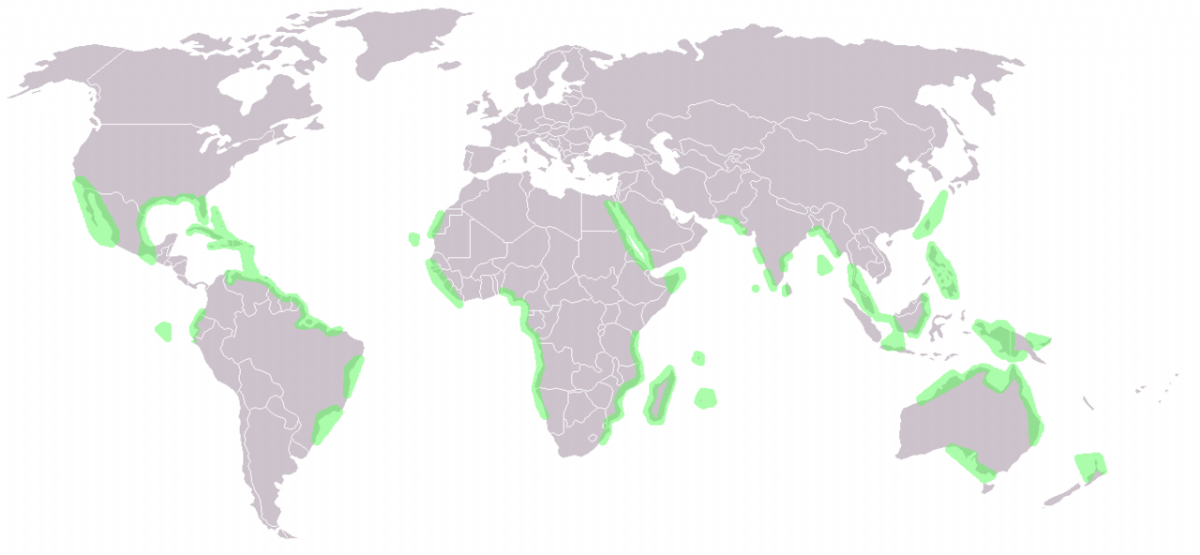
Mangrove forests are found on sheltered bays and estuaries along many tropical coastlines. They are formed in places where flowing salt water lays down mud and other sediments, resulting in swampy land. The roots of mangrove trees are flooded with salt water when the tide comes in. To avoid drowning, mangrove trees have shallow root systems that form branches above the water line. This allows them to breathe and also acts as a support for the rest of the tree. The tangled mass of roots traps nutrient-rich mud which, in turn, provides food for many kinds of animals.
Animal life
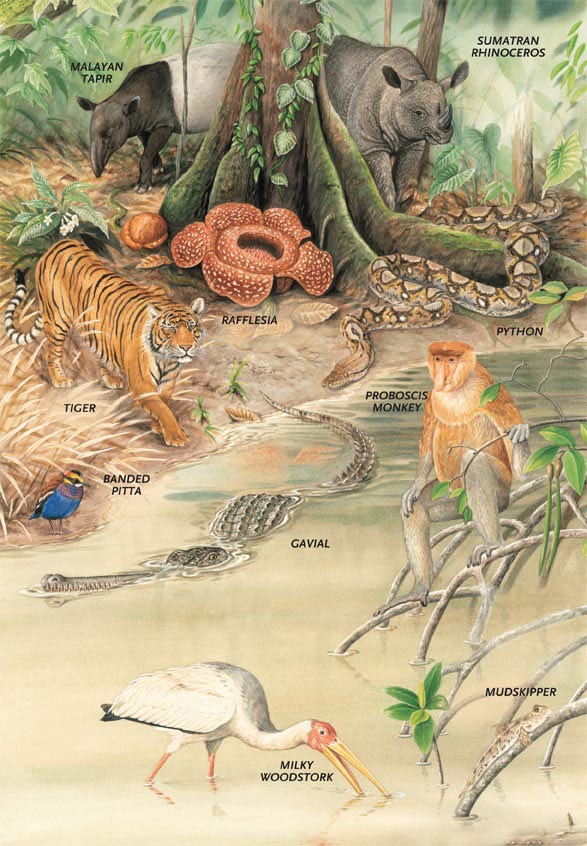
The trees and plants of a mangrove forest are home to numerous insects, while many kinds of fish swim through the shallow water between the tangled roots. Crabs, sea snails and other small creatures burrow into or crawl across the mud. These animals provide food for frogs and a wide variety of birds. Several kinds of monkey clamber between the trees, feeding on fruits and leaves. They need to be constantly on the lookout for large predators, such as snakes and crocodiles, which slip through the water or bask on the mudflats.
Crabs and fish
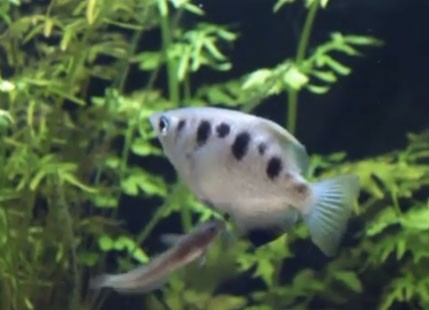
Fiddler crabs scavenge in the mud at the water’s edge. Their huge claws are used to attract a mate or threaten a rival. In the shallows, the archer fish spits a jet of water at insects or spiders that are sitting on leaves above the surface, making them fall into the water.
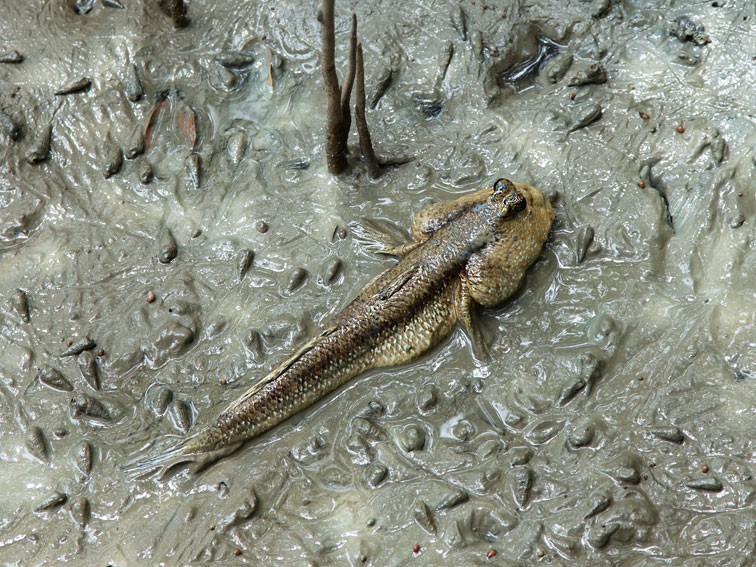
In the mud left between tides, a fish called the mudskipper skips along on its fins. It breathes using water stored in a chamber near its gills, and can also take in oxygen through its skin. At high tide, most mudskippers retreat into their burrows under the mud. Those left above ground use their fins to “walk” across the mud and often climb trees with the help of a sucker on their undersides to avoid predatory fish.
Consultant: Chris Jarvis
pics


Without in any way limiting Q-files Ltd’s exclusive rights under copyright, any use of this publication to “train” generative artificial intelligence (AI) technologies to generate text is expressly prohibited. Q-files Ltd reserves all rights to license use of this work for generative AI training and development of machine learning language models.