
Marine invertebrates

CITE
We have made every effort to follow citation style rules, but there may be some minor differences. If in doubt, please refer to the appropriate citation style manual.
Crabs. (2026). In Q-files Encyclopedia, Life, Marine invertebrates. Retrieved from
https://www.q-files.com/life/marine-invertebrates/crabs
"Crabs." Life, Marine invertebrates, Q-files Encyclopedia, 24 Mar. 2026.
https://www.q-files.com/life/marine-invertebrates/crabs.
Accessed 21 Sep. 2026.
Crabs 2026. Life, Marine invertebrates. Retrieved 21 September 2026, from
https://www.q-files.com/life/marine-invertebrates/crabs
Life, Marine invertebrates, s.v. "Crabs," accessed September 21, 2026.
https://www.q-files.com/life/marine-invertebrates/crabs


Crabs
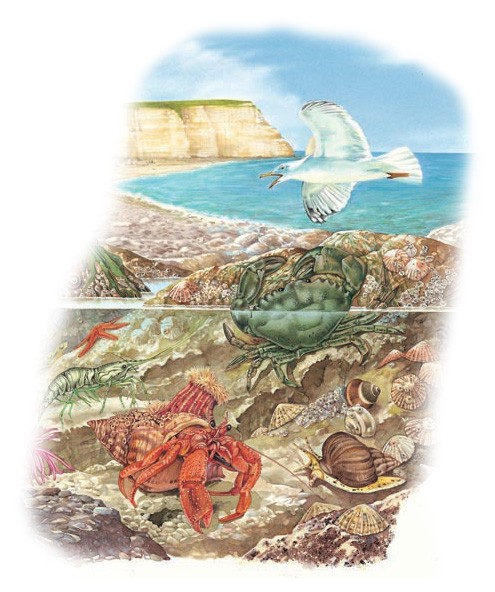
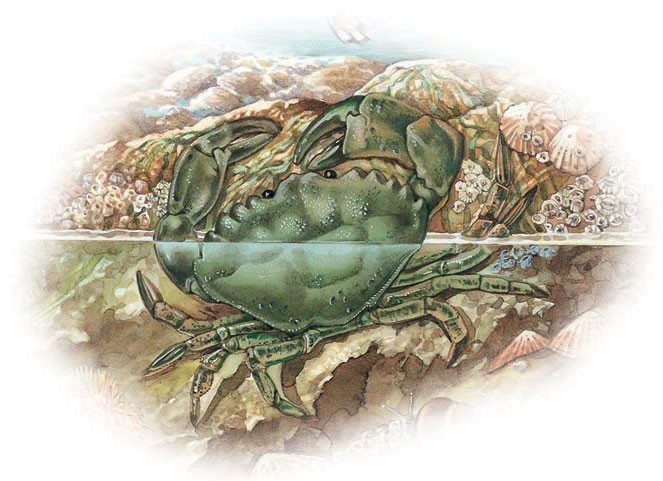
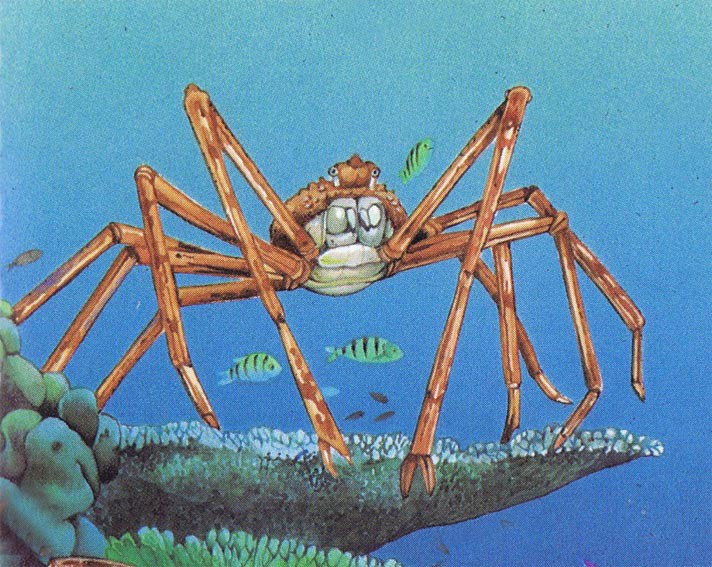
Crabs are crustaceans, the same group to which lobsters, shrimp and and barnacles belong. Crabs have round, flat bodies with a shell, known as a carapace, four pairs of jointed legs, two pairs of sense receptors, called antennae, on their heads, and a pair of pinching claws that are used both for feeding and defence. They have thick external skeletons, called exoskeletons. Most crabs live on the seabed, but some live in sandy burrows on the seashore or on land. Crabs feed mostly on algae, molluscs, worms and other crustaceans, but some also eat the rotting bodies of dead animals and plants.

Red crabs
The red crabs of Christmas Island in the Indian Ocean usually live in the island's forests, but they still return to the sea to mate each November. The crabs face a number of obstacles along the way, crossing roads and even scrambling through houses. Males reach the beaches first and dig burrows in the sand, ready to mate with females. Females stay in the burrows while their eggs develop. When ready, they crawl to the sea at high tide and shake the eggs into the water. About 25 days later, the tiny crabs, just 5 millimetres (0.2 inches) across, crawl out of the sea and head inland.

Hermit crab
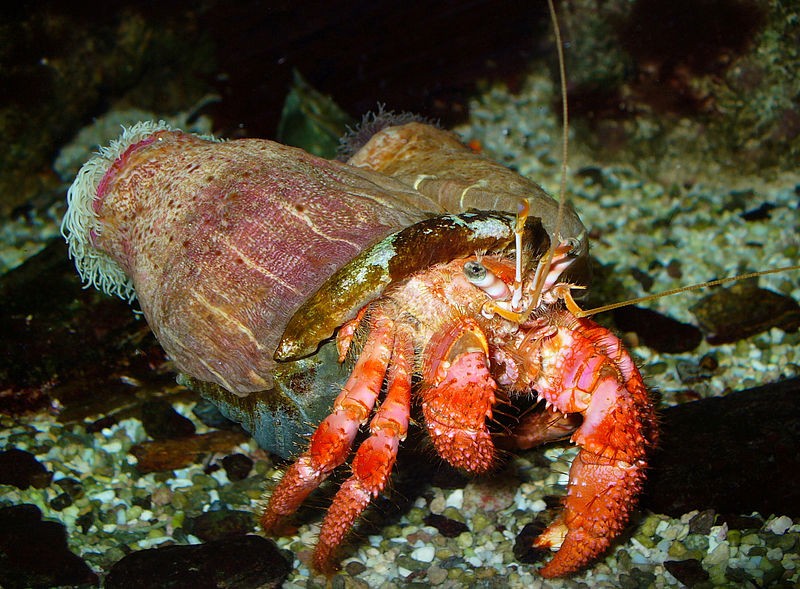
The hermit crab is not a true crab, but a closely related family. It has no shell of its own, but lives in the empty shells of other animals instead. Hermit crabs scavenge on dead plant and animal debris. They sometimes go into partnership with sea anemones. The anemone lives on the crab’s shell, providing camouflage and using its tentacles to protect the crab from predators. In return, the anemone feeds on the crab’s leftovers.
Coconut crab
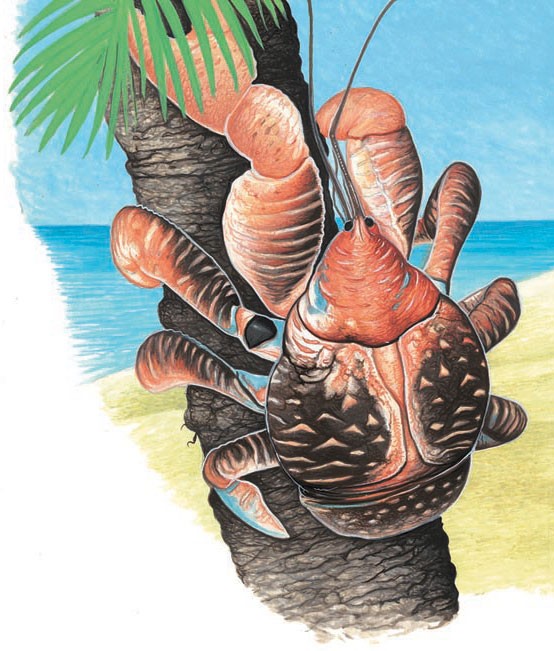
Coconut crabs are a type of hermit crab, although they are shell-less as adults. They are enormous: their legs span more than a metre (about 3.3 feet). They usually live in burrows, coming out only at night to forage for fruit or nuts. But in the breeding season, the crabs venture out for longer periods while they search for mates. After mating, the female lays her fertilized eggs in the sea. When they hatch, the young crabs will spend the first part of their lives in the sea.
Adult crabs will drown if they stay completely underwater, but they must still keep their gills moist for them to work. They do this by rubbing water over them with their legs.
Consultant: Chris Jarvis
pics
Without in any way limiting Q-files Ltd’s exclusive rights under copyright, any use of this publication to “train” generative artificial intelligence (AI) technologies to generate text is expressly prohibited. Q-files Ltd reserves all rights to license use of this work for generative AI training and development of machine learning language models.