
Oceans

CITE
We have made every effort to follow citation style rules, but there may be some minor differences. If in doubt, please refer to the appropriate citation style manual.
Tides. (2026). In Q-files Encyclopedia, Earth, Oceans. Retrieved from
https://www.q-files.com/earth/oceans/tides
"Tides." Earth, Oceans, Q-files Encyclopedia, 6 Mar. 2026.
https://www.q-files.com/earth/oceans/tides.
Accessed 21 Sep. 2026.
Tides 2026. Earth, Oceans. Retrieved 21 September 2026, from
https://www.q-files.com/earth/oceans/tides
Earth, Oceans, s.v. "Tides," accessed September 21, 2026.
https://www.q-files.com/earth/oceans/tides


Tides
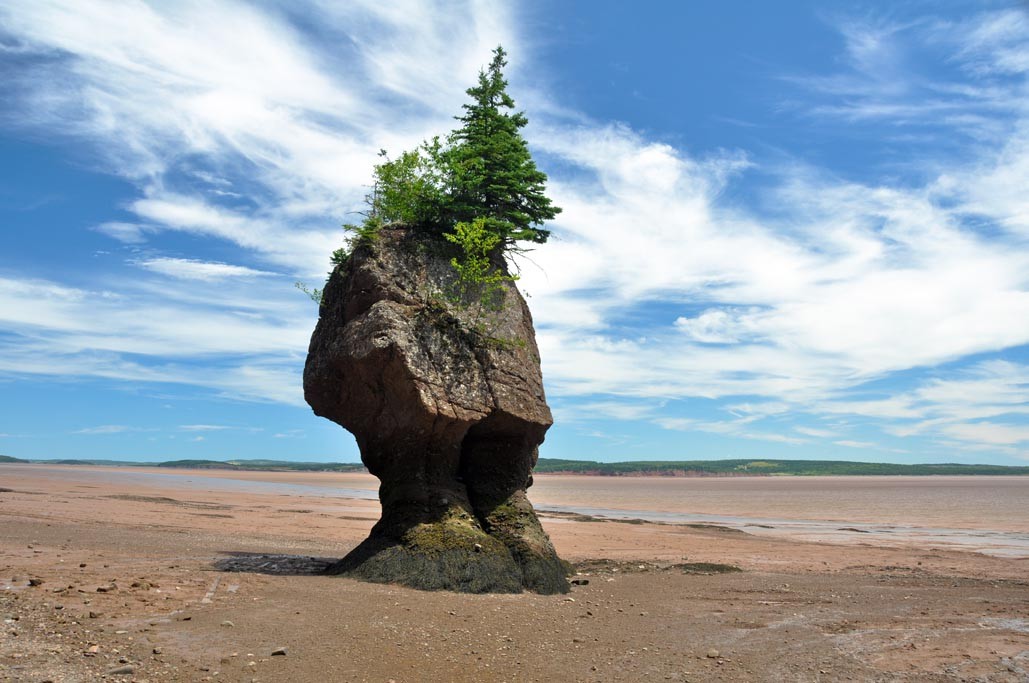
Sea levels rise and fall twice a day. This pattern is known as the tides. The tidal range is the difference between high and low tide. Seas that are almost surrounded by land, such as the Mediterranean Sea, have a very small tidal range. Tides are caused by the the combined gravitational pull of the Moon and the Sun and the rotation of the Earth. Most coastlines have two low tides and two high tides each day, while others have only one of each or as many as four.
How are tides caused?
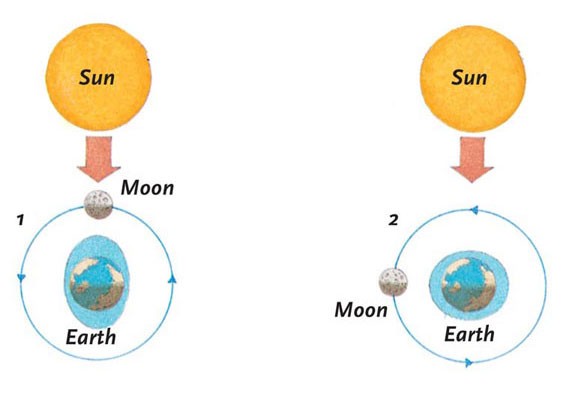
Tides are caused by the pull of gravity by the Sun and Moon on the Earth. As the Earth spins, the ocean waters on the side of the Earth closest to the Moon (and the opposite side) bulge outwards, causing a high tide. At the same time, the rest of the Earth has a low tide.
When the Sun, Moon and Earth are in line, the Sun’s gravity combines with that of the Moon to increase the pull on the water. This makes high tides higher and low tides lower. These are called spring tides (1). When the Sun and Moon are at right angles, the difference between high and low tides is at its lowest. These are neap tides (2).

Tidal bore
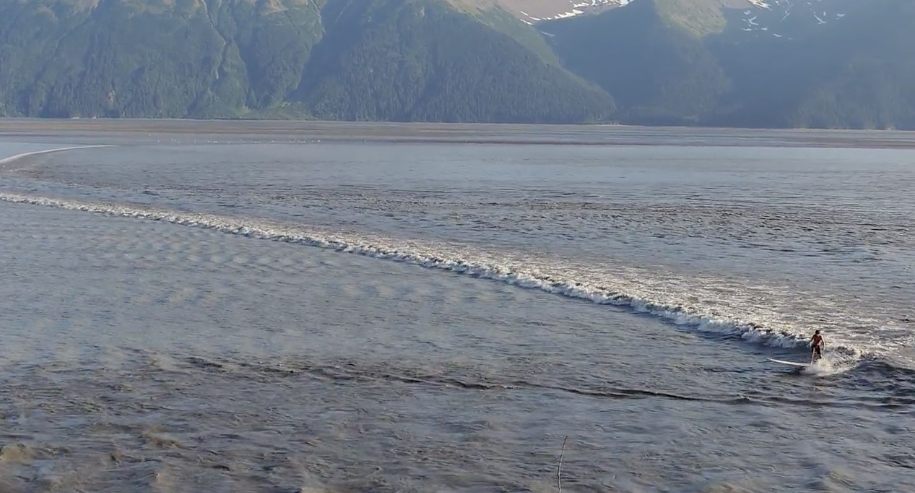
A tidal bore is a type of wave. It forms when the leading (front) edge of the incoming tide meets the current in a river, estuary or narrow bay flowing in the opposite direction. The resulting wave travels up the river or bay against the direction of the current, accompanied by a powerful roar.
Bores occur in only about 60 locations around the world, usually where there is a large tidal range and where incoming tides are funnelled into a shallow, narrowing river via a broad bay. The world's largest bore is on the River Qiantang in China. It can reach nine metres (30 feet high). Perhaps the most famous is the pororaca, which travels up the Amazon in South America.
Severn bore
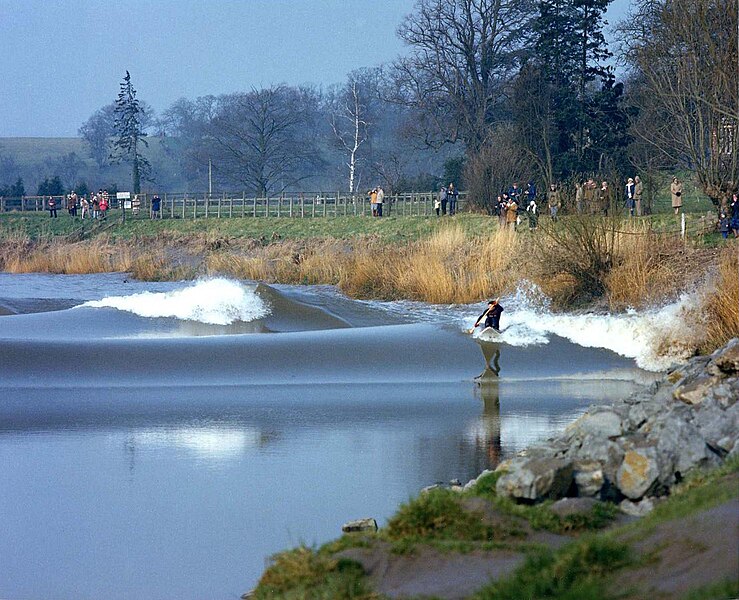
The Severn bore is a tidal bore that occurs on the tidal reaches of the River Severn in southwestern England. It is formed when the rising tide, which starts far out in the Atlantic Ocean, moves into the funnel-shaped Bristol Channel and Severn Estuary. The surging water forces its way upstream in a series of waves as far as Gloucester and beyond, travelling at speeds of between 13 and 21 km/h (8 to 13 mph). Bores occur twice-daily on about 130 days of the year, concentrated on the days immediately following the new and full moon. The waves, which can be 2 metres (7 feet) high, attract river surfing enthusiasts.
Consultant: Ian Fairchild
pics
Without in any way limiting Q-files Ltd’s exclusive rights under copyright, any use of this publication to “train” generative artificial intelligence (AI) technologies to generate text is expressly prohibited. Q-files Ltd reserves all rights to license use of this work for generative AI training and development of machine learning language models.