
Oceans

CITE
We have made every effort to follow citation style rules, but there may be some minor differences. If in doubt, please refer to the appropriate citation style manual.
Ocean currents. (2026). In Q-files Encyclopedia, Earth, Oceans. Retrieved from
https://www.q-files.com/earth/oceans/ocean-currents
"Ocean currents." Earth, Oceans, Q-files Encyclopedia, 27 Apr. 2026.
https://www.q-files.com/earth/oceans/ocean-currents.
Accessed 13 Sep. 2026.
Ocean currents 2026. Earth, Oceans. Retrieved 13 September 2026, from
https://www.q-files.com/earth/oceans/ocean-currents
Earth, Oceans, s.v. "Ocean currents," accessed September 13, 2026.
https://www.q-files.com/earth/oceans/ocean-currents


Ocean currents
The ocean waters move about the globe in great “rivers” called ocean currents. Surface currents have a big effect on the world’s climates. They make polar regions milder and the tropics cooler. There are two kinds of ocean currents. Surface currents are driven by the winds and move in roughly circular patterns, called gyres. These go round in a clockwise direction in the Northern Hemisphere and anticlockwise in the Southern Hemisphere. The second kind, deepwater currents, are driven by differences in density (the colder and saltier the water is, the greater its density).

Earth's ocean currents


In the Northern Hemisphere, the oceanic gyres rotate in a clockwise direction, causing the Gulf Stream–North Atlantic–Norway Current in the Atlantic Ocean and the Kuroshio–North Pacific Current in the Pacific Ocean. In the Southern Hemisphere the anticlockwise circulation of the gyres creates the Peru (Humboldt) Current off South America and the Benguela Current off southwestern Africa. Southern Hemisphere currents are also influenced by the powerful eastwards-flowing Antarctic Circumpolar Current: both the Humboldt and Benguela currents draw water from it.
Influence on climate
Warmed by the Sun, surface waters flow in currents from the tropics towards the poles, while cold currents move in to take their place. In this way, ocean currents influence climate zones and weather patterns around the world. For example, warm currents travelling along more temperate coasts increase temperatures of coastal areas—sometimes reaching some distance inland—by warming the sea breezes that blow over them. Examples of this are the Gulf Stream (see below) and the Humboldt Current, which brings a cooler subtropical climate to Lima, Peru, in contrast with that of its surrounding tropical latitudes.
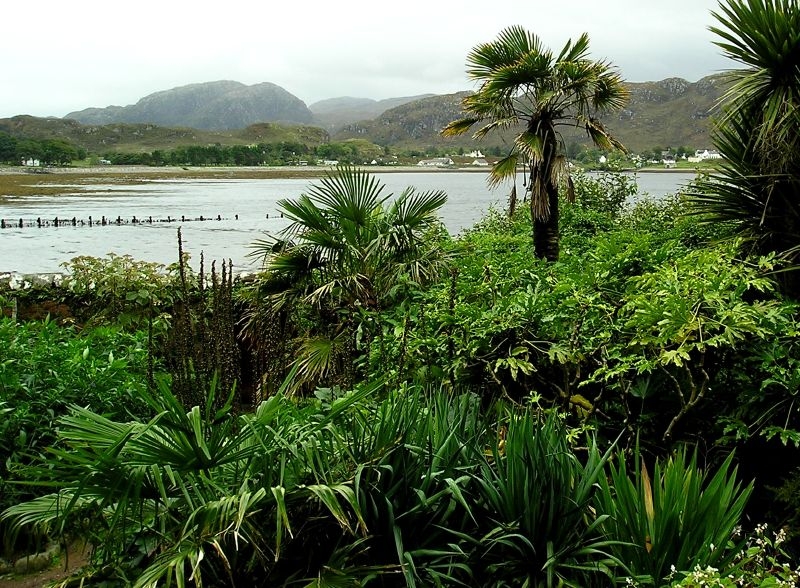
Gulf Stream


The Gulf Stream is a warm Atlantic Ocean surface current. It originates in the Gulf of Mexico and flows northeastwards, following the eastern coastlines of the United States and Newfoundland before heading out across the Atlantic Ocean. There it splits in two: the Canary Current turns south while the North Atlantic Current (or Drift) streams towards Europe. The current splits again, with one branch, the Norwegian Current, flowing past Scotland and up the coast of Norway.
The Gulf Stream brings mild, wet weather to northwestern Europe and makes this region much more temperate for its high latitude than other areas at the same latitude (for example, Labrador in Canada).
Thermohaline circulation

Slower-moving than surface currents, deepwater currents mix the waters of all the Earth's oceans, from north to south and back again. They are driven by differences in the water’s density, which is controlled by temperature (thermo-) and salinity (-haline). So the process is known as thermohaline circulation, sometimes called the "ocean conveyor belt".
In the Earth's polar regions, ocean water becomes very cold, forming sea ice. As a result, the surrounding seawater gets saltier. This is because when ice forms, the salt is left behind in the liquid. As the seawater gets both colder and saltier, its density increases, causing it to sink. Warmer water flows in to balance out the missing surface water. This, in turn, becomes colder and saltier enough to sink.

Ocean conveyor belt
In the North Atlantic Ocean near Greenland and Norway, the dense, cold, salty water sinks to the ocean floor where it collects in a basin known as the North Atlantic Deep Water. Other seas, including the Labrador Sea and the Mediterranean feed their waters into this basin.

The force of the sinking water pushes the North Atlantic Deep Water southwards towards Antarctica in a deepwater current. From here, some of it flows north into the Indian and Pacific Oceans. Here the water eventually becomes warm enough to rise.
The warm surface waters are then driven by winds. Some travels back northwards through the Atlantic Ocean to the North Atlantic Deep Water, completing a global loop. The rest joins the Antarctic Circumpolar Current, a surface current travelling clockwise around Antarctica driven by powerful westerly winds.
AMOC
The Gulf Stream and its northern extensions form part of the Atlantic Meridional Overturning Circulation (AMOC), a link in the global thermohaline circulation. The AMOC carries water northwards into the North Atlantic Ocean and back again. When the warm water reaches Arctic regions, it cools, becomes denser and sinks before flowing southwards as a deepwater current.
The cooling process has, in recent years, become severely hampered by global warming, which has caused water temperatures in the Arctic to rise. At the same time, melting ice from the Greenland ice sheet tips fresh water into the sea. This is less dense than salty seawater, so the disruption to the AMOC is even greater.

While the Gulf Stream is expected to slow down as the AMOC weakens—it is already weaker than it was in the mid-19th century—it will not stop altogether, even if the AMOC were to collapse completely (some scientists predict it will do so, even if carbon emissions are greatly reduced, in the early 2100s or possibly even earlier). Nevertheless, the slowing of the Gulf Stream is likely to have some significant effects, including a rise in sea level along the North American coast; less frequent mild southwesterly winds across Northwestern Europe (causing winter temperatures in London, for example, to plummet at times to -19°C / -2°F), changing patterns of precipitation in Europe and the tropics; much stronger storms in the North Atlantic.
Consultant: Ian Fairchild
pics


Without in any way limiting Q-files Ltd’s exclusive rights under copyright, any use of this publication to “train” generative artificial intelligence (AI) technologies to generate text is expressly prohibited. Q-files Ltd reserves all rights to license use of this work for generative AI training and development of machine learning language models.