
Marine invertebrates

CITE
We have made every effort to follow citation style rules, but there may be some minor differences. If in doubt, please refer to the appropriate citation style manual.
Horseshoe crabs. (2026). In Q-files Encyclopedia, Life, Marine invertebrates. Retrieved from
https://www.q-files.com/life/marine-invertebrates/horseshoe-crabs
"Horseshoe crabs." Life, Marine invertebrates, Q-files Encyclopedia, 24 Mar. 2026.
https://www.q-files.com/life/marine-invertebrates/horseshoe-crabs.
Accessed 21 Sep. 2026.
Horseshoe crabs 2026. Life, Marine invertebrates. Retrieved 21 September 2026, from
https://www.q-files.com/life/marine-invertebrates/horseshoe-crabs
Life, Marine invertebrates, s.v. "Horseshoe crabs," accessed September 21, 2026.
https://www.q-files.com/life/marine-invertebrates/horseshoe-crabs


Horseshoe crabs
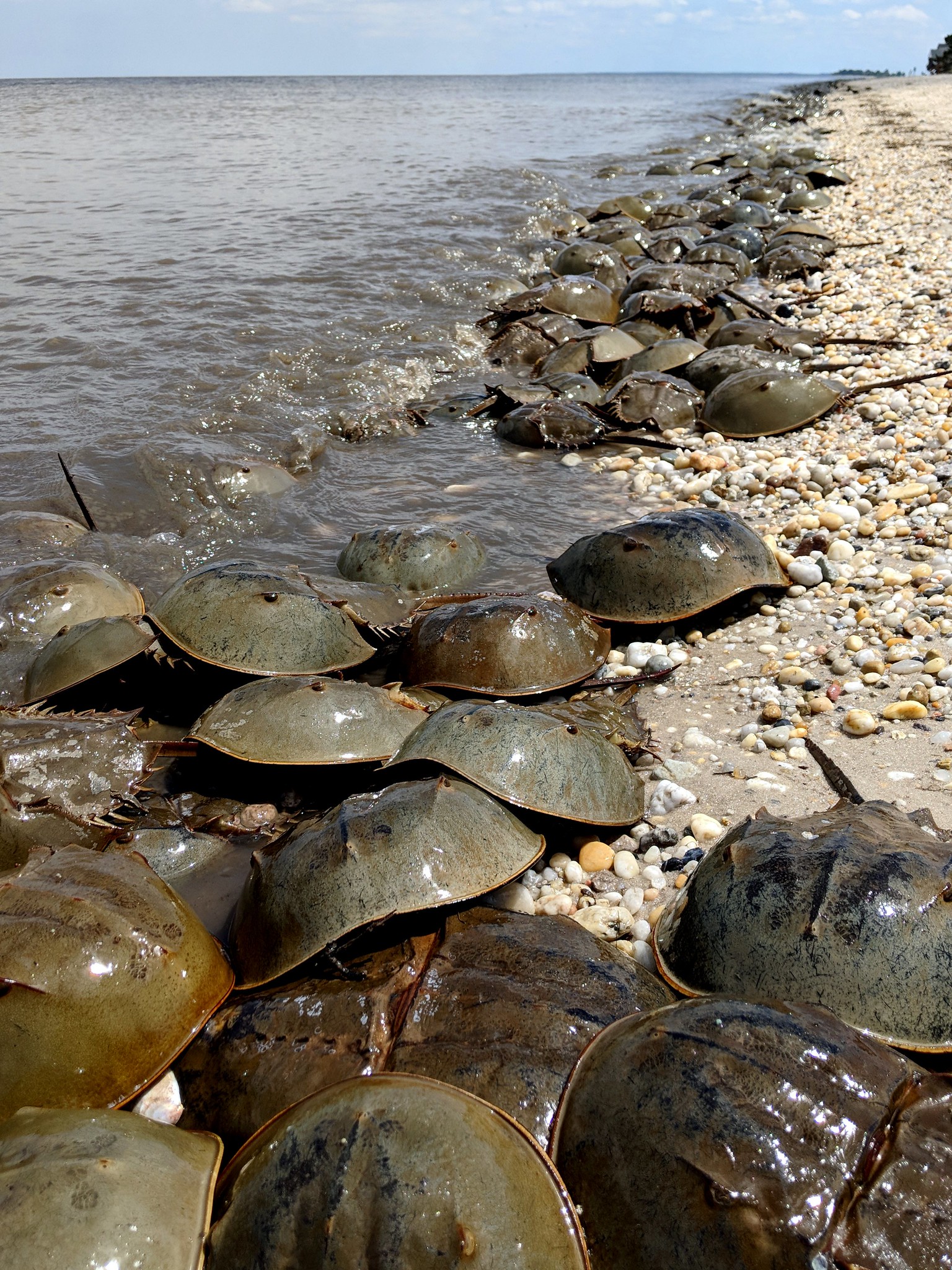
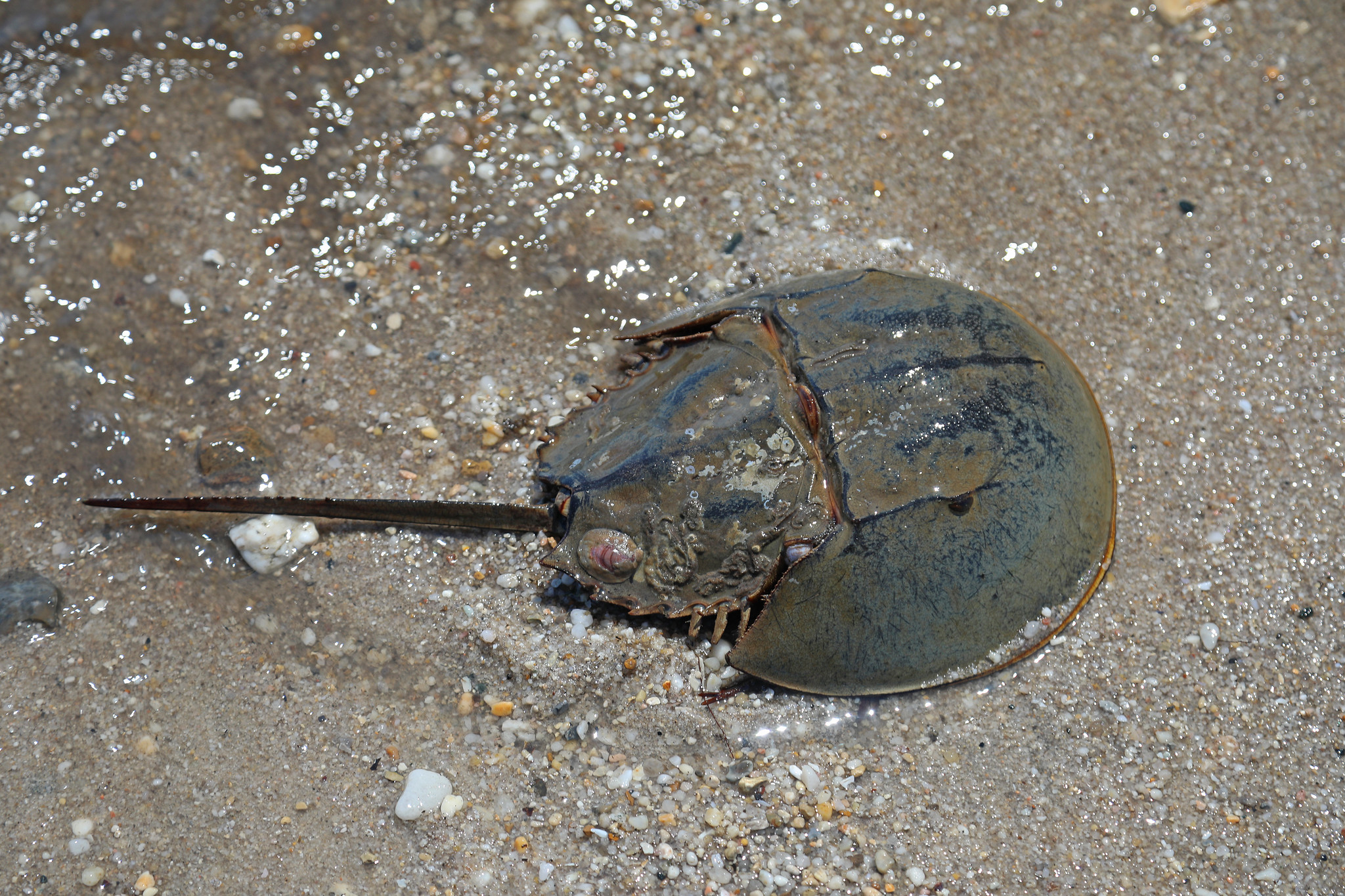
Horseshoe crabs are not true crabs, nor even crustaceans, but make up a different group of arthropods. There are four species, the largest of which can measure up to 80 centimetres (31 inches) long. Horseshoe crabs live mostly in and around shallow coastal waters. From the fossil record, they are known to have originated in the Ordovician Period around 445 million years ago. They have changed little since, giving them the description of "living fossils". Horseshoe crabs are closely related to the long extinct eurypterids (sea scorpions), which include some of the largest arthropods that ever existed.
How they live
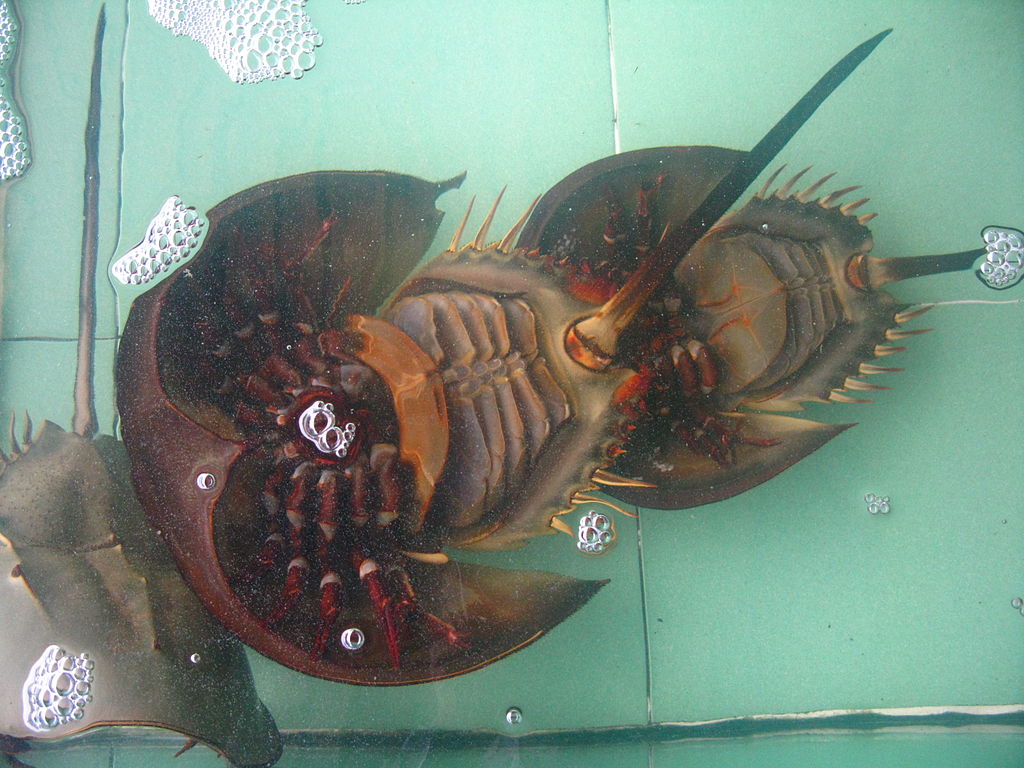
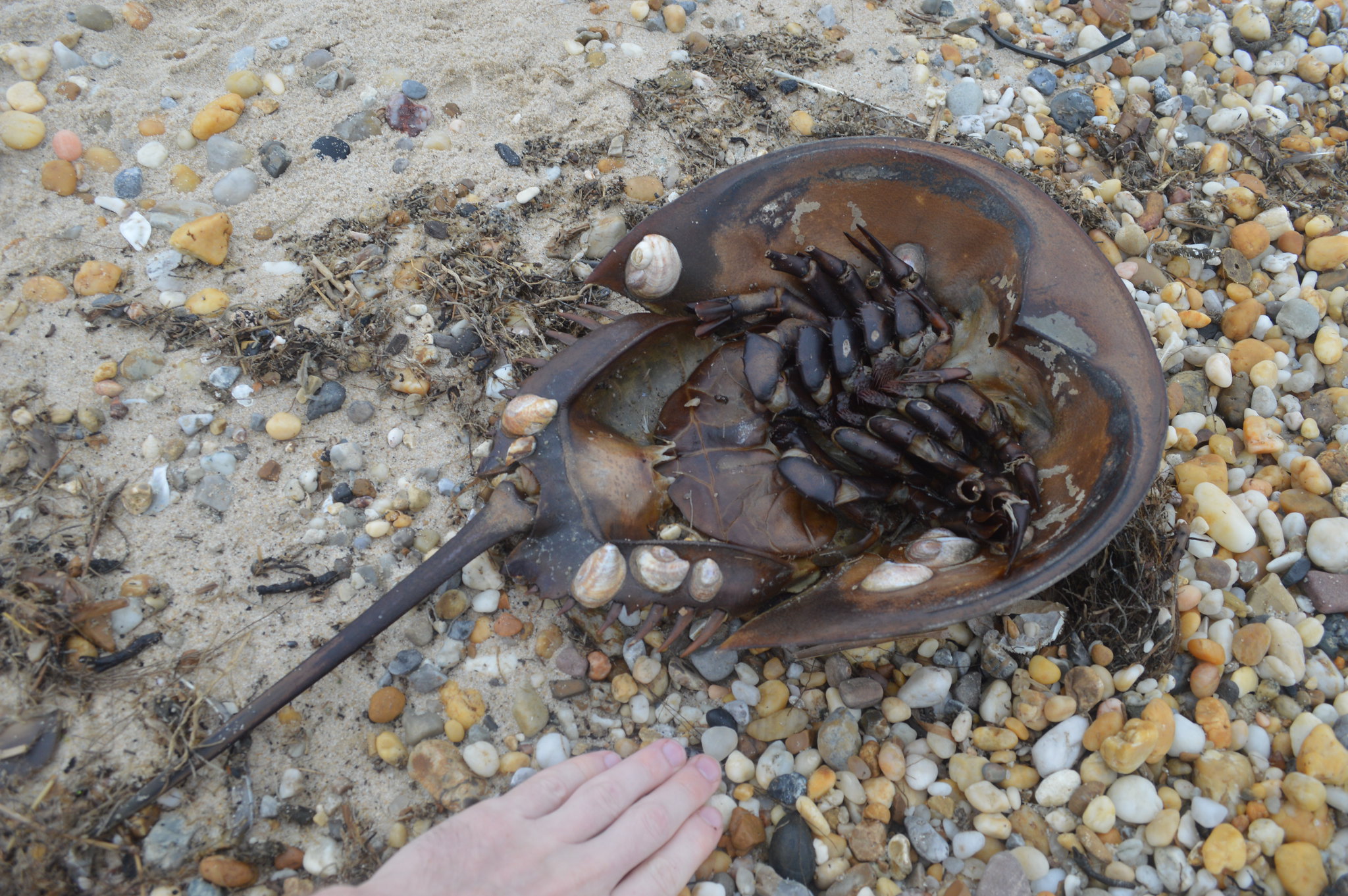
The entire body of the horseshoe crab is protected by a front shell called the prosoma and a back shell called the opisthosoma. Its spike-like tail is called a telson. Despite having two main compound eyes and eight secondary simple eyes—including a pair on its underside—it has poor eyesight, although its eyes are highly sensitive to light.
The horseshoe crab uses its chelicerae—a pair of small appendages—for moving food into the mouth. As well as a pair of pedipalps, it has four additional pairs of leg-like appendages, which are used for walking on the sea bottom. Horseshoe crabs normally swim upside down. For food, they search mainly for worms and molluscs.

Breeding
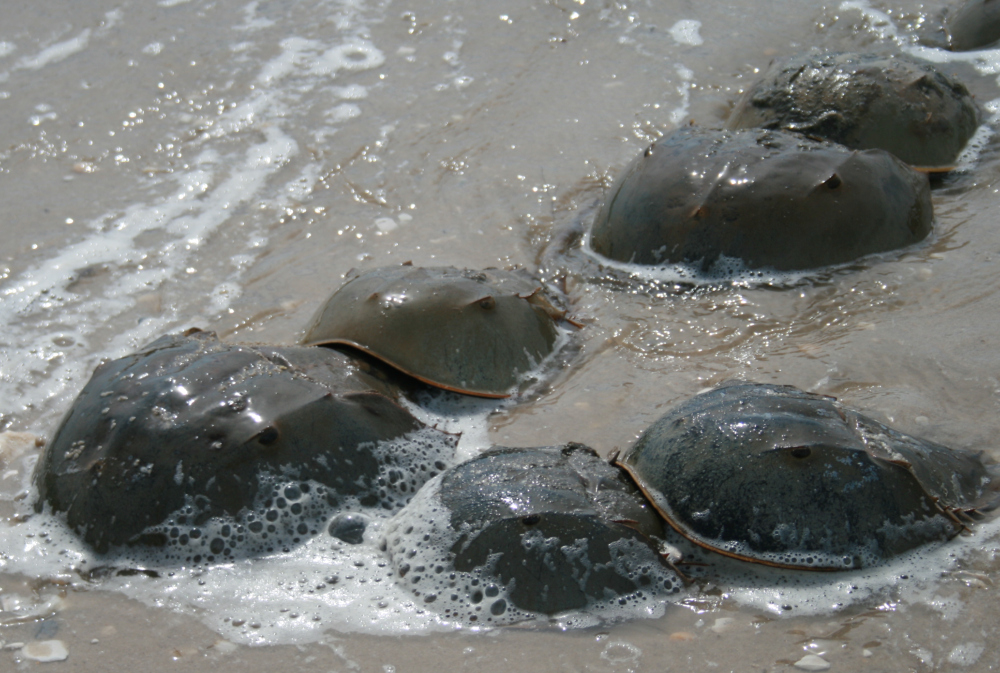

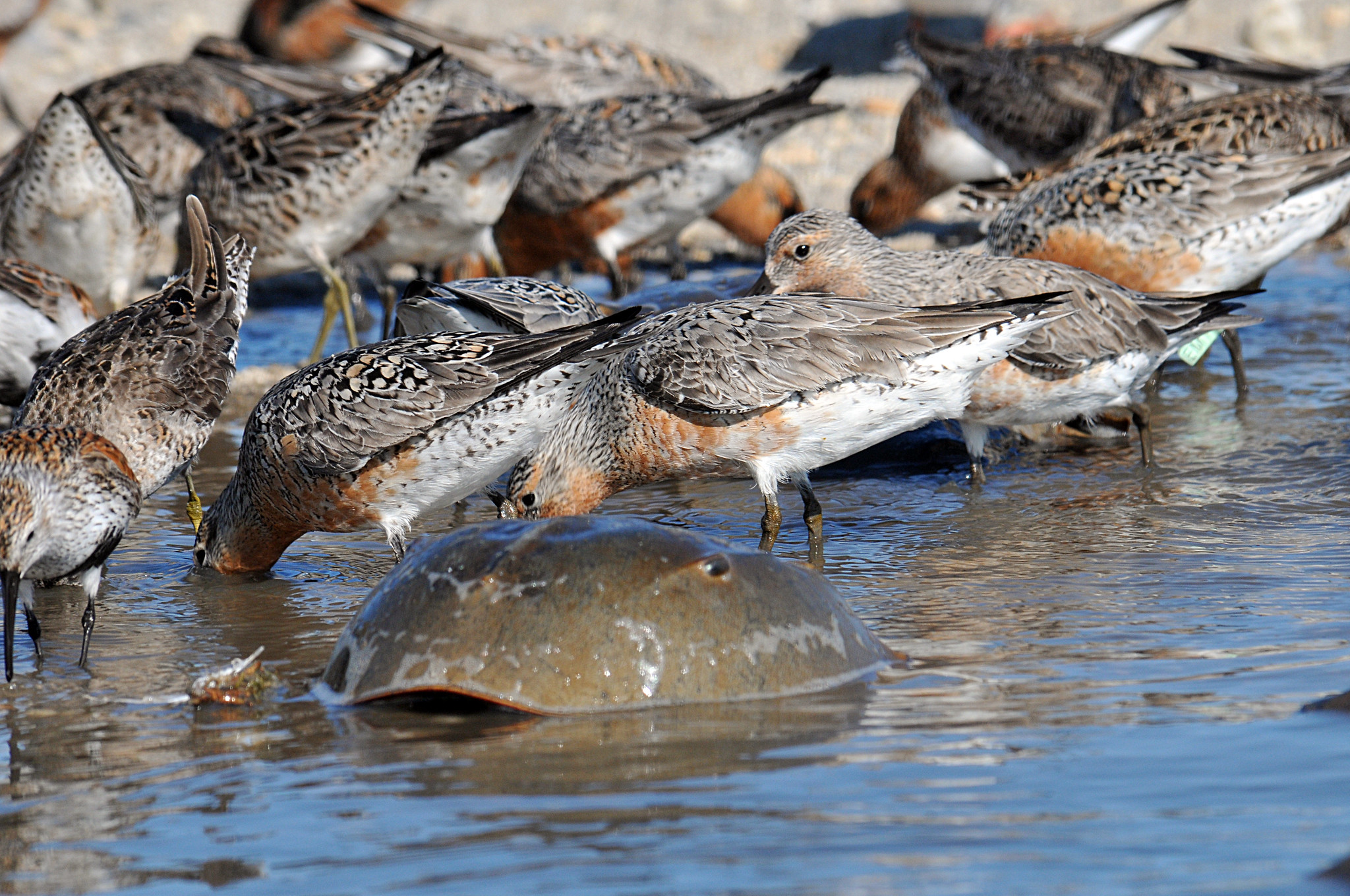
During the spring breeding season, horseshoe crabs migrate to shallow coastal waters. Guided by the full moon, hundreds of thousands of females crawl on to beaches to lay their eggs. There they dig holes in the sand and lay their eggs—tens of thousands of them—which the males then fertilize. Migratory shorebirds, such as turnstones and knots on the eastern seaboard of the United States, along with fish and terrapins, eat many of the eggs before they hatch.
Harvest for blood
The milky-blue blood (the colour comes from copper in the bloodstream) of one species of horseshoe crab, Limulus polyphemus, provides the only known natural source of a substance called limulus amebocyte lysate (LAL). This chemical is used by pharmaceutical companies to detect endotoxins, chemicals produced by bacteria that can contaminate vaccines and other medicinal fluids with potentially fatal results.
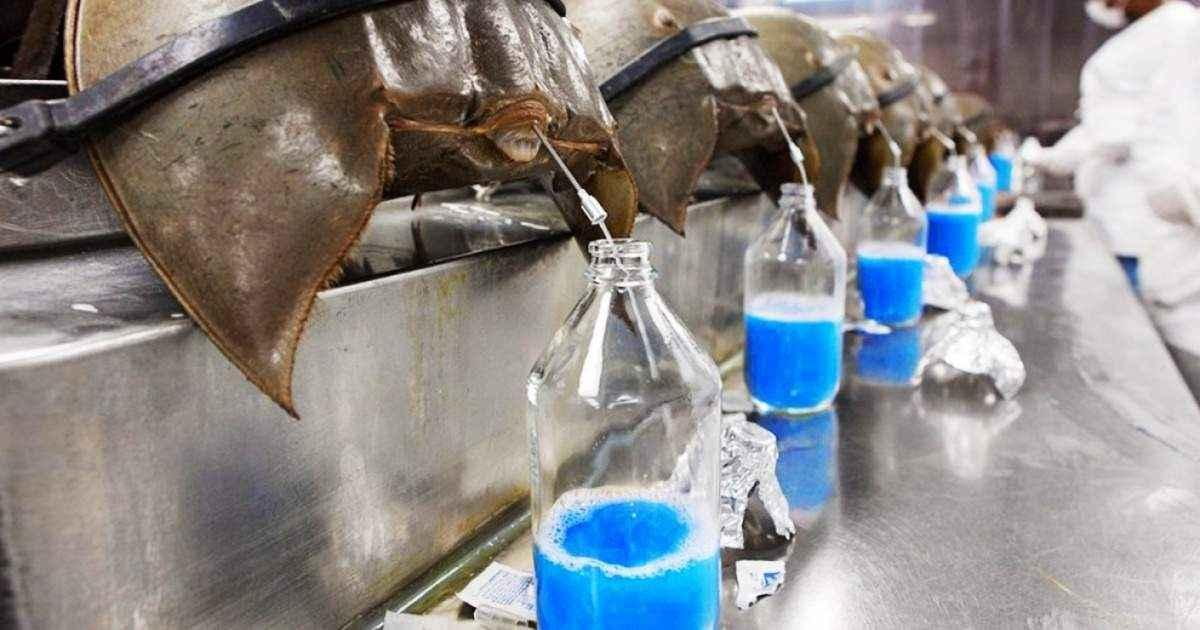
Each year, around 500,000 Atlantic horseshoe crabs are harvested, bled for their lysate, then released back into the sea. Many (thought to be around 70%) will survive this process, but it is thought to reduce fertility in females, leading to a steep decline in the species in the United States in recent decades.
In 2016, a synthetic (manmade) alternative to crab lysate, was approved for use in Europe, but its use was banned in the US in 2020. The continued demand for their blood for vaccines may cause the horseshoe crabs—along with other animals in the marine ecosystems that depend on them and their eggs—to become endangered. On the other hand, if crab lysate is no longer needed for vaccines, efforts to conserve the horseshoe crab might cease. The crabs could then become widely harvested for use as fishing bait, as was common in the past.
Consultant: Chris Jarvis
pics
Without in any way limiting Q-files Ltd’s exclusive rights under copyright, any use of this publication to “train” generative artificial intelligence (AI) technologies to generate text is expressly prohibited. Q-files Ltd reserves all rights to license use of this work for generative AI training and development of machine learning language models.