
Birds

CITE
We have made every effort to follow citation style rules, but there may be some minor differences. If in doubt, please refer to the appropriate citation style manual.
Shorebirds. (2026). In Q-files Encyclopedia, Life, Birds. Retrieved from
https://www.q-files.com/life/birds/shorebirds
"Shorebirds." Life, Birds, Q-files Encyclopedia, 23 Mar. 2026.
https://www.q-files.com/life/birds/shorebirds.
Accessed 31 Oct. 2026.
Shorebirds 2026. Life, Birds. Retrieved 31 October 2026, from
https://www.q-files.com/life/birds/shorebirds
Life, Birds, s.v. "Shorebirds," accessed October 31, 2026.
https://www.q-files.com/life/birds/shorebirds


Shorebirds
Most shorebirds, also known as waders, live in wetland or in coastal habitats, including beaches, rocky shores, mudflats and lagoons. Jacanas, sandpipers, thick-knees, snipes, avocets, stilts, plovers, oystercatchers and woodcocks are all shorebirds. They have long legs, suitable for walking in shallow water. Their bills are shaped to probe the mud, sand or soil for small invertebrates to eat. Shorebirds have sensitive nerve endings at the tips of their bills enabling them to detect prey below the surface of the water, sand or mud. Many shorebirds migrate to breed in warmer lands.


Jacanas
Jacanas are found in tropical and subtropical areas worldwide. Their toes and claws are so long that the birds’ weight is spread out over a large surface area. This enables them to walk over floating lily pads and other water plants. For their ability to apparently walk on water, they are sometimes known as Jesus birds or lilytrotters. Their diet consists of insects picked from the water’s surface.
Plovers
This large family also includes the dotterels and lapwings. They have shorter bills and legs than other shorebirds, and hunt by sight rather than probing with their bills. The common ringed plover nests on open grounds, including beaches and mudflats. If a predator approaches the nest (called a “scrape”), the adult pretends to have a broken wing and unable to fly—thus tempting the predator to attack it rather than the nest. Once the intruder is far enough away from the nest, the plover flies off.

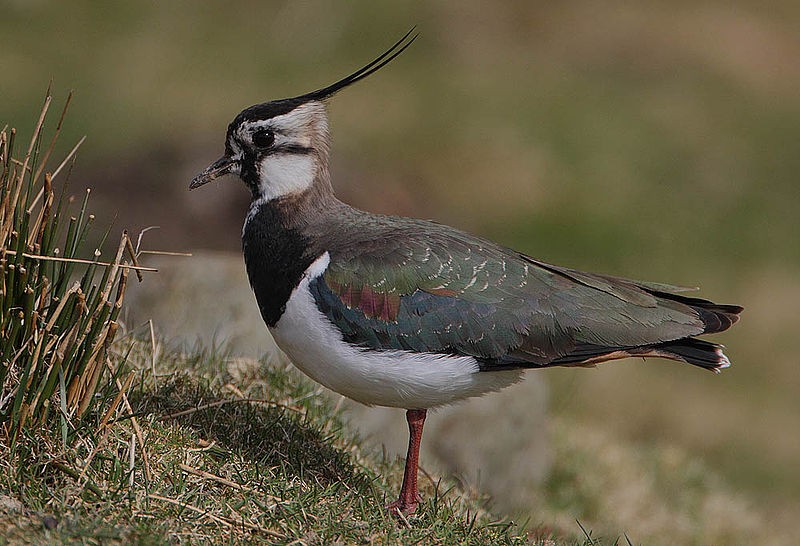
The lapwing has a crested head, rounded wings and a distinctive cry in flight, giving it the alternative name of peewit. It feeds on worms and snails as well as insects.
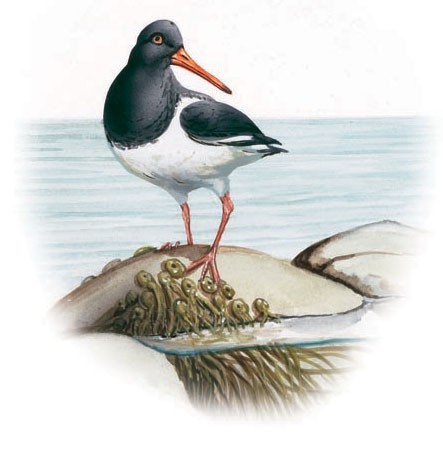
Oystercatchers
Oystercatchers have pink or red legs and long, straight, orange beaks. They live on the seashore or in estuaries, using their long beaks to probe through sand and tidal pools in search of worms, crustaceans and shellfish. When they find mussels, their beaks are perfectly designed for prising them off the rocks and splitting them open. Some oystercatchers breed far inland, nesting on bare earth in the middle of fields. On coasts and estuaries they scrape a patch of ground amongst shingle or rubble.
Sandpipers
The sandpipers are a large family of more than 80 species. It includes the curlews, snipes, woodcocks, godwits and phalaropes. Most eat small invertebrates picked out of the mud or soil with their bills. They makes their nests, usually simple scrapes in the ground, in open areas, and defend their territories with aerial displays. Curlews have long, slender, down-curving bills, which they use for probing mud searching for worms and crabs. Snipes have long, straight bills, with sensitive nerve endings to detect insect larvae.

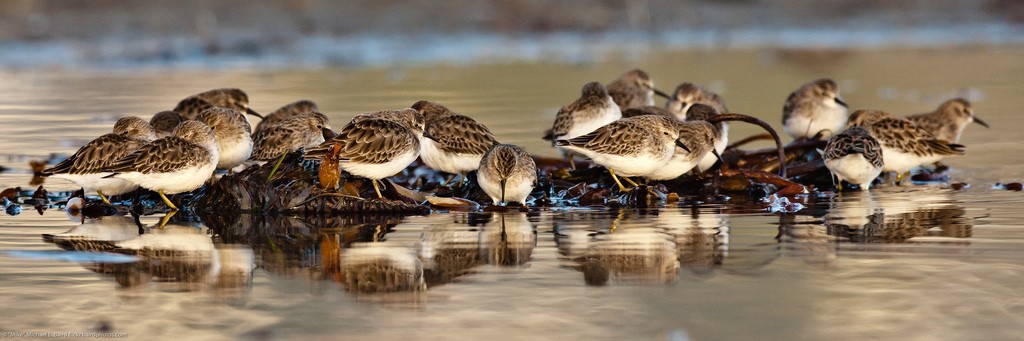

Avocets and stilts
Avocets have long, thin, upcurved bills which they sweep from side to side as they probe shallow brackish waters, looking for aquatic insects and other small creatures. Found in wetlands such as mudflats, estuaries and sandbanks, they nest on the ground in colonies, aggressively chasing away any other types of bird that attempt to nest near them.
Residents of freshwater swamps, marshes and lagoons, stilts belong to the avocet family. They have extremely long, pink legs, hence their name. They use their long, slender bills to pick insects and small aquatic animals off the water’s surface or water plants.
Consultant:Chris Jarvis
pics
Without in any way limiting Q-files Ltd’s exclusive rights under copyright, any use of this publication to “train” generative artificial intelligence (AI) technologies to generate text is expressly prohibited. Q-files Ltd reserves all rights to license use of this work for generative AI training and development of machine learning language models.