
Birds

CITE
We have made every effort to follow citation style rules, but there may be some minor differences. If in doubt, please refer to the appropriate citation style manual.
Kingfishers. (2026). In Q-files Encyclopedia, Life, Birds. Retrieved from
https://www.q-files.com/life/birds/kingfishers
"Kingfishers." Life, Birds, Q-files Encyclopedia, 23 Mar. 2026.
https://www.q-files.com/life/birds/kingfishers.
Accessed 13 Sep. 2026.
Kingfishers 2026. Life, Birds. Retrieved 13 September 2026, from
https://www.q-files.com/life/birds/kingfishers
Life, Birds, s.v. "Kingfishers," accessed September 13, 2026.
https://www.q-files.com/life/birds/kingfishers


Kingfishers
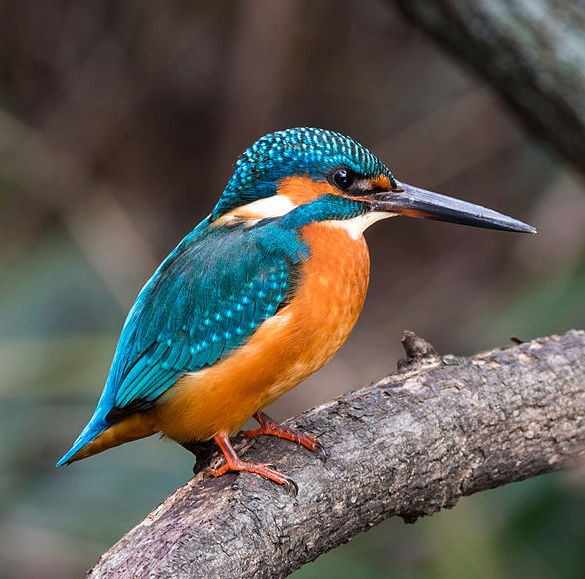
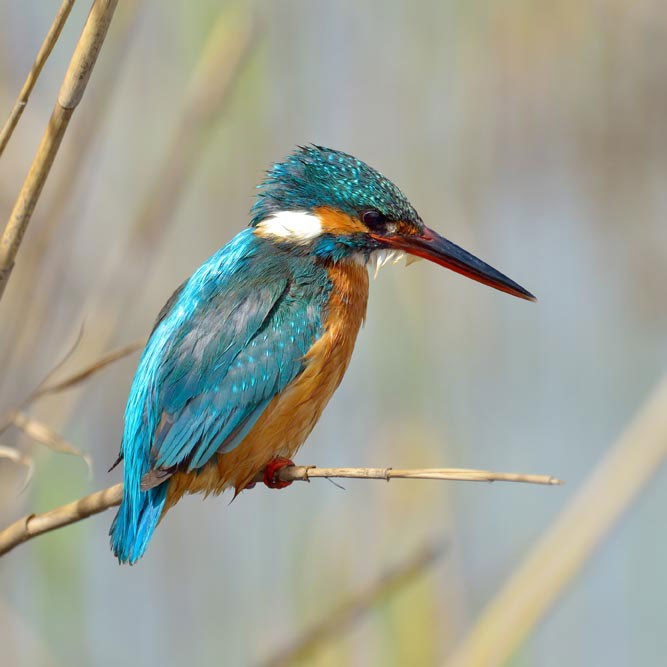
Kingfishers are mostly small, brightly coloured birds. There are 86 species. They have large heads with long, dagger-like bills. They consume a wide range of prey as well as fish, usually caught by swooping down from a perch. Kingfishers nest in sandy burrows, where their chicks are safely out of harm's way. They are usually associated with rivers, but different species live in a wide range of habitats, including deserts, mountains, open woodland, farmland, towns and tropical coral islands.


Catching prey
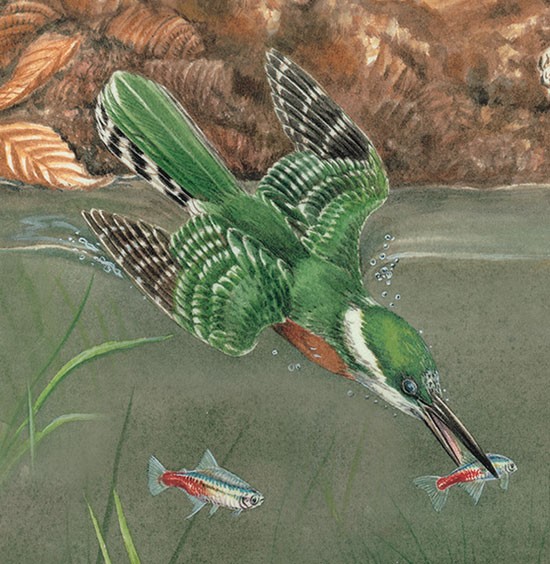
Kingfishers are famous for hunting and eating fish, but some species prey on crustaceans, worms, molluscs, insects, spiders, centipedes, amphibians—and even small reptiles, birds and mammals. Kingfishers hunt from an exposed perch a few metres from the water. Having spotted its prey, it swoops down to snatch it. It dives no deeper than 25 centimetres (10 inches) below the surface. It spreads its wings under water, its open eyes protected by transparent eyelids. Then it returns to the perch, where it beats its catch in order to kill it, or to dislodge the fish's spines and bones.
Kookaburras
Kookaburras are a family of large kingfishers that live in Australia and New Guinea. The laughing kookaburra is so-called because of its call that sounds very much like hysterical human laughter. It makes this call to warn other kookaburras off its territory. It is not closely associated with water, but is usually found in woodland or suburban gardens, where it can be quite tame.


Bee-eaters
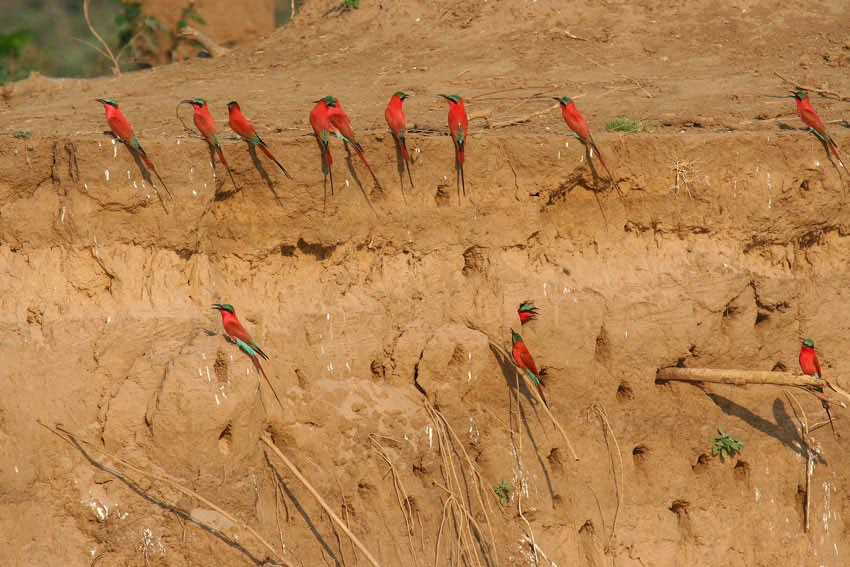
The bee-eaters are a group related to kingfishers. These small, slender-bodied birds have bright, jewel-like colours, long, downwards-curving beaks, pointed wings and long tail feathers. As their name suggests, bee-eaters feed on bees, wasps and other venomous insects. The insects are always caught in mid-air, usually after the bee-eater has spotted them from its high perch—sometimes from up to 60 metres (200 feet) away. Before eating them, the bee-eater removes the stinger by rubbing or smashing the insect against a branch.
Bee-eaters nest together in large colonies. They make their burrows by tunnelling into soft river banks.
Hornbills
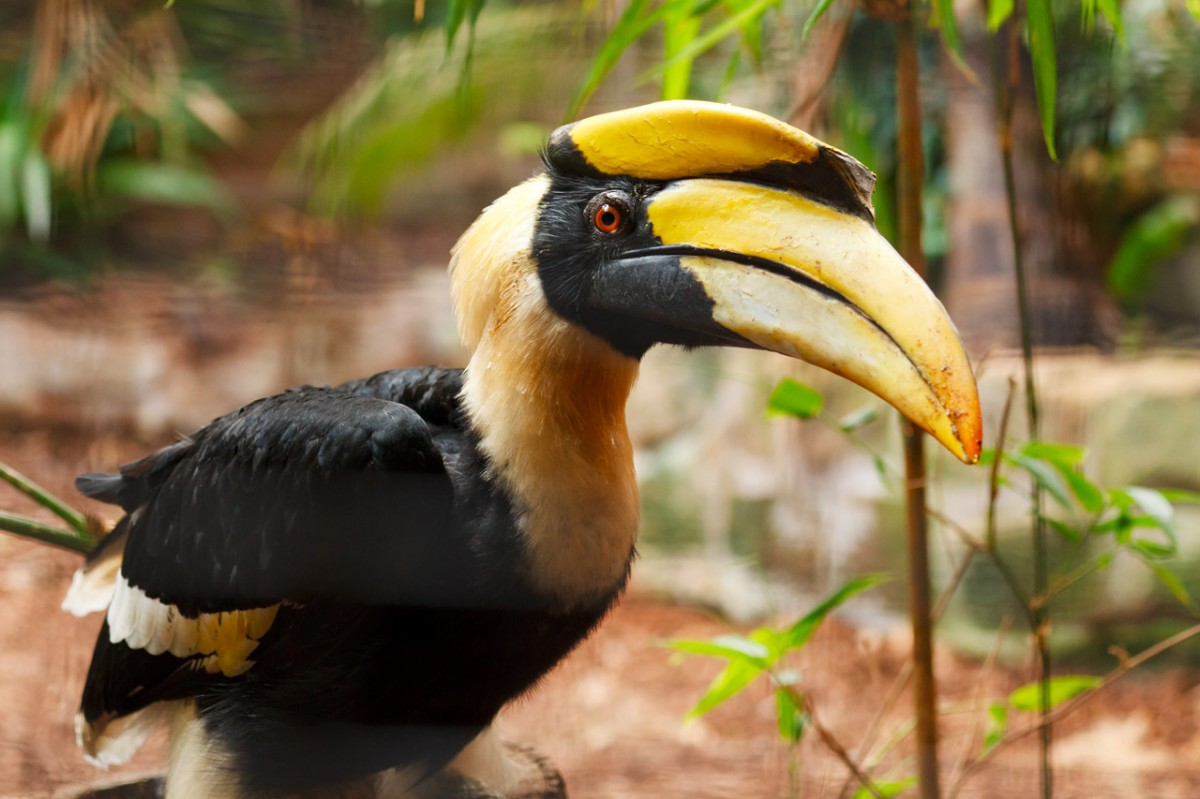
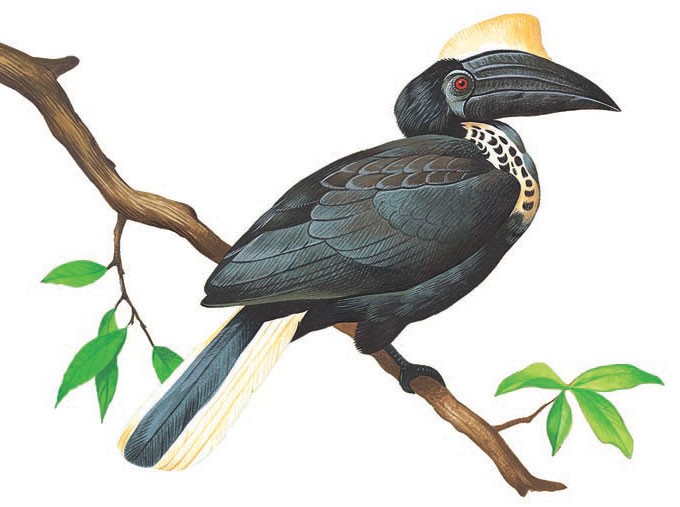
Hornbills are a group of large birds related to the kingfishers and bee-eaters. They are so-called because of the bright, horny growth on their huge beaks. They are noisy, turkey-sized birds. Hornbills mostly eat fruit but will also take any prey they can overpower—even poisonous animals such as snakes and scorpions.
The female hornbill lays her eggs inside a tree hollow, sealing its entrance with mud and clay. The male then passes food to her through a narrow slit he makes in the tree. When the chicks are three weeks old, the female breaks out of the hollow. The chicks reseal the entrance with a mixture of wood chips and their own droppings.


Hoopoe
The hoopoe is loosely related to the kingfishers, bee-eaters and hornbills. Found across Europe, Asia and Africa, the bird is noted for its distinctive "crown" of feathers. Its call, “oop-oop-oop”, may be the origin of its English and scientific name (Upupa epops). Alternatively, the name may come the French name for the bird, huppée, which means “crested”. Hoopoes forage over open ground for insects and larvae, probing the ground with their powerful bill. The prey is then dug out with the birds' strong feet.
Consultant: Chris Jarvis
pics



Without in any way limiting Q-files Ltd’s exclusive rights under copyright, any use of this publication to “train” generative artificial intelligence (AI) technologies to generate text is expressly prohibited. Q-files Ltd reserves all rights to license use of this work for generative AI training and development of machine learning language models.