
How animals live

CITE
We have made every effort to follow citation style rules, but there may be some minor differences. If in doubt, please refer to the appropriate citation style manual.
Migration. (2026). In Q-files Encyclopedia, Life, How animals live. Retrieved from
https://www.q-files.com/life/how-animals-live/migration
"Migration." Life, How animals live, Q-files Encyclopedia, 9 Apr. 2026.
https://www.q-files.com/life/how-animals-live/migration.
Accessed 21 Sep. 2026.
Migration 2026. Life, How animals live. Retrieved 21 September 2026, from
https://www.q-files.com/life/how-animals-live/migration
Life, How animals live, s.v. "Migration," accessed September 21, 2026.
https://www.q-files.com/life/how-animals-live/migration


Migration
Animals are always on the move in search of fresh sources of food. Some travel at the same time each year to places where the new season brings a more favourable climate for feeding or breeding. Called migration, these journeys are sometimes made to distant parts of the world. Birds are the main group of migrating animals because their power of flight allows them to cover long distances rapidly. Some land mammals migrate too, such as caribou. In Australia, herds of kangaroos and flocks of emus travel hundreds of kilometres across deserts in search of areas where rain has brought fresh plant growth.
Regular journeys
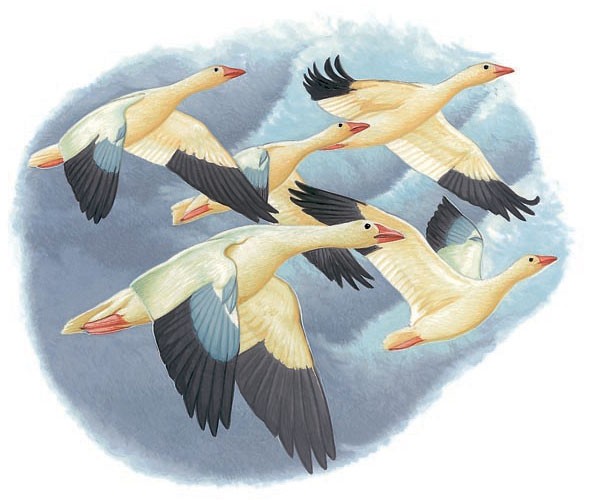
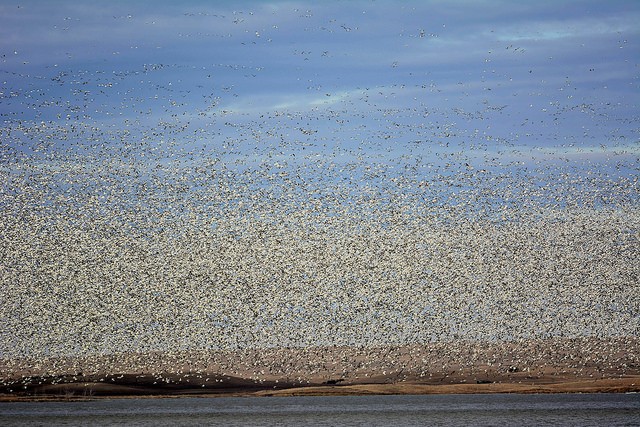
For most migrating creatures the journeys are at a regular time each year and usually follow the same routes as well. In the polar lands of the far north, the summer is short but the long hours of daylight and warmth allow plenty of plant growth. There are few resident animals to eat the plants. So birds such as geese fly up from the south in the spring to feed and raise their young in the Arctic. Then in the autumn, before the long, dark, icy winter grips the polar regions, they return south to temperate Europe, Asia and North America.
Another group of migrating birds, such as swallows and swifts, spend spring and summer in Northern temperate lands, feeding and breeding. Then, in autumn, they fly south to the warmth of the tropics.
Many animal migrants that go by air—birds, bats and insects—prefer to avoid travelling over the sea. They may be unable to find their usual sources of food, or to rest from long periods of flight. If they do need to cross the sea on their journey, they will cross where there are narrow straits or island "stepping-stones".
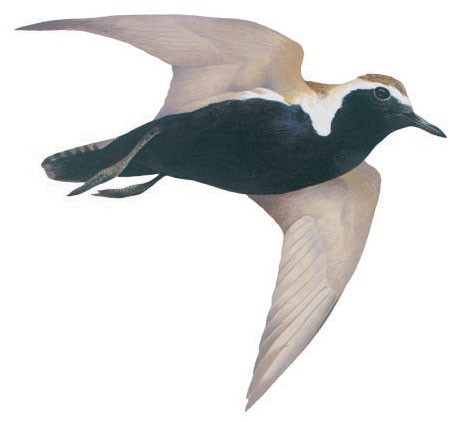
Travelling by air
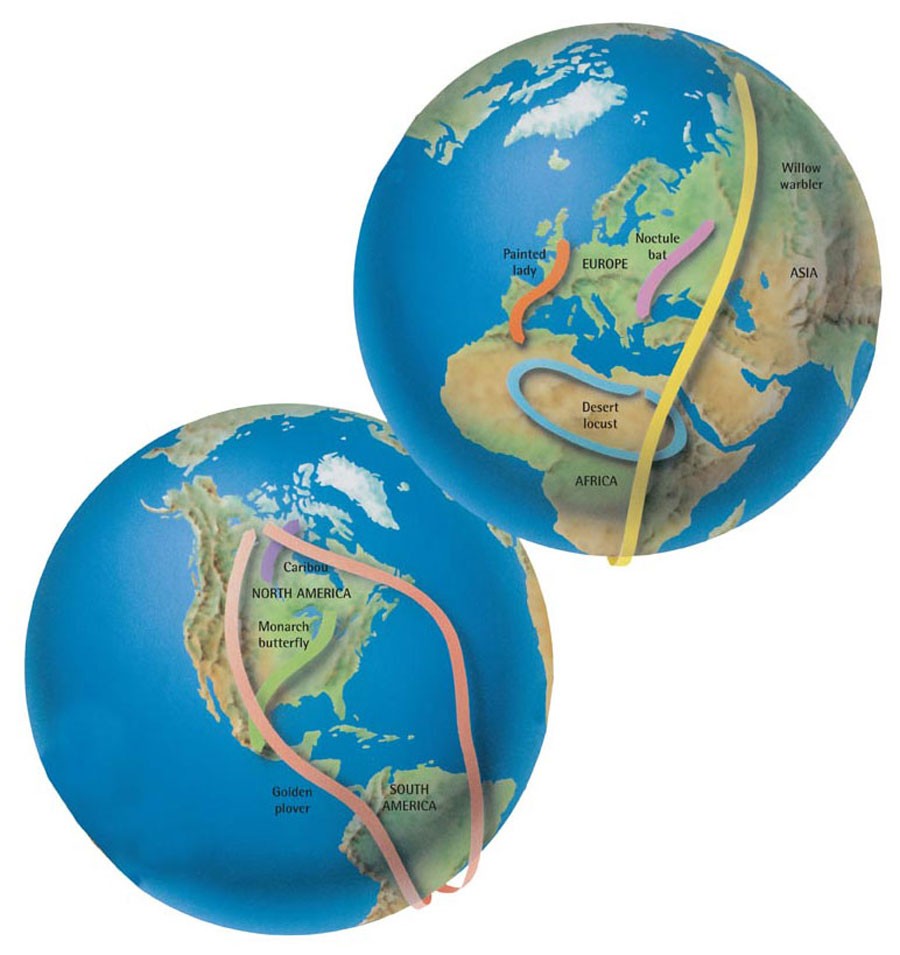
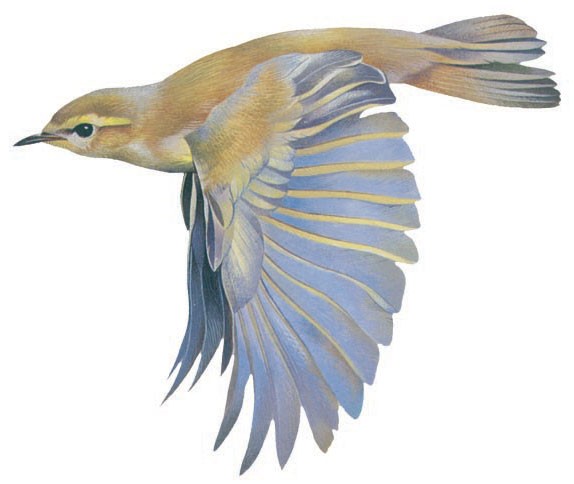
In the Northern Hemisphere spring, millions of birds fly north from the tropics. Warblers, plovers and others will rear their young during the long northern summer days when food is plentiful.
Sometimes, the travellers must cross deserts. To many, these are just as forbidding as the open seas. Warblers feed well before they overfly a desert. As summer ends, the long-distance travellers, or their young, head back south to spend winter in warmer climates.
Ocean wanderers
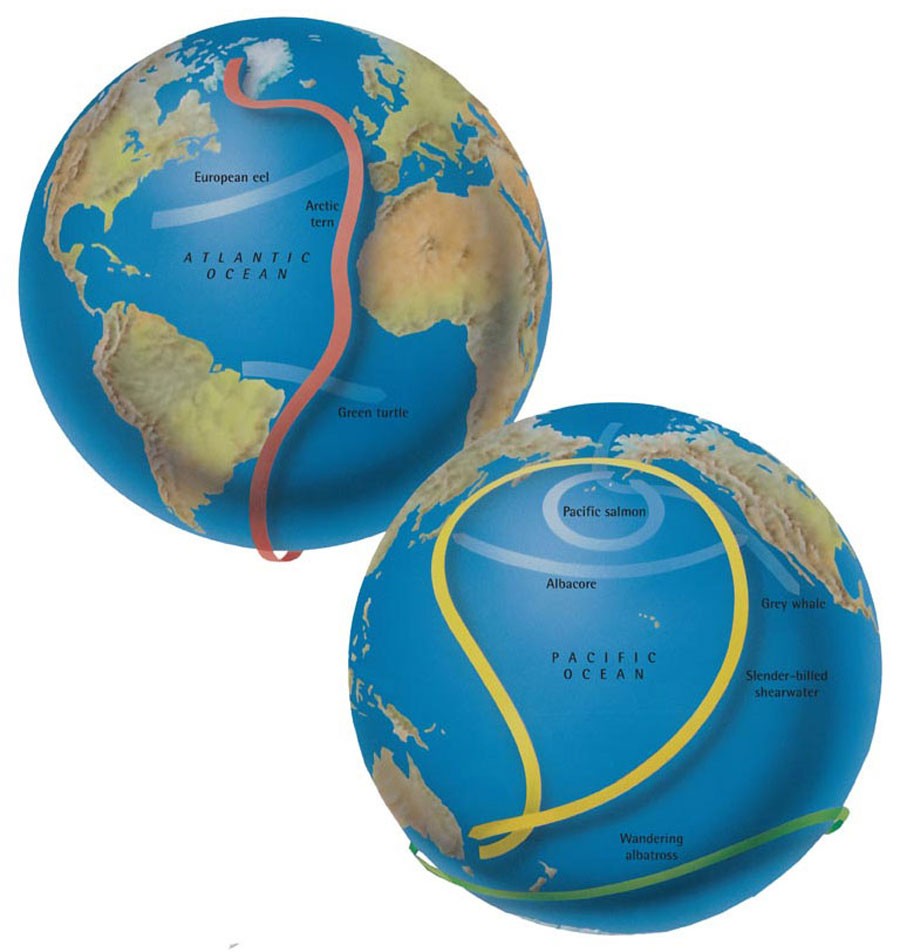
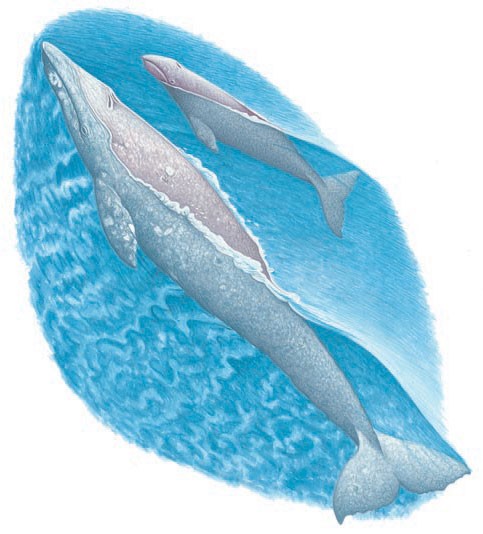
Animals migrate through oceans as well as across land. Some are regular to-and-fro migrants with the seasons, like grey whales. Their total yearly journey can amount to 20,000 kilometres (12,400 miles), making these creatures the longest-travelled mammals. Grey whales spend the brief summer in Arctic waters between East Asia and North America, where shrimp, shellfish and worms are abundant. Then they cruise south to spend winter. Females give birth to their offspring in warm, shallow, sub-tropical waters off South Korea to the west and southern California and Mexico in the east.
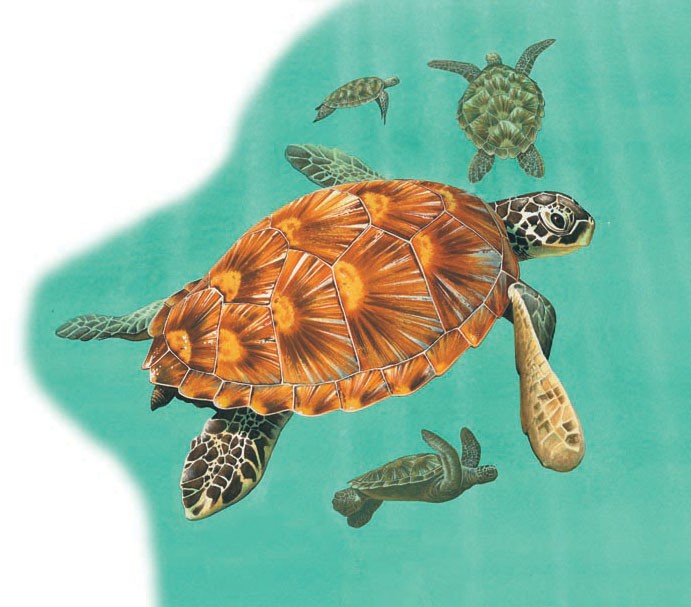
Green turtles are some of the farthest-travelled reptiles. Some groups feed off the tropical coasts of South America and then swim over 2000 kilometres (1200 miles) to breed on lonely Ascension Island in the middle of the Atlantic Ocean.
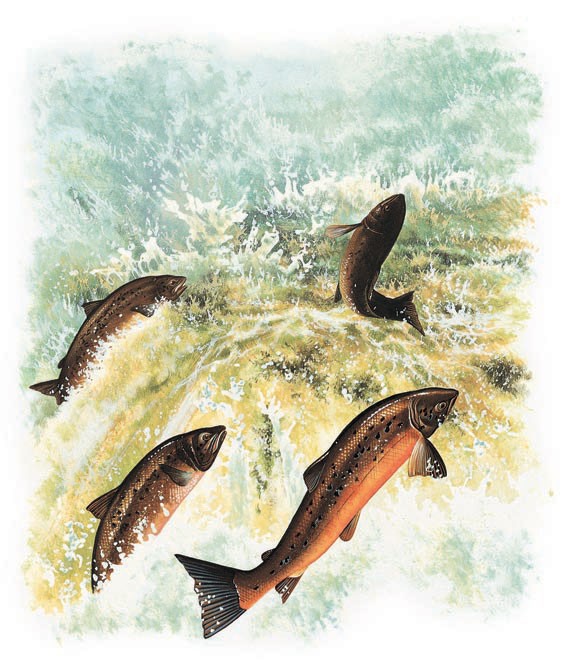
Some ocean migrations are less regular. Salmon grow up in European and North American rivers, then swim out to sea. They wander the oceans for thousands of kilometres before returning to their home rivers.
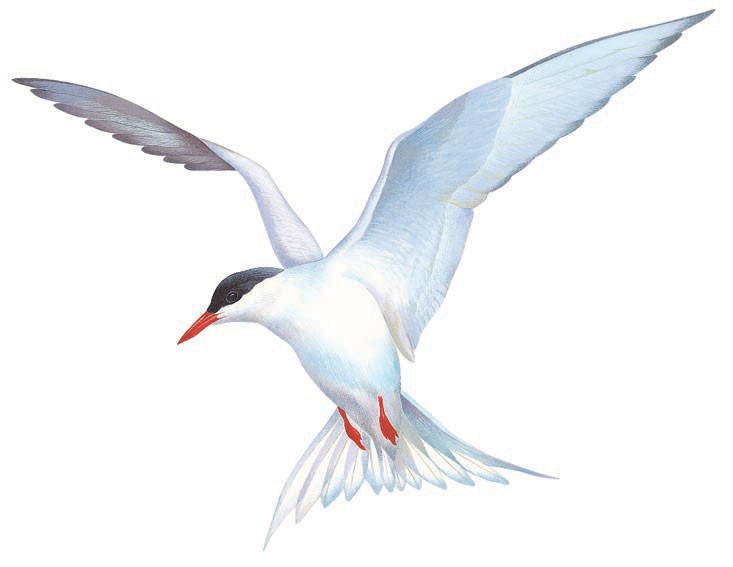
Arctic tern
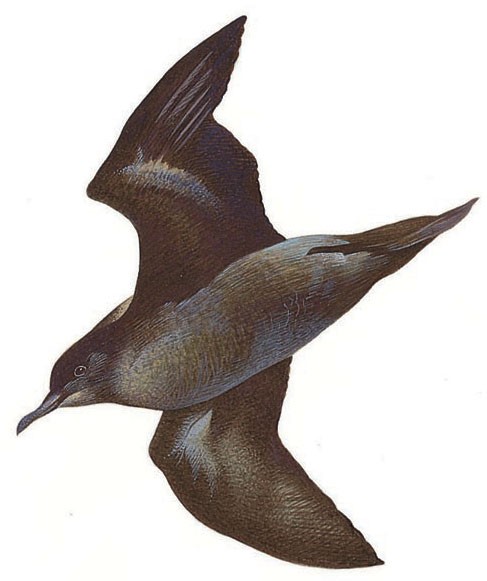
The champion long-distance migrant is the Arctic tern. In one year, this small bird flies from the Arctic to Antarctica and back again—almost all the way around the world. Adults breed in the Arctic when it is summer in the north. Then they fly to the opposite end of the Earth, a distance of more than 12,000 kilometres (7400 miles), where they spend the southern summer fishing in the Southern Ocean. They actually spend half the year flying from one home to another. Over the course of their lives, some will fly more than a million kilometres.
Caribou
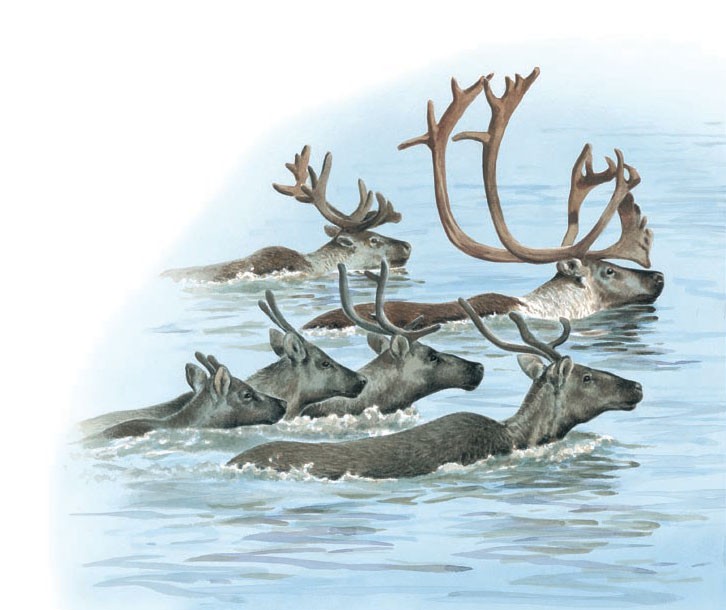
Caribou (reindeer) undertake the longest mammal migrations over land. As the spring thaw sets in, the herds leave their winter regions in the thick conifer forests of Canada and Northern Europe. They trek up to 1500 kilometres (900 miles) north along well-worn tracks to their summer pastures north of the Arctic Circle. Here, melting snows uncover plants that grow quickly in the continuous daylight of summer.
When autumn approaches, the well-fed caribou make the return trip to the shelter of the forests for winter. Wolves track the herds for part of the migration, picking off the stragglers. The passage can hold other dangers as well, some unexpected. In the mid-1980s more than 4000 caribou drowned trying to swim across a flooded river in Québec.
Monarch butterflies
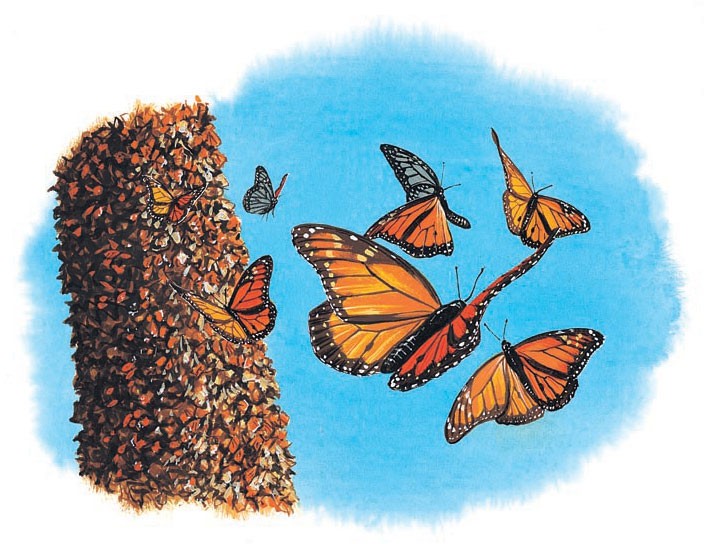
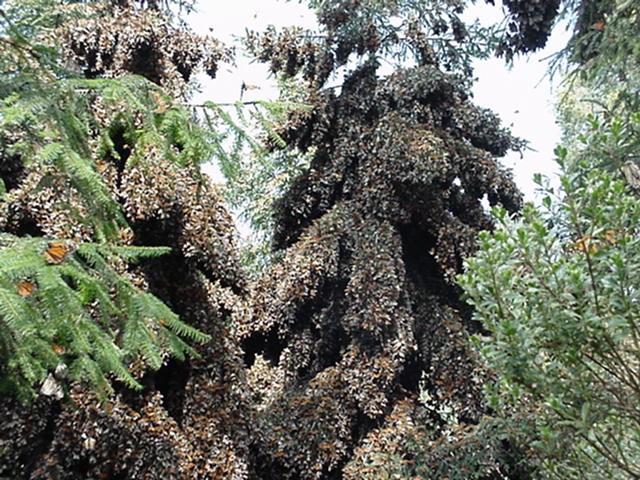
Every autumn, clouds of monarch butterflies flutter around 3200 kilometres (about 2000 miles) south from southern Canada to Mexico. Millions of these insects spend winter clustered together on tall evergreen trees. In spring they fly back north, laying eggs as they go. Most adults die, but their young complete the journey begun by their parents.
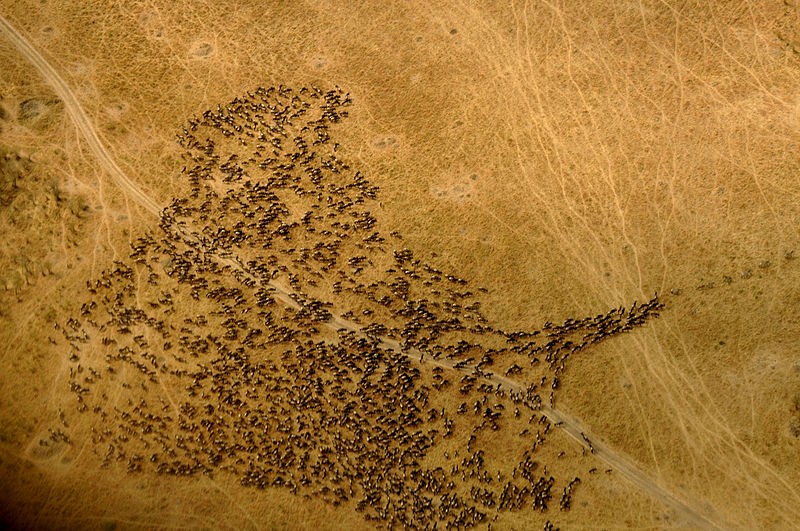
Wildebeest
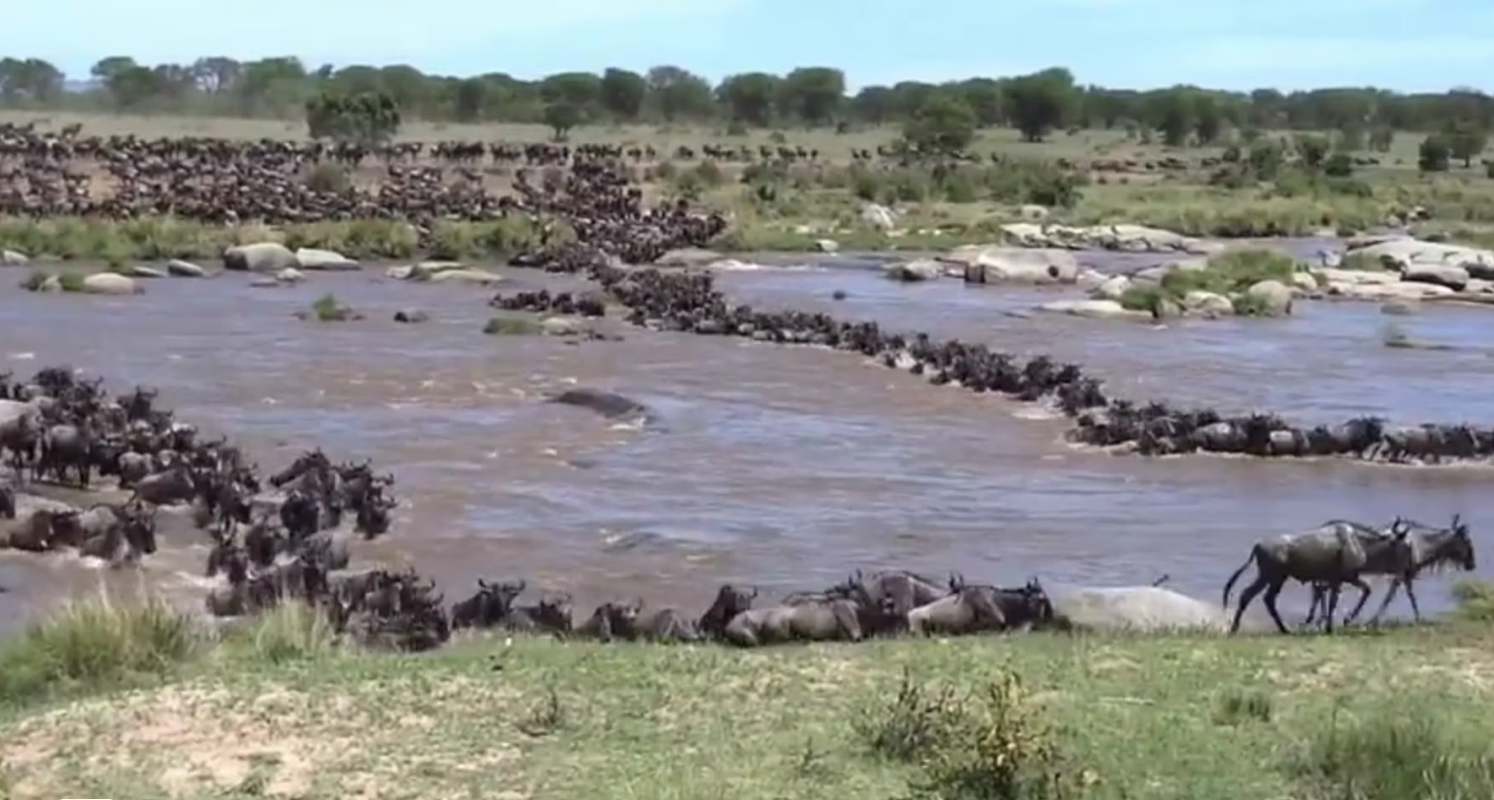
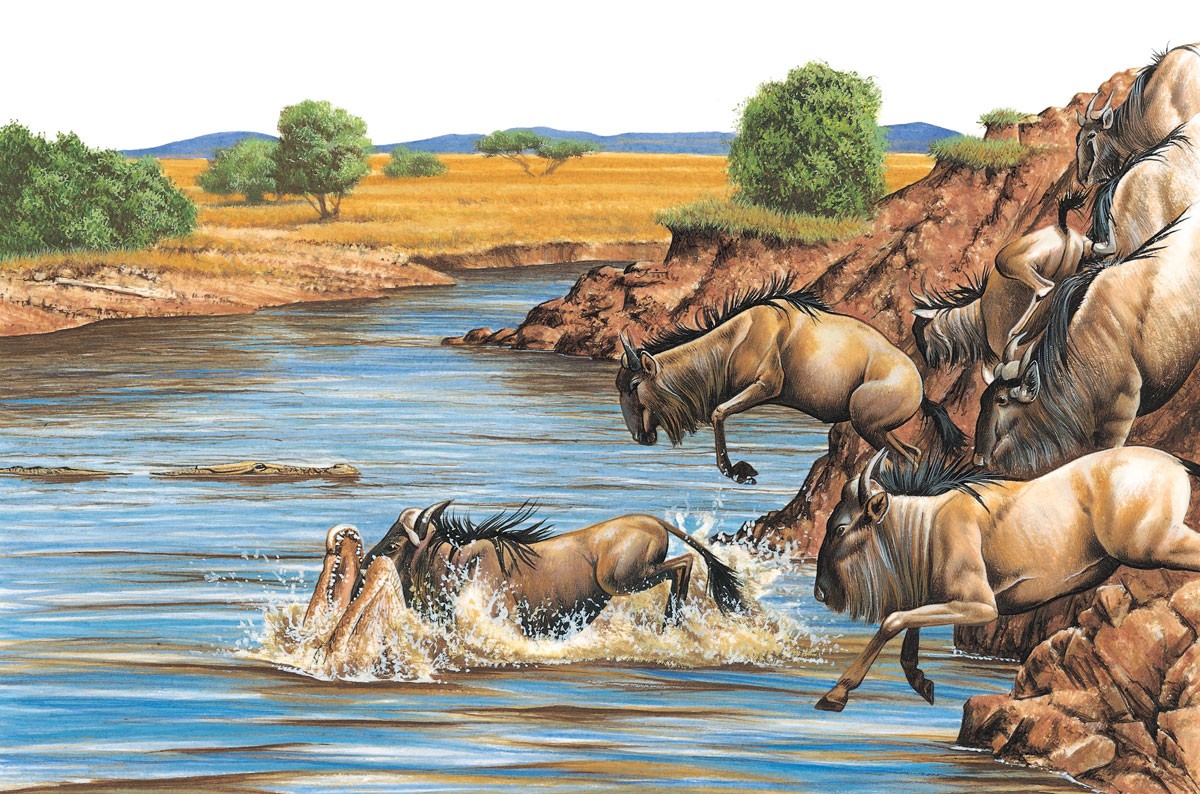
Each year around the same time, the great wildebeest migration begins in the Ngorongoro Conservation Area of Serengeti National Park in Tanzania. Roughly 1.7 million wildebeest are joined by 260,000 zebra and 470,000 gazelle in a journey north to the plains of Kenya’s Maasai Mara, where they find rain-ripened pastures to graze during the hot, dry season. When the rains on the Serengeti end in May, the wildebeest move northwest into lusher pastures, crossing the Mara River in July.
The herds stay in Kenya for the remainder of the dry season, before moving south again when the rains begin in November. To watch the wildebeest brave the steep cliffs—and hungry crocodiles, which depend on them for food—to cross the Mara River is one of the most awe-inspiring sights of the natural world, and tourists flock to the area to witness it. Those wildebeest that survive the journey (thousands die from thirst, hunger, exhaustion or predation) arrive back in the Serengeti in December in time for calving in February.
Antelopes
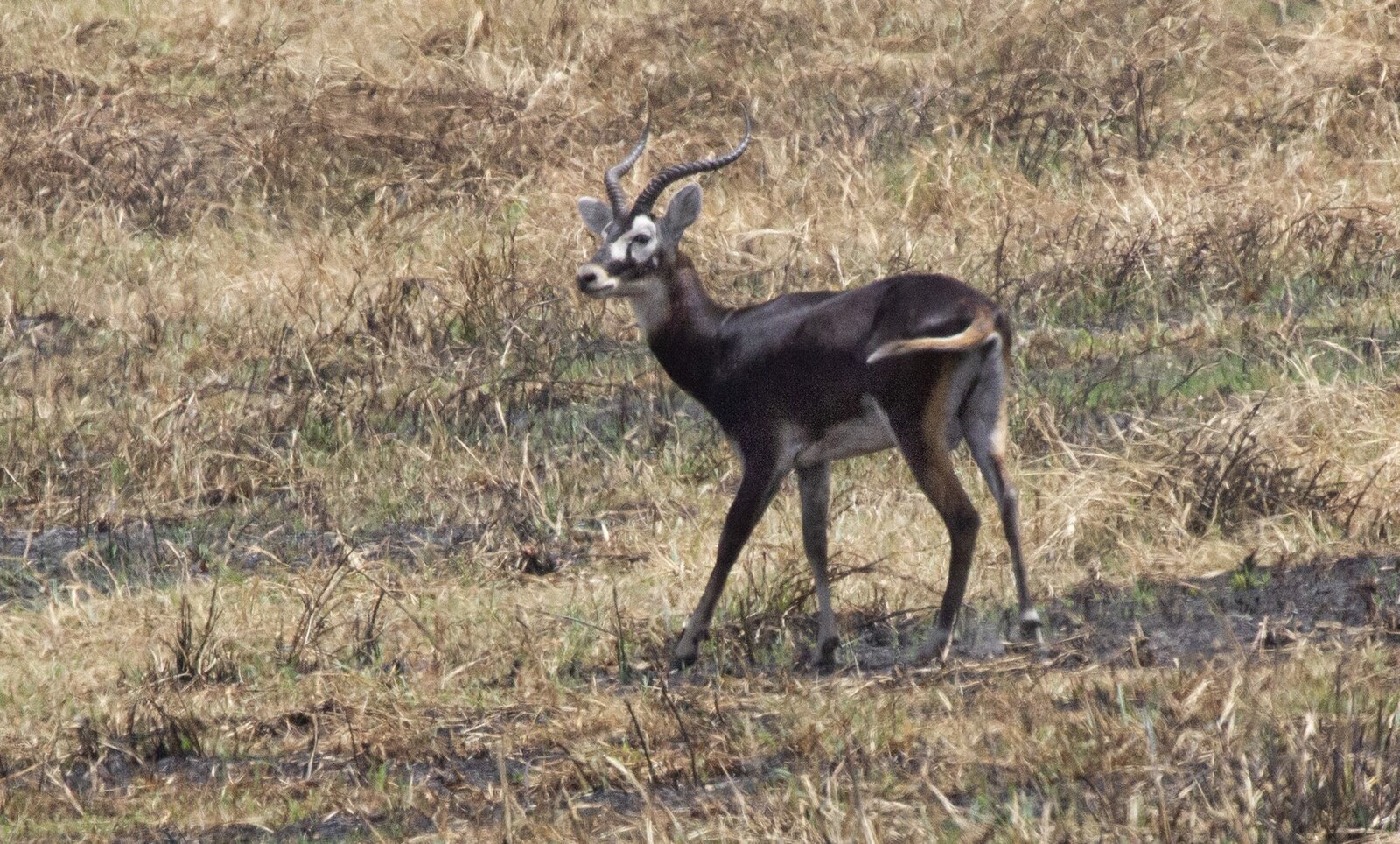
The largest migration of land mammals anywhere on Earth—more than double the size of the great migration of wildebeest, zebra and gazelle between Tanzania and Kenya—takes place in South Sudan. An aerial survey carried out in 2023 found that, despite decades of civil war in that country, some 6 million antelopes migrate from South Sudan's Bandingilo and Boma national parks northeast to the Gambella National Park in Ethiopia between January and June. The pattern is reversed from November to January. Four species of antelope, mainly white-eared kob, but also tiang, Mongalla gazelle and bohor reedbuk, make the 2000-kilometre (1250-mile) great Nile migration.
Desert locusts
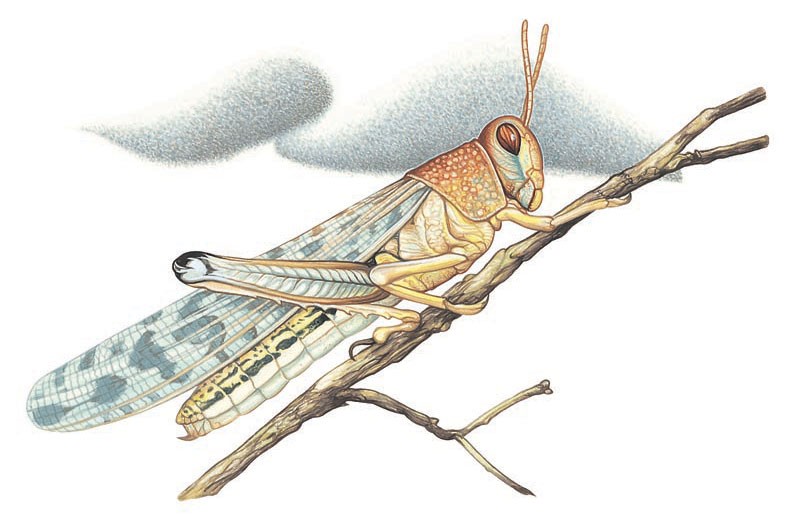
When food is scarce, desert locusts are uncommon. In good conditions they breed well, increase in numbers, band together in vast swarms and fly off to find new food—often farmers’ fields where they devastate the crops. They may fly about 3200 kilometres (2000 miles) in a great circle around the Sahara Desert.
Eels
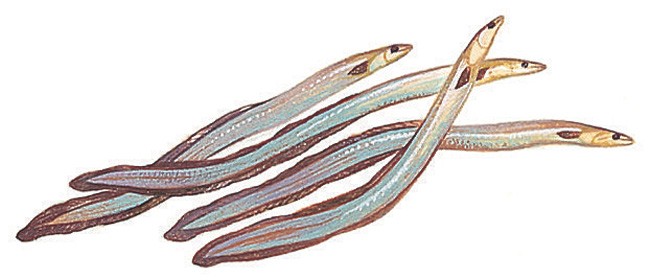
Eels hatch in the Sargasso Sea, a seaweed-choked region of the West Atlantic Ocean. The glass eels (young eels) drift slowly east with the currents for about 10,000 kilometres (6000 miles) and swim into European rivers three or four years later, where they grow into adults.
Freshwater fish
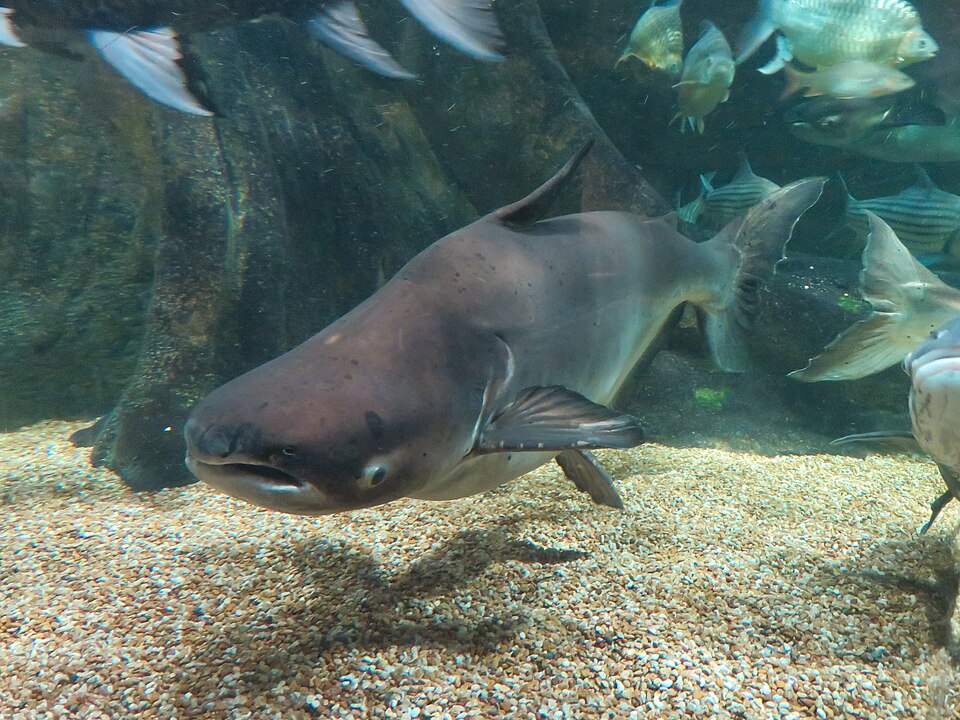
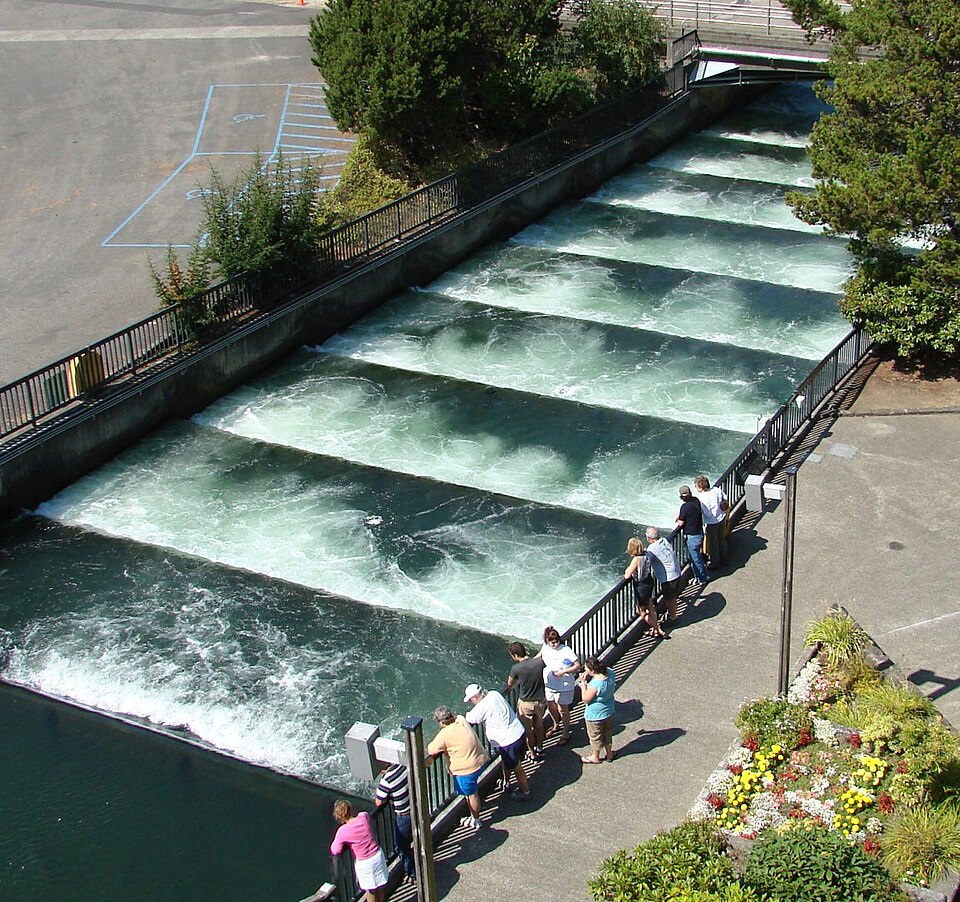
Fish that hatch out in fresh water, migrate to the ocean and return to the same freshwater streams to spawn are called anadromous fish. Examples include salmon, shad, striped bass, catfish and sturgeon. They lay their eggs in upstream waters with gravel beds, then swim downstream to take advantage of more abundant food in the sea. A catadromous fish, such as the eel, does the opposite. It lives in fresh water but travels to salt water to spawn.
The longest migration of any freshwater fish species is that of the 2-metre (6.6-foot) dorado catfish (or dourada) of South America It makes a migration of 11,000 kilometres (7000 miles), from spawning in the foothills of the Andes to feeding in the Amazon estuary and back again.
Such fish migrations happen in rivers across the world, but many are being disrupted by human activity. Dams block waterways, overfishing decimates populations while pollution destroys river and lake ecosystems. The climate crisis is adding to the damage by raising water temperatures. As well as the destructive effect this has on marine life, fisheries that rely on migratory freshwater fish (which feed hundreds of millions of people worldwide) are under threat.
Consultant: Chris Jarvis
pics
Without in any way limiting Q-files Ltd’s exclusive rights under copyright, any use of this publication to “train” generative artificial intelligence (AI) technologies to generate text is expressly prohibited. Q-files Ltd reserves all rights to license use of this work for generative AI training and development of machine learning language models.