
How animals live

CITE
We have made every effort to follow citation style rules, but there may be some minor differences. If in doubt, please refer to the appropriate citation style manual.
Animal behaviour. (2026). In Q-files Encyclopedia, Life, How animals live. Retrieved from
https://www.q-files.com/life/how-animals-live/animal-behaviour
"Animal behaviour." Life, How animals live, Q-files Encyclopedia, 23 Mar. 2026.
https://www.q-files.com/life/how-animals-live/animal-behaviour.
Accessed 21 Sep. 2026.
Animal behaviour 2026. Life, How animals live. Retrieved 21 September 2026, from
https://www.q-files.com/life/how-animals-live/animal-behaviour
Life, How animals live, s.v. "Animal behaviour," accessed September 21, 2026.
https://www.q-files.com/life/how-animals-live/animal-behaviour


Animal behaviour
Many animals, from earthworms to whale sharks, lead simple lives. Their behaviour is limited and they only encounter others of their own species briefly to mate—although, even then, some kind of courtship process is involved. Other creatures have much more complex behaviour. They form groups, which can sometimes involve thousands of individuals, have contests for group supremacy, mates and territories, help each other when feeding or hunting, and even look after each other’s offspring.
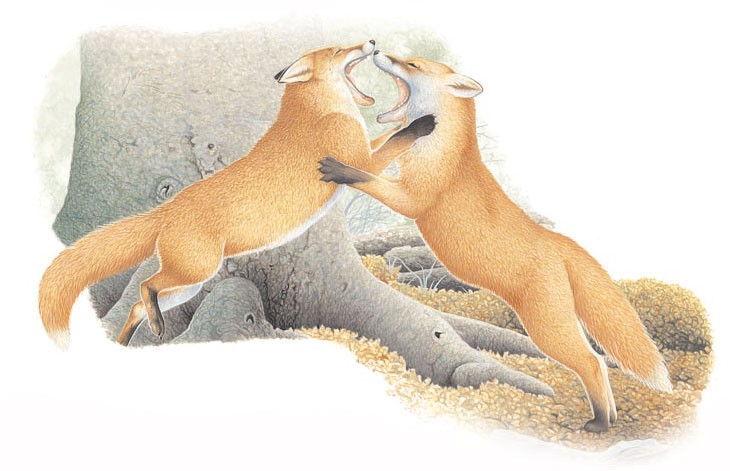
Courtship
Living things strive to survive so that they can breed and pass on their genes to their offspring. An animal must choose its breeding partner carefully. Courtship behaviour and mating displays pick out a partner of the same species, the opposite sex, sexually mature, strong, fit and healthy. This increases the chances of the offspring being fit and healthy, too.
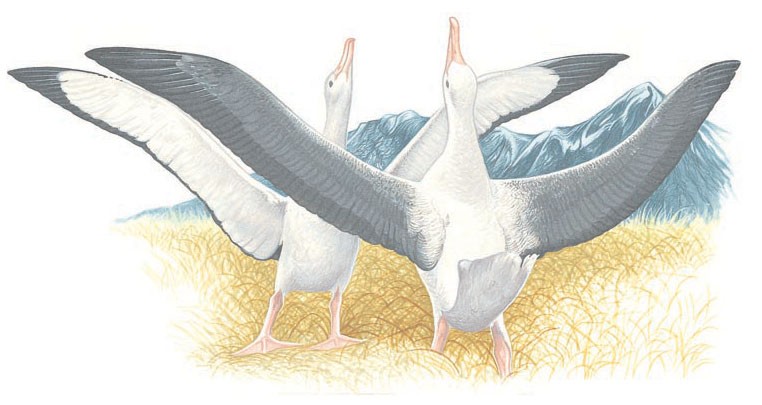
A pair of albatrosses produces only one chick every two years. So it is important that each parent knows the other is strong and healthy. The two go through a series of actions called a courtship ritual. They extend wings, bob heads, strut about, click beaks and make various groaning noises. If one partner fails to respond correctly, it may be ill or injured and so less suitable as a parent.
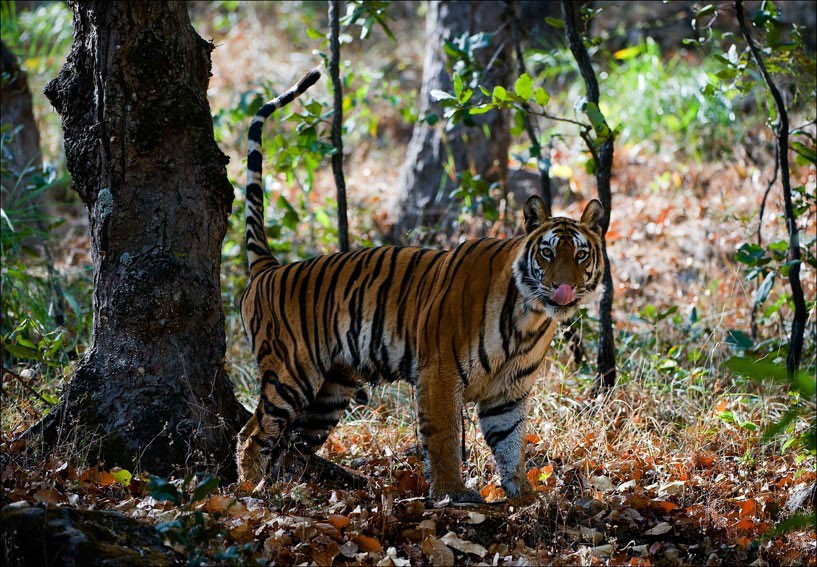
Territory
In some animals, survival depends on having a territory. This is a patch of land or water where the owner can live and feed without being in direct competition with rivals of its own kind. Owners often mark their territories by rubbing scents, spraying urine and leaving piles of droppings around the borders. They defend the territory against other of their kind by calls and songs, and also by visual displays.
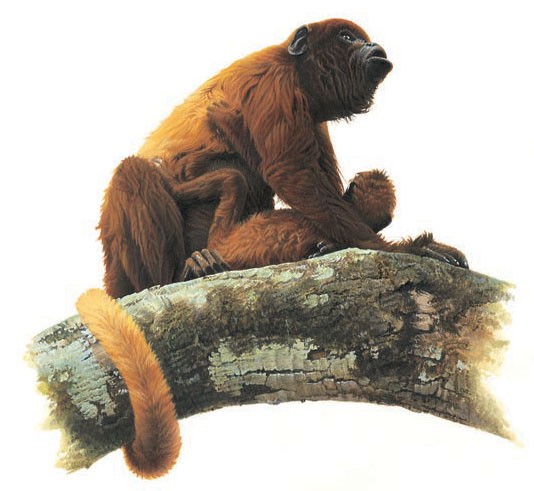
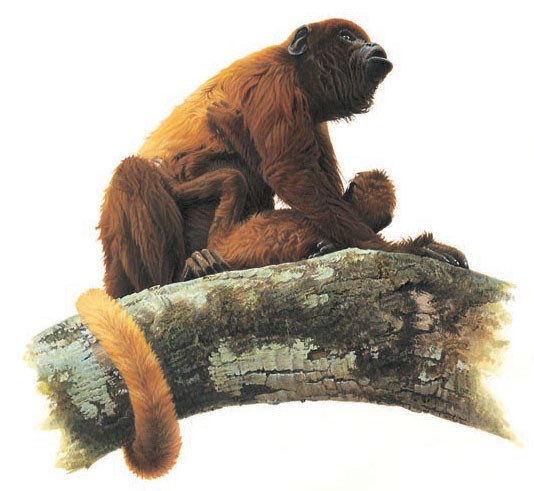
In thick forest, visual displays cannot be seen easily. So forest animals use sounds to defend their territories and attract mates. Each morning a howler monkey troop makes its whooping calls (really deep growling noises). The calls carry for five kilometres (three miles) and are among the loudest sounds in the animal kingdom. Neighbouring troops hear the calls and know the territory is already occupied. The dawn chorus of birds has the same purpose.
Partnerships
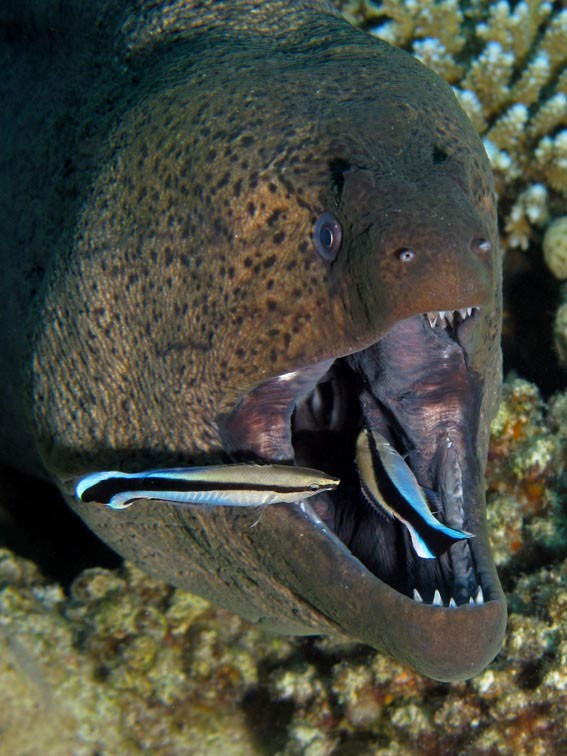
Life in the wild is a battle to stay alive. But sometimes helping others can increase an individual’s own chances of survival. Some living things form partnerships with other, quite different species where both partners gain. This is known as symbiosis.
Cleaner fish are small fish, such as wrasses, that tend to larger fish. The big fish could easily eat the cleaner. But the cleaner nips fish lice and other pests from its body, mouth and gills. The big fish is relieved of these parasites and the cleaner fish gets its meal. Similarly, birds called oxpeckers perch on large mammals, such as rhinos and zebras, on the African savanna, and pick off ticks and other parasites from their hosts' skin.
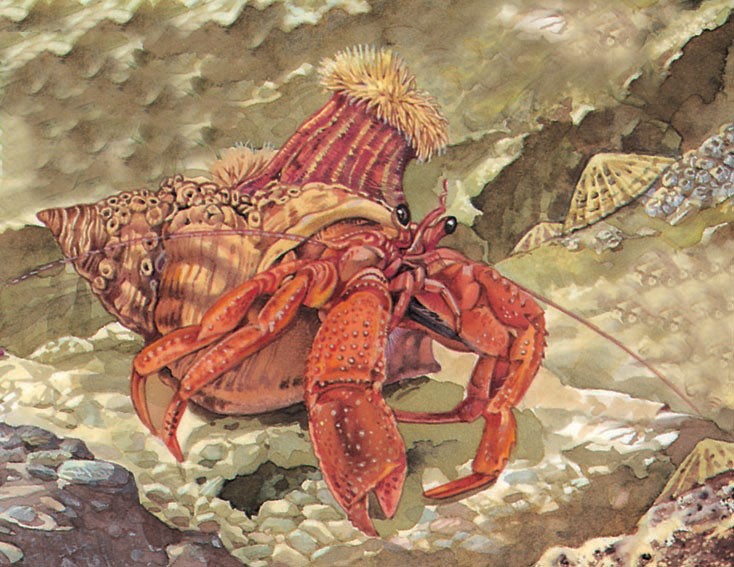
The hermit crab lives in the empty shells of other animals, and feeds by scavenging on dead plant and animal debris. It forms a symbiotic partnership with the calliactis sea anemone. The anemone lives on the crab's shell and protects its host by both providing camouflage and using its stinging tentacles to repel predators. In return, the crab carries the anemone to new places to catch victims. The anemone may also eat the leftovers of the crab's meals.
Group co-operation
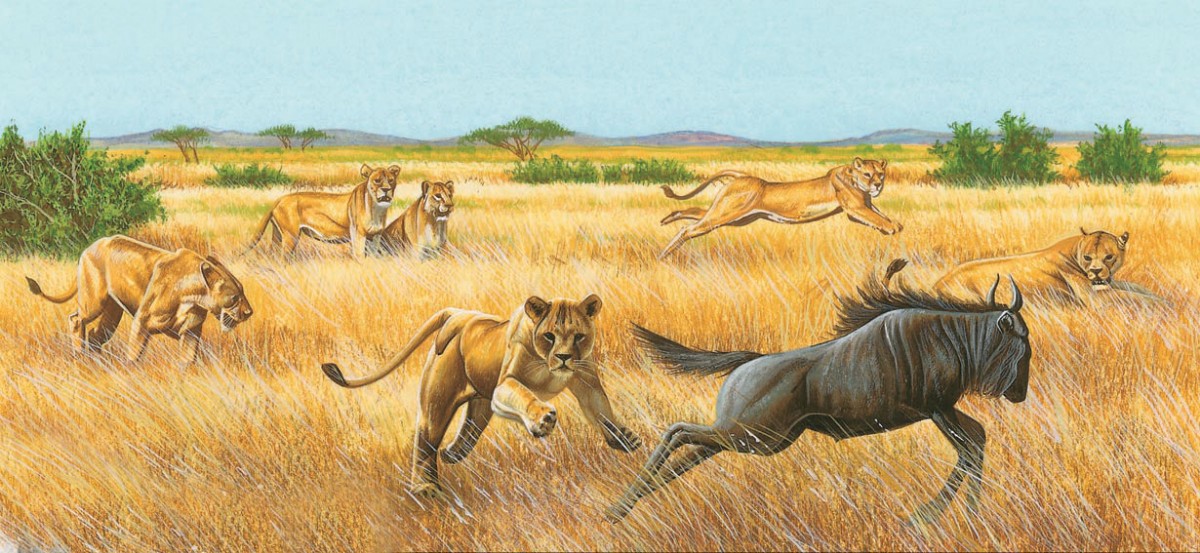
Many group-living animals produce alarm calls and actions if they spot danger. This warns others in their group. Likewise if one group member finds a plentiful supply of food, the others gather round to share it. A few kinds of animals even work together to hunt prey. These co-operative killers include wolves, lions, African wild dogs and killer whales.
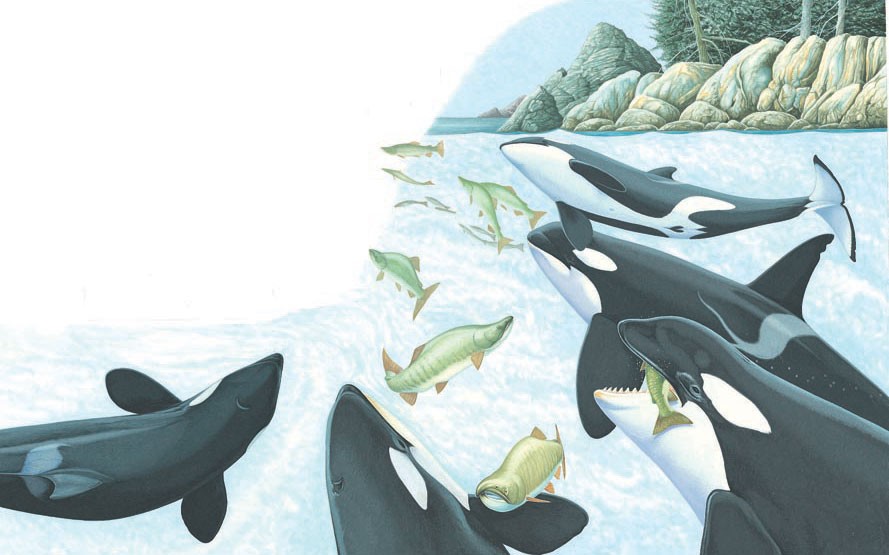
Killer whales or orcas live in groups called pods. Members of the pod communicate with each other using sounds, body postures and actions such as slapping the water with their flippers and tails. They spread out and surround prey such as a shoal of fish or squid. The orcas may then herd the shoal into shallow water or into a cove where they can be caught more easily, one by one.
These co-operative hunters also attack seals, sea lions, dolphins, porpoises and larger whales—even chasing and trapping sea birds on the water’s surface.
Consultant: Chris Jarvis
pics
Without in any way limiting Q-files Ltd’s exclusive rights under copyright, any use of this publication to “train” generative artificial intelligence (AI) technologies to generate text is expressly prohibited. Q-files Ltd reserves all rights to license use of this work for generative AI training and development of machine learning language models.