
Mammals

CITE
We have made every effort to follow citation style rules, but there may be some minor differences. If in doubt, please refer to the appropriate citation style manual.
Rhinoceroses. (2026). In Q-files Encyclopedia, Life, Mammals. Retrieved from
https://www.q-files.com/life/mammals/rhinoceroses
"Rhinoceroses." Life, Mammals, Q-files Encyclopedia, 24 Mar. 2026.
https://www.q-files.com/life/mammals/rhinoceroses.
Accessed 6 Aug. 2026.
Rhinoceroses 2026. Life, Mammals. Retrieved 6 August 2026, from
https://www.q-files.com/life/mammals/rhinoceroses
Life, Mammals, s.v. "Rhinoceroses," accessed August 6, 2026.
https://www.q-files.com/life/mammals/rhinoceroses


Rhinoceroses
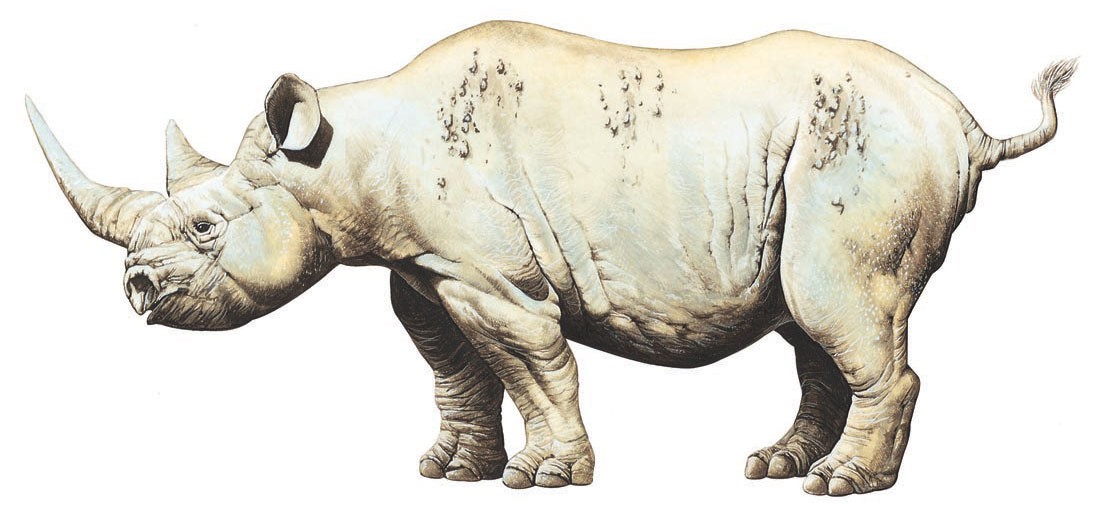
A rhinoceros is a large mammal with three toes on each foot. It is an ungulate, a group of herbivorous mammals with hooves. Rhinos like to be near water to keep cool, and roll in the mud to protect their skin from biting insects. There are five species: the black and white African rhinos and the Indian, Sumatran and Javan rhinos. Rhinos have one or two horns on their snout. The horns are made of keratin, the same substance that makes up hair and fingernails. Both African species and the Sumatran rhinos have two horns, while the Indian and Javan have a single horn. All but the white African are in danger of extinction because of poaching for their horns. They are sold to people who grind them up and offer them for sale as medicines.

Raising young
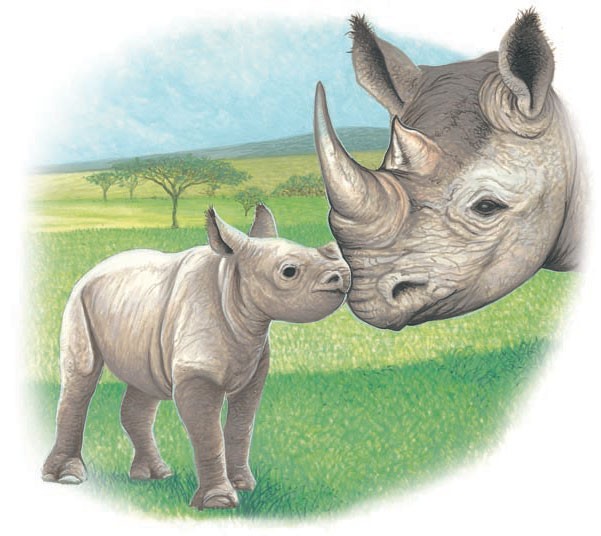
A rhinoceros calf can be on its feet when it is just hours old, but will stay with its mother for up to three years. A rhinoceros mother and calf form a tight bond. A mother will defend her calf fiercely should danger approach.
Black and white
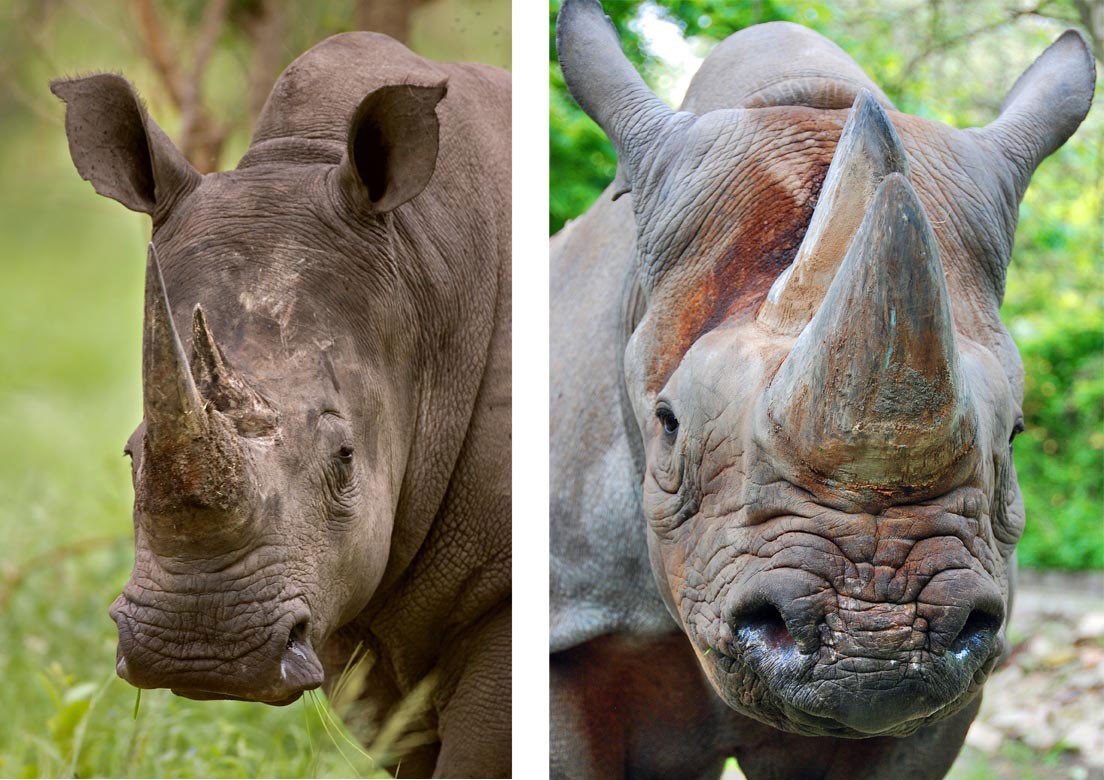
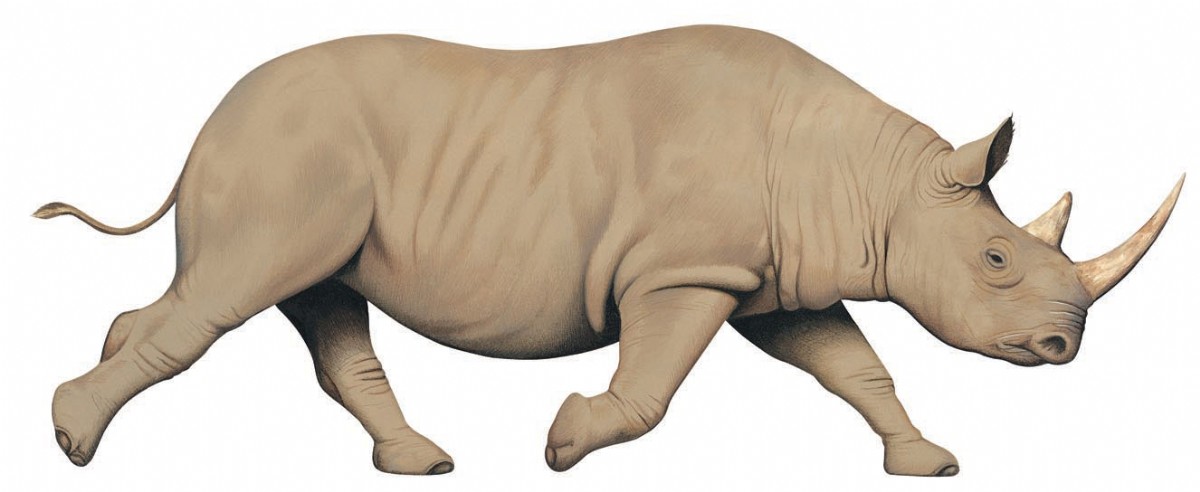
The two kinds of African rhinoceros, known as the black and the white rhinoceros, are actually both grey. The black rhino has a hooked lip for pulling at woody plants, thorny bushes, leaves and fruit, while the white has broad lips for grazing grass. The word "white" is thought to be from the Afrikaans word wyd, meaning wide—referring to its broad, square lips. Both kinds have two horns, the front one being the largest.
Far from being gentle herbivores, both white and black rhinos have a keen sense of smell and will charge at anything they perceive to be a threat—including other rhinos.
Indian rhinoceros
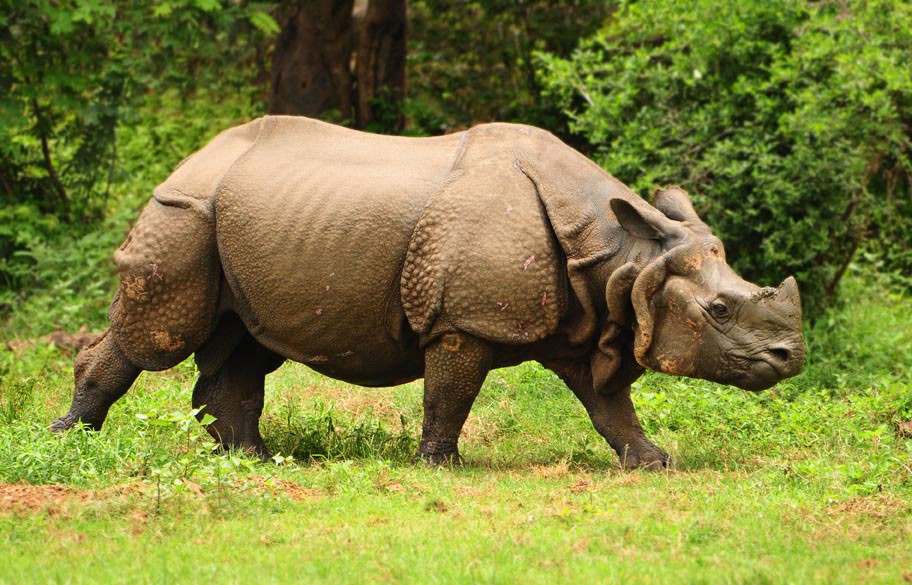
This single-horned species is about the same size as its African cousins. Its thighs and shoulders are covered in wart-like bumps. Previously widespread across southern Asia, it is now confined to a few protected areas in the foothills of the Himalayas.
Southeast Asian rhinos
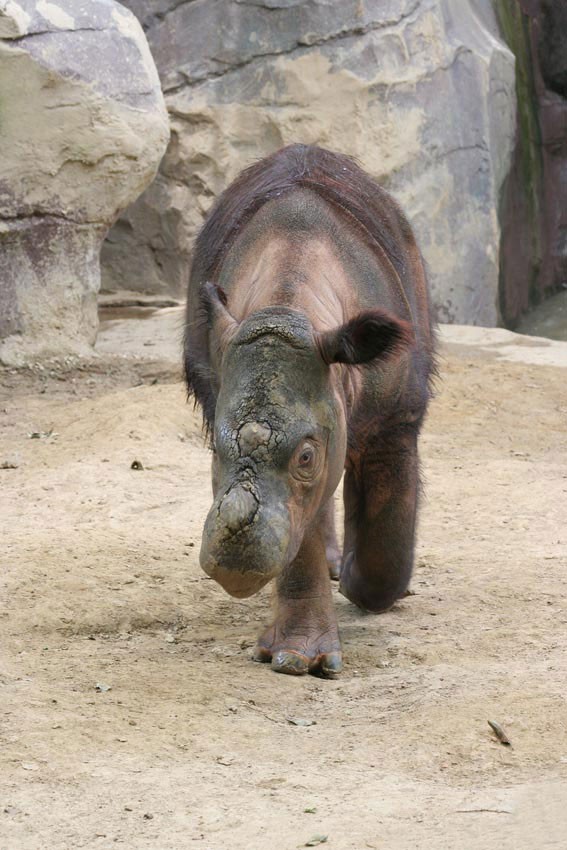
All Southeast Asian rhinos may be extinct in the wild in the next 5–10 years. The Sumatran rhinoceros is the smallest of the five species. It has two horns. It lives in the rainforest of Southeast Asia and is extremely rare, with only 100 individuals in the wild. Unlike other rhinos, the Sumatran rhinoceros is covered with long hair.
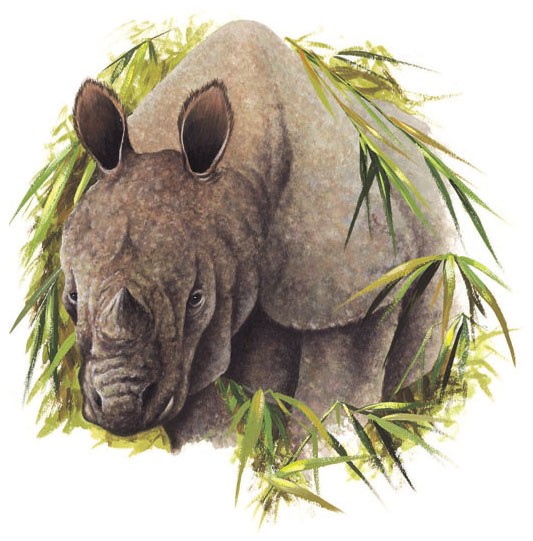
The Javan rhinoceros is the rarest of all the species of rhinoceros. Around 44 animals still survive in the rainforests of Indonesia. Since 2010, it has been extinct in its other stronghold, Vietnam. It has a single horn and its thick, folded skin gives it the look of wearing armour.
Consultant: Chris Jarvis
pics
Without in any way limiting Q-files Ltd’s exclusive rights under copyright, any use of this publication to “train” generative artificial intelligence (AI) technologies to generate text is expressly prohibited. Q-files Ltd reserves all rights to license use of this work for generative AI training and development of machine learning language models.