
Mammals

CITE
We have made every effort to follow citation style rules, but there may be some minor differences. If in doubt, please refer to the appropriate citation style manual.
Chimpanzee. (2026). In Q-files Encyclopedia, Life, Mammals. Retrieved from
https://www.q-files.com/life/mammals/chimpanzee
"Chimpanzee." Life, Mammals, Q-files Encyclopedia, 27 Apr. 2026.
https://www.q-files.com/life/mammals/chimpanzee.
Accessed 6 Aug. 2026.
Chimpanzee 2026. Life, Mammals. Retrieved 6 August 2026, from
https://www.q-files.com/life/mammals/chimpanzee
Life, Mammals, s.v. "Chimpanzee," accessed August 6, 2026.
https://www.q-files.com/life/mammals/chimpanzee


Chimpanzee
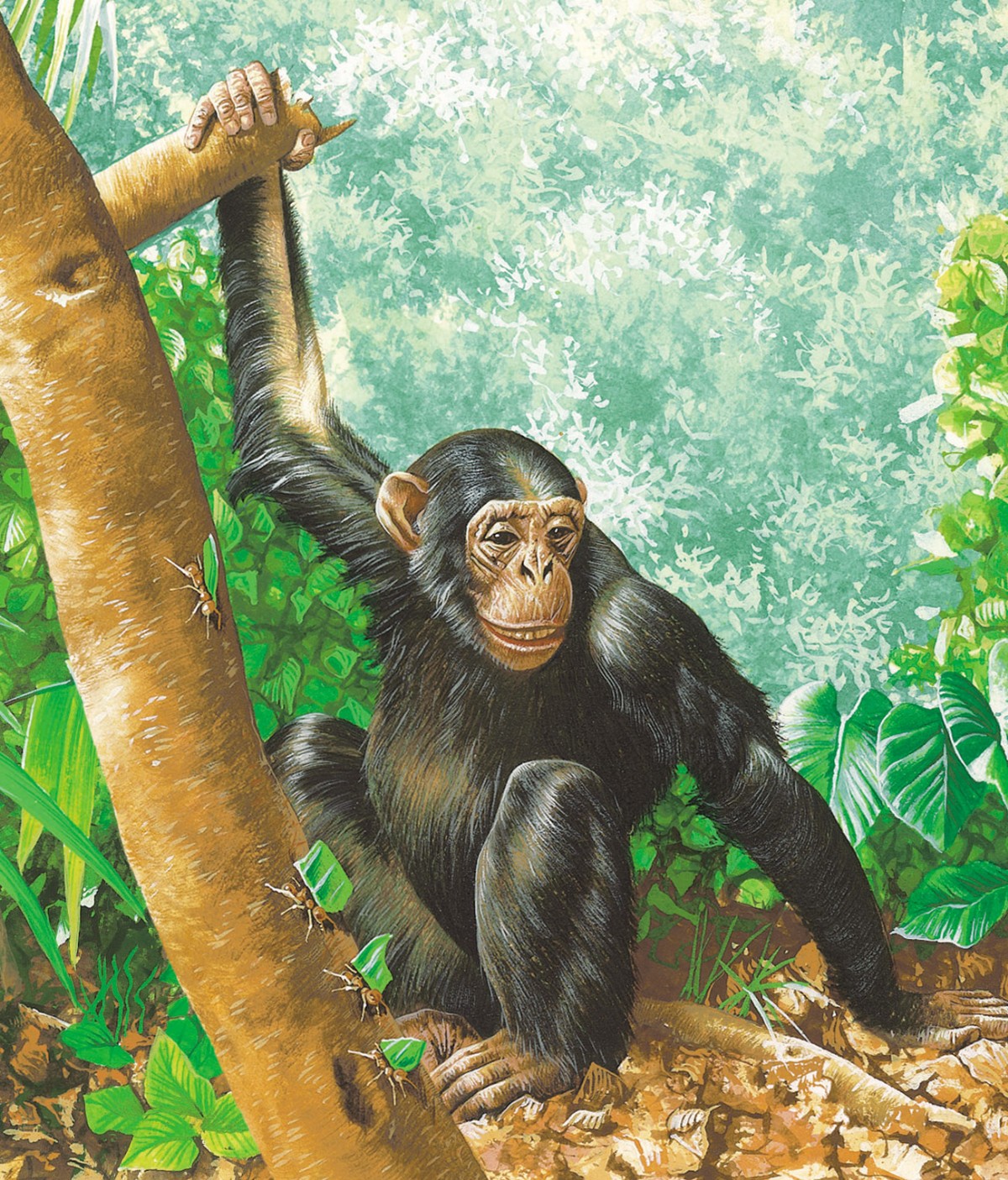
The chimpanzee is a great ape that lives in the rainforests, woodlands and savanna of Central, West and East Africa. Humans’ closest relative, the chimpanzee is one of the most intelligent of all animals, using a wide variety of tools and capable of problem-solving or learning sign language to communicate with people. It spends most of its time on the forest floor, although it usually sleeps in nests made of leaves in the trees at nights. An omnivore, it eats a wide range of foods, including fruit, eggs and insects. Troops of chimps will also hunt monkeys, deer and other small animals for food. There are four subspecies of chimpanzee and a close relative, the bonobo.
Getting about
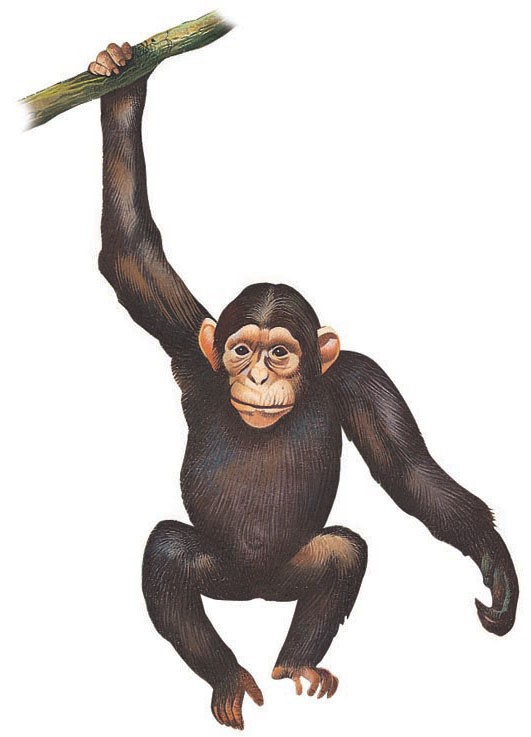
Chimpanzees use their long, powerful arms for climbing trees and swinging from branch to branch. On the ground, like gorillas and bonobos they move around mostly on all fours using their knuckles for support. This is known as knuckle-walking. Chimps can walk and run upright on two legs for short distances, especially when carrying objects in their hands.
Communities
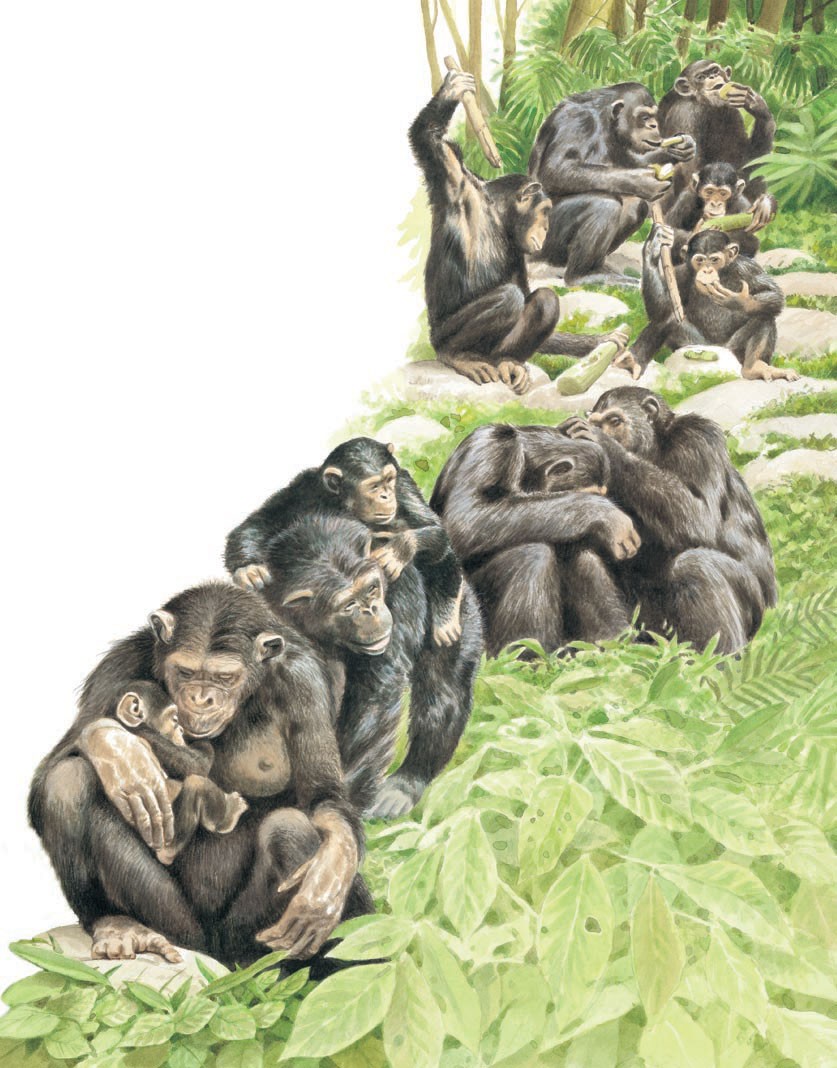
Chimpanzees live together in communities of between 20 and 150 individuals. Males are dominant over females. They patrol their territory, protect members of the group and search for food. At the top of the heirarchy is the alpha male, which maintains order during any disputes. The females often choose which male is to be the alpha male in the group, so a male must win acceptance from the females in the community.
Male chimpanzees form troops that fight each other, often while attempting to seize part or all of their rivals' territority, or from defending their own. The common chimpanzee tends to show more aggression than its relative, the bonobo.

Diet
The chimpanzee prefers to eat fruit, but will also feed on leaves, seeds, flowers, honey and bark. While they are mostly herbivorous, chimps also eat insects, birds, eggs and even small mammals, such as deer or bushbabies. Troops of chimps will hunt and kill monkeys, with the western red colobus their favourite victim.
Young
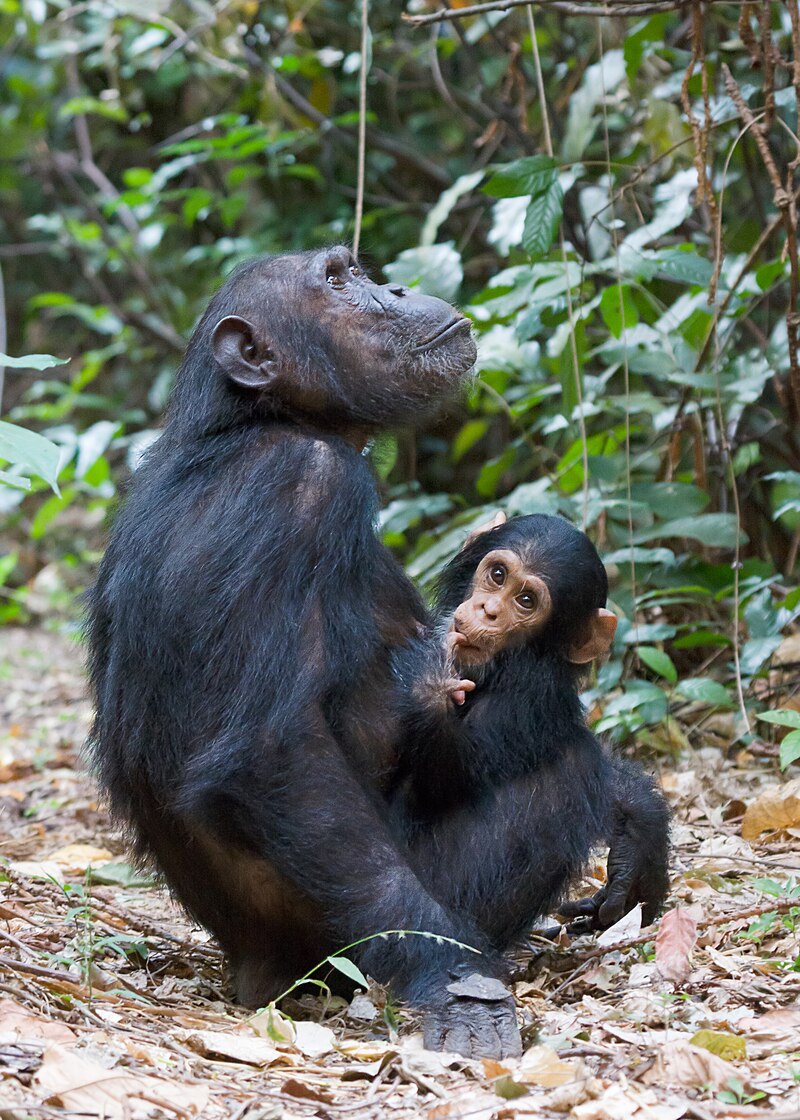
Young chimpanzees learn which fruits are safe to eat and where ripe fruit is to be found in the forest from closely observing their mothers and other adults. For the first few months of its life, the baby chimp clings to its mother's fur all the time. A young chimp will spend its first 10 years or so learning, for example, how to groom other chimps. This important part of social behaviour, involves cleaning each other's fur, including picking out parasites, insects, twigs and so on. Young chimps also learn how to make nests of leaves in trees, where to find fruit and other food, and how to use a variety of tools.
Toolmaking
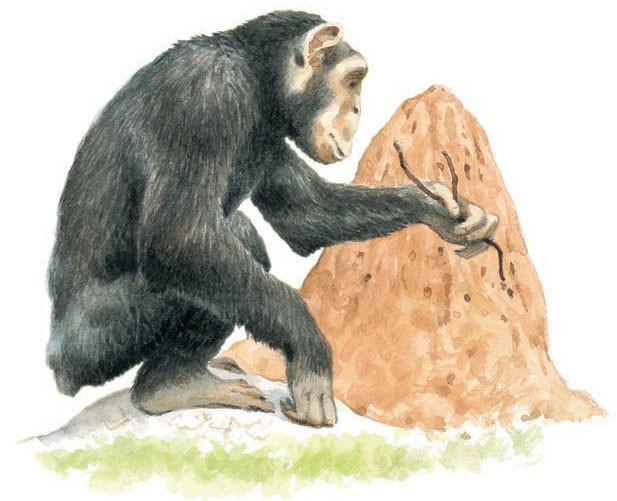
Chimpanzees use sticks and stones as tools. They were first observed using tools in October 1960. Before this, it was thought that only humans used tools. Since then, all other ape species have been observed using some sort of tool. They poke termite mounds with a large stick tool, and then using a smaller stick to "fish" the termites out. They sharpen sticks with their teeth to make spears which they use to hunt bushbabies. They also use stones to smash open nuts and leaves as cups for drinking water.

Bonobos
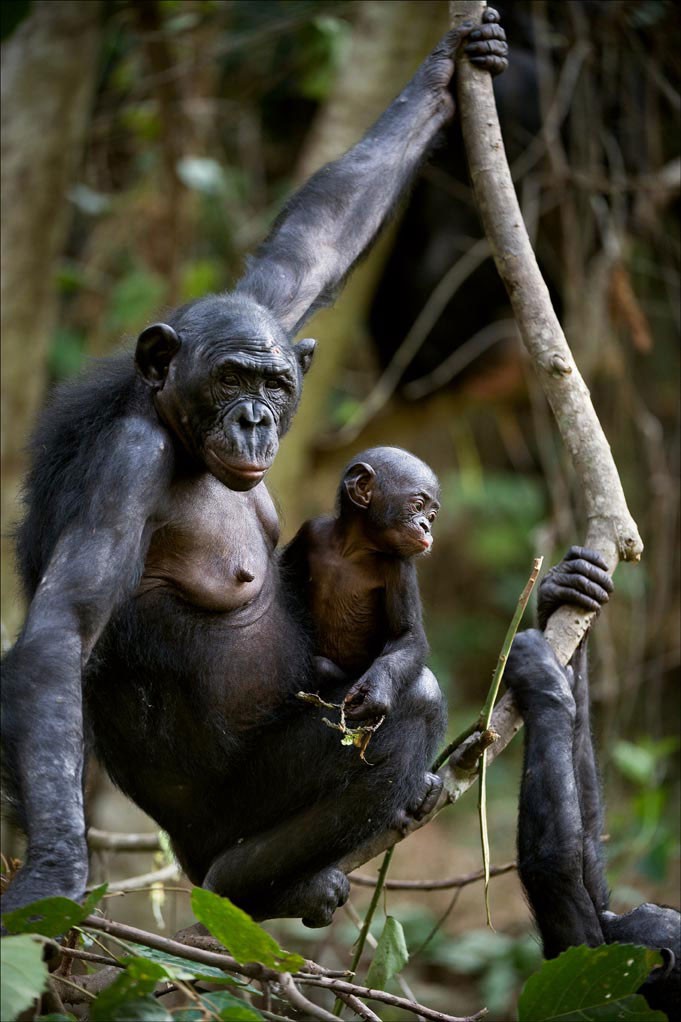
Bonobos live to the south of the River Congo in the tropical rainforest of the Democratic Republic of Congo. Scientists say they probably descend from chimpanzees that crossed the river between 1 and 2 million years ago, most likely during a period of drought. (Neither chimps nor bonobos are good swimmers, so they have remained separated by the wide Congo ever since.)
Those migrants to the south evolved differently from their relatives to the north. Among bonobos, females are the dominant sex, and their societies are more peaceful. Compared to chimpanzees, bonobos have slim upper bodies and long legs They also have longer hair on their heads, parted down the middle. Bonobos eat mostly fruit, but their diet also includes leaves, honey, eggs and meat from small animals they come across the forest. With a population of between 15,000 and 20,000 individuals, they are critically endangered.
Consultant: Chris Jarvis
pics
Without in any way limiting Q-files Ltd’s exclusive rights under copyright, any use of this publication to “train” generative artificial intelligence (AI) technologies to generate text is expressly prohibited. Q-files Ltd reserves all rights to license use of this work for generative AI training and development of machine learning language models.