
Mammals

CITE
We have made every effort to follow citation style rules, but there may be some minor differences. If in doubt, please refer to the appropriate citation style manual.
Wolf. (2026). In Q-files Encyclopedia, Life, Mammals. Retrieved from
https://www.q-files.com/life/mammals/wolf
"Wolf." Life, Mammals, Q-files Encyclopedia, 24 Mar. 2026.
https://www.q-files.com/life/mammals/wolf.
Accessed 21 Sep. 2026.
Wolf 2026. Life, Mammals. Retrieved 21 September 2026, from
https://www.q-files.com/life/mammals/wolf
Life, Mammals, s.v. "Wolf," accessed September 21, 2026.
https://www.q-files.com/life/mammals/wolf


Wolf
Grey wolves are large, wild dogs with powerful jaws and sharp hearing. They will eat anything they can find: animals already killed, farm stock, vegetation—even waste from rubbish dumps. But their main food is other animals, such as deer and moose. To take down such large prey, the wolves hunt in packs. Their long legs allow them to run fast in pursuit of quarry, and also to pick their way through deep snow. There are 39 subspecies of grey wolf, including the dingo, red wolf and African wolf. Domestic dogs are descended from wolves.

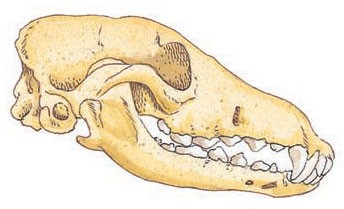
Powerful predator
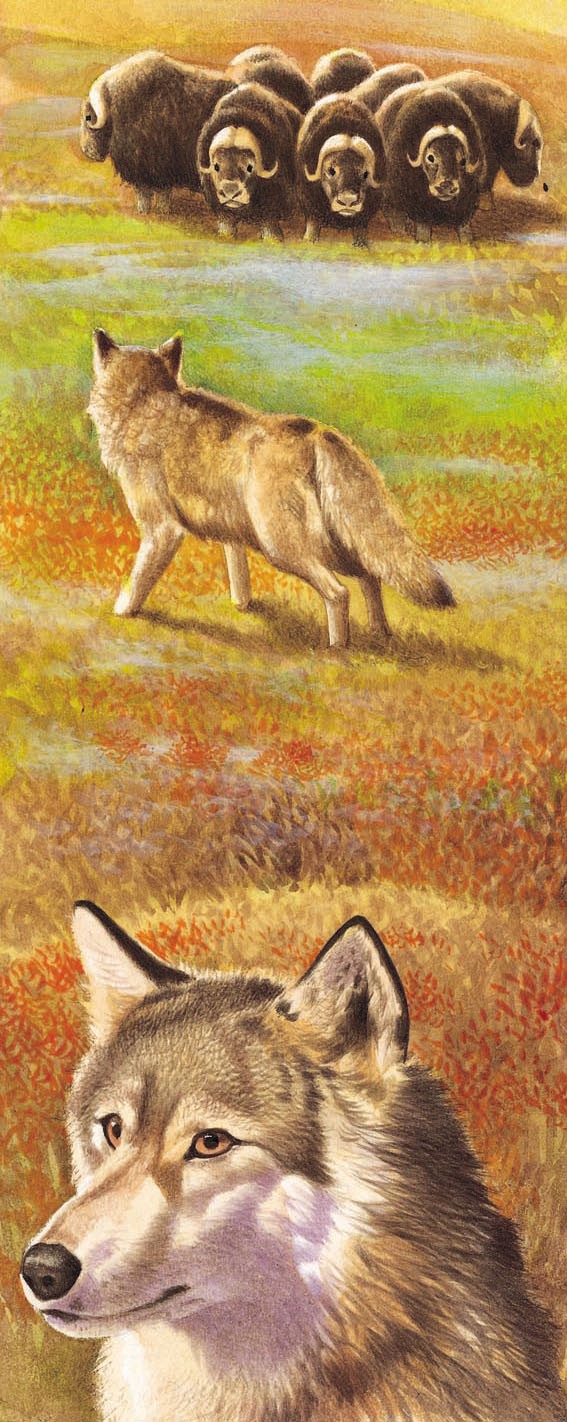
The skull of this wolf shows the powerful jaws and teeth that make it a superb predator. The force of its bite enables it to crush bones. Wolves normally feed on large ungulates such as moose, musk ox, reindeer and bison (as well as livestock in farming areas), but also prey on smaller animals such as rabbits, rodents, lizards, birds and insects. They frequently eat carrion (dead animals) and human waste, and supplement their diet with fruit.
Wolves are the dominant predator in their range, with tigers their only threat where they live in the same regions of Asia. A pack of wolves is a match for any other carnivore, including brown bears and hyenas.
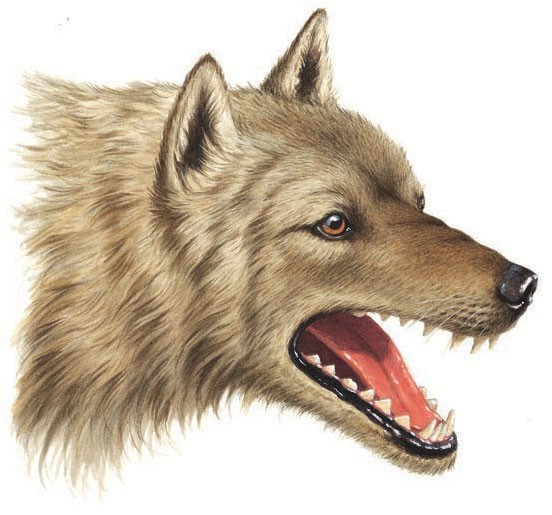
Pack hunting
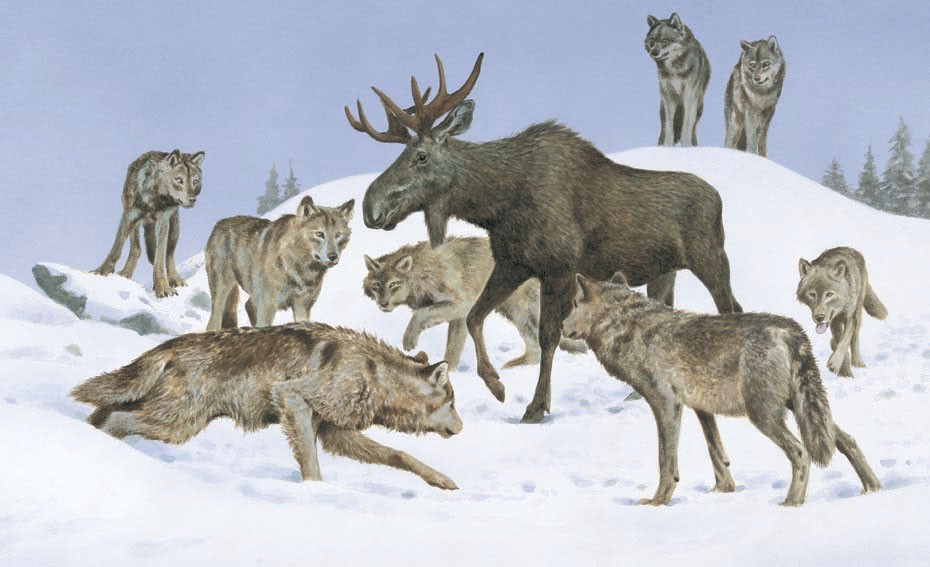
In the northern forests, grey wolves live and hunt in packs that usually consist of a family of 5–10 animals: a mated pair, called the alpha pair, and their offspring. The wolves howl to keep in touch with each other and to warn rival packs away. They establish large territories, which they mark out with urine, dung and scratches in the ground, and defend them from other packs fiercely.
When seeking prey, the wolves set out in single file to track musk oxen, deer, bison or moose. They most often detect their prey by scent. Once the prey is sighted, the wolves stand still. As soon as the prey starts to run, the wolves suddenly rush forward into the attack. If the prey stands its ground, the wolves may ignore it.
Consultant: Chris Jarvis
pics
Without in any way limiting Q-files Ltd’s exclusive rights under copyright, any use of this publication to “train” generative artificial intelligence (AI) technologies to generate text is expressly prohibited. Q-files Ltd reserves all rights to license use of this work for generative AI training and development of machine learning language models.