
Mammals

CITE
We have made every effort to follow citation style rules, but there may be some minor differences. If in doubt, please refer to the appropriate citation style manual.
Mongooses. (2026). In Q-files Encyclopedia, Life, Mammals. Retrieved from
https://www.q-files.com/life/mammals/mongooses
"Mongooses." Life, Mammals, Q-files Encyclopedia, 24 Mar. 2026.
https://www.q-files.com/life/mammals/mongooses.
Accessed 22 Sep. 2026.
Mongooses 2026. Life, Mammals. Retrieved 22 September 2026, from
https://www.q-files.com/life/mammals/mongooses
Life, Mammals, s.v. "Mongooses," accessed September 22, 2026.
https://www.q-files.com/life/mammals/mongooses


Mongooses
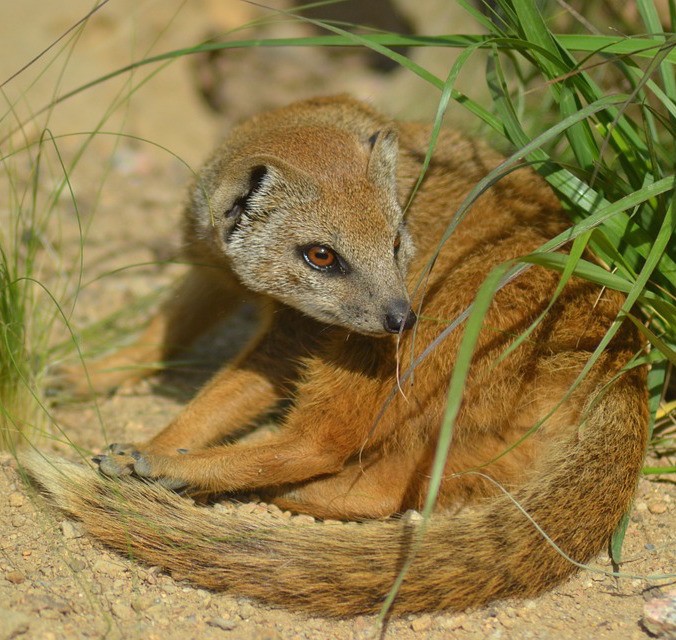
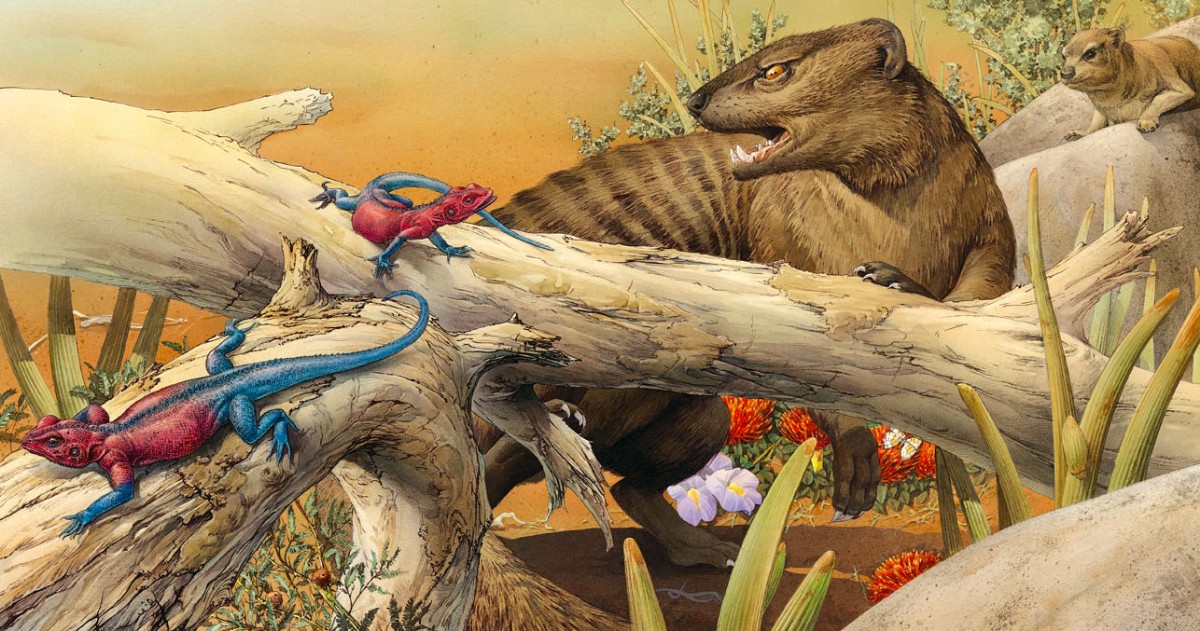
The mongoose family includes the 34 species of mongoose and the meerkat. Their home range is Asia, Africa, and southern Europe, but they have also been introduced to other areas. They are mainly solitary animals, but the dwarf and banded mongooses live and forage for food in colonies. Equipped with long claws that are good for digging, they feed mostly on insects, worms, lizards, snakes, birds, eggs and rodents. They use their strong sense of smell to locate prey, as well as carcasses to scavenge. A few species, such as the Indian grey mongoose, prey on venomous snakes, such as cobras.
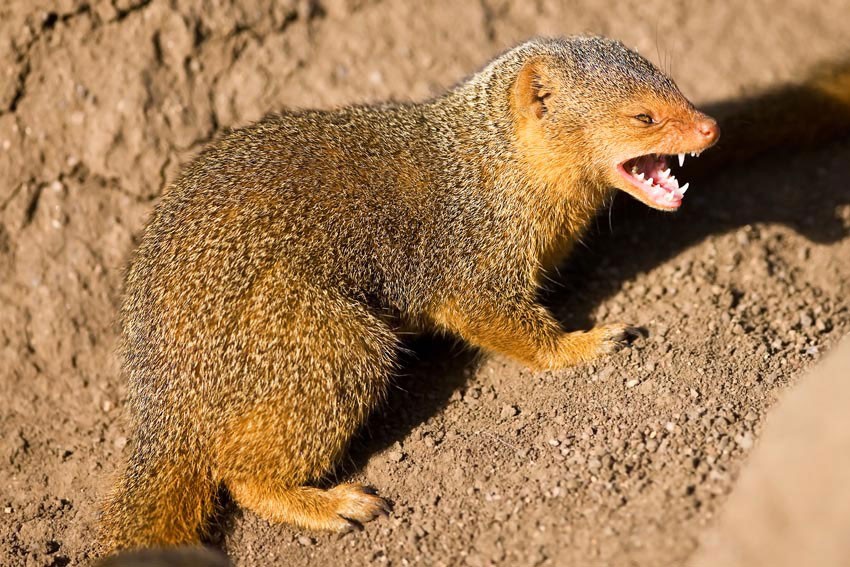
Dwarf mongoose
Each dwarf mongoose pack contains one dominant pair, together with their offspring and some "immigrants", other individuals that have been allowed to join. There may be more than 20 animals in each pack. Both males and females may leave one pack and join another. Care of the young is shared by "babysitters" in the pack, while the adults forage for food.
Like both the banded mongoose and the meerkat, the dwarf mongooses rely on a sentry system in which each pack member takes it in turns to scan the surroundings—including the skies above—for predators. The sentry sits on a high point, for example, a termite mound, for a better view. A loud series of alarm calls sends the animals scattering for cover.
Meerkat
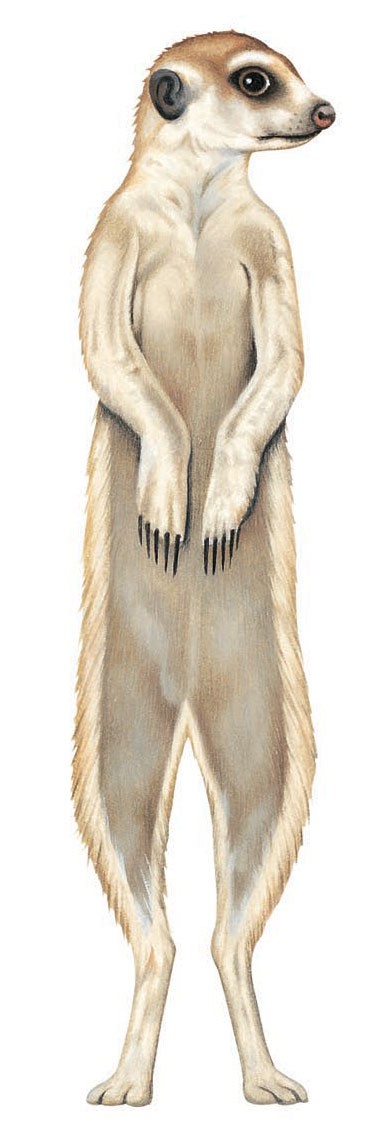
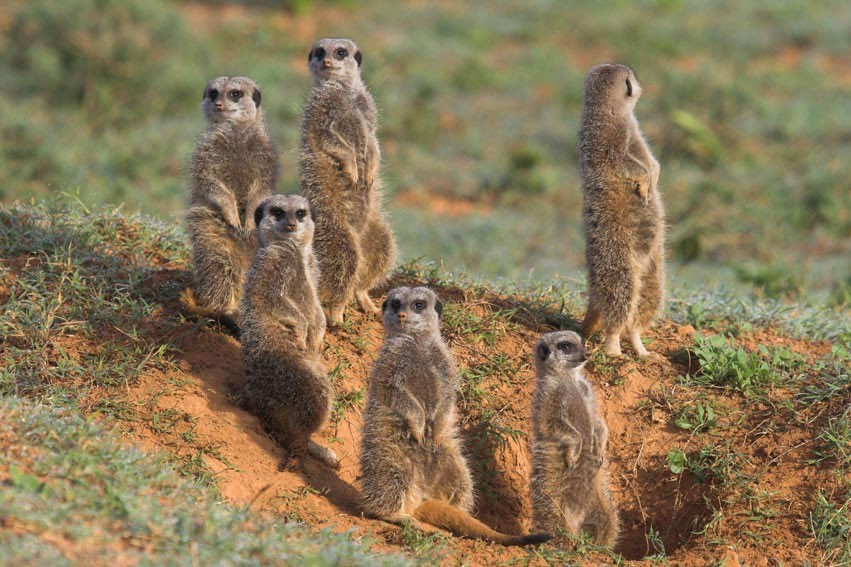
Unlike most other mongooses, meerkats live in groups, called mobs or gangs, of between 20 and 30 animals. They forage for small reptiles, insects and other invertebrates by day in the dry scrublands of Southern Africa.
The meerkats each take turns to act as a lookout on behalf of the rest of the mob, watching for danger from a high point on a mound. If it detects a predator, it gives a loud alarm bark to warn the mob. Different barks tell the others whether the threat comes from a bird of prey, such as a hawk, in the air, or a predator on the ground. If it is from the air, the meerkats dive down the nearest bolt hole. If a predator is approaching on the ground, the mob flees in all directions.
The meerkat uses its tail for balance when standing upright on sentry duty. It has superb, binocular vision, allowing it to judge distances well. It has long, curved claws for digging burrows and for unearthing insects. At night, meerkats live in burrows that have many different entry holes and linking passageways.
Genets and civets
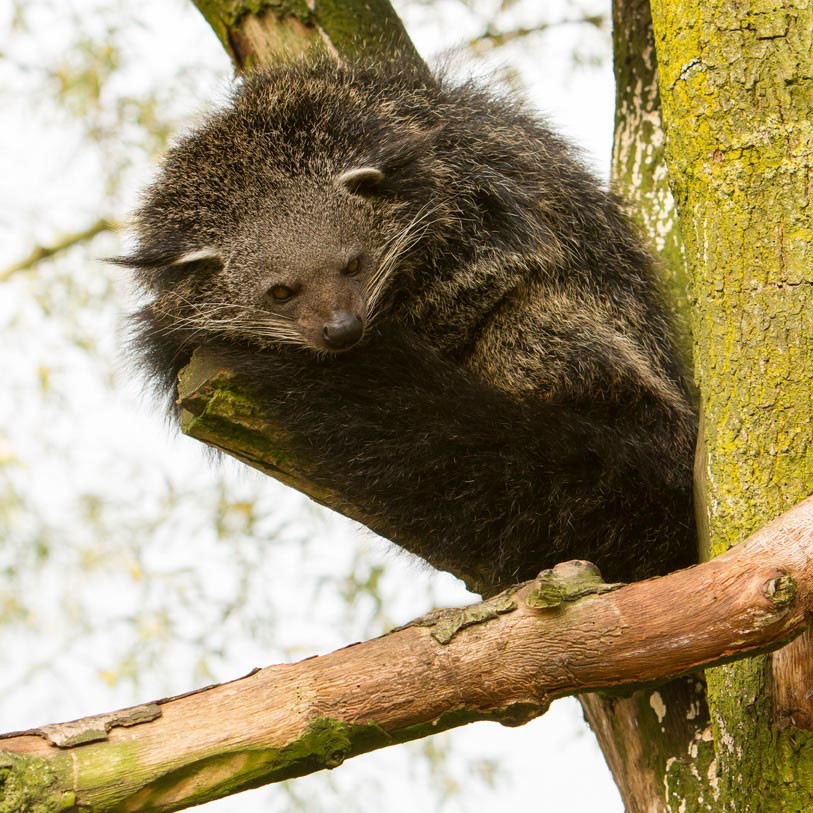
The genets, civets, binturong and linsangs form a family of animals called the viverrids. The most primitive of the carnivores, they resemble long-nosed cats. Nocturnal, solitary animals, they have excellent hearing and vision. Despite being classified as carnivores, they are omnivorous, feeding on small animals, carrion, insects and other invertebrates, eggs and plants. The palm civets eat just fruits and sap. They have anal scent glands, which release foul smells as a chemical defence against potential attackers.
Consultant: Chris Jarvis
pics
Without in any way limiting Q-files Ltd’s exclusive rights under copyright, any use of this publication to “train” generative artificial intelligence (AI) technologies to generate text is expressly prohibited. Q-files Ltd reserves all rights to license use of this work for generative AI training and development of machine learning language models.