
Mammals

CITE
We have made every effort to follow citation style rules, but there may be some minor differences. If in doubt, please refer to the appropriate citation style manual.
Camels. (2026). In Q-files Encyclopedia, Life, Mammals. Retrieved from
https://www.q-files.com/life/mammals/camels
"Camels." Life, Mammals, Q-files Encyclopedia, 24 Mar. 2026.
https://www.q-files.com/life/mammals/camels.
Accessed 21 Sep. 2026.
Camels 2026. Life, Mammals. Retrieved 21 September 2026, from
https://www.q-files.com/life/mammals/camels
Life, Mammals, s.v. "Camels," accessed September 21, 2026.
https://www.q-files.com/life/mammals/camels


Camels
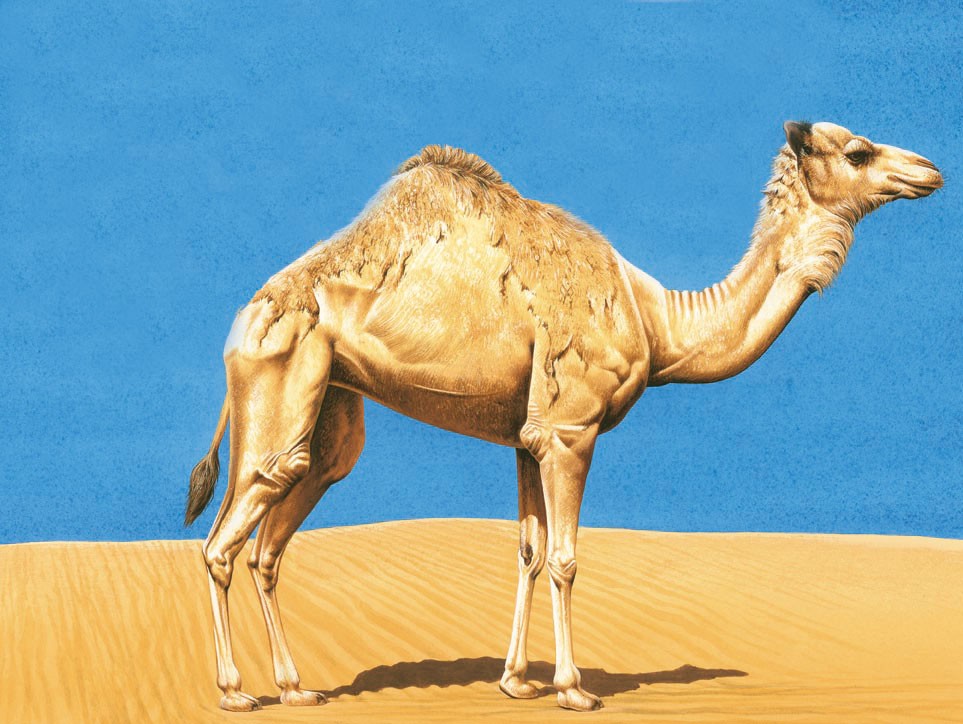
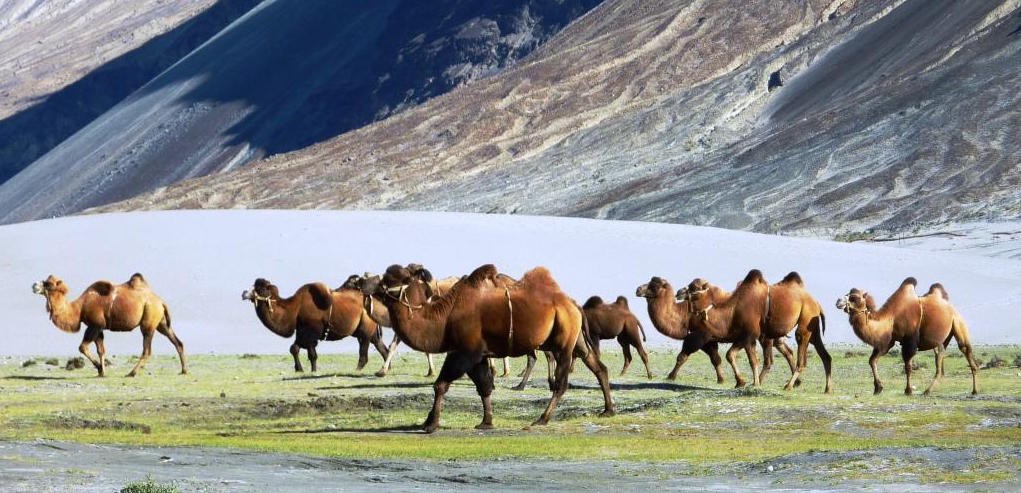
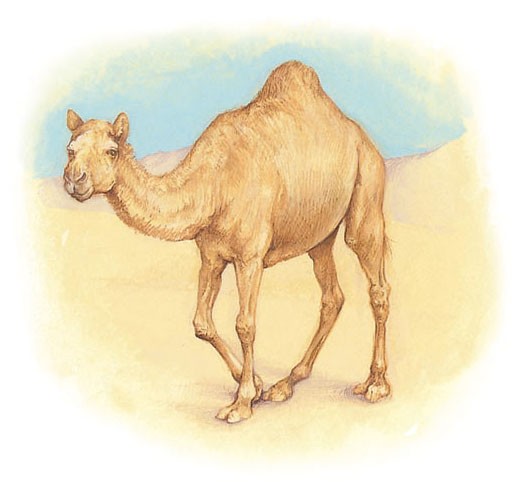
Camels are even-toed ungulates—animals with hooves instead of claws. The camel group includes two "true" camels, the dromedary and the Bactrian, and the more distantly related members of the llama family that live in South America. Camels live in deserts or dry scrublands, and have adapted to be able to survive in the harshest of conditions. All dromedaries and most Bactrian camels are domesticated; a few wild Bactrians still roam the Gobi Desert. The feral camels of the Australian deserts are descended from dromedaries that were imported in the 19th century.
Desert living
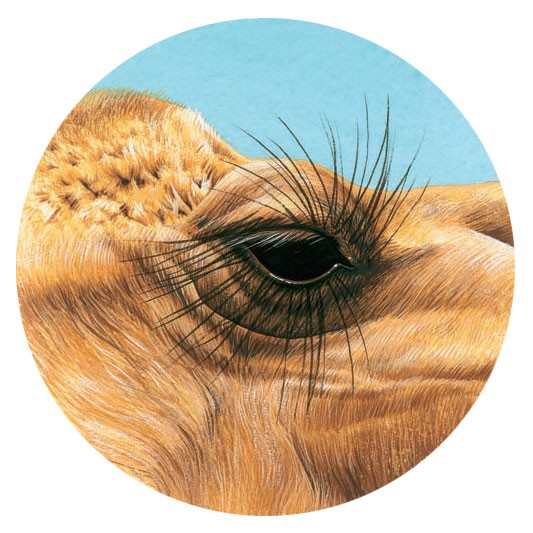
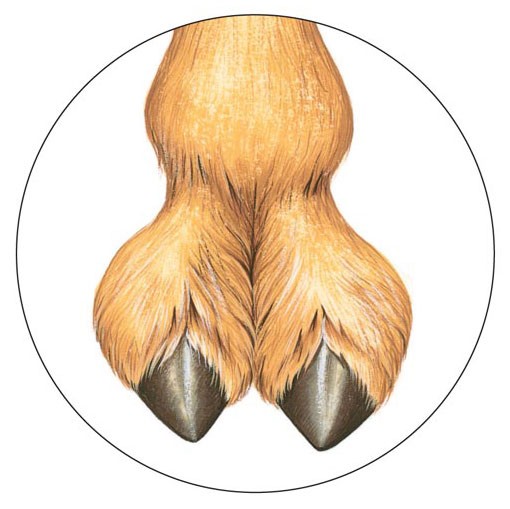
Camels are desert animals. Their flat, wide feet help them to walk over soft sand, and they can even close their nostrils to stop sand blowing in. Using their large, tough lips, camels will eat dry, thorny plant material that other animals would not, and they can go long periods without food or water.
Camels rarely sweat, even in temperatures of 50°C (about 120°F). When a camel breathes out, the water vapour in its breath is trapped in its nostrils and is reabsorbed into its body—a way of conserving water.
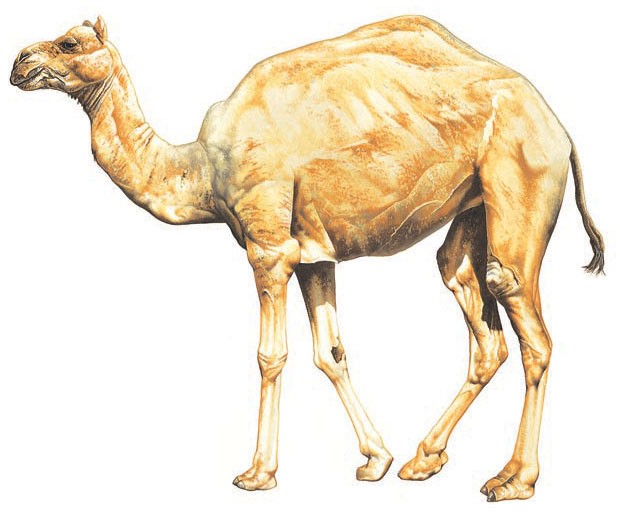
The camel's humps are not stores of water, as was once thought, but actually food stores in the form of fat. Their bodies conserve as much water as possible. When they do drink, they can take in large volumes of water in a short time.
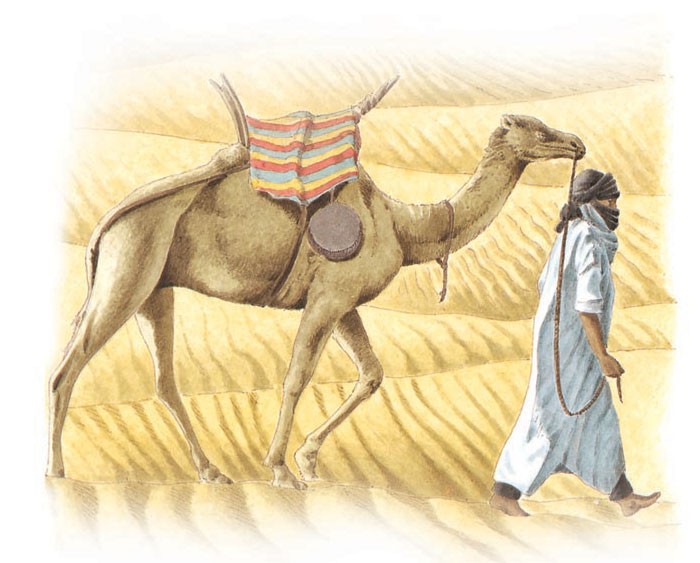
Instead of hooves, camels have broad, two-toed feet, each with a cushion-like pad that spreads out when they put their feet on the ground. This supports them on the loose sand so that they do not sink in. Camels can comfortably carry large loads for up to about 40 kilometres (25 miles) a day across the hot desert.
Bactrian camel
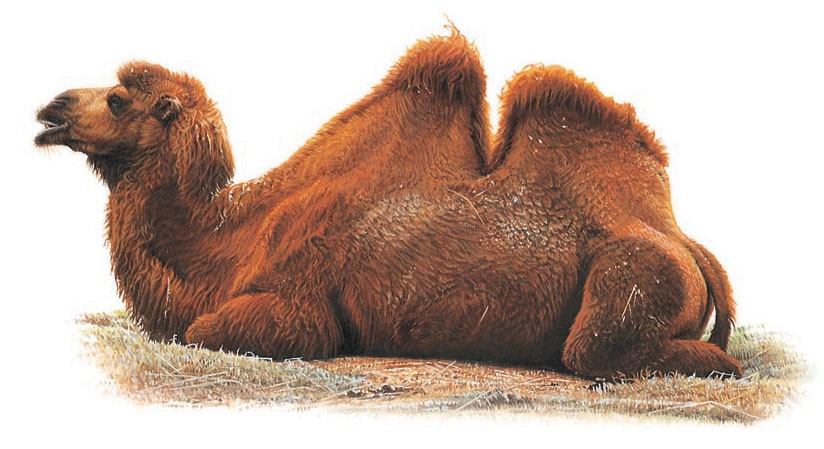
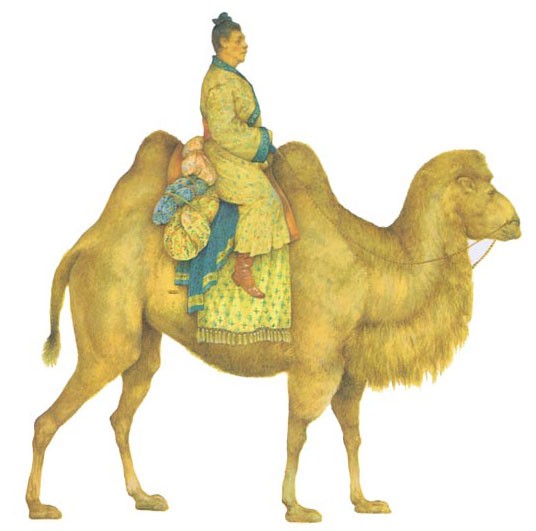
The dromedary has only one hump, while the Bactrian camel has two. The two-humped Bactrian camel still lives wild in the Gobi Desert in Mongolia and northern China, although many camels have been domesticated by the local people. In winter, Bactrian camels grow long, shaggy fur for warmth. They shed their coats when summer comes.
Domestication
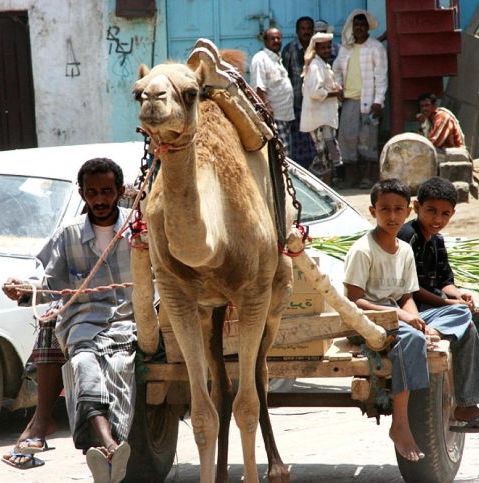
Most camels have long been domesticated by humans, though some live as feral animals (returned to the wild) in Australia. They still roam freely for much of the time, living in herds and feeding for themselves. Camels have been used for thousands of years by humans as beasts of burden, carrying goods and people for many kilometres. They have also been used in warfare. Their meat, wool and milk are also valued by their owners.
Consultant: Chris Jarvis
pics
Without in any way limiting Q-files Ltd’s exclusive rights under copyright, any use of this publication to “train” generative artificial intelligence (AI) technologies to generate text is expressly prohibited. Q-files Ltd reserves all rights to license use of this work for generative AI training and development of machine learning language models.