
Mammals

CITE
We have made every effort to follow citation style rules, but there may be some minor differences. If in doubt, please refer to the appropriate citation style manual.
Weasels. (2026). In Q-files Encyclopedia, Life, Mammals. Retrieved from
https://www.q-files.com/life/mammals/weasels
"Weasels." Life, Mammals, Q-files Encyclopedia, 23 Jun. 2026.
https://www.q-files.com/life/mammals/weasels.
Accessed 22 Sep. 2026.
Weasels 2026. Life, Mammals. Retrieved 22 September 2026, from
https://www.q-files.com/life/mammals/weasels
Life, Mammals, s.v. "Weasels," accessed September 22, 2026.
https://www.q-files.com/life/mammals/weasels


Weasels
The weasel family, also called the mustelids, includes weasels, stoats, minks, ferrets, polecats, martens, the sable, otters, badgers and the wolverine. They are carnivores with long bodies, short legs and often long tails. Mustelids can be found on and under the ground, in the trees or in the water. Most feed on smaller mammals, especially rodents, but some will also eat worms, fruit and insects. Apart from some otters and badgers, the weasel family are solitary mammals, keeping to their own territories and fighting if these are invaded. Males and females usually come together only to breed.
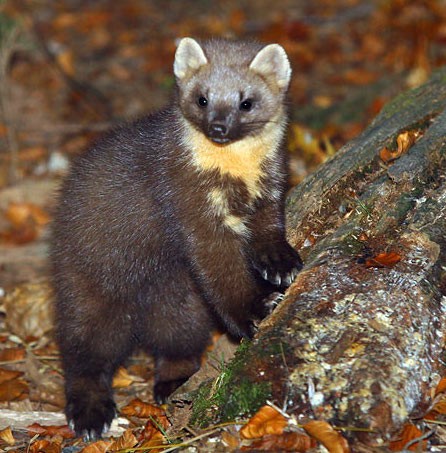
Musk
Many members of the weasel family can produce a foul-smelling liquid called musk, both to mark their territories and to defend themselves against predators. Musk is produced in the anal scent glands. Among the best known of these musk-producers is the striped polecat, also called the zorilla, of Africa.
Stoat
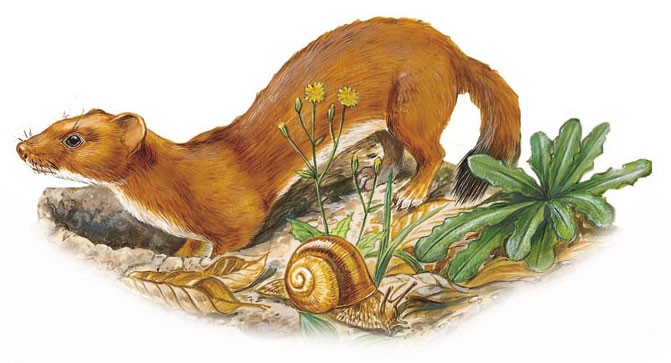
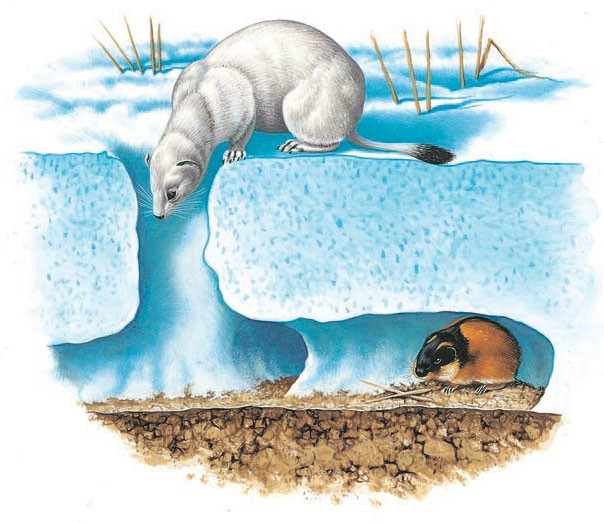
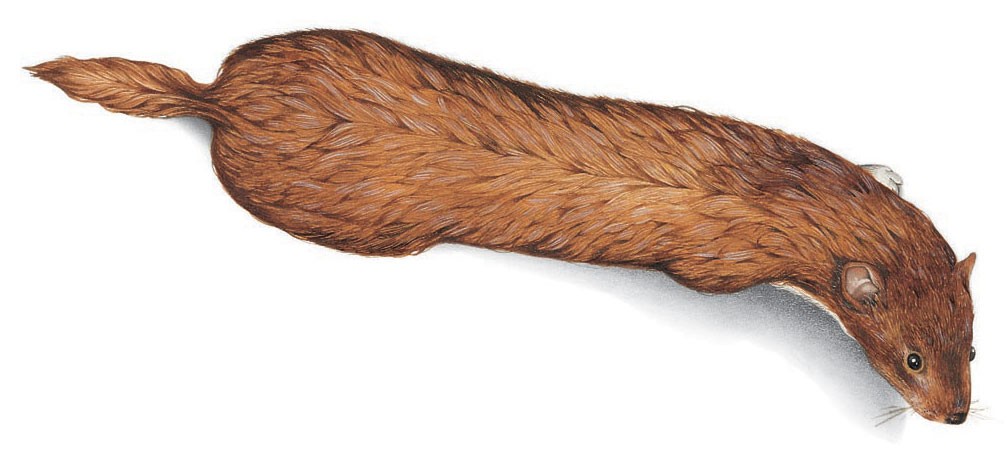
Distinguished from least weasels by their larger size and black tips to their tails, stoats are ferocious predators. They will sometimes attack animals over twice their own size. They search for prey inside burrows or in other likely hiding places.
Their slim bodies enable them to chase their quarry along narrow tunnels under the ground or beneath the snow. Stoats kill their prey with a sharp bite to the back of the neck.
Stoats that live in the Arctic change the colour of their fur to white (except for the black tip of their tail) in winter for better camouflage against the snowy landscape.
Least weasel
The least weasel (also known, simply, as the weasel), although tiny, is a fierce predator. It can attack and kill a rabbit or hare many times its own size, but will normally hunt small rodents or rabbit kittens, chasing its prey down through their burrows or out into the open. It kills by delivering a swift bite to the skull or neck.

American mink
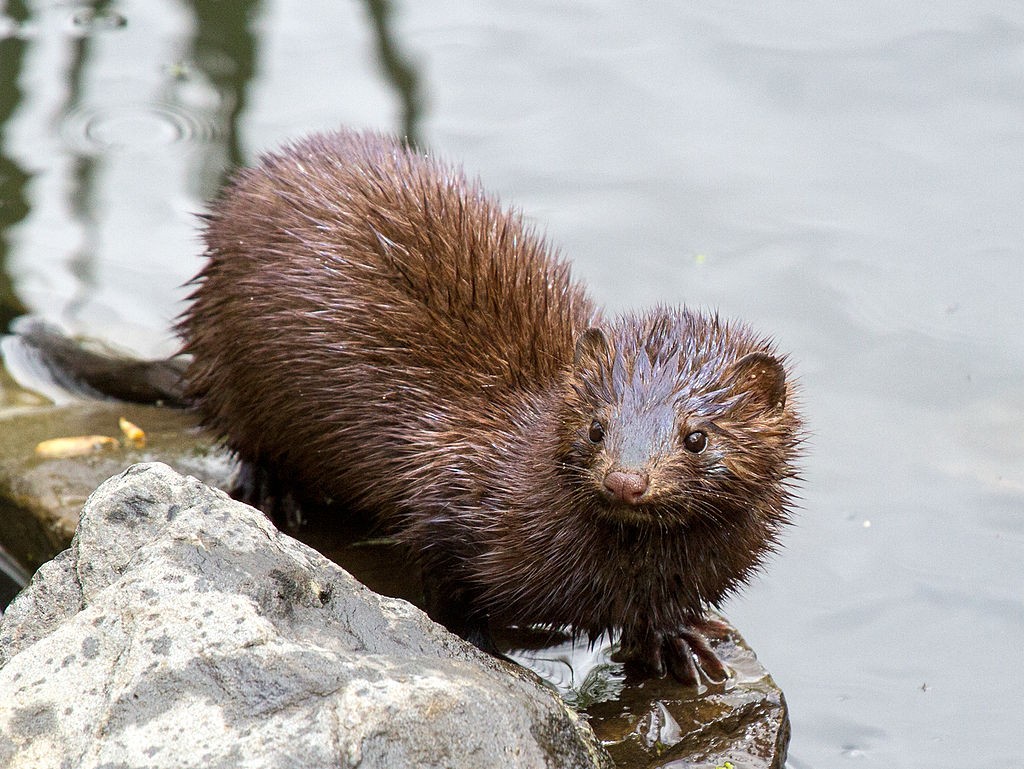
Native to North America, the American mink has been introduced to many parts of Europe, Siberia and South America. It feeds on rabbits, rodents, fish, crustaceans, frogs and birds. Its arrival to Europe resulted in the decline of the European mink, Pyrenean desman and water voles, all of which it attacks and kills.
Mink are farmed for their dense, luxurious fur, and it is for this reason that they were imported to Europe in the 1920s for breeding. Descendants of farm escapees have since spread far and wide.
Black-footed ferret

The black-footed ferret preys mostly on prairie dogs, hunting them in their burrows. Considered pests on farmland, these rodents have been exterminated by poisoning in many parts of the American West. The disappearance of their prey has meant a severe decline in the numbers of black-footed ferrets, and they were eventually declared extinct in the wild. But from a small group of 18 captive animals, more ferrets have been bred, and a population of about 1000 is once again living and breeding in the wild.
Wolverine
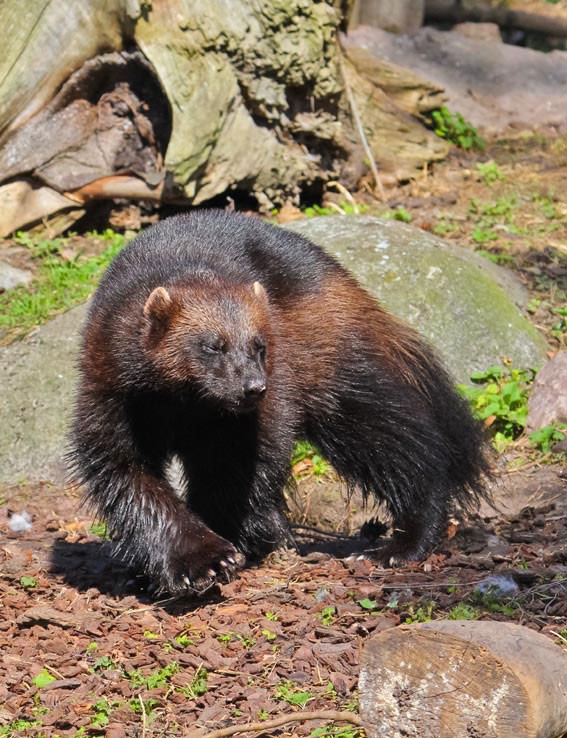
The wolverine is a heavy, powerful carnivore, capable of preying on animals larger than itself, such as reindeer. Its broad feet allow it to run over the top of the snow, while the reindeer's narrow hooves sink in, giving the pursuing predator a crucial advantage. A solitary hunter, it will also scavenge kills of other animals, using its powerful jaws and chewing muscles to crush thick bones. Its diet also includes small mammals, plants and berries.
Skunks
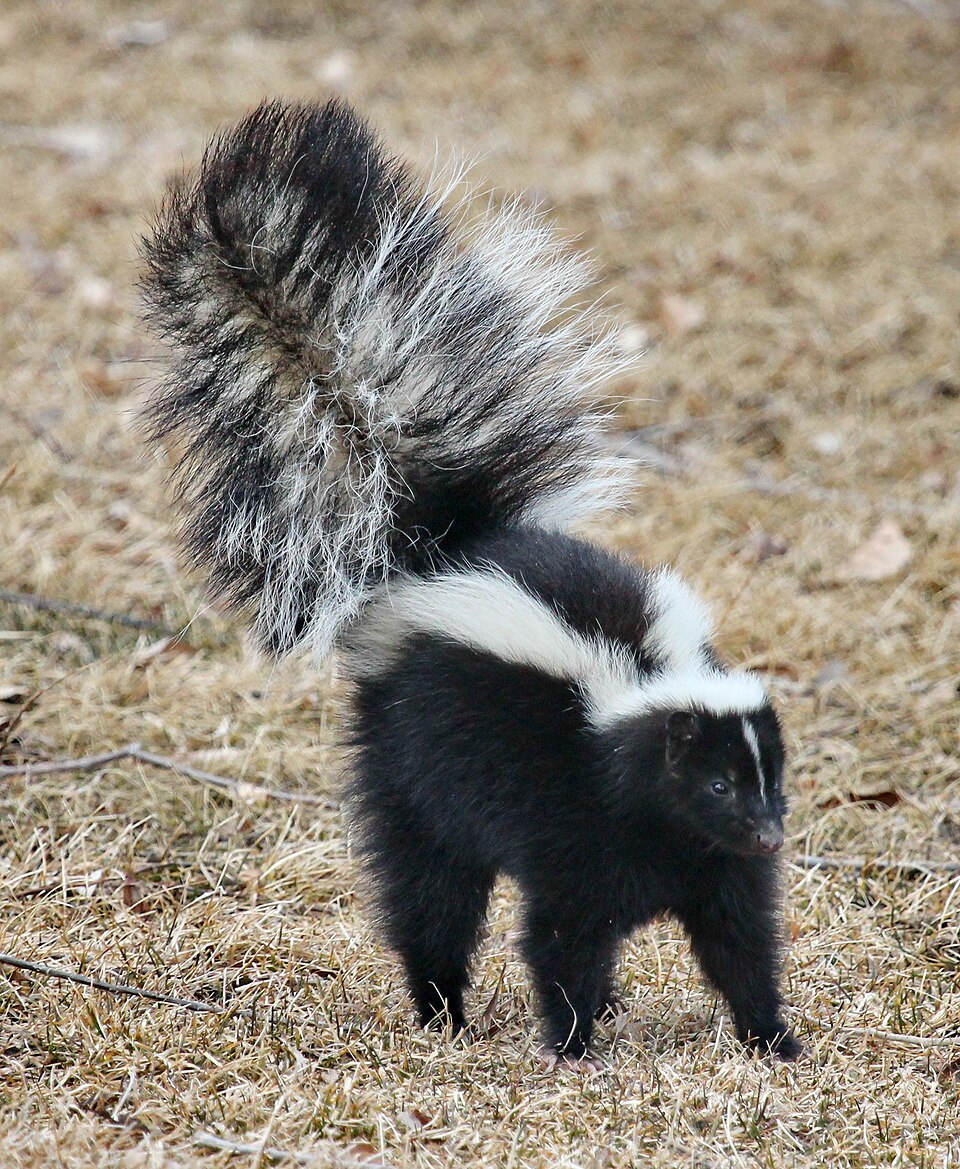
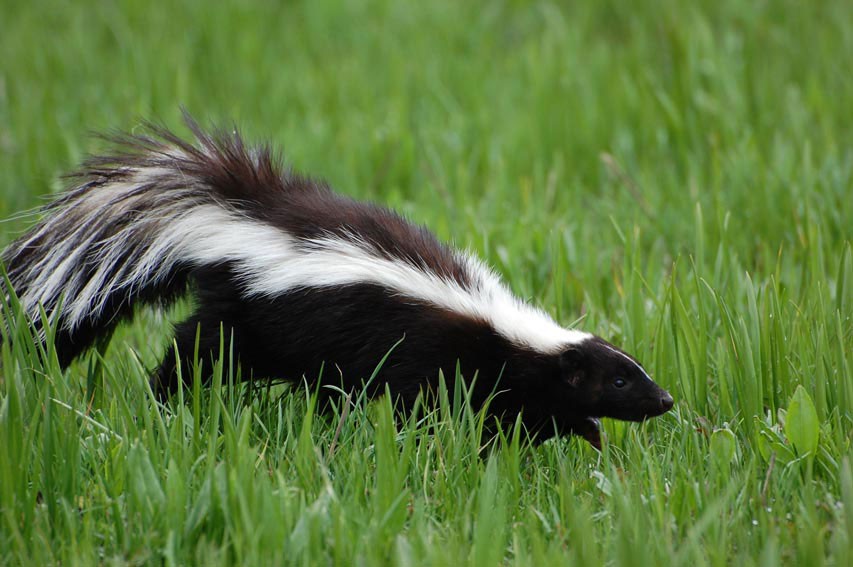
Distantly related to mustelids but belonging to a different family, the mephitids, are the skunks. All 14 species are from the Americas. Long-clawed and omnivorous, skunks have a bushy tail and a thick black-and-white coat, which protects them from the stings of honeybees, upon which they frequently prey.
If threatened by a predator itself, the skunk will turn its back on its attacker and spray foul-smelling liquid in its face. It can spray with great accuracy as far as 3 metres (10 feet). Its bold markings warn predators of this weapon, deterring them from attack (which is to the skunk's advantage as it can only use the chemical five or six times; it takes 10 days for a new supply to build up). Most predators, including bears and wolves, are wary, although domestic dogs and the great horned owl often attempt to attack it, despite the risk.
Consultant: Chris Jarvis
pics
Without in any way limiting Q-files Ltd’s exclusive rights under copyright, any use of this publication to “train” generative artificial intelligence (AI) technologies to generate text is expressly prohibited. Q-files Ltd reserves all rights to license use of this work for generative AI training and development of machine learning language models.