
Mammals

CITE
We have made every effort to follow citation style rules, but there may be some minor differences. If in doubt, please refer to the appropriate citation style manual.
Cheetah. (2026). In Q-files Encyclopedia, Life, Mammals. Retrieved from
https://www.q-files.com/life/mammals/cheetah
"Cheetah." Life, Mammals, Q-files Encyclopedia, 24 Mar. 2026.
https://www.q-files.com/life/mammals/cheetah.
Accessed 21 Sep. 2026.
Cheetah 2026. Life, Mammals. Retrieved 21 September 2026, from
https://www.q-files.com/life/mammals/cheetah
Life, Mammals, s.v. "Cheetah," accessed September 21, 2026.
https://www.q-files.com/life/mammals/cheetah


Cheetah
The cheetah is the smallest of the big cats. It has a lean body, long legs and spotted markings that help it blend into the tall, dry grasses of its savanna habitat in Africa and the scrublands of the Middle East. It is the fastest land animal on Earth, capable of reaching speeds of more than 100 km/h (60 mph). Its hard paws and semi-retractable claws give it grip for running and making sharp turns at top speed.

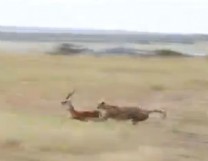
Fastest land animal
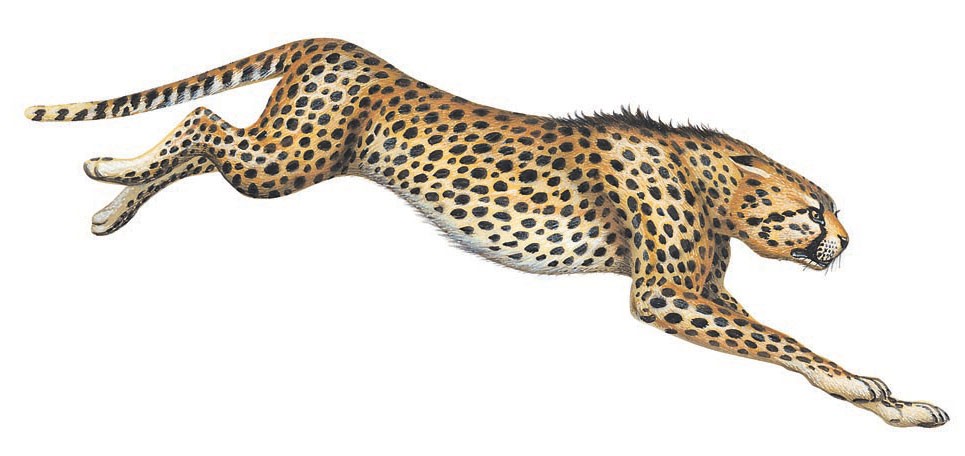
Over short bursts, the cheetah can run faster than any other animal in the world. With its long legs and lean, muscular body, it is perfectly built for speed. Its bones are light, and it has a super-long stride. Its spine is like a spring for its powerful back legs, and its tail helps it to balance and turn quickly at speed. All this means that it can hit a top speed of 105 km/h (65 mph). It can accelerate from a standing start to that speed in only three seconds.

Hunting
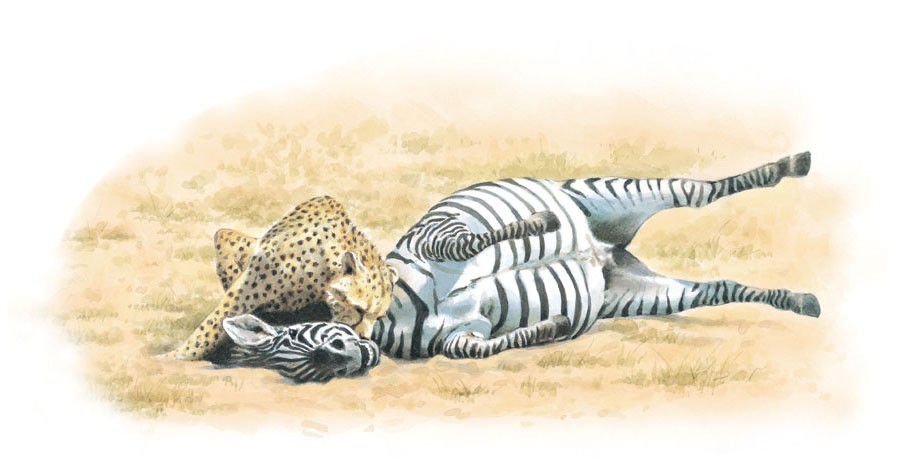
Cheetahs hunt in the daylight and rely on good eyesight to spy prey and to judge distances. The dark stripes under their eyes help reduce glare from the sun. The cheetah uses its speed to catch its prey, including gazelles, other antelopes, hares and young ostriches, often those separated from the rest of the group. Several adults may together chase down larger animals such as zebra.

When the cheetah catches up with its victim, it trips it up or knocks it over and suffocates it with a bite to the throat. Full sprints take a lot of energy, so they usually last about 20 seconds and very rarely more than a minute. Sometimes a cheetah will go in for a longer chase. At slower speeds it can run after its prey for over 5 kilometres (3 miles).
Unfortunately for the cheetah, most of its hunts fail: its intended victim gets away. But if successful, it may drag its kill to a hiding place to protect it from other predators, such as hyenas, who would readily steal the kill before the cheetah, a relatively small animal, had a chance to eat it.
Consultant: Chris Jarvis
pics
Without in any way limiting Q-files Ltd’s exclusive rights under copyright, any use of this publication to “train” generative artificial intelligence (AI) technologies to generate text is expressly prohibited. Q-files Ltd reserves all rights to license use of this work for generative AI training and development of machine learning language models.