
Mammals

CITE
We have made every effort to follow citation style rules, but there may be some minor differences. If in doubt, please refer to the appropriate citation style manual.
Kangaroos. (2026). In Q-files Encyclopedia, Life, Mammals. Retrieved from
https://www.q-files.com/life/mammals/kangaroos
"Kangaroos." Life, Mammals, Q-files Encyclopedia, 24 Mar. 2026.
https://www.q-files.com/life/mammals/kangaroos.
Accessed 21 Sep. 2026.
Kangaroos 2026. Life, Mammals. Retrieved 21 September 2026, from
https://www.q-files.com/life/mammals/kangaroos
Life, Mammals, s.v. "Kangaroos," accessed September 21, 2026.
https://www.q-files.com/life/mammals/kangaroos


Kangaroos
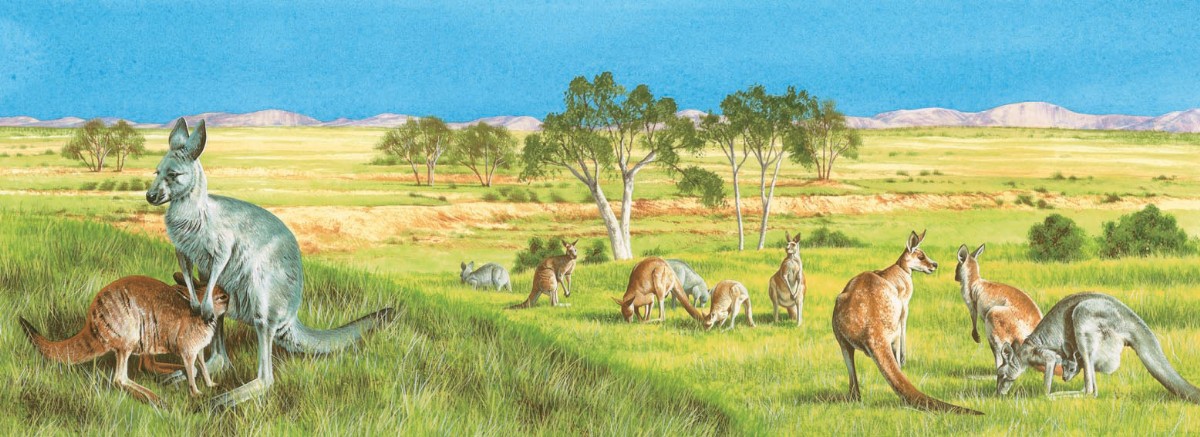
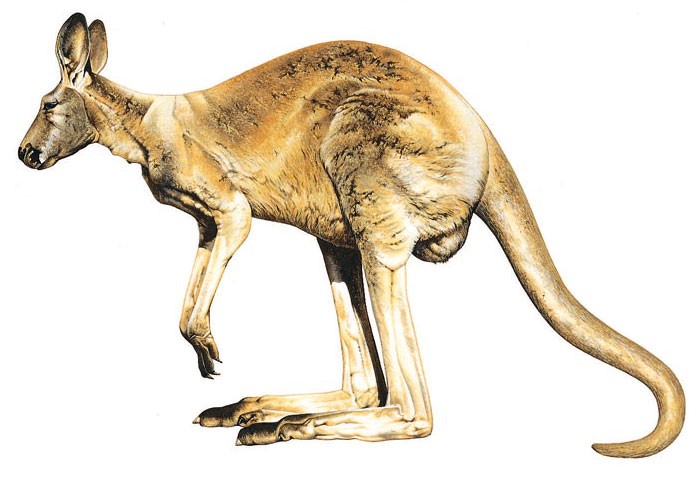
The kangaroo is a large marsupial that moves by bounding on its long hind legs. Females have pouches where their young develop. Kangaroos live in groups, called “mobs”, of up to 50 on the grassy plains of Australia. Together they look for food, often feeding at night. Closely related to kangaroos are the wallabies, which are smaller and stockier but have similar lifestyles. There are four species of kangaroo: red, eastern grey, western grey and antilopine. There are 56 species of wallabies, wallaroos, pademellons, tree kangaroos and forest wallabies.

Grazing
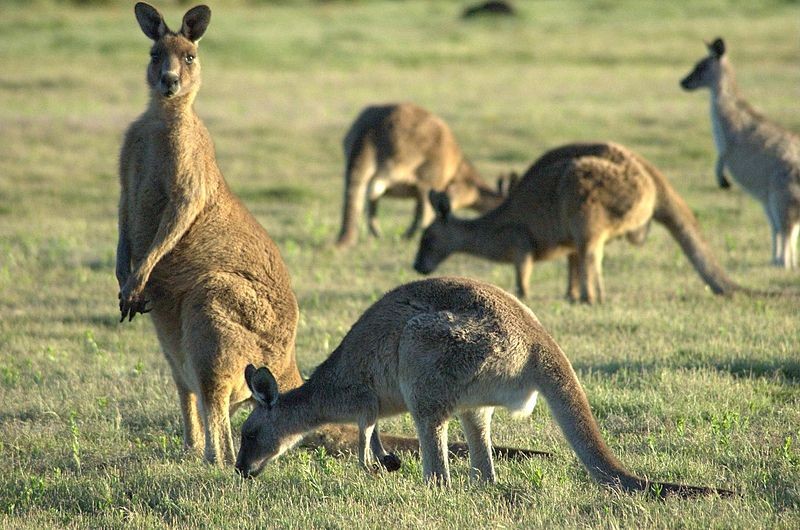
The kangaroo's incisor teeth crop grass close to the ground, while its molars chop and grind the grass in its mouth. Kangaroos have separate stomachs similar to those of ruminants, such as cattle and deer. They sick up the vegetation they have eaten, chew it as cud then swallow it again for final digestion. All kangaroo species are herbivores. The eastern grey kangaroo eats mostly grasses, whereas the red kangaroo also eats shrubs.

Boxing
In the last months of winter, male kangaroos fight one another over females to mate with. They “box” with their fists and kick out with their strong back feet, using their strong, 1-metre-long (about 3 feet) tails for balance. Most fights begin with the two males grooming each other. Then one male will issue a challenge to the other by grabbing his neck—although a large male will sometimes turn down the challenge of a smaller one. Besides boxing and kicking, the males also wrestle, push each other or bite.
Hopping

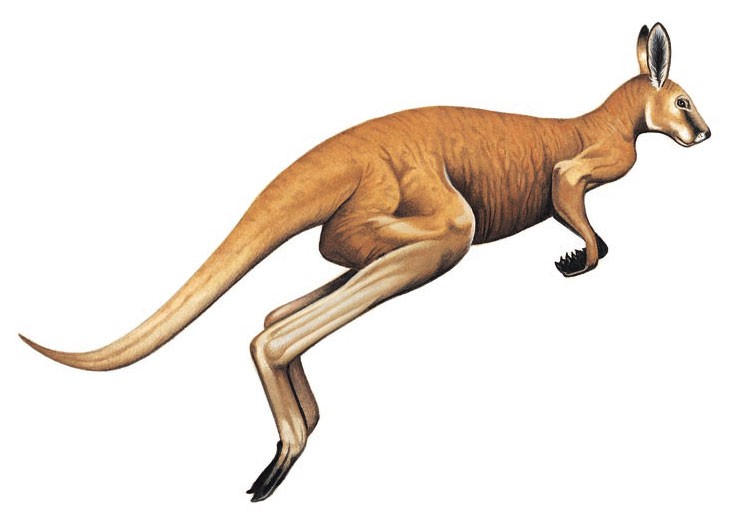
For a kangaroo, hopping is a fast and efficient way of covering long distances across the dry Australian grasslands in search of food and water. They push off with their back feet and lean forwards as they leap into the air. They can jump two metres (more than 6 feet) high and cover nearly 10 metres (around 30 feet) in a single bound. Their long tails keep them balanced when they bound. Kangaroos can reach speeds of 70 km/h (more than 40 mph) in short bursts.
Joeys
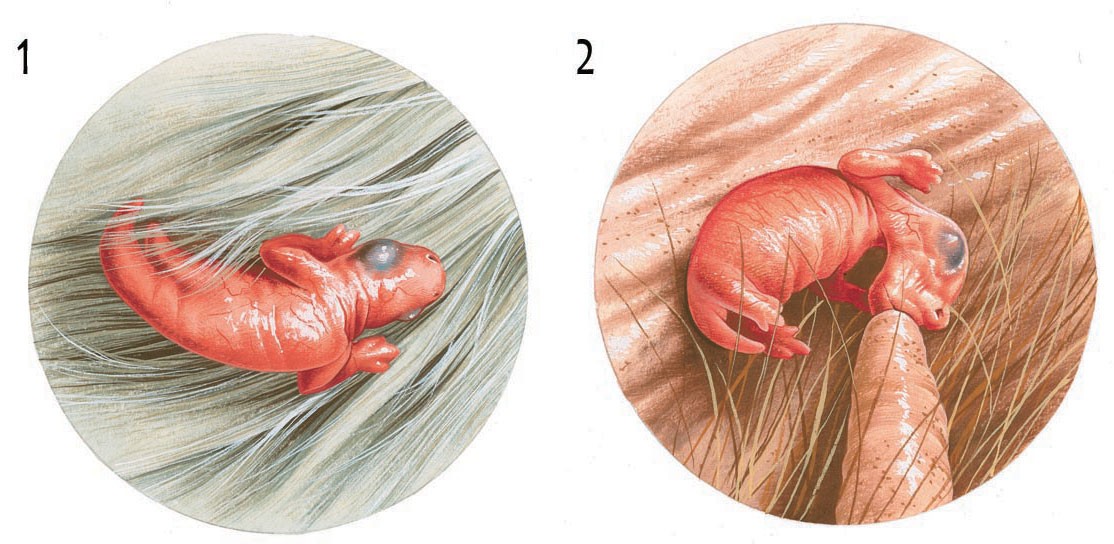
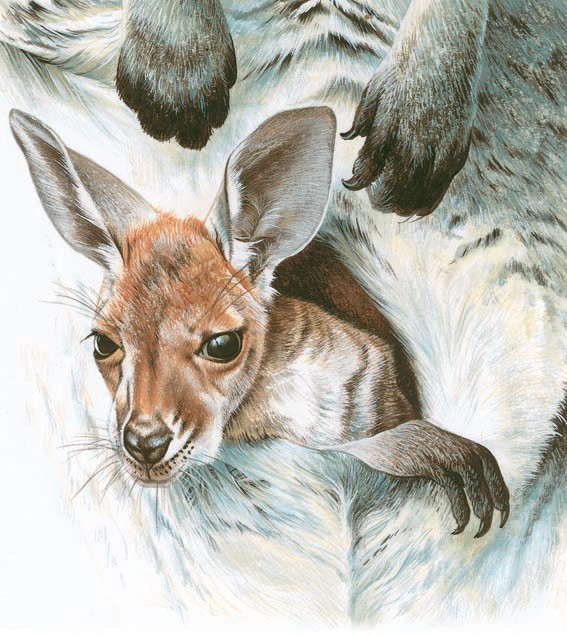
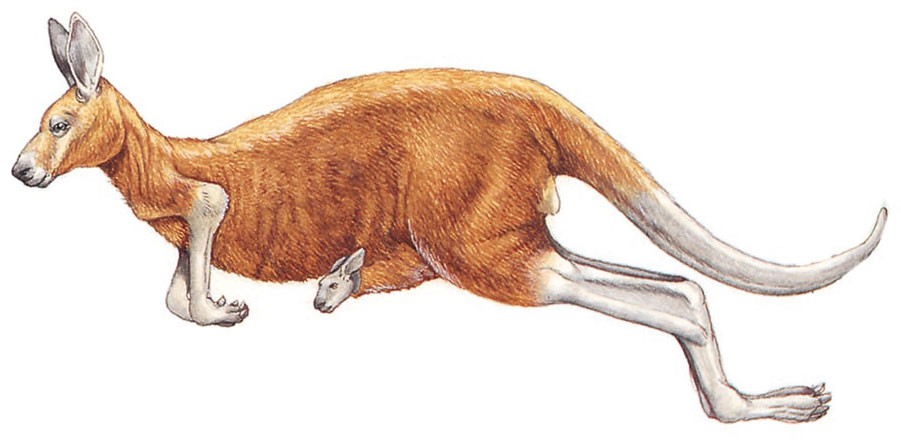
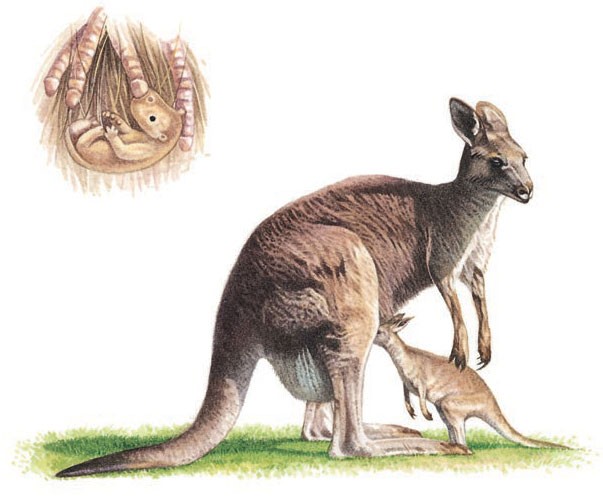
Like all marsupials, female kangaroos have pouches which they use as nurseries for their young. Young kangaroos, called joeys, develop in a forward-facing pouch on their mother’s stomach. A new-born kangaroo is blind, helpless and only about two centimetres (less than an inch) long. It crawls up its mother’s fur into her pouch where it attaches itself to one of her teats. It stays there for about six months, drinking milk and growing.
Leaving the pouch
At 28 weeks old, a joey makes its first journey outside the pouch but quickly hops back in if danger threatens. When a joey is nine months old it leaves its mother’s pouch for good and starts to eat leaves and grass. But it still returns to its mother for milk until it is 12 months old.
Wallabies
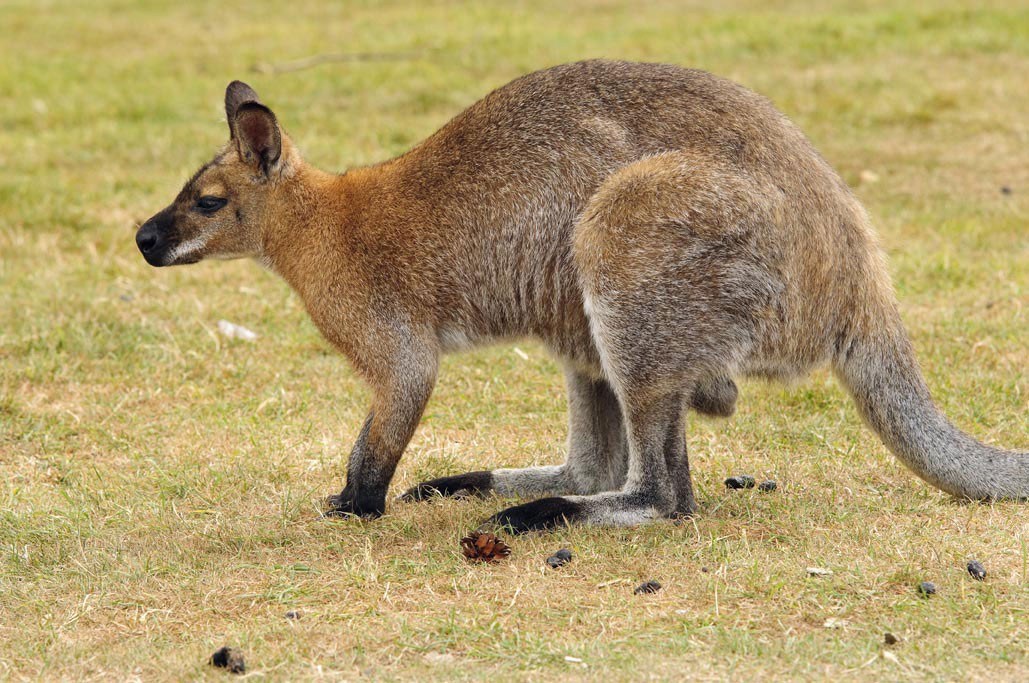
Wallabies are small, stocky marsupials. They have thicker fur than their relatives the kangaroos, and live in a wider variety of habitats, including rocky terrain, grassland and forests. Their pouches are backwards-facing to stop soil from getting inside them. Wallabies are more likely to be preyed on by dingos and feral cats or dogs than the larger kangaroos.
Consultant: Chris Jarvis
pics
Without in any way limiting Q-files Ltd’s exclusive rights under copyright, any use of this publication to “train” generative artificial intelligence (AI) technologies to generate text is expressly prohibited. Q-files Ltd reserves all rights to license use of this work for generative AI training and development of machine learning language models.