
Mammals

CITE
We have made every effort to follow citation style rules, but there may be some minor differences. If in doubt, please refer to the appropriate citation style manual.
Tapirs. (2026). In Q-files Encyclopedia, Life, Mammals. Retrieved from
https://www.q-files.com/life/mammals/tapirs
"Tapirs." Life, Mammals, Q-files Encyclopedia, 1 May. 2026.
https://www.q-files.com/life/mammals/tapirs.
Accessed 22 Sep. 2026.
Tapirs 2026. Life, Mammals. Retrieved 22 September 2026, from
https://www.q-files.com/life/mammals/tapirs
Life, Mammals, s.v. "Tapirs," accessed September 22, 2026.
https://www.q-files.com/life/mammals/tapirs


Tapirs
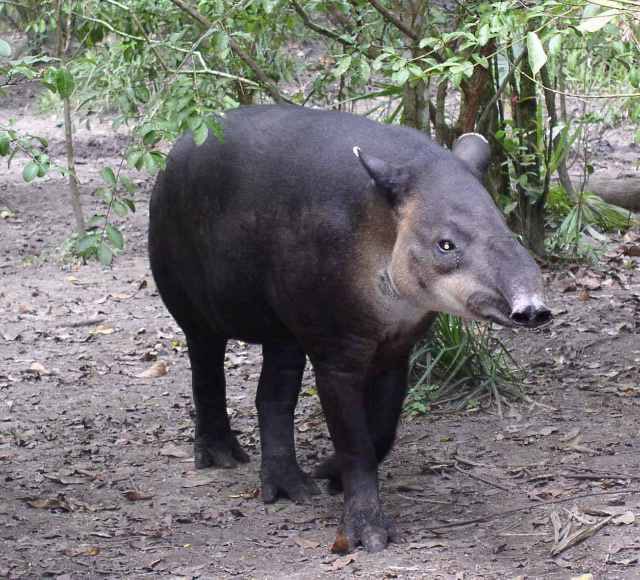
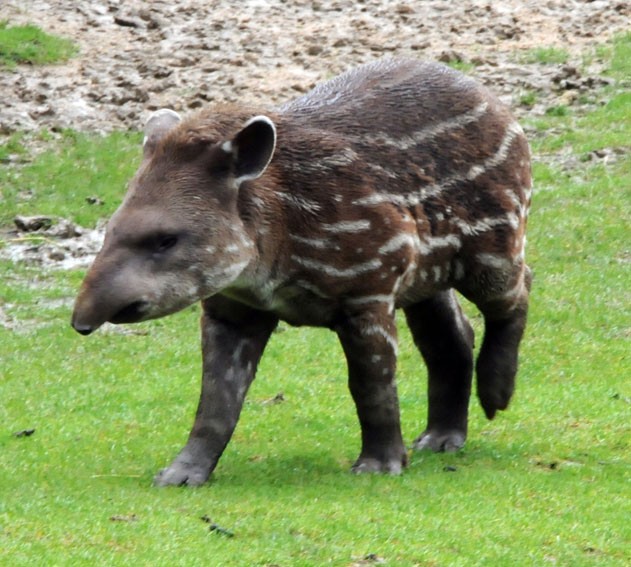
Tapirs are bulky mammals with trunk-like snouts that live in the rainforests of Central and South America and Southeast Asia. They are odd-toed ungulates, the group of plant-eating mammals that includes horses and rhinoceroses. There are four species: the Brazilian, Malayan, Baird's and mountain tapir. Tapirs average about 2 metres (6.6 feet) in length and 1 metre (3 feet) in height. Their hooves are splayed (split and spread out), which helps them to walk on the soft rainforest floor. They have thick skin on the backs of their necks to protect them from predators such as jaguars and crocodiles.

Lifestyle
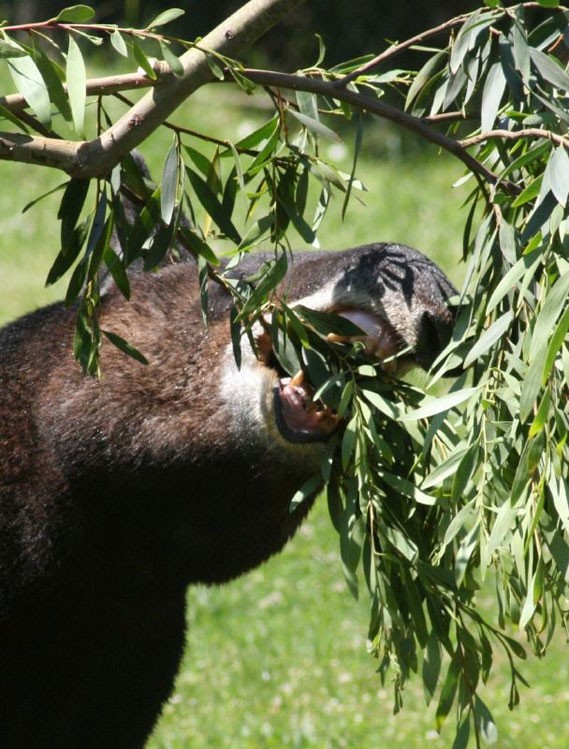
Excellent swimmers, tapirs spend a lot of time in the water. They wallow in rainforest rivers and streams to cool off or dive feed on water plants. Their trunk-like snouts—extensions of the nose and upper lip—are perfect for gripping and plucking leaves or fruit from branches. They are mainly active at night, emerging to feed around dusk. Tapirs are solitary creatures; they usually travel alone through the rainforest along well-worn paths they have themselves created.
Malayan tapir
The Malayan tapir lives in the rainforests of Southeast Asia, mainly along the Malay Peninsula and the Indonesian island of Sumatra. The biggest of all the tapirs, it can grow up to 1.8 metres (about 6 feet) in length. Its distinctive markings—black head, neck and legs, with a large white saddle extending from its shoulders to its rump—probably help camouflage it: it looks like a large rock when lying on the ground. As a result of deforestation, the Malayan tapir is in danger of extinction.

Consultant: Chris Jarvis
pics
Without in any way limiting Q-files Ltd’s exclusive rights under copyright, any use of this publication to “train” generative artificial intelligence (AI) technologies to generate text is expressly prohibited. Q-files Ltd reserves all rights to license use of this work for generative AI training and development of machine learning language models.