
Reptiles

CITE
We have made every effort to follow citation style rules, but there may be some minor differences. If in doubt, please refer to the appropriate citation style manual.
Crocodiles and alligators. (2026). In Q-files Encyclopedia, Life, Reptiles. Retrieved from
https://www.q-files.com/life/reptiles/crocodiles-and-alligators
"Crocodiles and alligators." Life, Reptiles, Q-files Encyclopedia, 14 May. 2026.
https://www.q-files.com/life/reptiles/crocodiles-and-alligators.
Accessed 22 Sep. 2026.
Crocodiles and alligators 2026. Life, Reptiles. Retrieved 22 September 2026, from
https://www.q-files.com/life/reptiles/crocodiles-and-alligators
Life, Reptiles, s.v. "Crocodiles and alligators," accessed September 22, 2026.
https://www.q-files.com/life/reptiles/crocodiles-and-alligators


Crocodiles and alligators
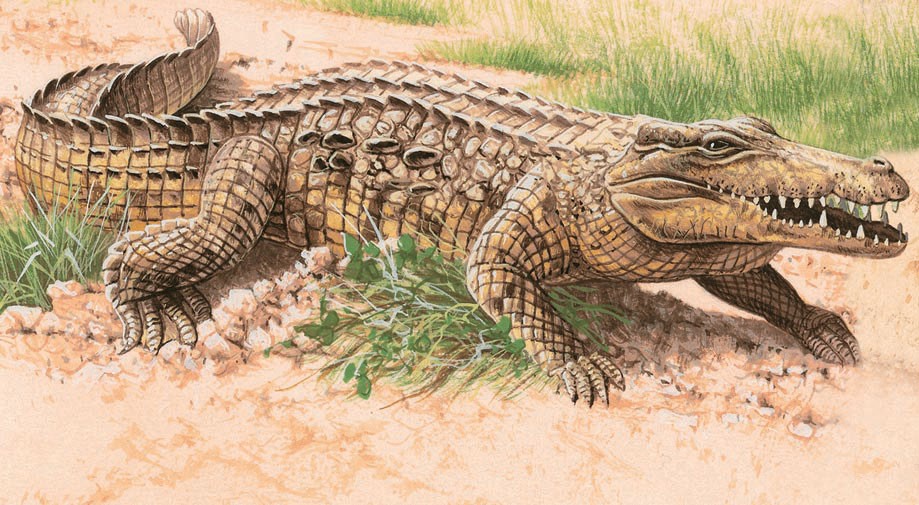
Crocodilians are aquatic, predatory reptiles with long jaws and bony plates of armour on their bodies. The family includes crocodiles, alligators, gharials and caimans. Most live in tropical rivers and lakes. The largest species are the Nile crocodile and the saltwater crocodile, both of which grow up to 7 metres (23 feet) long. They can easily bring down large prey such as antelope, which they ambush at the water’s edge, dragging them underwater to drown. Crocodiles are expert swimmers, but can also run at speed on land.


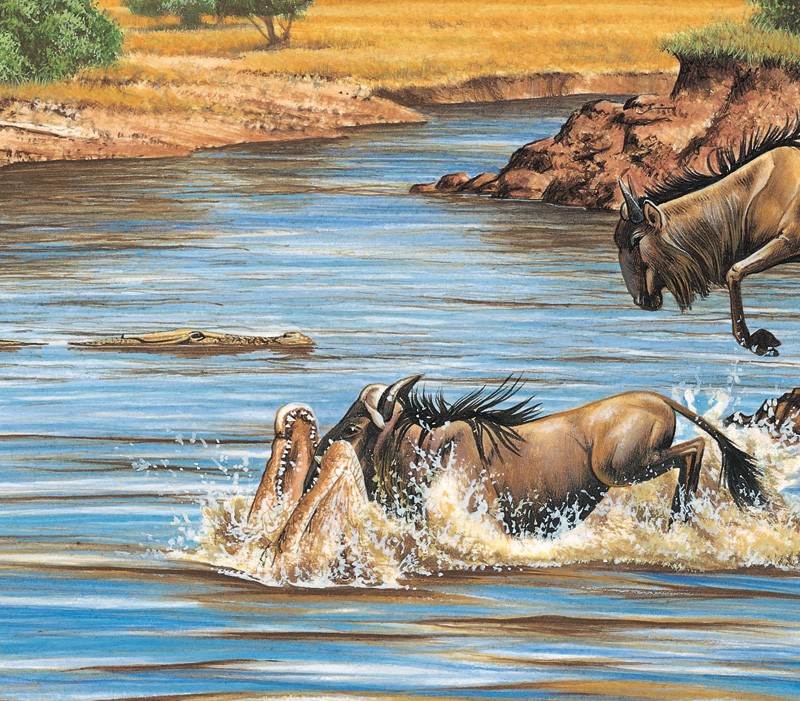
Hunting
Crocodiles feed on a wide range of prey, including fish, turtles, birds and mammals. Having eyes and nostrils on top of their heads allows them to lie in the water with their bodies almost completely hidden.
They also have transparent “third eyelids” which closes to protect their eyes when they submerge. They can close off part of their throats to avoid swallowing water while feeding.
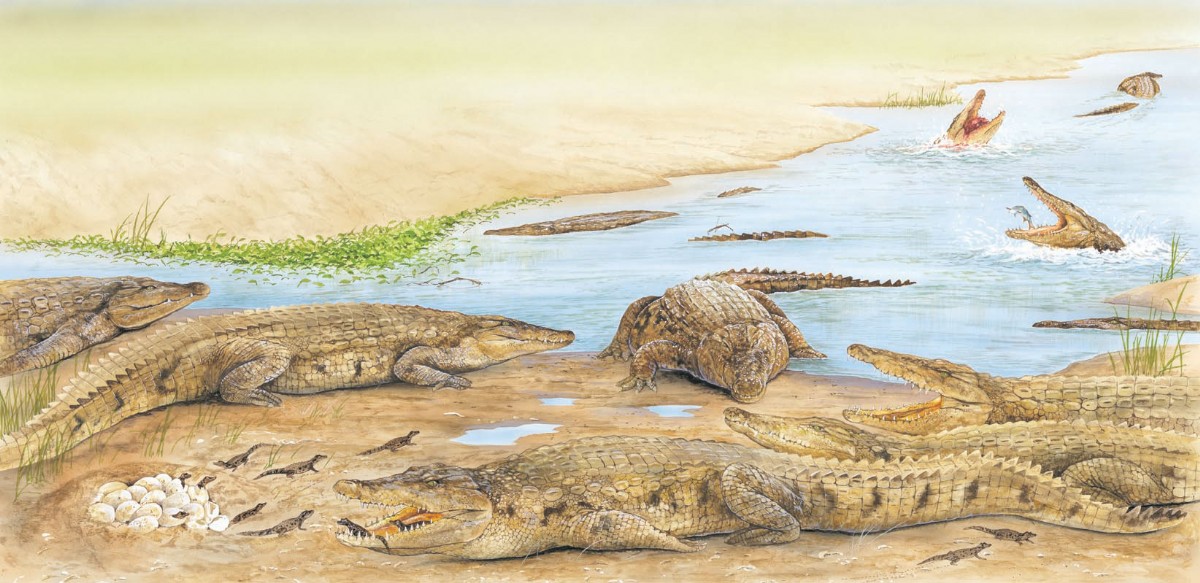
Crocodiles lie in the water, waiting for their prey to come down to the water to drink. They lunge out with their powerful jaws, dragging their prey into the water to drown. Then they tear them apart with their teeth. Crocodile jaws can bite with immense force. They have by far the strongest bite of any animal—12 times more powerful than a great white shark.
Caring for their young
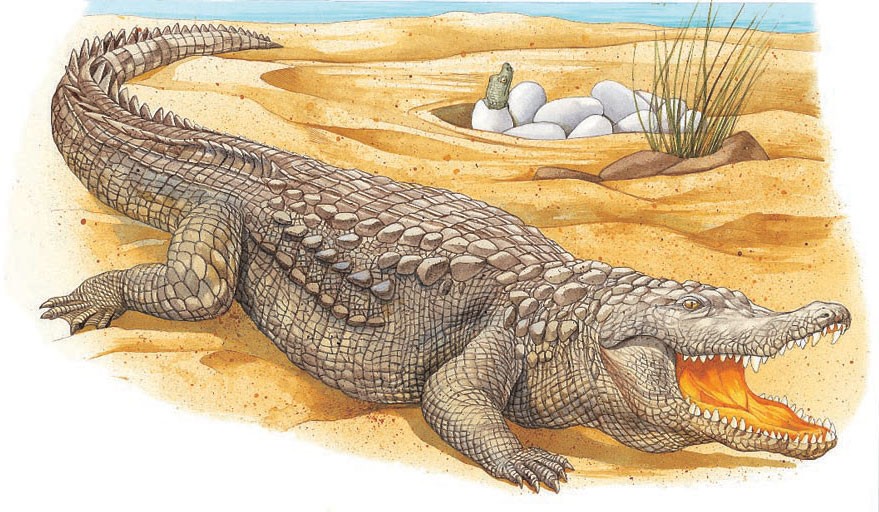
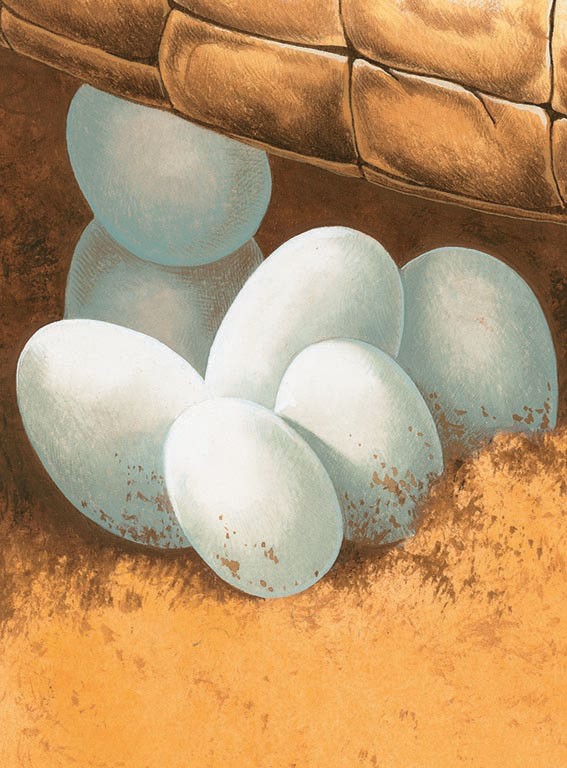
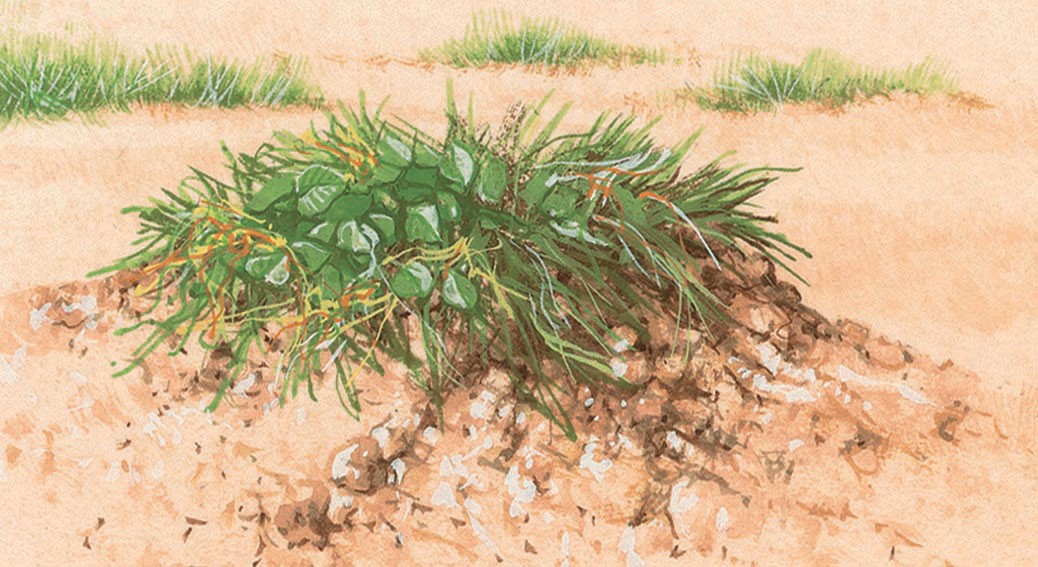
Like most reptiles, crocodiles lay eggs on land. Females lay from 15 to 80 eggs in a pit they dig not far from the water’s edge. Smooth and white with hard shells, eggs are about the same size as hens’ eggs. The mother carefully covers them up with sand to keep them warm and dry.

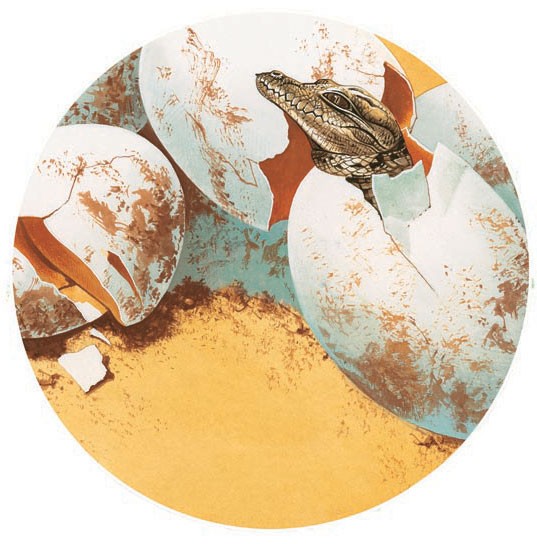
Female crocodiles guard their eggs from predators. Unguarded eggs might be eaten by mongooses, snakes or lizards, or could rot if exposed to wet weather. At the first sign of rain, the mother positions her body over the eggs to protect them from the downpour.
After three months, the young crocodiles finally hatch. When they are ready to hatch, the babies start squeaking loudly. This signals to the mother to dig them out of the nest.
The mother gathers the hatchlings in her mouth and carries them to a safe “nursery area”. Alerted by the cries of the young, the father will join the female to help care for them. When another of his broods hatches (males mate with several females) he will move on to help care for that family.

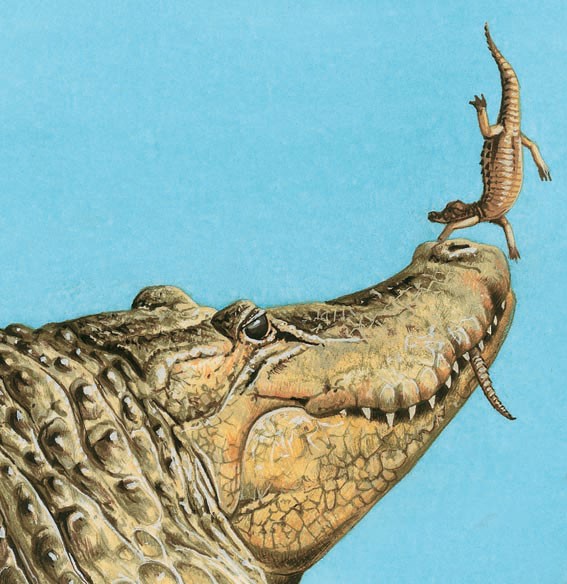
The hatchlings stay with their mother for three months, after which they go off to to establish territories of their own. The young may then be preyed on by herons, storks, eagles and other predators. Only one or two will live to adulthood. Young crocodiles feed on small prey, including crabs or frogs. Older ones feed on fish or animals that are already dead.
Alligators
Alligators are related to crocodiles, but their snouts have a more rounded shape. They also lurk in tropical rivers and swamps and feed on animals that come down to the water’s edge to drink. Their eyes, ears and nostrils are on the tops of their heads so that they can lie in wait almost completely under the water. Alligators can grow up to 4.8 metres (15.7 feet) long.


The two main species of alligator are the American alligator, which lives in the swamps of southeastern United States (from southern Oklahoma and Texas to North Carolina), and the rare Chinese alligator, which lives in the valley of the River Yangtse.

Gharials
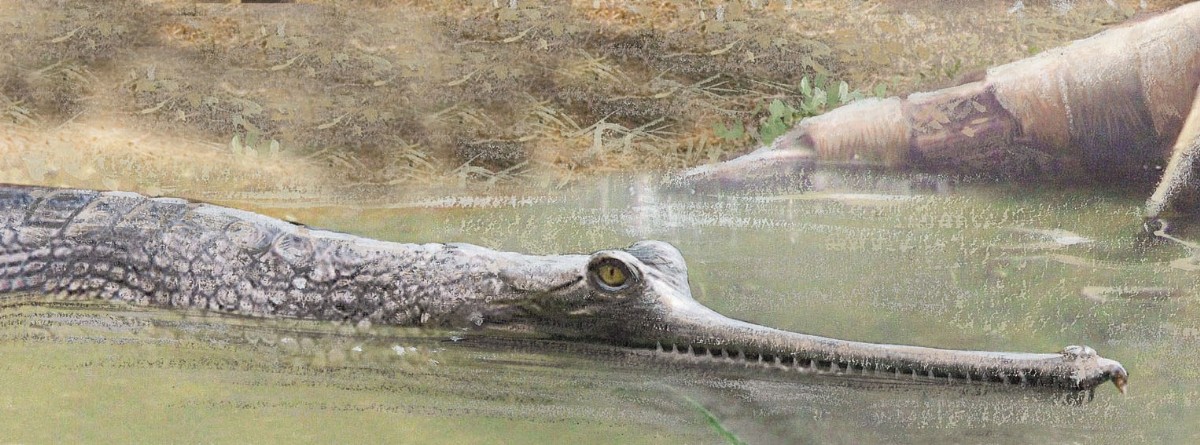
Gharials, also known as gavials, are related to crocodiles and alligators. They have long, narrow snouts, lined with needle-like teeth. They live in rivers and mangroves of Southeast Asia, feeding only on fish. Gharials can reach lengths of up to 7 metres (23 feet) long and are very agile swimmers.
Caimans
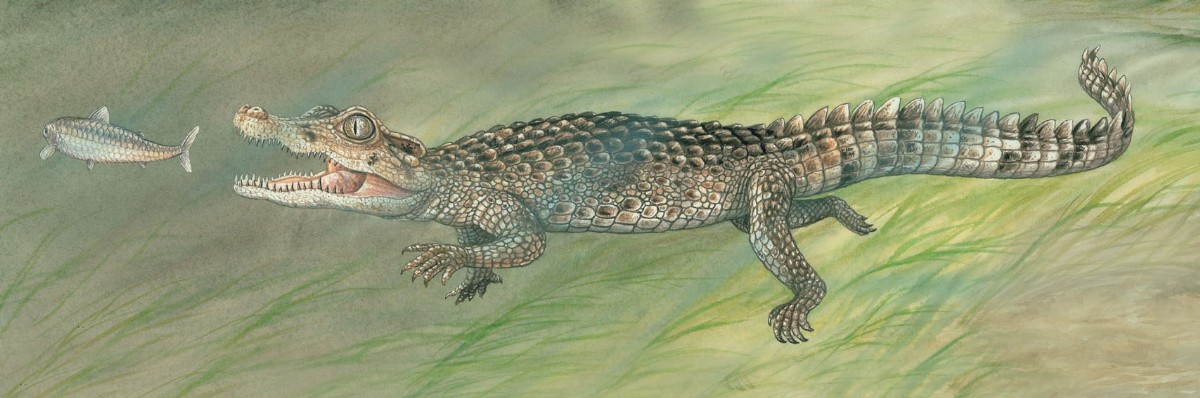
Caimans are relatives of the alligator that live in Central and South America and have heavily armoured undersides. They are usually smaller than alligators but the black caiman can grow up to 5 metres (16 feet) long.
Consultant: Chris Jarvis
pics


Without in any way limiting Q-files Ltd’s exclusive rights under copyright, any use of this publication to “train” generative artificial intelligence (AI) technologies to generate text is expressly prohibited. Q-files Ltd reserves all rights to license use of this work for generative AI training and development of machine learning language models.