
Ecosystems

CITE
We have made every effort to follow citation style rules, but there may be some minor differences. If in doubt, please refer to the appropriate citation style manual.
Tropical rivers. (2026). In Q-files Encyclopedia, Life, Ecosystems. Retrieved from
https://www.q-files.com/life/ecosystems/tropical-rivers
"Tropical rivers." Life, Ecosystems, Q-files Encyclopedia, 23 Mar. 2026.
https://www.q-files.com/life/ecosystems/tropical-rivers.
Accessed 13 Sep. 2026.
Tropical rivers 2026. Life, Ecosystems. Retrieved 13 September 2026, from
https://www.q-files.com/life/ecosystems/tropical-rivers
Life, Ecosystems, s.v. "Tropical rivers," accessed September 13, 2026.
https://www.q-files.com/life/ecosystems/tropical-rivers


Tropical rivers
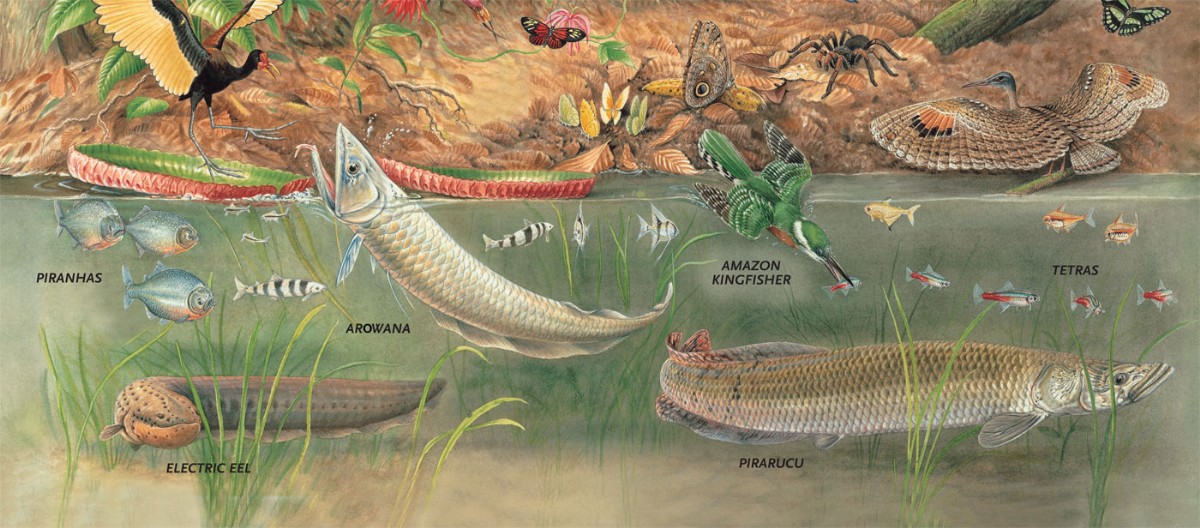
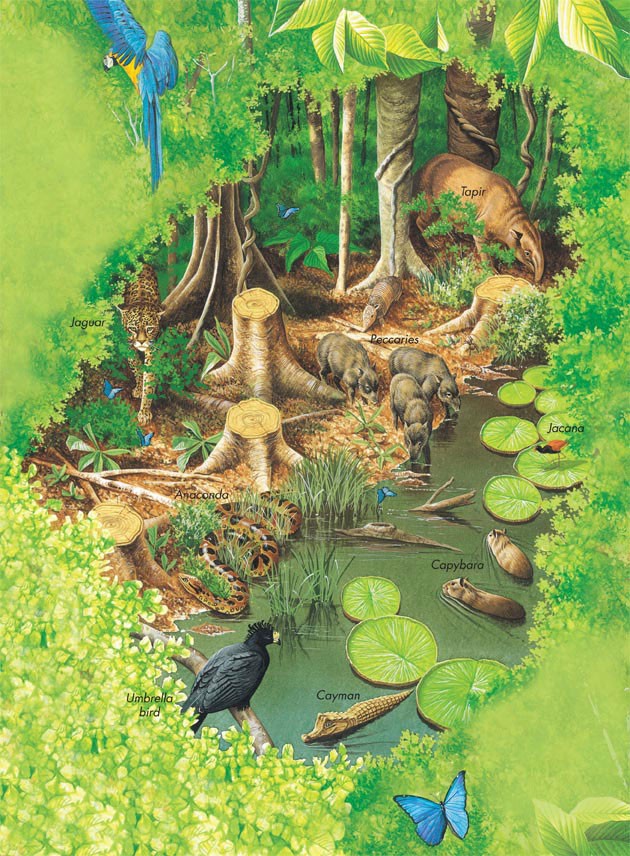
The River Amazon has thousands of tributaries that flow through the rainforest. Some of these channels are wide and deep, while others are narrow, shallow and full of fallen leaves, branches and winding tree roots. The river teems with fish, including predators such as the notorious piranha, the electric eel and the arowana, which will often leap out of the water to snatch insects or even birds. By night, various forest animals come to the river banks to drink. Tapirs, peccaries and capybaras are wary of dangerous predators, such as jaguars.


Floods
During the Amazon rainy season (from December to May), vast areas of the forest floor flood, and fish swim among the tree trunks. River animals like the giant otter, the caiman or the Amazon dolphin, go off in pursuit of them. Some animals, such as the capybara, anaconda or jaguar, are good swimmers and are easily able to negotiate the floodplains. Others, such as monkeys, iguanas and anteaters, take to the trees during the floods.
Dry season

At the height of the dry season, normally between June and August, parts of the Amazon River are reduced to a shallow trickle. Fish now find themselves trapped in small pools of water. Surrounded by predators, such as caimans, jaguars and fish-eating birds, the fish have no escape.
The low water also exposes banks and sandbars along the river. These provide ideal nesting sites for animals such as turtles and black skimmer birds. There is plenty of food for the young, but they must raise their families quickly, before the waters rise again. Millions of butterflies gather on the wet sandbars to suck water, salts and minerals from the mud. This replenishes their supplies and keeps them healthy.
Fish
The largest of all Amazon fish, the pirarucu (or arapaima) grows to 3 metres (10 feet) or more in length. It prefers shallow, swampy water to spawn. It has a swim bladder, a kind of “lung” which it uses to breathe air when its head is above water.
Like the pirarucu, the arowana preys on insects and other fish. It will often leap right out of the water to take them. It has even been known to snatch birds off branches.
The electric eel is another air-breather, taking in gulps of air while at the surface. It is capable of delivering a charge of up to 500 volts—enough to give a human a severe shock. It uses the electricity both to defend itself and to stun its own prey, mostly other fish.
The piranha is armed with razor-sharp teeth. Schools of 20 or more piranhas will, on detecting blood in the water, set about an injured animal, reducing anything the size of a pig to a mere skeleton in a very short time. Normally, the piranha feeds on small fish and fruit.

Reptiles

At up to 9 metres (30 feet) long, and with a diameter of 30 centimetres (12 inches) the anaconda is one of the world’s longest and heaviest snakes. It seizes its prey by the neck and coils its body around it to suffocate the animal to death. It then swallows its victim whole. It can go weeks or even months without food after a big meal.

The caiman, a type of crocodile, lurks in shallow water with just its eyes and nostrils showing. It usually feeds on fish but is also capable of attacking animals such as tapirs and capybaras. When they come to the water to drink, it seizes them in its teeth and drags them under water.
The matamata, a river turtle, lurks on the riverbed waiting for fish to approach. The flaps of skin on its neck attract the fish’s curiosity—and also help it to sense approaching prey. The matamata then suddenly thrusts out its neck and grabs it.
Iguanas are kinds of lizards. The green iguana has a crest of comb-like spikes running down its back. If danger threatens, it will simply drop out of the trees into the water below. The green anole, another kind of iguana, has long toe pads to help it grip to tree trunks. The male’s red throat flap is used in displays to attract females.


Amphibians
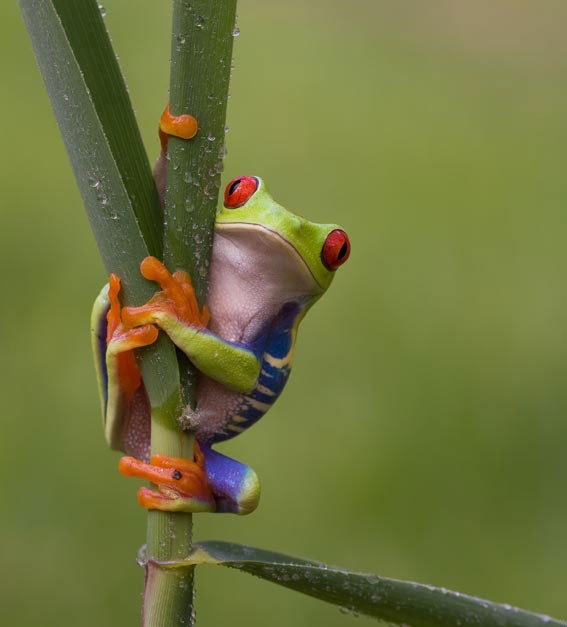
Some tree frogs climb high up into the trees. They carry their tadpoles on their backs, searching out hollows where water has collected. Here the tadpoles develop into adults.
The Suriname toad also carries its young on its back—in special pockets. This unusual toad has a flat, square body, webbed hind feet and star-shaped fingertips.
Consultant: Chris Jarvis
pics


Without in any way limiting Q-files Ltd’s exclusive rights under copyright, any use of this publication to “train” generative artificial intelligence (AI) technologies to generate text is expressly prohibited. Q-files Ltd reserves all rights to license use of this work for generative AI training and development of machine learning language models.