
Ecosystems

CITE
We have made every effort to follow citation style rules, but there may be some minor differences. If in doubt, please refer to the appropriate citation style manual.
Wildlife of the Galapagos Islands. (2026). In Q-files Encyclopedia, Life, Ecosystems. Retrieved from
https://www.q-files.com/life/ecosystems/wildlife-of-the-galapagos-islands
"Wildlife of the Galapagos Islands." Life, Ecosystems, Q-files Encyclopedia, 30 Sep. 2026.
https://www.q-files.com/life/ecosystems/wildlife-of-the-galapagos-islands.
Accessed 30 Oct. 2026.
Wildlife of the Galapagos Islands 2026. Life, Ecosystems. Retrieved 30 October 2026, from
https://www.q-files.com/life/ecosystems/wildlife-of-the-galapagos-islands
Life, Ecosystems, s.v. "Wildlife of the Galapagos Islands," accessed October 30, 2026.
https://www.q-files.com/life/ecosystems/wildlife-of-the-galapagos-islands


Wildlife of the Galapagos Islands
The Galapagos Islands are a group of islands lying nearly 1000 kilometres (600 miles) off the west coast of South America. Part of Ecuador, they lie across the equator. The islands were created by a volcanic "hot-spot" on the floor of the Pacific Ocean. They are home to hundreds of animal and plant species found nowhere else on Earth, known as “endemic” species. All the Galapagos animals and plants have, over millions of years, adapted in isolation to the harsh environment of the islands, evolving into the species we know today. The Galapagos Islands are a national park, and the waters surrounding them a marine reserve. Their wildlife is protected by law.


Adaptation
in isolation
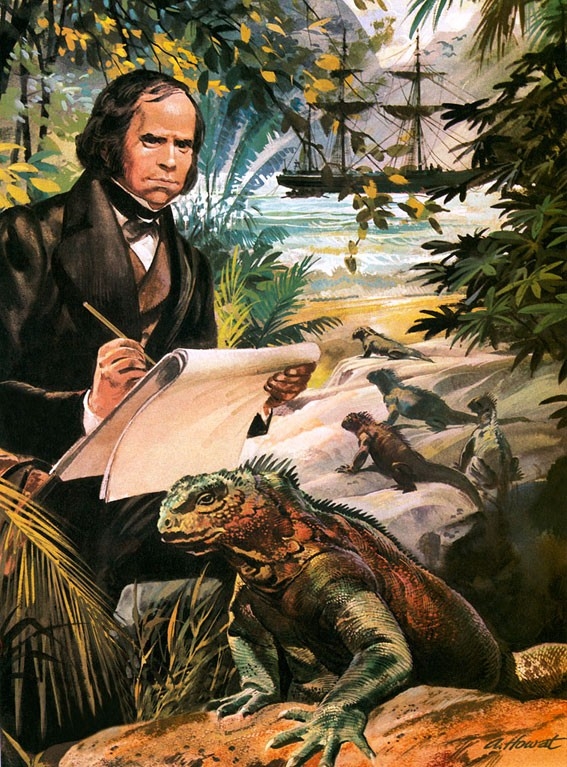
Because the Galapagos native species evolved in isolation, the islands are an excellent natural "laboratory" for studying how animals adapt to their environment. Studies of Galapagos wildlife helped the scientist Charles Darwin, who visited the islands in 1835, to develop his theory of evolution by natural selection.
Every Galapagos animal (and plant) is descended from those that arrived on the islands either by flying, being blown on the wind, or swimming or floating across the ocean from mainland South America. Vegetation is sparse on some of the islands, so, in order to survive, newcomers had to adapt by eating what they could find.
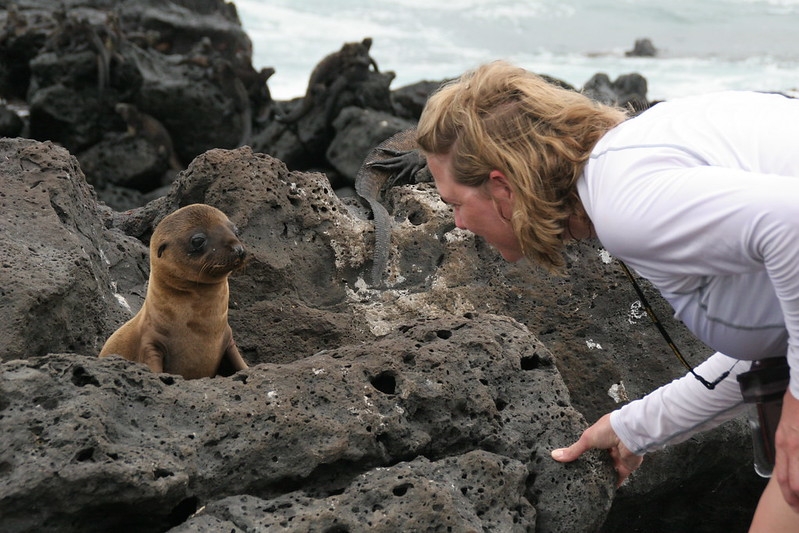
Large animals could not make the long sea journey, so smaller ones were able to flourish without predators. Galapagos's native animals have not learned to fear humans, and so they appear tame.
Habitats
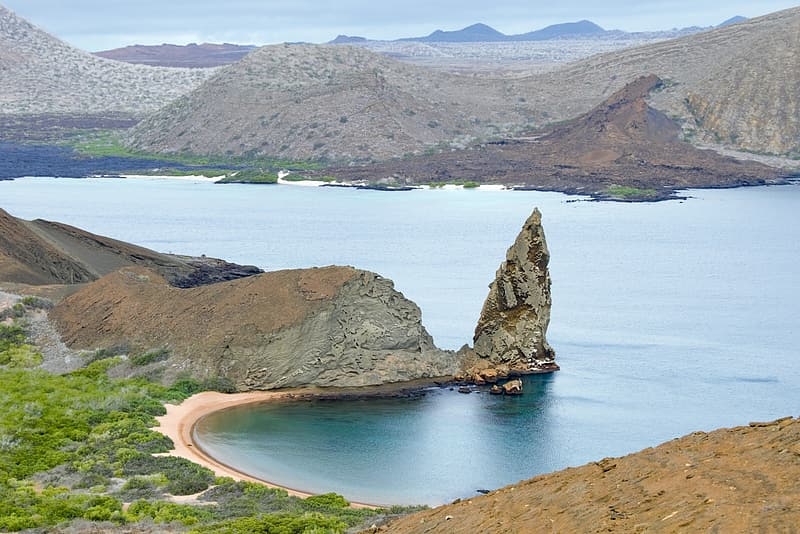
On the larger islands of the Galapagos archipelago, including Isabela, Santa Cruz and San Salvador, the highlands have generally wet climates with lush green vegetation and tropical forest in some areas. The lowlands tend to have arid or semi-arid vegetation, with many thorny shrubs and cacti; there is almost bare volcanic rock in some places.
The meeting of several ocean currents at the Galapagos Islands provides exactly the right conditions for an unusually wide range of animals to exist. The Humboldt Current brings cool waters, rich in nutrients, which support shoals of cold-water fish such as sardines and anchovies, and which in turn provide food for penguins and fur seals.

During El Niño years, when changes in direction of the ocean currents brings warmer waters to the Galapagos Island, many penguins and fur seals, along with other animals that depend on cold-water fish, starve.
Reptiles thrive in the Galapagos islands because the climate is hot and dry, food is plentiful and—apart from the Galapagos hawk—there is a lack of predators. Lava lizards, for example, openly sunning themselves on the rocks or the sand, are a common sight across the islands.

Giant tortoises
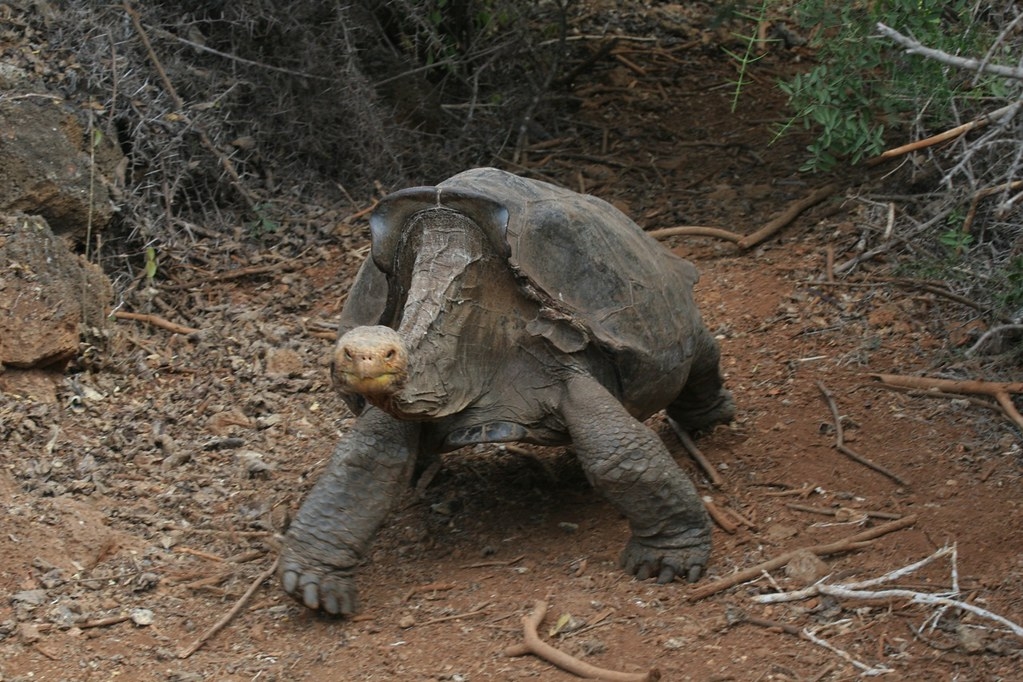
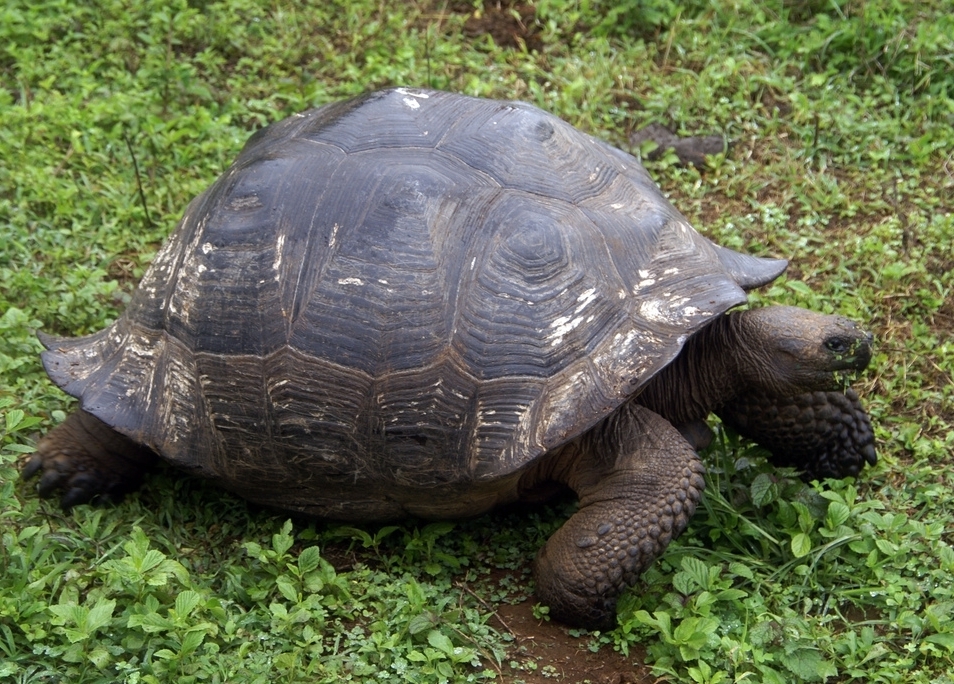
The largest land animal of the Galapagos Islands, and the best-known, is the giant tortoise. These huge reptiles can grow up to 1.5 metres (5 ft) long and weigh more than 200 kilograms (440 pounds). They can live for more than 150 years.
Different species of giant tortoise live on different islands. Each has a different shaped shell, which has evolved according to the range of food available. On the islands where there is plenty of lush grass, such as Santa Cruz, the tortoises have domed shells and short necks. On the drier ones, such as San Cristobal, Española, Floreana and Pinzón, the tortoises' shells have arched openings to allow them to reach up to eat taller plants. The tortoises also have longer necks.
Iguanas
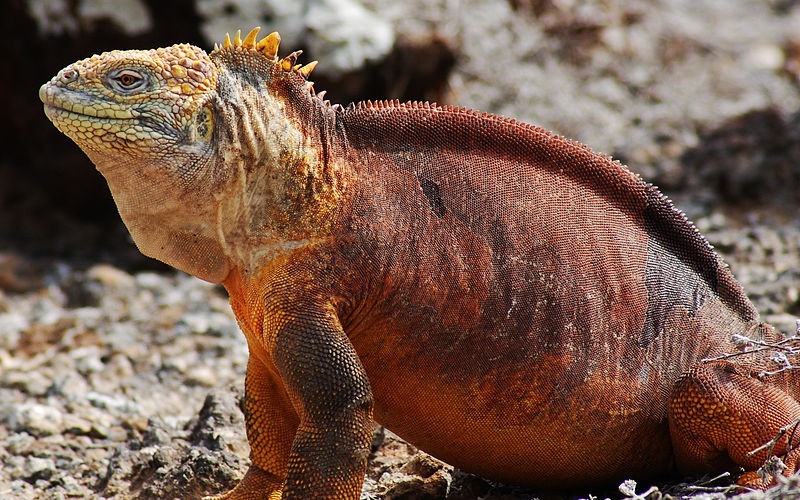
The three species of iguana found on the Galapagos Islands are found nowhere else on Earth. Two live on land, one in the sea. The Galapagos land iguana is golden yellow in colour and can often be seen with finches perching on its back to pick off ticks from its scaly skin. The rare pink land iguana, discovered in 1986 and recognized as a different species in 2009, lives only on the slopes of Wolf Volcano on Isabela. There are just 200 or so of them left in the wild.
The marine iguana is the only lizard adapted to live in the sea, where it feeds on red and green algae. Its ancestors probably survived by eating algae and seaweed on the rocky shore, gradually over many generations venturing further and further out from the shore to find food.
The marine iguana's flat snout and sharp teeth enable it to scrape off algae growing on rocks. Any excess salt taken in while eating is snorted out through its nostrils, leaving white patches of salt on its head.
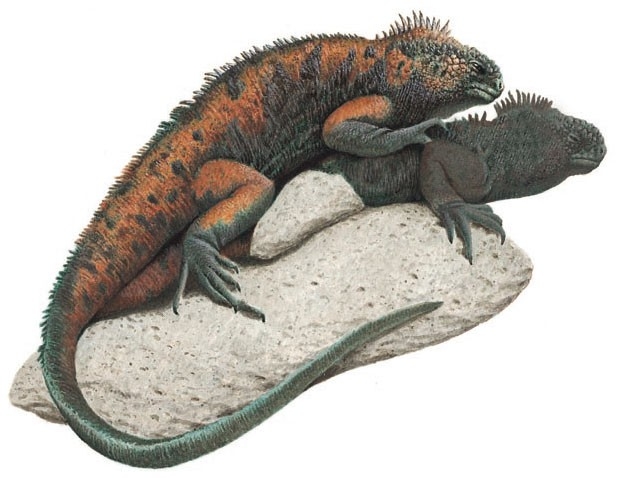

The iguana dives over 15 metres (50 feet) deep in search of food, using its flattened tail to propel itself through the water. Emerging from the water it basks in the sun to warm up again.
In the mating season, the bodies of male marine iguanas change from their usual black or grey colour to shades of orange, red or green. They herd together groups of females, called harems, to mate with and guard from the attentions of other males.
Darwin’s finches
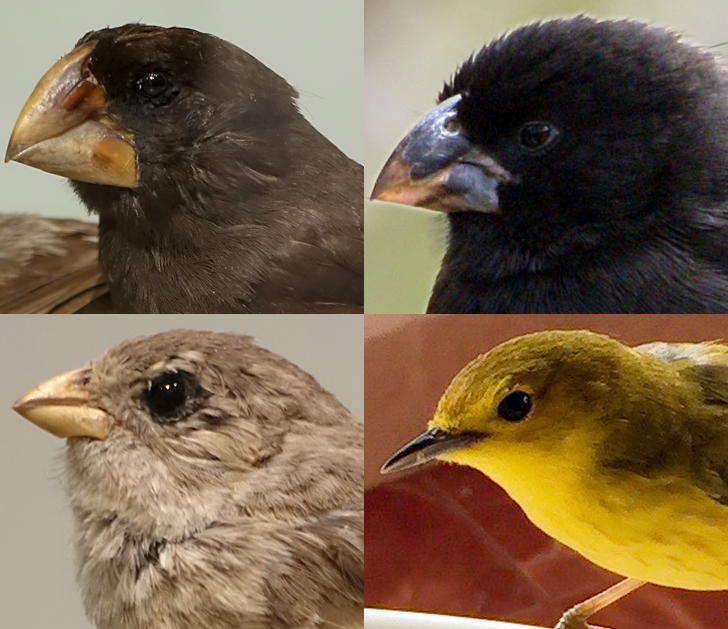
The Galapagos Islands are home to 13 species of finch, small perching birds that Darwin studied in detail. They probably evolved from South American birds called grassquits, members of the tanager family, which flew to the islands around 2 million years ago. As the birds spread out across the islands, they found different foods. Some made their homes in places where there was lots of fruit, and so their beaks evolved to help them eat it. Others evolved to eat seeds or insects. The large ground finch has a short, stubby beak, good for cracking open seeds. The cactus finch is able to eat spiky cacti, while the vampire ground finch feeds on the blood of sea birds.

Sea birds
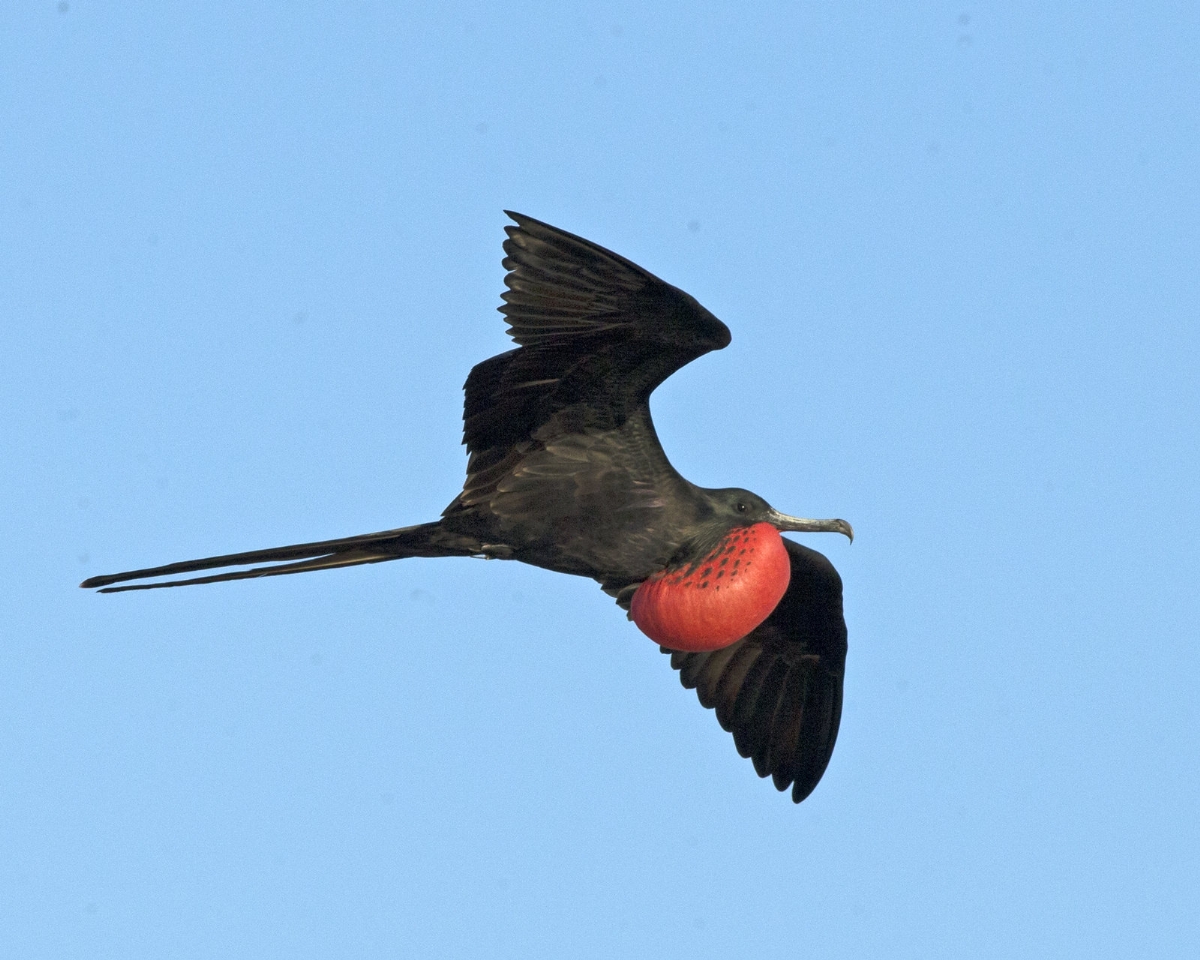
The Galapagos islands are home to 19 species of sea bird, five of which are endemic. The magnificent frigatebird lives in tropical waters off the coasts of the Americas. It uses thermals, warm upcurrents of air, to soar to altitudes of up to 2500 metres (8000 feet). It catches fish and squid by swooping down to the water’s surface. But it also steals from other sea birds by biting their tails, forcing them to release their catch. During the mating season, the male’s throat pouch reddens and inflates. The bigger and redder the pouch, the more likely he is to attract a mate.
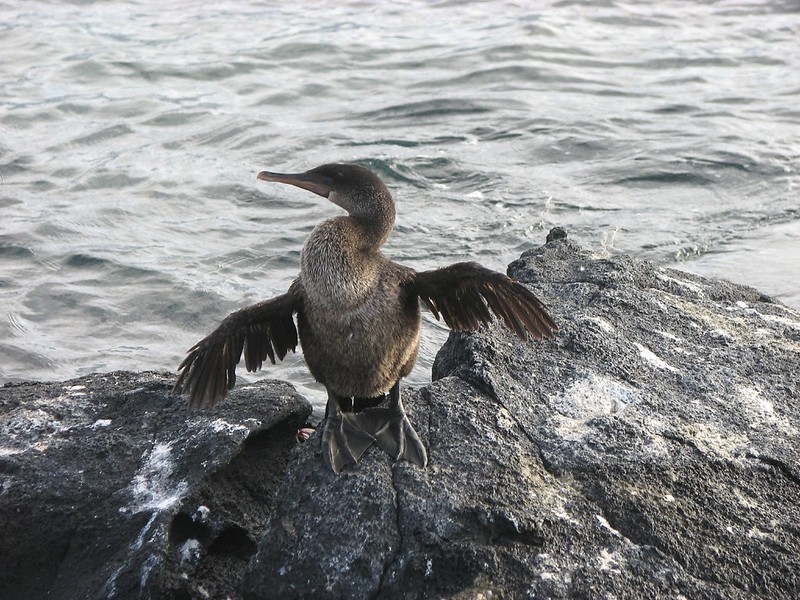
The flightless cormorant, a species endemic to the Galapagos, was descended from a type of cormorant that was able to fly. Because there were no predators on the islands it needed to escape from, over many generations its wings gradually shrunk in size and it could no longer fly. The flightless cormorant is however a strong swimmer, and dives to the seabed to catch eels and octopus.
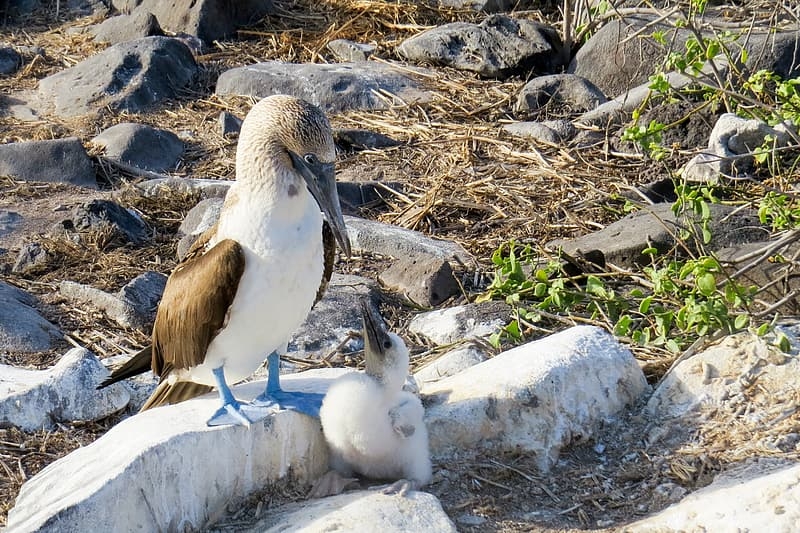
Blue-footed boobies are large birds, related to gannets. They build their nests on the islands’ steep cliff faces. They dive into the sea from high in the air to catch fish. Their tapered bodies cut easily through the water as they power beneath the surface. Their bills are long and sharply pointed, with serrated edges for gripping on to fish. Both male and female boobies have bright blue feet. Males display their feet during courtship to help them attract a mate.
The waved albatross soars over the Galapagos Islands’ eastern waters. Some of these massive birds have wingspans of nearly 2.5 metres (8 ft). They are named after the wavy pattern on their wings. Waved albatrosses gather to form large colonies out to sea, rafting together on the water's surface. They come onshore to lay their eggs and guard their nests. After flying the nest, a young albatross spends six years at sea. It then returns to the islands to find a mate. When it finds one, they pair for life.

Galapagos penguin
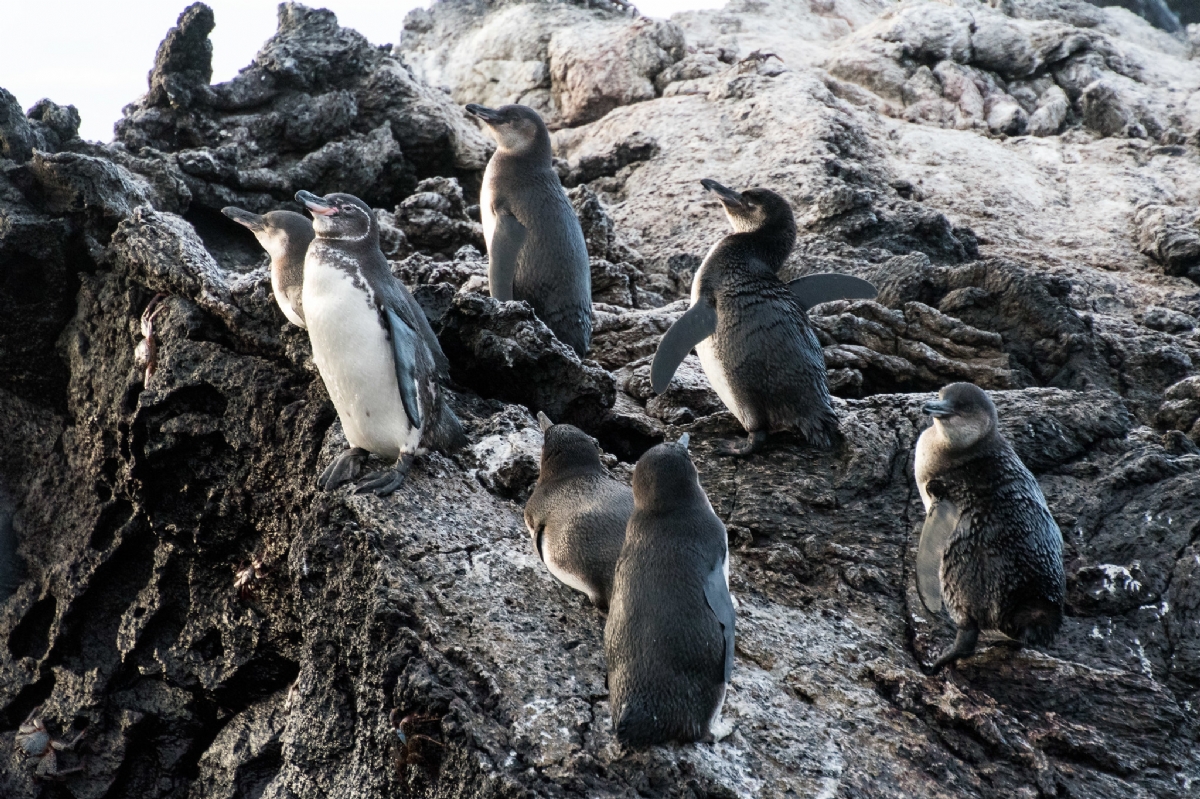
Galapagos penguins, the only kind of penguin found on (and north of) the equator, live mostly on Fernandina and the west coast of Isabela. It is thanks to the Humboldt Current, which brings cold water from farther south, that these penguins can survive in tropical latitudes. They lay their eggs in rocky crevices, to shelter them from the scorching heat of the sun. The penguins dive for fish, staying close to the shore to avoid being caught by fur seals.

Sally Lightfoot crab
The Sally Lightfoot crab lives on the Pacific coasts of the Americas, including Galapagos beaches. A scavenger, it will eat almost anything it can find—even the ticks on marine iguanas’ skin. Only the adults are brightly coloured: the young are black or dark brown in colour and are camouflaged well on the Galapagos's black volcanic rocks. It is named after a Caribbean dancer, because of its nimble “light-footed” way of scuttling over the rocks.

Conservation success

Thanks to a conservation programme begun in 2017, the Floreana giant tortoise has been re-introduced to the island of Floreana after 180 years. It was driven to extinction in the 1840s by whalers, who took thousands from the island—a favourite stopover for sailors, thanks to its low terrain and supply of fresh water—for food on their voyages. Fortunately, some giant tortoises recently discovered living in the north of Isabela Island were found to be descended in part from the Floreana population (they had probably got to Isabela after whalers dumped live tortoises in the sea nearby).
In 2026 conservationists brought back to the island more than 150 hatchlings they had bred from individuals genetically most closely related to the Floreana subspecies. Meanwhile, most of the rats and feral cats on Floreana have been removed under an invasive species eradication programme, allowing the tortoises to establish themselves unthreatened by predators. As they graze, the giant tortoises will help plants to grow and spread their seeds across the island, thus enabling other wildlife—reptiles, invertebrates and birds—to flourish.
Consultant:Chris Jarvis
pics


Without in any way limiting Q-files Ltd’s exclusive rights under copyright, any use of this publication to “train” generative artificial intelligence (AI) technologies to generate text is expressly prohibited. Q-files Ltd reserves all rights to license use of this work for generative AI training and development of machine learning language models.