
South America

CITE
We have made every effort to follow citation style rules, but there may be some minor differences. If in doubt, please refer to the appropriate citation style manual.
Ecuador. (2026). In Q-files Encyclopedia, Geography, South America. Retrieved from
https://www.q-files.com/geography/south-america/ecuador
"Ecuador." Geography, South America, Q-files Encyclopedia, 4 Mar. 2026.
https://www.q-files.com/geography/south-america/ecuador.
Accessed 6 Aug. 2026.
Ecuador 2026. Geography, South America. Retrieved 6 August 2026, from
https://www.q-files.com/geography/south-america/ecuador
Geography, South America, s.v. "Ecuador," accessed August 6, 2026.
https://www.q-files.com/geography/south-america/ecuador


Ecuador
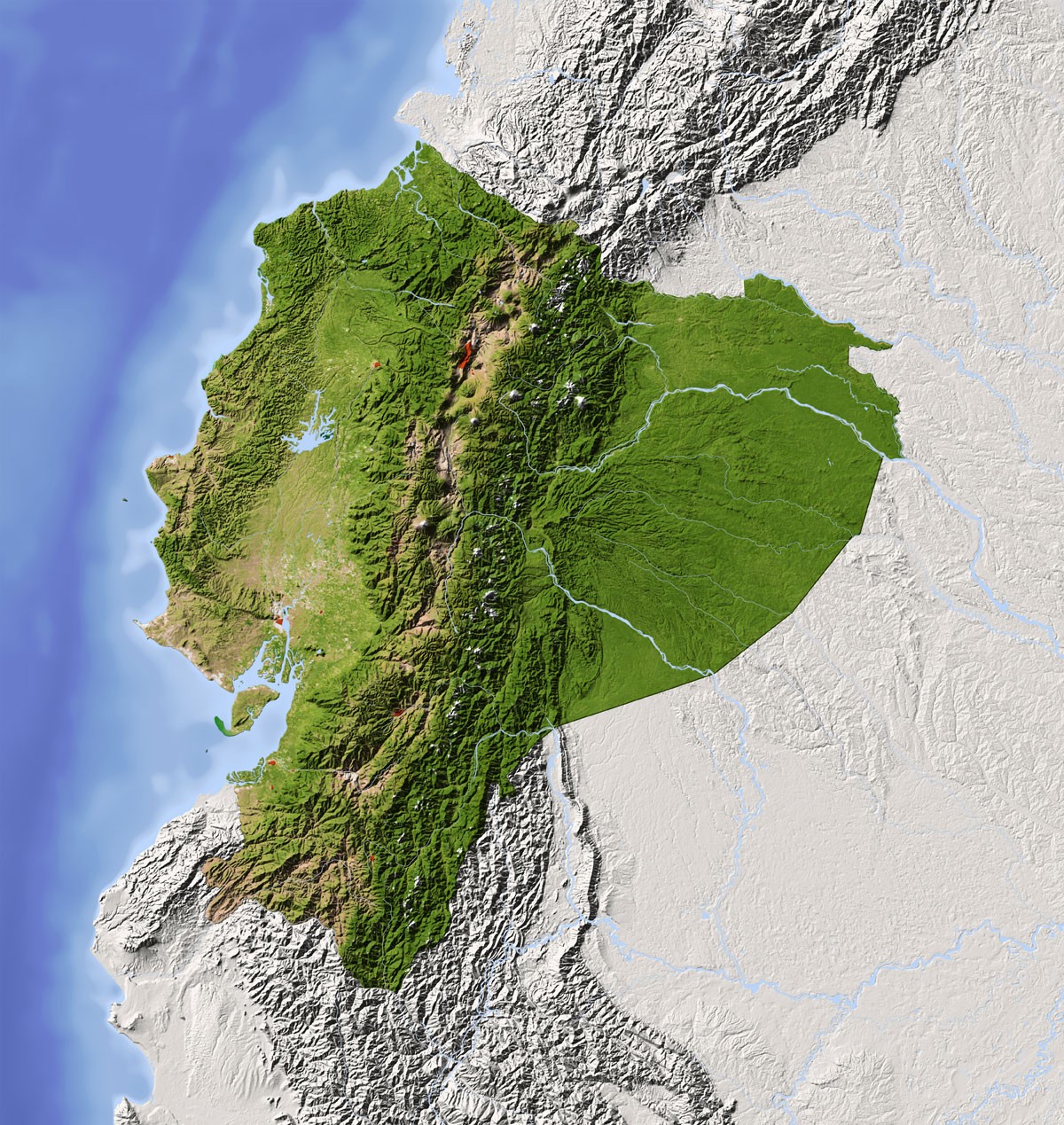
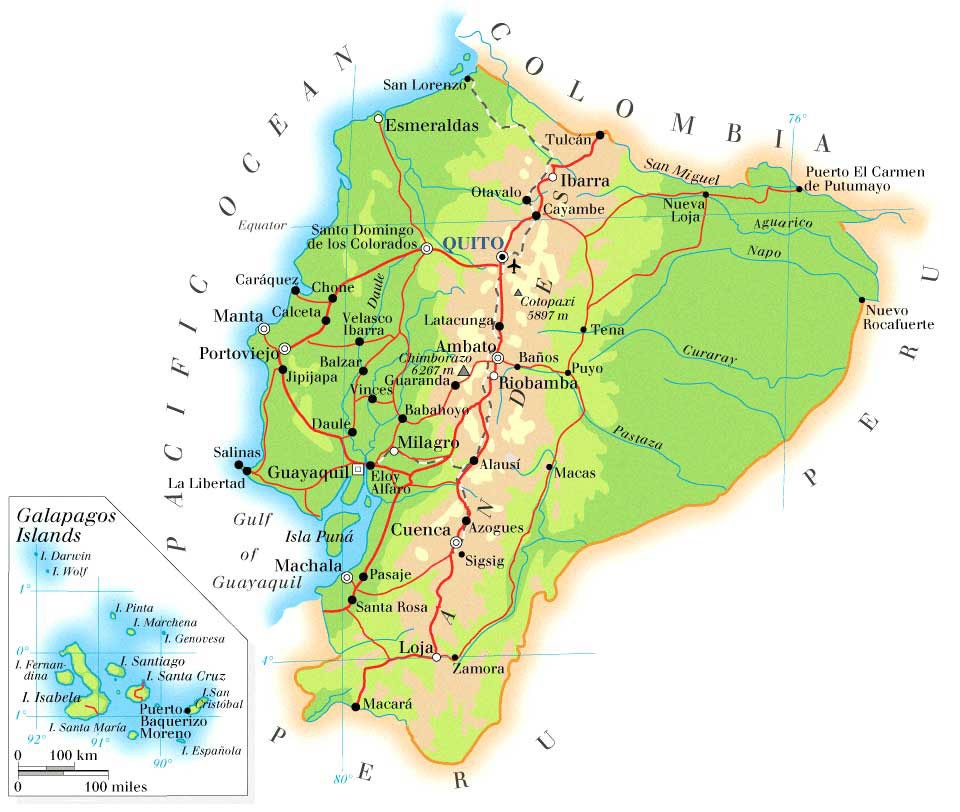
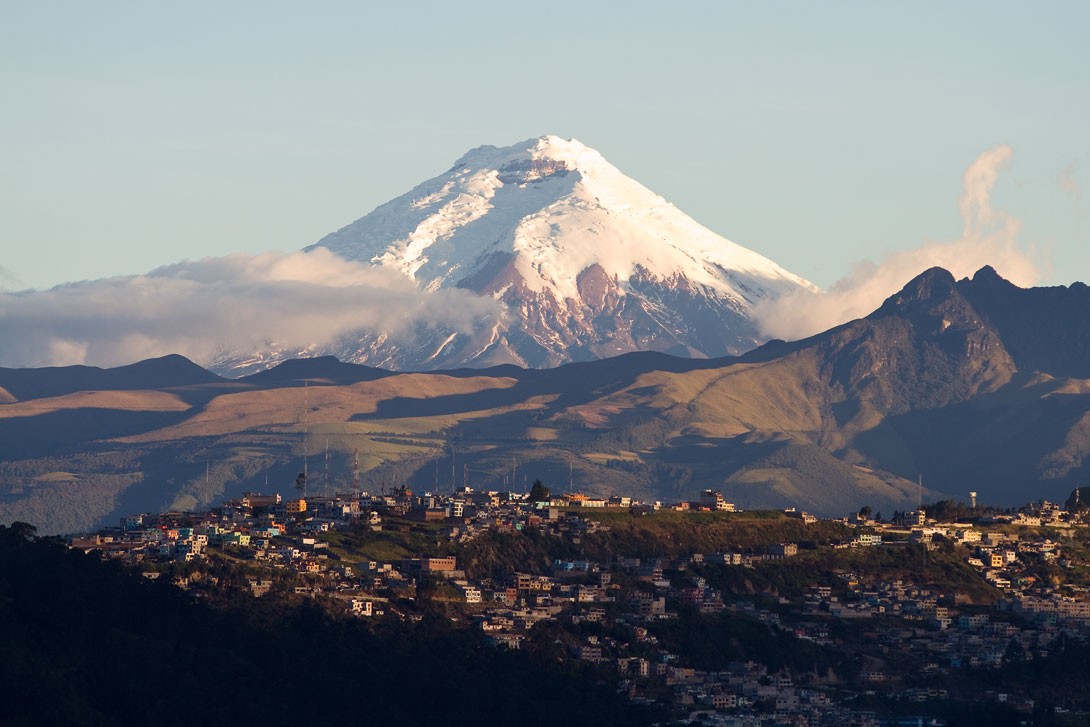
Ecuador is the Spanish name for the Equator, which runs through the northern part of the country. Running down the centre of Ecuador are the snow-capped mountains and volcanoes of the Andes. The highest peaks include Cotopaxi, which at 5897 metres (19,347 feet) is the highest active volcano in the world. This highland region, known as the sierra, is home to almost half of Ecuador's population. To the west, a green, fertile plain stretches to the coast; this rich farmland is used for growing bananas, rice and flowers. Eastern Ecuador is part of the great Amazon rainforest. Ecuador’s territories include the Galápagos Islands, which lie about 1000 kilometres (620 miles) west of the mainland in the Pacific Ocean.
People
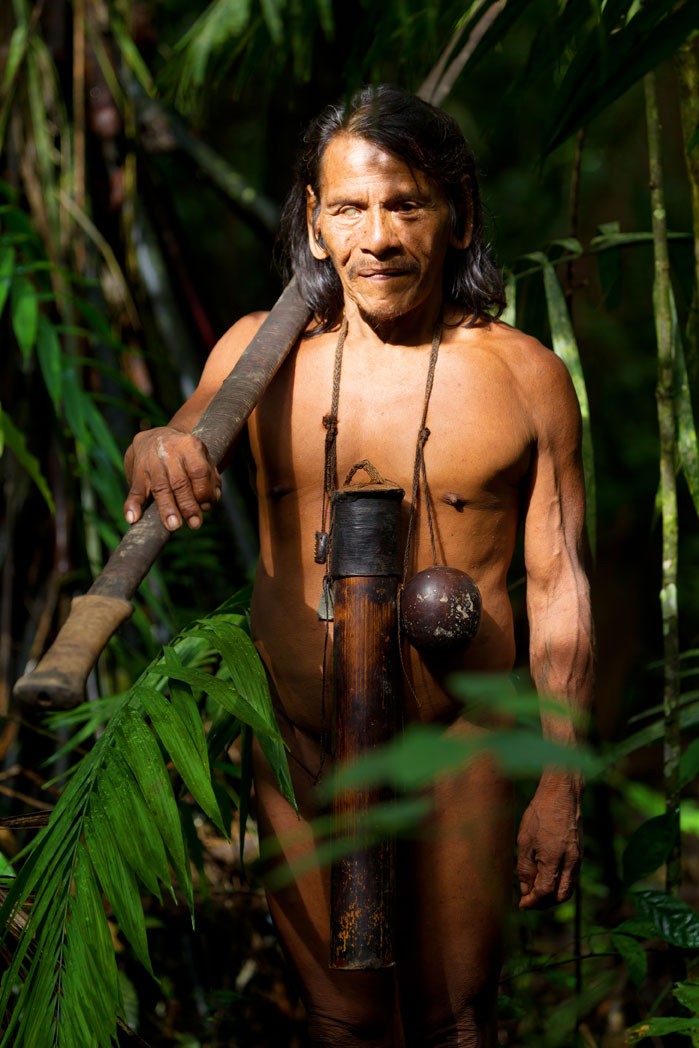
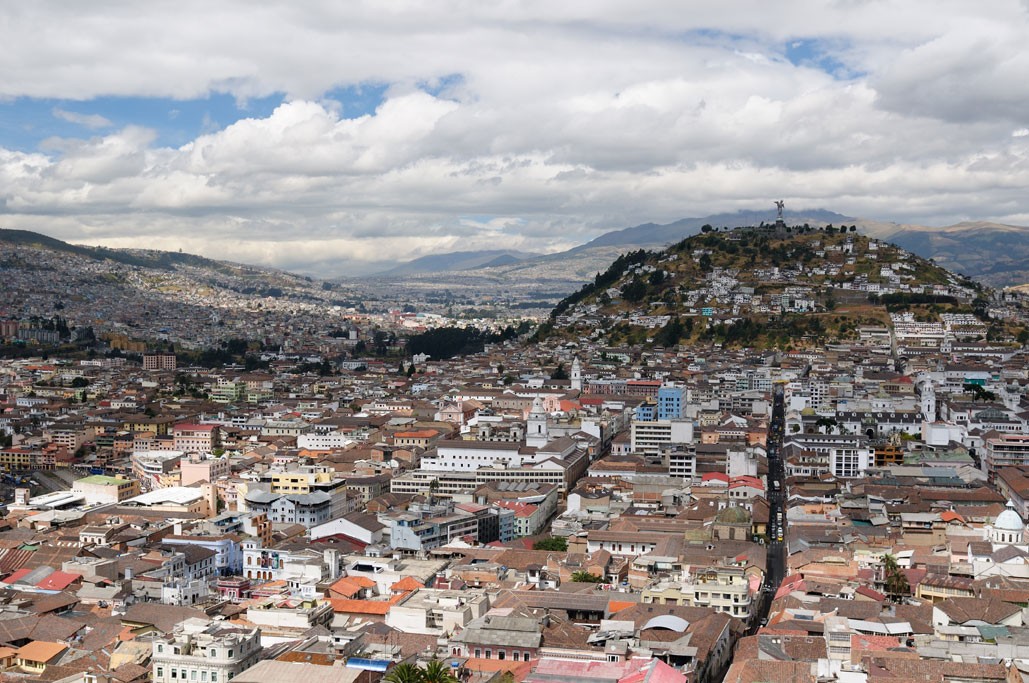
About three-quarters of Ecuadorians are mestizo—descended from both Native American peoples and Spanish settlers, who arrived in the 16th century. A smaller number are the descendants of Africans brought by the Spanish to work as slaves. Most people live in the central highlands or along the Pacific coast, while a large area of the rainforest is almost completely uninhabited. Most of Ecuador’s native Quechua people live in mountain villages or towns.
Economy
Although Ecuador is developing quickly, many of its people—especially in native communities—are still quite poor. Many work as subsistence farmers, growing maize, potatoes and beans for their families. Some make textiles, woodcarvings and jewellery to sell at markets or for export.
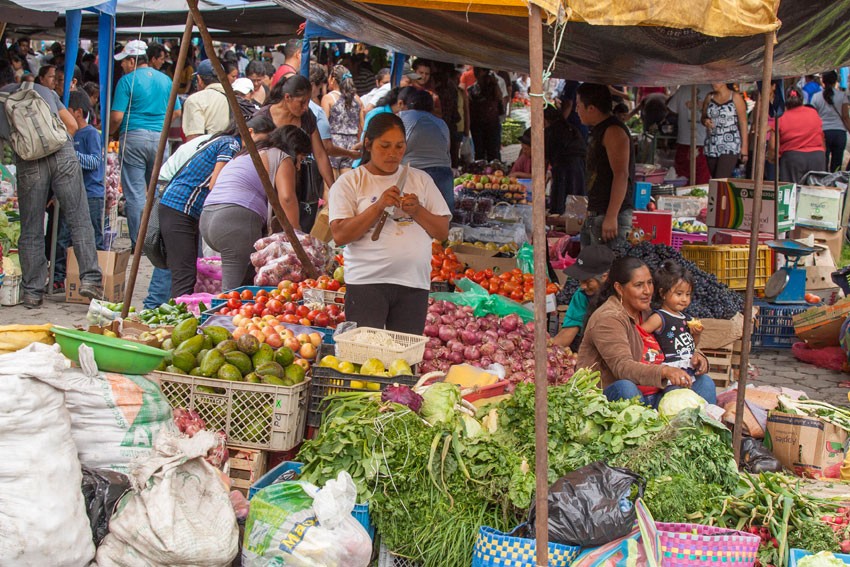

Ecuador is one of the world’s largest producers of bananas, which are grown in the hot, tropical Pacific coast region known as El Oro. Since it was discovered in eastern Ecuador in the early 1970s, oil has become the country’s main export. Soon after the discovery, a pipeline was built across the Andes Mountains to link the wells to Pacific ports.
Protecting the environment
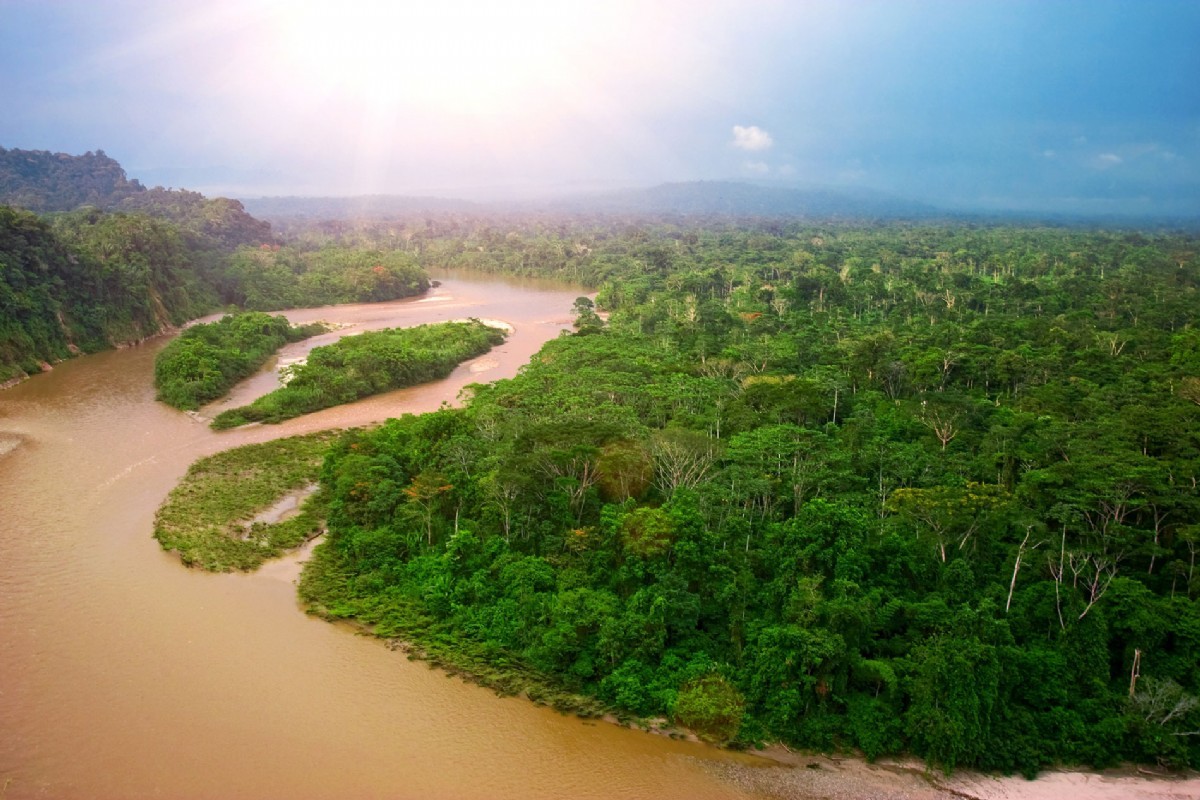
Ecuador is one of 17 “megadiverse” countries in the world. This means that it has very high numbers of bird, animal and plant species within its land area (which includes the Galápagos Islands, see below). Many of its frogs, butterflies, orchids and trees are endemic: they are found nowhere else on Earth. In 2008 Ecuador became the first country in the world to recognize the rights of nature to exist by law. Around a third of Ecuador’s land is protected by national parks or wildlife reserves, but oil drilling still threatens some rainforest areas with pollution.
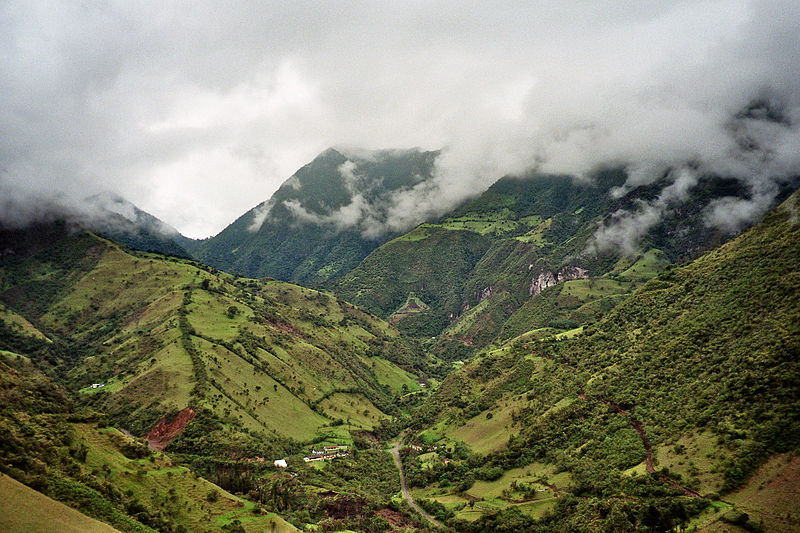
In December 2021 Ecuador’s highest court ruled that plans to mine for copper and gold in a protected cloud forest would violate the rights of nature set down in the 2008 Act. Los Cedros, a protected area in the north the country—which lies in the Chocó region of South America, one of the most biodiverse parts of the Earth—is home to spectacled bears, endangered frogs, the brown-headed spider monkey (one of the world’s rarest primates) and many rare species of orchid. The decision means that mining concessions in the forest granted to Enami EP, the national mining company, must now be cancelled.
Galápagos Islands
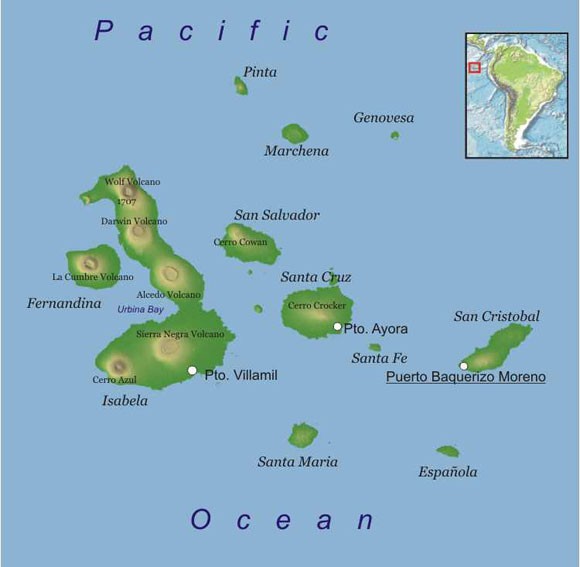
An archipelago of volcanic islands sitting right on the Equator, the Galápagos Islands consist of 18 main islands and 3 smaller ones. The islands were discovered in 1535 by Tomas de Berlanga, the Spanish Bishop of Panama, when his ship drifted by the islands. Until the early 19th century they served as a hideout by pirates attacking Spanish treasure ships. Later they became a base for whalers. Thousands of the Galápagos tortoises were captured and eaten, bringing the species close to extinction.
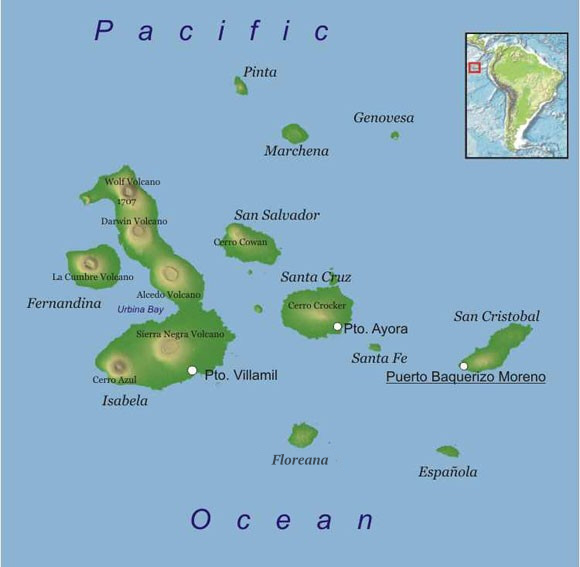

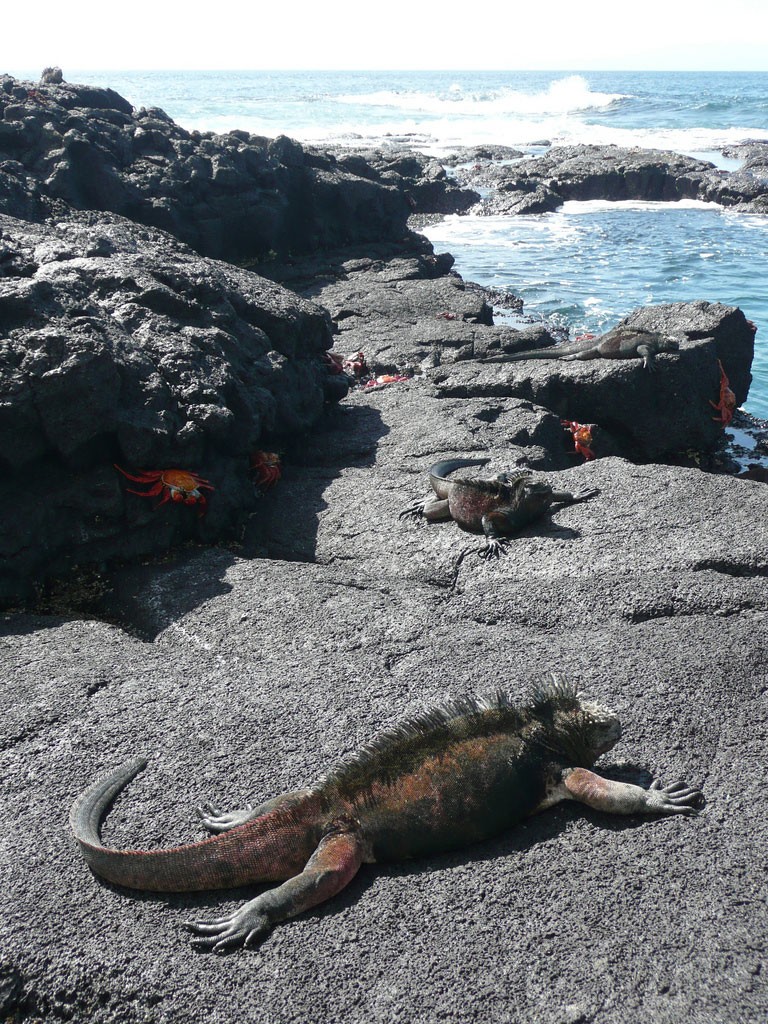
Ecuador annexed the Galápagos Islands in 1831 and used them as a prison colony. The islands became famous after the survey ship, HMS Beagle, carrying Charles Darwin, arrived in the Galápagos in 1835. His observations of the islands' unique wildlife led to his theory of evolution.
The islands became a national park in 1959. They and the surrounding seas have since been declared World Heritage sites.
Consultant: Nicholas Harris
Facts about Ecuador
Area 276,841 sq km
Population 17,483,326 (2023 estimate)
Highest point Chimborazo 6267 m (20,556 ft)
Capital Quito, metro area population 2,889,703
Largest city Guayaquil (metro area pop. 3,193,267)
Languages Spanish, Quechua
Religions Christian (Roman Catholic) 68%, Christian (other) 37%, others 5%
Ethnicity mestizo (mixed Native American / white) 72%, Montubio (mixed Spanish / Native American / African) 7%, Quechua 4%, others 17%
Currency United States Dollar (USD)
Chief exports crude oil, bananas, cut flowers, shrimp, cacao, coffee, fish, wood
History of Ecuador
3500–1800 BC
Tribal peoples, including the Valdivia, settle Ecuador’s west coast region, living by hunting and fishing
1450s
Incas arrive from Peru, conquering the Caras people of modern-day Quito
1463
The northern highlands becomes part of the Inca Empire, but natives of coastal and rainforest areas fiercely resist conquest by the Incas. By 1500 Huayna Capac overcomes this resistance and thus incorporates most of present-day Ecuador into Inca Empire
1530
Spanish forces under Francisco Pizarro land in Ecuador
1533
Along with the rest of the Inca Empire, Ecuador is conquered by the Spanish conquistadors. They found the cities of Quito (1534) and Guayaquil (1537)
1542
The Viceroyalty of Peru, the Spanish Empire in South America, and of which present-day Ecuador is part, is created
1680s
English and French pirates attack Ecuador’s coast
1717
Ecuador becomes a province of the Viceroyalty of the New Kingdom of Granada, ruled from Bogotá
1809–12
Quito Revolution: the people of Quito begin fight for independence from Spain, but they are crushed by Spanish troops at the Battle of Ibarra in 1812
1820
Guayaquil, on the west coast, becomes independent from Spain
1820–22
War of Independence: after Guayaquil declares independence in 1820, a rebel army under Antonio José de Sucre battles with Spanish forces. Finally the independence campaigner Simón Bolivar defeats the Spanish at the Battle of Pichincha in 1822; Ecuador joins the independent Gran Colombia (made up of Colombia, Panama and Venezuela)
1830
Ecuador leaves Gran Colombia, becoming fully independent. A period of instability with a rapid succession of rulers lasts until the 1860s
1941–42
Peru invades the mineral-rich coastal region of El Oro, gaining 200,000 sq km of land
1950s–60s
Banana trade develops quickly, bringing in substantial income
1963
President Carlos Arosemena Monroy is forced to resign by the military; violent protests follow until a new, temporary government is formed
1972
Oil production begins in Ecuador
1979
Jaime Roldós Aguilera, Ecuador's first democratically elected president, takes office
1982
Falling oil prices damage Ecuador’s economy and lead to demonstrations and strikes
1998
Brasilia Presidential Act peace agreement ends hostilities between Ecuador and Peru over an area of land in the Amazon rainforest, putting an end to the territorial dispute that dates from 1821
2002
Indigenous peoples call for more of the profits from oil to be invested in their communities
2008
Ecuador's new constitution is the first in the world to recognize legally enforceable Rights of Nature
2019
Violent protests against the policies of President Lenín Moreno and his government break out in Quito. They cease after an organization representing Ecudaor's indigenous peoples reaches agreement with the government. The protesters carry out a community clean-up project (called a minga) after the riots
2022
Mass protests against the economic policies of President Guillermo Lasso triggered by increasing fuel and food prices. Begun by indigenous groups, they have been joined by students and workers. Lasso declares a state of emergency, causing food and fuel shortages across the country
2024
President Daniel Noboa declares an “internal armed conflict” with criminal gangs
pics
Without in any way limiting Q-files Ltd’s exclusive rights under copyright, any use of this publication to “train” generative artificial intelligence (AI) technologies to generate text is expressly prohibited. Q-files Ltd reserves all rights to license use of this work for generative AI training and development of machine learning language models.