
South America

CITE
We have made every effort to follow citation style rules, but there may be some minor differences. If in doubt, please refer to the appropriate citation style manual.
French Guiana. (2026). In Q-files Encyclopedia, Geography, South America. Retrieved from
https://www.q-files.com/geography/south-america/french-guiana
"French Guiana." Geography, South America, Q-files Encyclopedia, 1 Apr. 2026.
https://www.q-files.com/geography/south-america/french-guiana.
Accessed 6 Aug. 2026.
French Guiana 2026. Geography, South America. Retrieved 6 August 2026, from
https://www.q-files.com/geography/south-america/french-guiana
Geography, South America, s.v. "French Guiana," accessed August 6, 2026.
https://www.q-files.com/geography/south-america/french-guiana


French Guiana
French Guiana is an overseas department of France. Two members of the National Assembly represent it in the French government. Most people live on the coast: the capital, Cayenne, has half the population of the entire country. Inland, the land slopes up to the Guiana Highlands. Much of the little-explored, barely inhabited interior is covered by thick rainforest. Lying just above the Equator, French Guiana has a hot, humid, tropical climate. Since 1964 French Guiana has been the home of the European Space Programme, which has its main launch site at Kourou, on the coast.


People
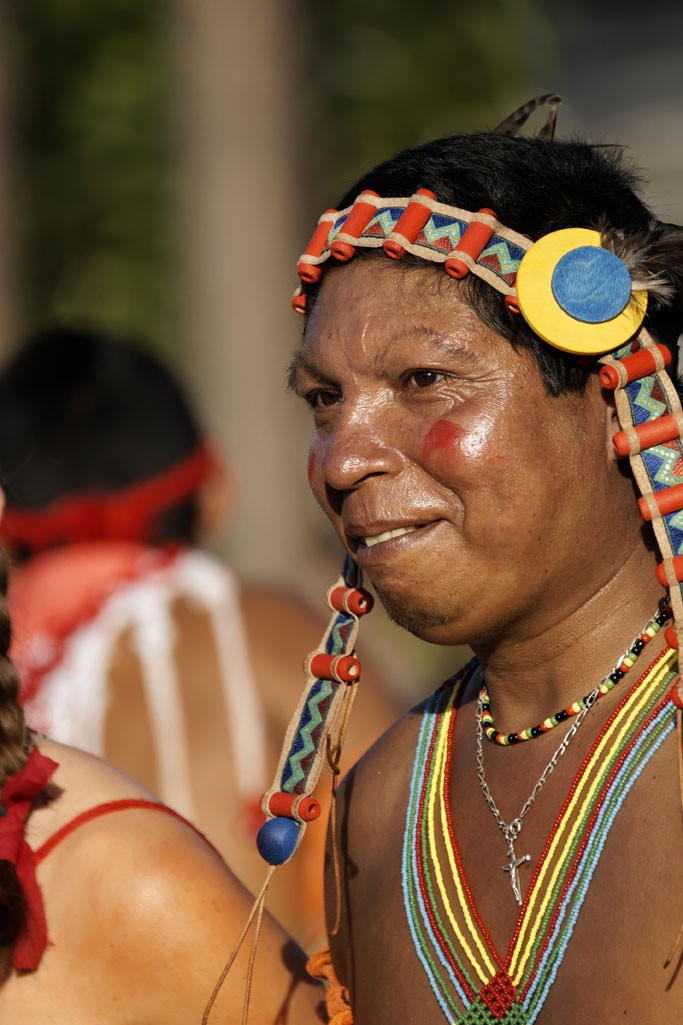
French Guiana’s Creole people are descended from a mixture of French settlers and Africans who arrived to work on plantations in the 19th century. They make up the largest part of the population; many of the rest are descended from people of the French West Indies (Guadeloupe and Martinique), France and Laos. In the rainforest, along the River Maroni, live the Maroons, the descendants of escaped African slaves. French is spoken by everybody. The French social security system helps people with health care, benefits and insurance, and so nearly all the inhabitants of French Guiana have a high standard of living.
Economy
French Guiana has large areas of hardwood forest: sawn logs cut from its trees are quickly becoming an important export. Agriculture and industry are very limited in the country; the soil is very poor and there are hardly any roads. Inland, people travel by river. Much of French Guiana’s income is from France. Nearly all its food and energy is imported.


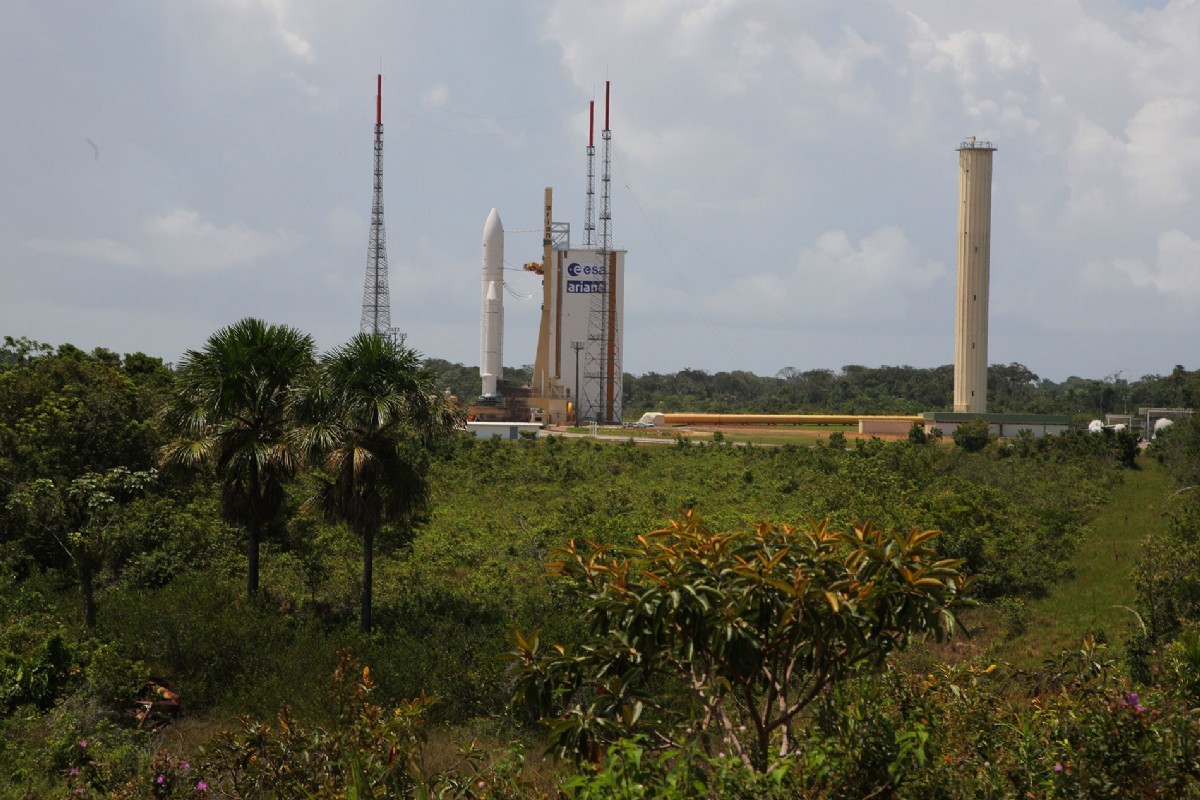
Kourou
A European Space Agency rocket launch site at Kourou provides jobs for around 15,000 people. The site was chosen because it is close to the Equator: here, the Earth’s spin is faster, helping to launch rockets eastward with extra force. It is also a good site because it has open sea to the east, so debris from rocket launches fall into the water and cause no damage to the land.
Facts about French Guiana
Population 292,354 (2025)
Area 89,150 sq km
Highest Point Bellevue de l'Inini 851 m (2792 ft)
Capital Cayenne, metro area pop. 151,103
Languages French, Creole
Religions Christian (Roman Catholic), indigenous beliefs
Ethnicity Creole / mulatto (mixed European / French and African) 82%, French and other European 14%, Native American (Arawak, Carib, Emirillon and others) 4%
Currency Euro (EUR)
Chief exports fish, shrimp, timber, gold
Consultant: Nicholas Harris
History of French Guiana
Pre–1500
Native American peoples, including the Caribs, Arawak and Palikur, live in the region
1498
Christopher Columbus is the first European to set foot in the area
1624
France makes first attempts to settle the land, but are forced out by the Portuguese
1643
France sets up a settlement at Cayenne, but it is attacked by native tribes and abandoned
1658
The region of French settlement is seized by the Dutch West Indies Company, which builds a Dutch colony at Cayenne
1763
France signs the Treaty of Paris and loses nearly all its overseas territories.
1764
Thousands of French settlers are encouraged to move to Guiana; 12,000 die from diseases such as dysentery and malaria
Early 1800s
French bring slaves from Africa to work on sugar cane and spice plantations
1809–14
French Guiana is captured and occupied by Brazil’s Portuguese rulers
1848
France abolishes slavery. Freed slaves flee to the rainforests and set up communities there; they become known as Maroons
1852
France begins sending prisoners to French Guiana, where they are kept at an offshore prison called Devil’s Island
1853
Gold discovered in the rainforest interior
1930–46
French Guiana is divided into two territories: Inini, in the interior, and Guiana along the coast
1946
French Guiana becomes an overseas department of France
1951
French Guiana’s prison colonies, including Devil’s Island, are closed down and the prisoners freed
1964
Kourou, in the north, is chosen to be a rocket launch site and the home of the Guiana Space Centre
1970s
Hmong refugees from Laos, a former French colony, arrive in French Guiana escaping war in their homeland
2010
Voters reject proposal to give the local government more powers while remaining part of France
2017
Protests and strikes led by the "Collective of 500 Brothers" over lack of electricity and running water, and over high rates of crime and unemployment; French government pledges €2.1bn (£1.85bn) in aid to the territory.
pics

Without in any way limiting Q-files Ltd’s exclusive rights under copyright, any use of this publication to “train” generative artificial intelligence (AI) technologies to generate text is expressly prohibited. Q-files Ltd reserves all rights to license use of this work for generative AI training and development of machine learning language models.