
South America

CITE
We have made every effort to follow citation style rules, but there may be some minor differences. If in doubt, please refer to the appropriate citation style manual.
South American countries. (2026). In Q-files Encyclopedia, Geography, South America. Retrieved from
https://www.q-files.com/geography/south-america/south-american-countries
"South American countries." Geography, South America, Q-files Encyclopedia, 1 Apr. 2026.
https://www.q-files.com/geography/south-america/south-american-countries.
Accessed 6 Aug. 2026.
South American countries 2026. Geography, South America. Retrieved 6 August 2026, from
https://www.q-files.com/geography/south-america/south-american-countries
Geography, South America, s.v. "South American countries," accessed August 6, 2026.
https://www.q-files.com/geography/south-america/south-american-countries


South American countries
There are 12 independent countries in South America, stretching from Colombia and Venezuela in the north to Chile and Argentina in the south. French Guiana, on the northeastern coast, is an overseas region of France. Before the arrival of Europeans, a number of great civilizations had grown up in South America, but it was the mighty Inca Empire, which extended from Ecuador in the north to Chile in the south, that was the dominant power. From the 16th century, South America was colonized by European settlers, largely from Spain and Portugal. From the 19th century, the South American nations started to throw off European authority and become independent.

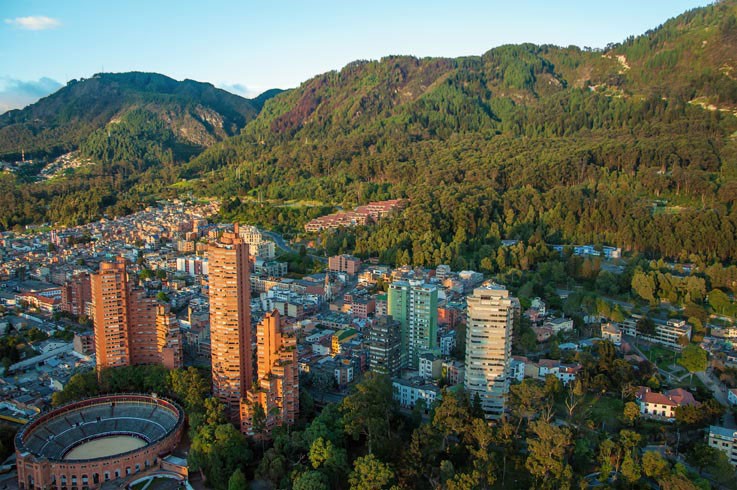
Colombia
Three branches, or cordilleras, of the Andes Mountains meet in Colombia. Most of the country's population lives in the cooler climates of the high Andes valleys. Cotton, sugar cane and bananas are grown in the warm lowlands, while coffee, cereals and potatoes are cultivated in higher, cooler regions. Colombia has reserves of oil, gas and coal, and is the world’s largest supplier of emeralds.
Venezuela
In Venezuela, the Andes Mountains reach the coast. Inland, the River Orinoco flows across grassland plains, known as llanos, where cattle graze. The Guiana Highlands, a high, flat-topped range, lie across southeastern Venezuela and Guyana. Thick forest grows on their lower slopes. Oilfields beneath Lake Maracaibo are important to Venezuela's economy.


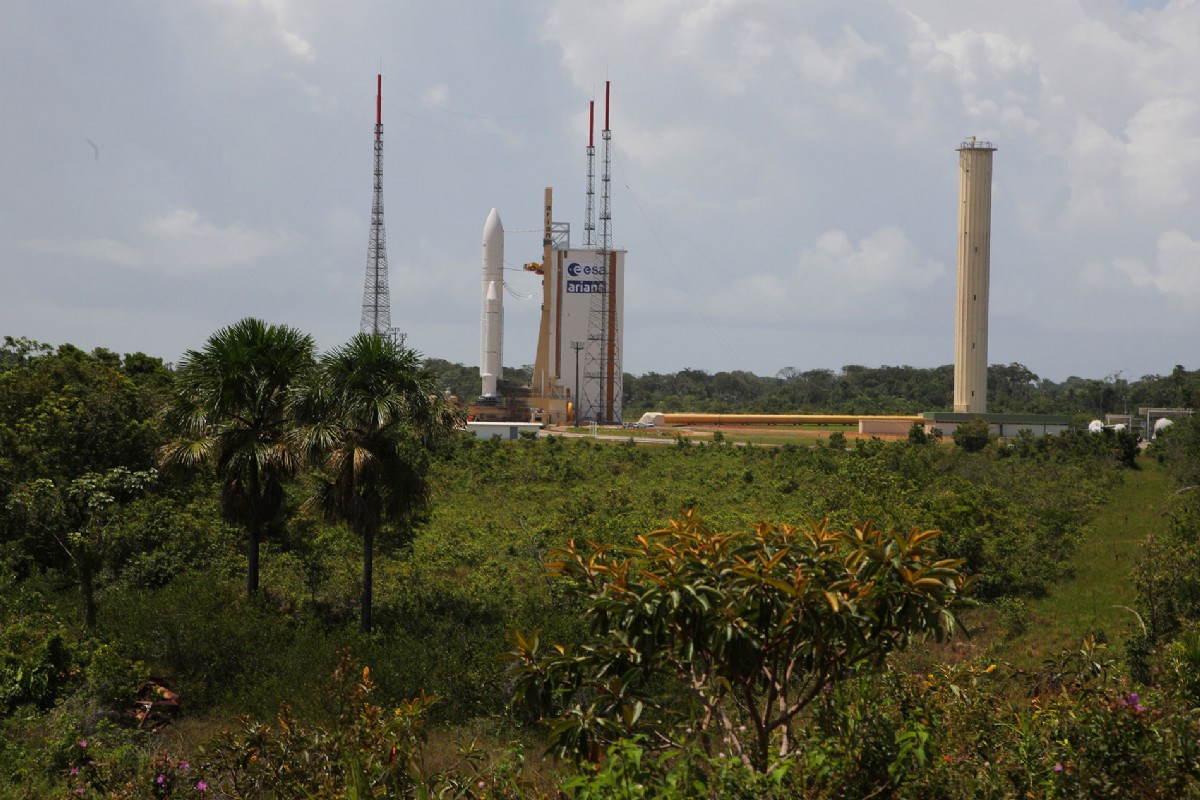
The Guianas
Plantations of sugar, cotton and bananas were once run by Europeans in the Guianas (Guyana, Suriname and French Guiana). Guyana still has large sugar plantations. The Guianas are rich in natural resources such as oil, bauxite, gold, silver and other minerals. Gold and bauxite, the rock from which the metal aluminium is extracted, are valuable exports for both Guyana and Suriname.
Ecuador
In Ecuador, tropical rainforest clings to the eastern slopes of the Andes. West of the mountains, low-lying land stretches to the Pacific Coast, where many people make their living from fishing. Ecuador's largest export is oil, with other major exports being bananas, flowers, cocoa and timber. Ecuador also includes the Galápagos Islands in the Pacific Ocean, 1000 kilometres (600 miles) west of the mainland.
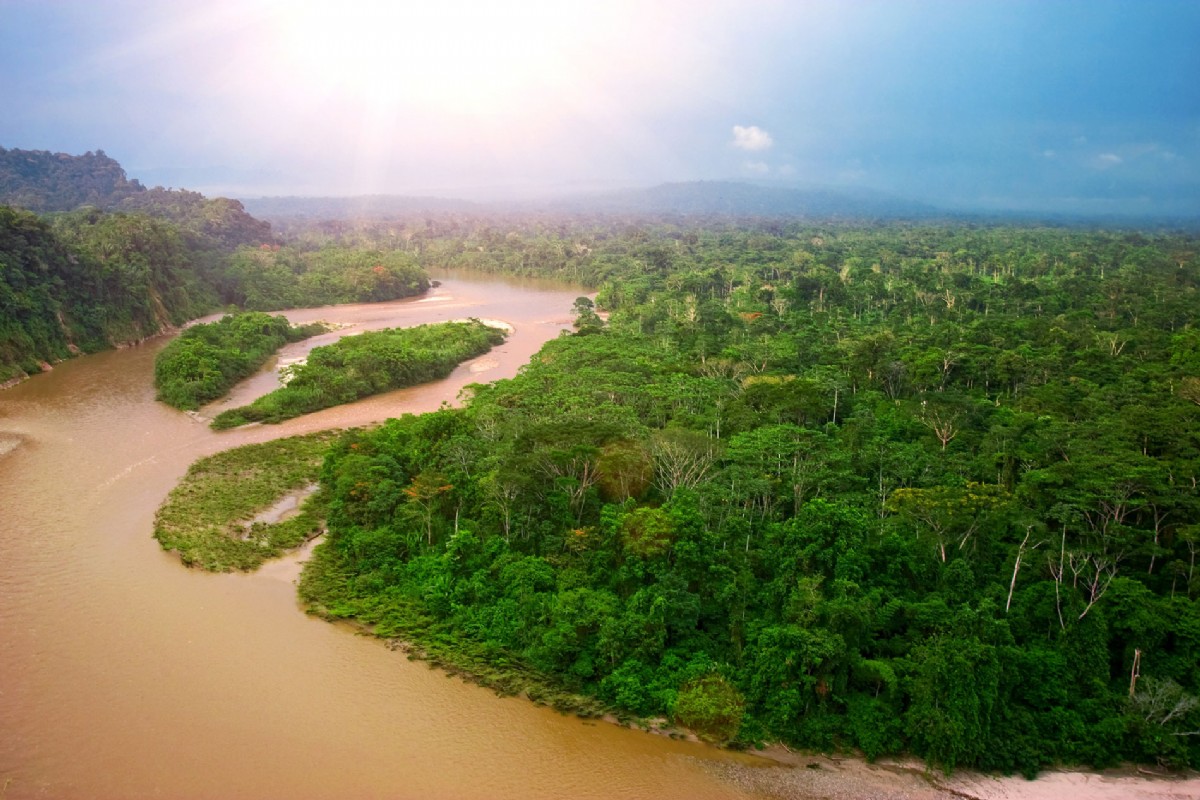
Peru
The Andes Mountains divide Peru in two. To the west, lies the coastal plain, where most of the population, descended from both indigenous peoples and the Spanish, lives. Farther south the plain turns to desert. To the east of the mountains lies the western reaches of the vast Amazon rainforest. Mining, particularly of copper, is a major source of wealth. Other important industries are manufacturing, agriculture, tourism and fishing.


Until the Spanish conquistadores first arrived in Peru in 1532, the powerful Inca emperor reigned supreme over his Andes realm. Today, the Indians still speak Quechua, the language of the Incas. Some still farm the steep hillsides of the Andes, cultivating terraced fields and grazing their llamas and alpacas on the high plains as they have done for hundreds of years.
Lake Titicaca, which stretches between Peru and Bolivia, is the highest navigable lake in the world. The local people still use boats made from tough, tightly bundled reeds. People also live on floating island villages in the lake, made from thickly piled reeds. When the reeds at the bottom rot away, more layers are piled up on top.

Bolivia
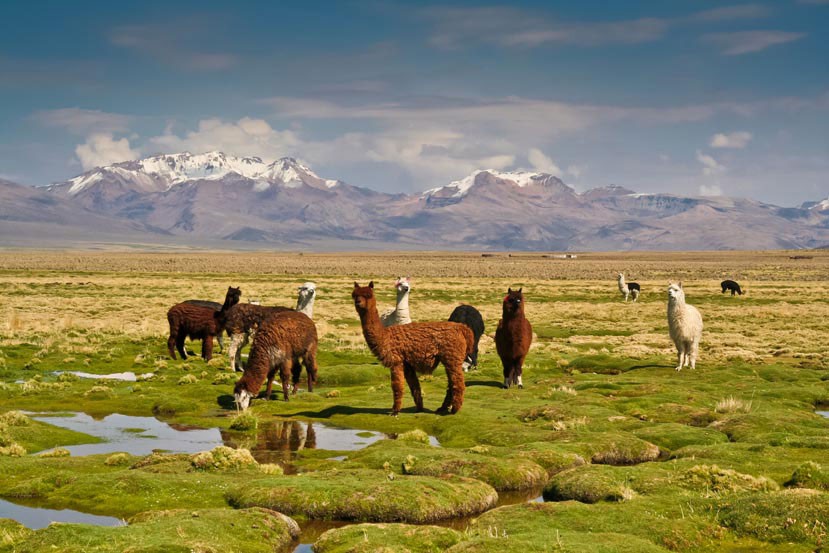
Bolivia is one of South America's two landlocked countries, the other being Paraguay to the south. In between the snow-capped Andean peaks of Bolivia, lies the altiplano, a high plain, cold and windswept, where farmers herd llama and alpaca for their meat and wool. Bolivia is rich in minerals, particularly tin, and mining is a major industry. Other industries include farming, forestry, fishing and the manufacture of goods such as clothing and textiles.
Brazil
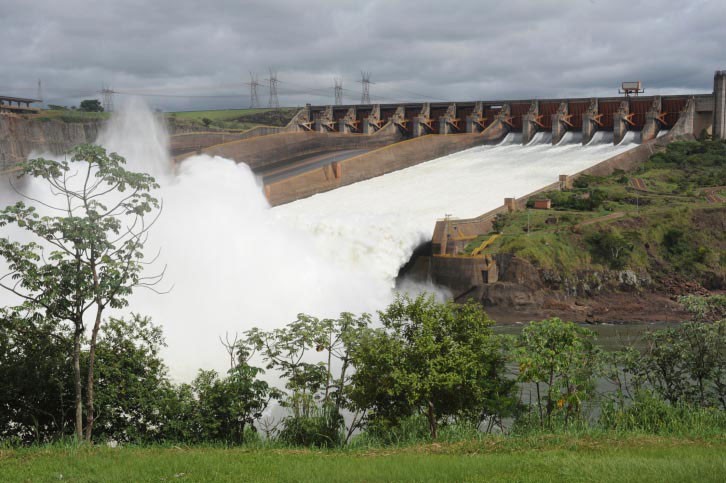
In the north of Brazil, the world’s largest rainforest covers the vast basin of the River Amazon. To the south and east of the central highlands lies most of Brazil’s farmland. Coffee, cocoa, soya beans, fruit and beef cattle are Brazil’s main farm products. Iron mined in the highlands is also an important export. Brazil is one of the world's fastest growing economies. Other exports include oil, gas, aircraft, electrical equipment, cars, ethanol, textiles and steel. Paraguay and Brazil share the world’s largest hydro-electric project, the Itaipú Dam on the Paraná River.
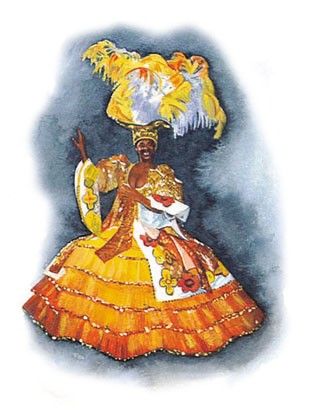
The Brazilians are a mixed population, descended from the first Portuguese settlers, black African slaves forced to work on the sugar plantations, and later immigrants from Europe and Asia.
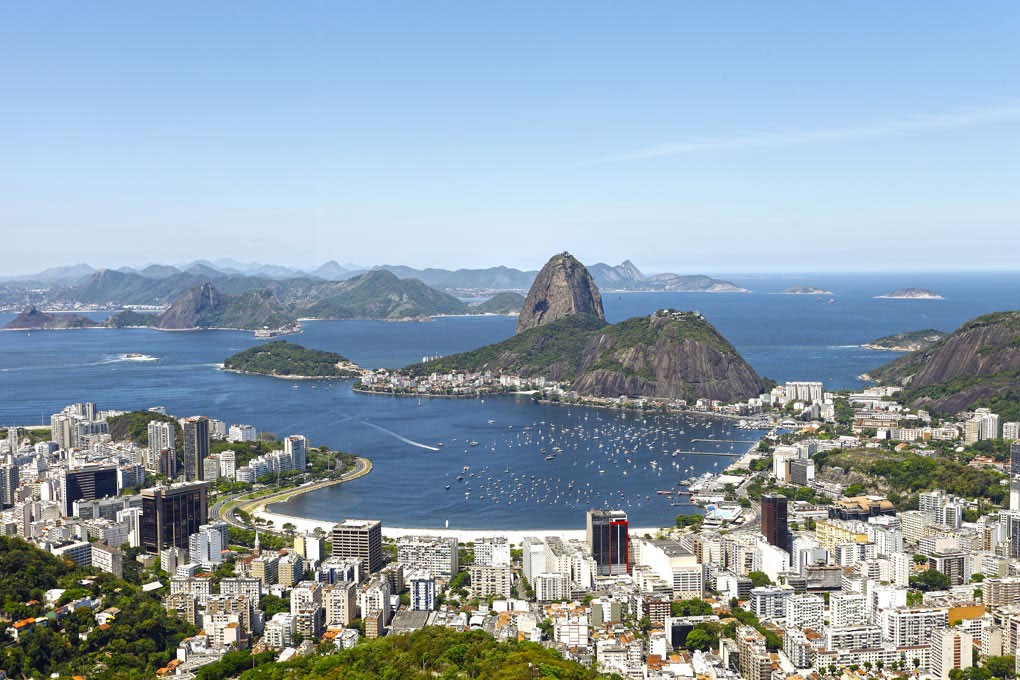
Most Brazilians live in the crowded cities of the southeast. The second largest city, Rio de Janeiro grew up around the shores of a natural harbour overlooked by Sugar Loaf mountain, which is shaped like a rounded cone. In the 19th century, Rio de Janeiro was an important port, trading gold and diamonds mined in the interior of the country.
Today, many rich people in Rio de Janeiro live in luxury apartments, many with wonderful views. Thousands of poor people live in shabby slums on the edge of the city. Their shantytowns are known as favelas.

Paraguay
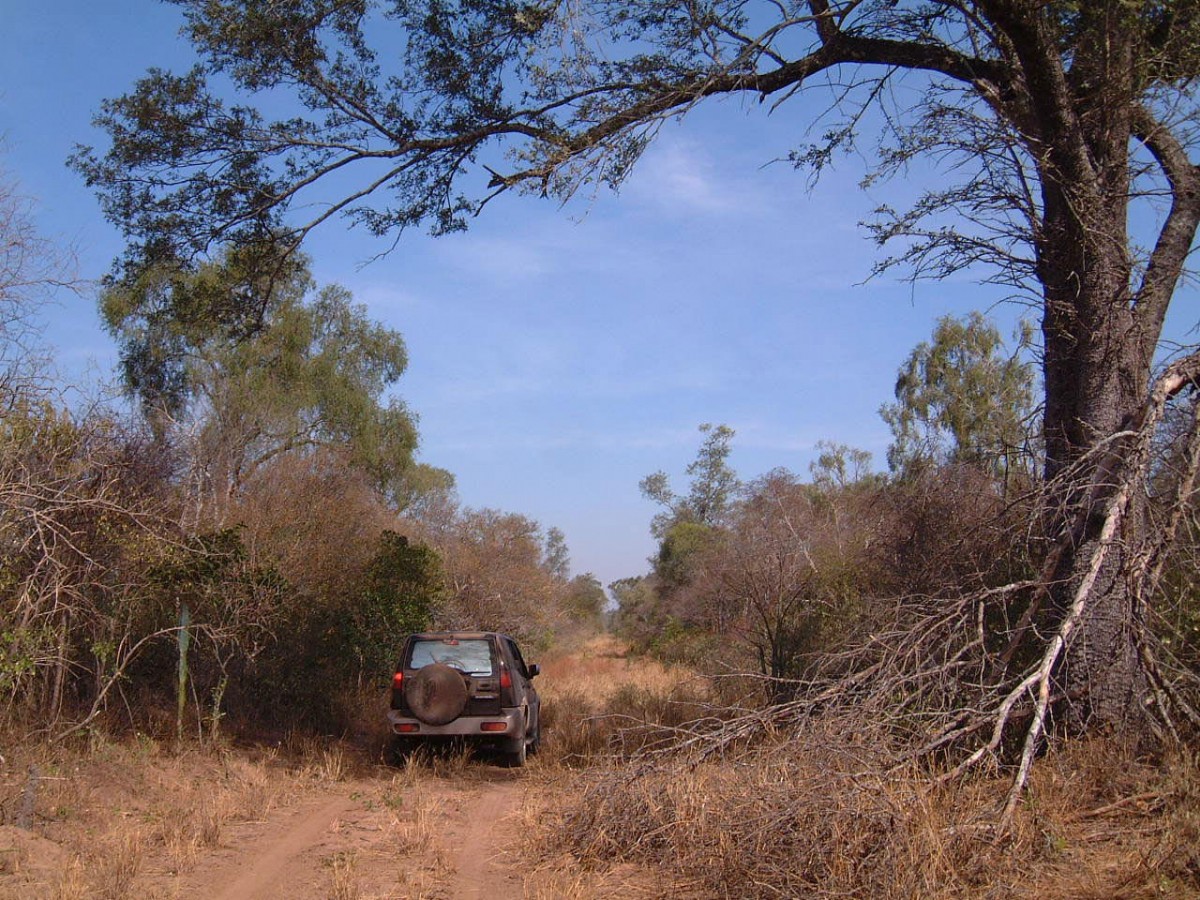
The Paraguay River runs from the north to the south of Paraguay, dividing the country in two. West of the river lies the dry scrubland plain of the Gran Chaco. It covers much of northwest Paraguay. Cattle are farmed and cotton and soya beans grown in the more fertile south and east. Other major industries include the manufacture of car parts and clothing. The southeast is also where the majority of the population lives. Most Paraguayans are the descendants of Spanish settlers and the indigenous Guaraní people.
Chile
Along the southwest coast of South America lies the long, narrow country of Chile, 25 times longer than it is wide. Along the northern coastal strip lies the Atacama Desert, the driest region on Earth, where it almost never rains. Here are copper mines, which provide a large part of Chile’s exports. Most of the population lives on the warm and fertile central plain, where cereals, fruits and vines are grown. Chile is one of South America's wealthiest and most politically stable countries.


Uruguay
Open grasslands, known as pampas, cover much of Uruguay. The region was largely uninhabited until immigrants from Portugal and Spain arrived from the late 17th century. They settled on the pampas, where they farmed wheat and raised cattle. More than half the country's population of 3.3 million people lives in the capital, Montevideo. Uruguay is one of the wealthiest nations in South America, with major industries including farming, tourism, banking and information technology.
Argentina
Millions of cattle and sheep graze on vast ranches on Argentina's pampas grasslands. Argentina is one of the world's most important agricultural producers, with meat and grain being major exports. Other key industrial sectors are services (such as banking, telecommunications and tourism) and manufacturing of products such as food, cars, chemicals, steel and aluminium.
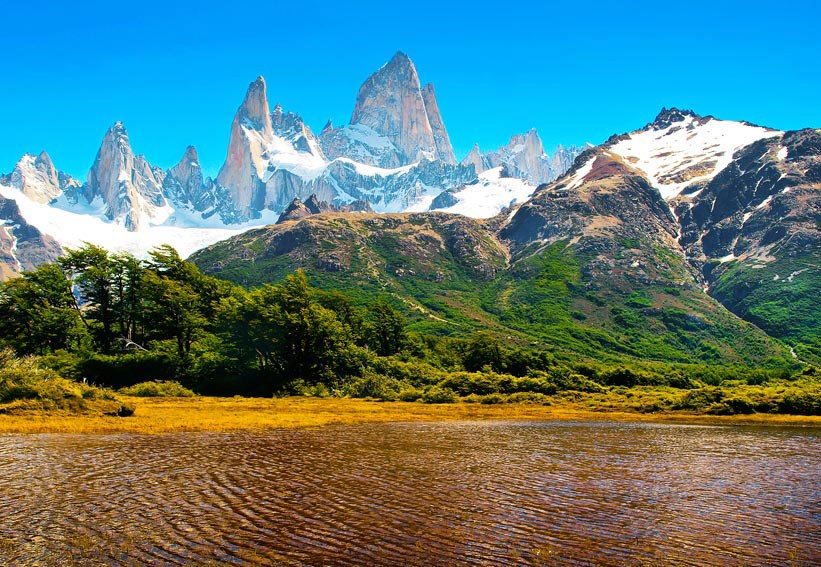
The fertile plains turn into the dry and dusty Patagonian desert in the south. The island of Tierra del Fuego (the “land of fire", named after the Indian camp fires sighted by the Portuguese explorer Magellan) lies at South America’s southern tip.
Consultant: Lloyd Jenkins
pics
Without in any way limiting Q-files Ltd’s exclusive rights under copyright, any use of this publication to “train” generative artificial intelligence (AI) technologies to generate text is expressly prohibited. Q-files Ltd reserves all rights to license use of this work for generative AI training and development of machine learning language models.