
South America

CITE
We have made every effort to follow citation style rules, but there may be some minor differences. If in doubt, please refer to the appropriate citation style manual.
Guyana. (2026). In Q-files Encyclopedia, Geography, South America. Retrieved from
https://www.q-files.com/geography/south-america/guyana
"Guyana." Geography, South America, Q-files Encyclopedia, 1 Apr. 2026.
https://www.q-files.com/geography/south-america/guyana.
Accessed 6 Aug. 2026.
Guyana 2026. Geography, South America. Retrieved 6 August 2026, from
https://www.q-files.com/geography/south-america/guyana
Geography, South America, s.v. "Guyana," accessed August 6, 2026.
https://www.q-files.com/geography/south-america/guyana


Guyana
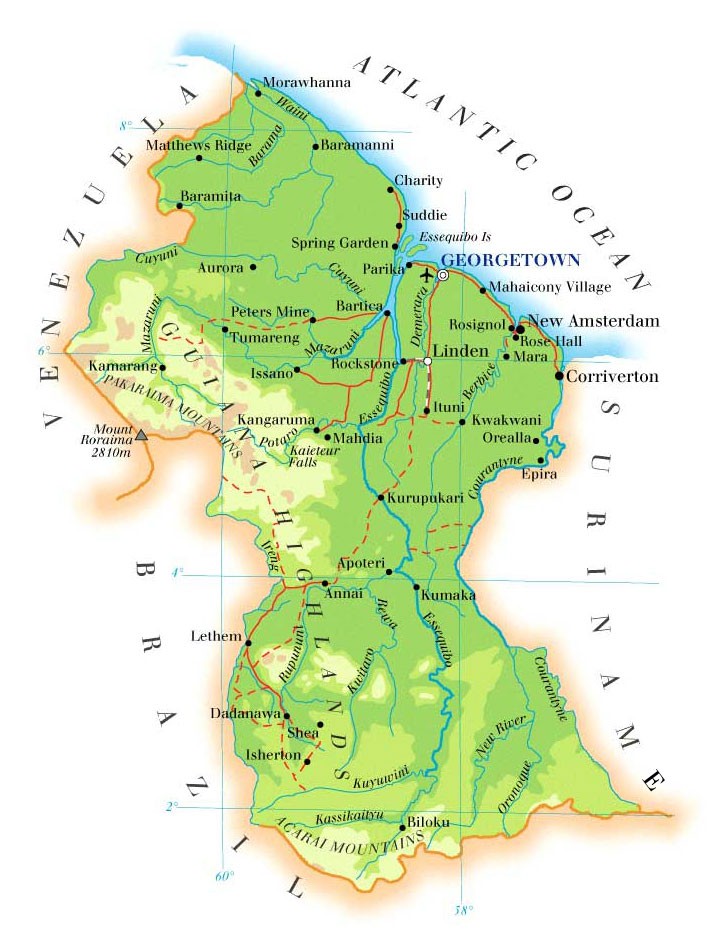
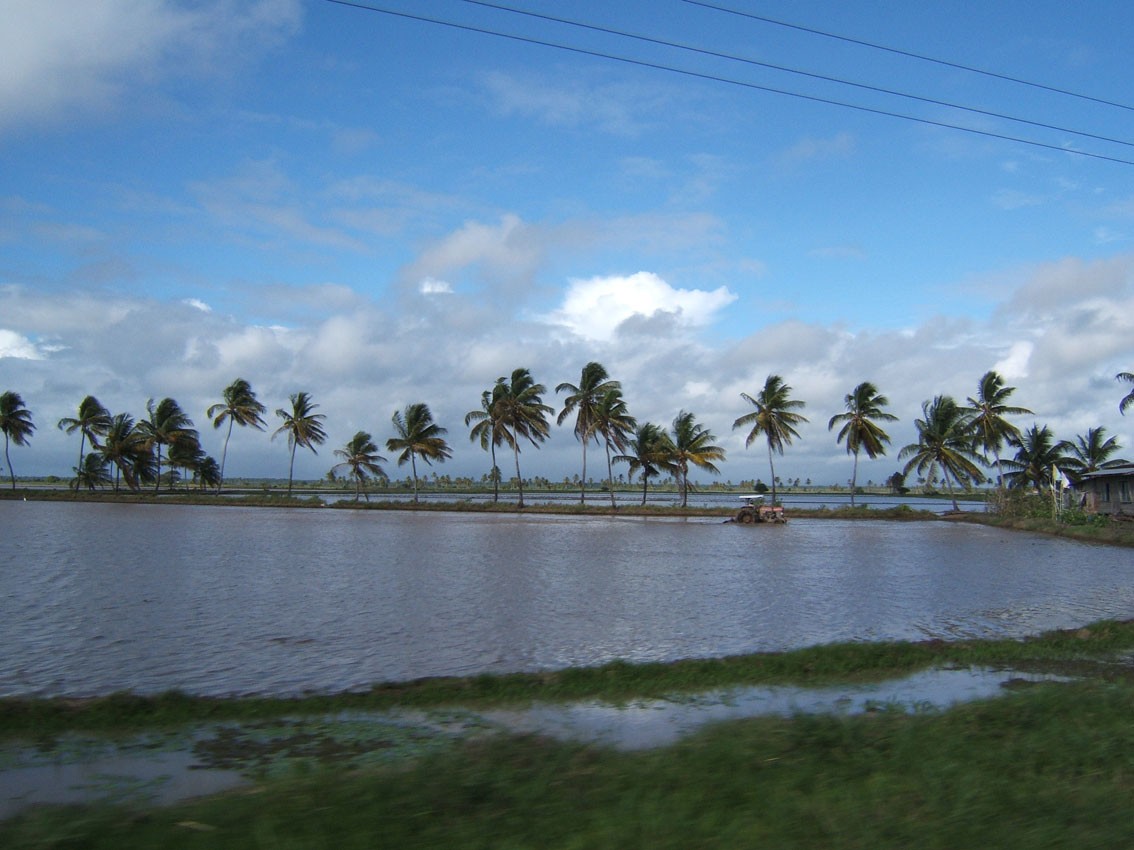
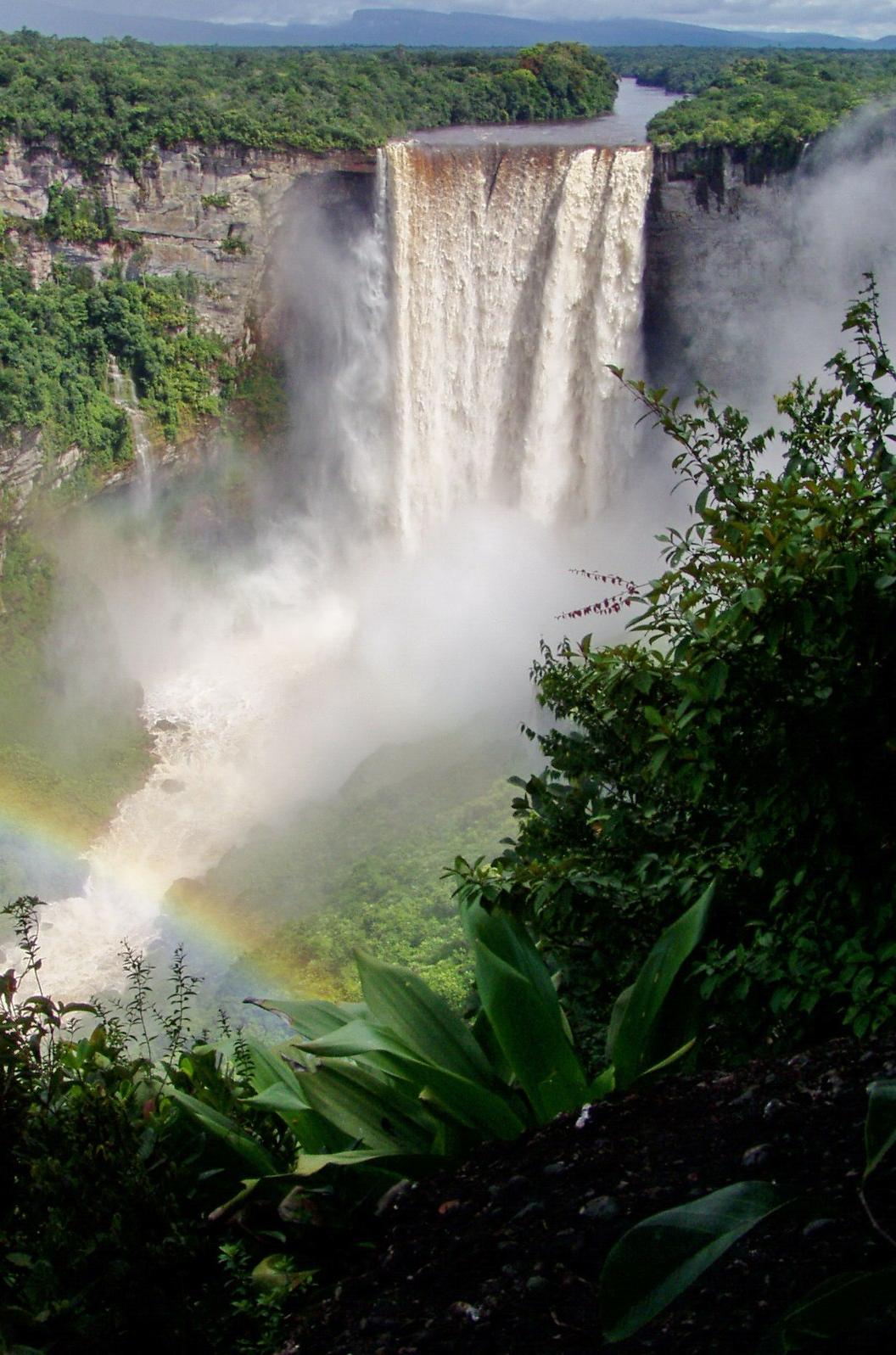
Most of the Guyanese people live on the narrow, marshy plain that runs along the country's Caribbean coast. Some of this land actually lies below sea level; it is protected from the ocean by Dutch-built dykes and dams. Inland, thick forests cover more than 80% of Guyana's land area. Home to thousands of species of trees and plants, some of its forests have barely been explored. In the southwest, near the Venezuelan border, lie areas of open savannah and the high, table-topped mountains of the Guiana Highlands, called tepuis. The name "Guyana" means “land of waters”, after the many rivers that run through it. The largest is the Essequibo. The Courantyne marks the country's eastern border with Suriname. Lying just north of the Equator, Guyana has a tropical climate, with hot, humid weather all year round.


People
Guyana was part of the British Empire (known as British Guiana) from 1814 to 1966. Today, it is the only English-speaking country in South America. However, nearly everyone speaks a mixture of English, Dutch and West African languages called Guyanese Creole. Most Guyanese are descended from either Africans or Indians who were forcibly brought to work on Guyana’s plantations between the 17th and 19th centuries. Political tensions sometimes break out between the two ethnic groups.
Economy
Farmers grow rice and sugar on the eastern coastal plains. The northern region is well-known for producing a type of brown sugar called Demerara sugar, named after the River Demerara. Guyana also makes a lot of its foreign income from mining. Huge reserves of gold (in the northwest, near Aurora) and bauxite (in the northeast, south of Linden), the ore containing the metal aluminium.
Guyana's economy has been transformed since the discovery of an offshore oil field in the country’s waters about 190 kilometres (120 miles) from Georgetown in 2015. Since commercial drilling began in 2019, Guyana has become the world's fastest-growing economy: per capita GDP has more than quintupled between 2015 and 2024.
Guyana's enormous oil wealth has led to the revival of neighbouring Venezuela's claim to Essequibo, the entire region lying to the west of the River Essequibo and accounting for two thirds of Guyana’s territory. Essequibo's territorial waters include a large portion of the recently-discovered offshore oil field. In March 2024, Venezuela passed a law that made Essequibo a new state of Venezuela.

Consultant: Nicholas Harris
Facts about Guyana
Area 196,849 sq km
Population 817,607 (2024 estimate)
Highest point Mount Roraima 2810 m (9217 ft)
Capital Georgetown, population 235,017
Other major cities Linden (pop. 44,690)
Languages English, Creole, Hindi, Urdu
Religions Christian (Protestant) 30%, Hindu 28%, Christian (Roman Catholic) 8%, Muslim 7%, others 27%
Ethnicity Indian 43%, black African 30%, mixed 17%, Native American 9%, others 1%
Currency Guyanese dollar (GYD)
Chief exports oil, sugar, gold, bauxite, rice, shrimp, molasses, timber
History of Guyana
14th century
Carib people drive out the region’s Arawak people. The Arawak move northwards into the Caribbean islands
1498
Navigator Christopher Columbus is the first European to spot Guyana
1580
Dutch build trading settlements in Guyana
1616–1752
Dutch set up colonies at Essequibo, Berbice and Demerara; they establish sugar plantations and import slaves from Africa to work on them
1780–1813
Control of the region passes between the Netherlands, Britain and France
1814
During the Napoleonic Wars, Britain occupies Guyana
1823
Demerara rebellion: led by Jack Gladstone, more than 10,000 enslaved people take part in a peaceful protest against their poor treatment. They also demand their freedom in the mistaken belief that the British Parliament has passed a law for emancipation (in fact only the slave trade has been abolished, not slavery itself). The rebellion is brutally crushed by governor John Murray: up to 250 slaves are killed and 27 are executed.
1831
Guyana becomes a colony of the British Empire
1834
Slavery abolished in the British Empire; slaves on plantations are freed and replaced by hired workers, mainly from India
1879
Gold discovered in Guyana, boosting the economy
1899
An international committee rules that the Essequibo region claimed by neighbouring Venezuela belongs to Guyana (and is therefore ruled by Britain)
1957
Guyana’s most popular political party splits in two: Cheddi Jagan leads a mostly Indian party (the PPP), while Forbes Burnham’s party (the PNC) is made up of mainly African descendants
1961
Guyana is granted self-government; Jagan becomes prime minister
1966
Guyana becomes fully independent from Britain; Burnham becomes prime minister
1998
People protest violently at discrimination by PPP against the African-Guyanese; state of emergency is declared in the capital Georgetown
2008
Guyana joins the Union of South American Nations as a founding member
2015
Oil is discovered in the country’s waters about 190 km (120 miles) from Georgetown
2023–present
Guyana–Venezuela crisis: Following the passing of a vote in a referendum over whether the Essequibo region of Guyana should become part of Venezuela, held in December 2023, Venezuela passes a law that designates Essequibo as a new state of Venezuela, governed from Tumeremo. A Venezuelan military build-up on the Guyanese border sparks concerns of war between the two states.
pics


Without in any way limiting Q-files Ltd’s exclusive rights under copyright, any use of this publication to “train” generative artificial intelligence (AI) technologies to generate text is expressly prohibited. Q-files Ltd reserves all rights to license use of this work for generative AI training and development of machine learning language models.