
South America

CITE
We have made every effort to follow citation style rules, but there may be some minor differences. If in doubt, please refer to the appropriate citation style manual.
Suriname. (2026). In Q-files Encyclopedia, Geography, South America. Retrieved from
https://www.q-files.com/geography/south-america/suriname
"Suriname." Geography, South America, Q-files Encyclopedia, 1 Apr. 2026.
https://www.q-files.com/geography/south-america/suriname.
Accessed 22 Sep. 2026.
Suriname 2026. Geography, South America. Retrieved 22 September 2026, from
https://www.q-files.com/geography/south-america/suriname
Geography, South America, s.v. "Suriname," accessed September 22, 2026.
https://www.q-files.com/geography/south-america/suriname


Suriname
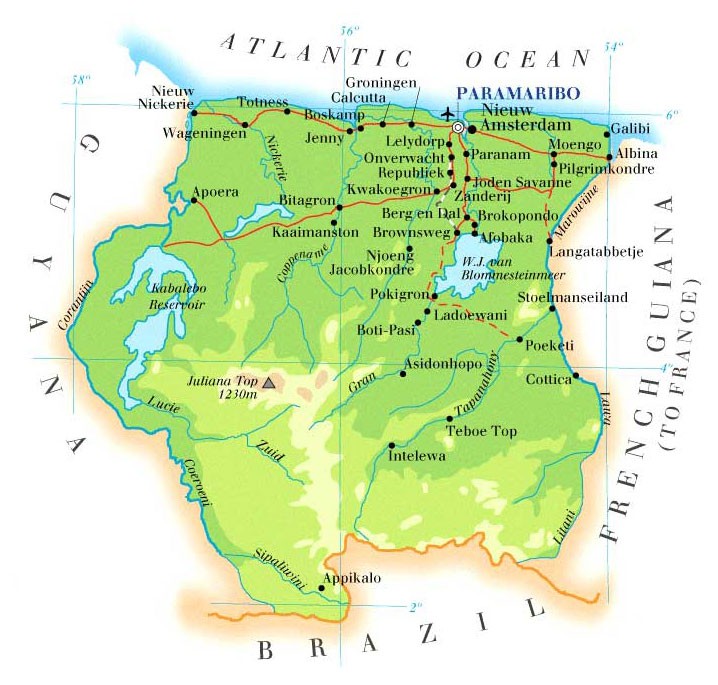
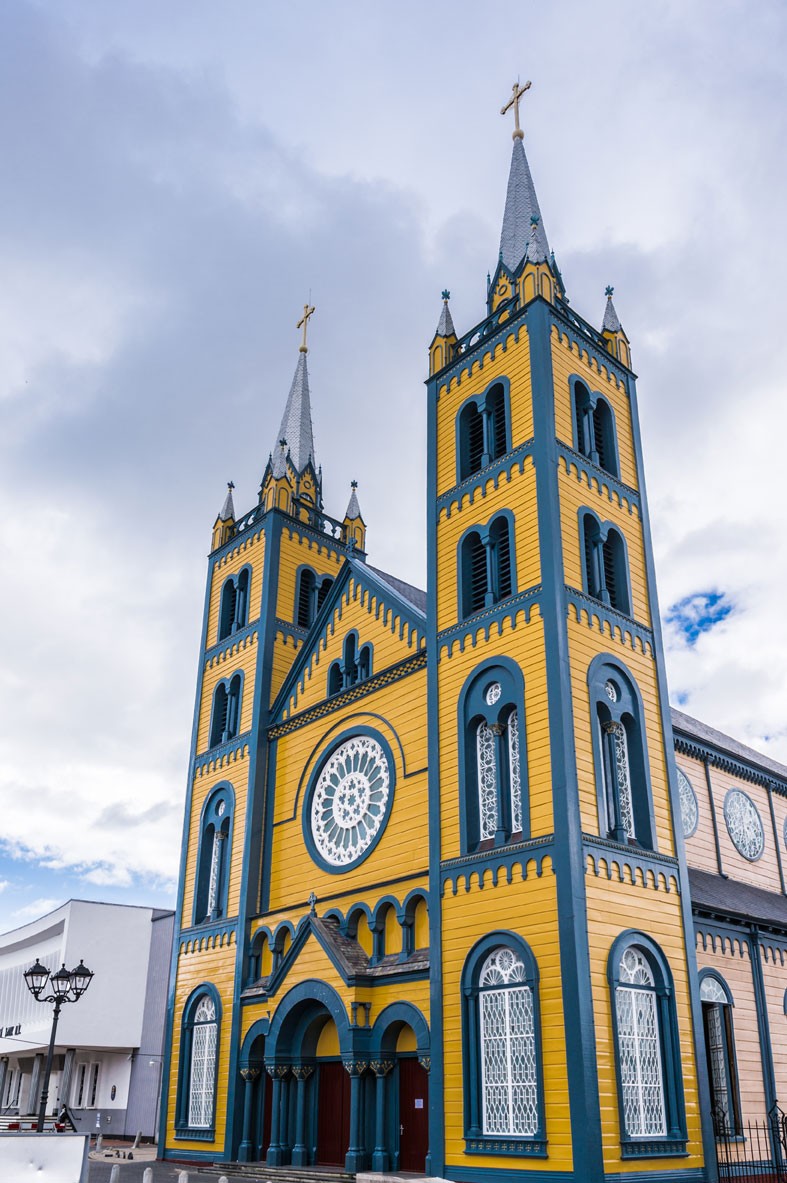
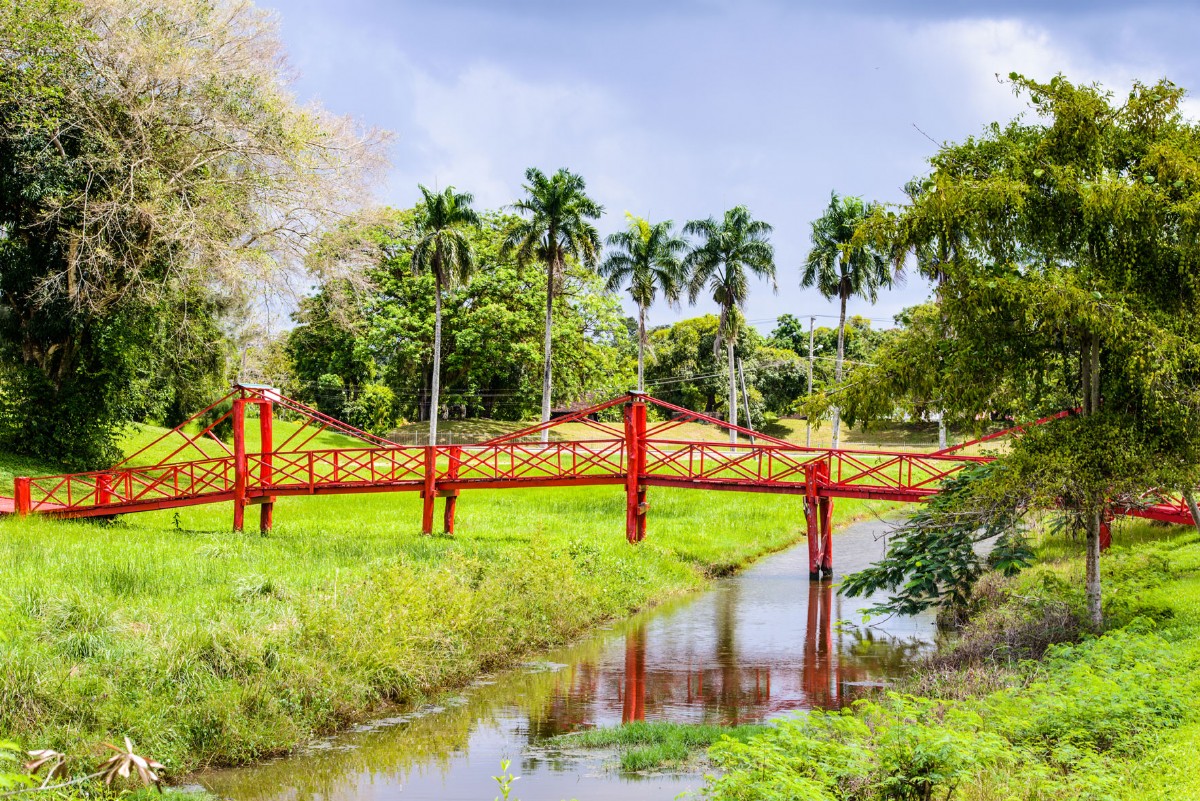
Suriname is South America’s smallest independent country. Once named Dutch Guiana, it was governed from the Netherlands until 1975. In the north, a swampy plain, a rice-growing region, borders the coast. The capital city of Paramaribo lies close to the mouth of the River Suriname where it flows into the Atlantic Ocean. Further inland, the land is drier and farmers grow palms, bananas and sugar cane. The rest of Suriname, around 80% consists of almost uninhabited uplands covered by rainforest. Suriname has a tropical climate with hot, wet weather all year round.

People
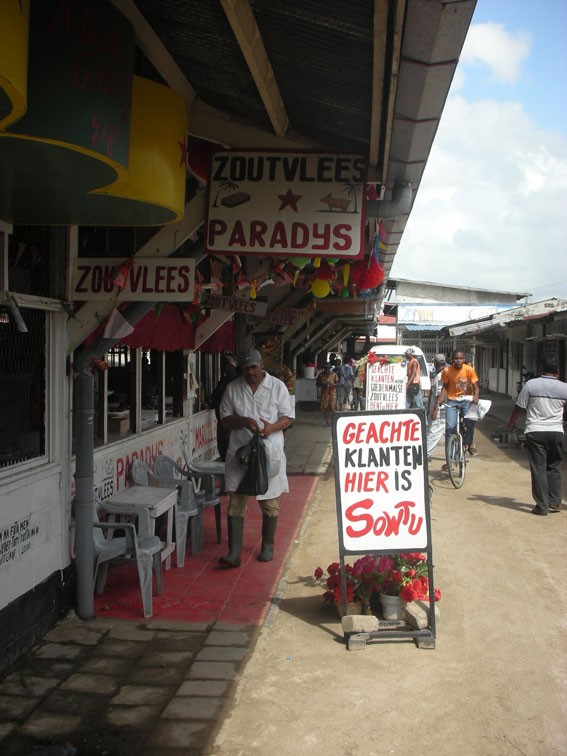
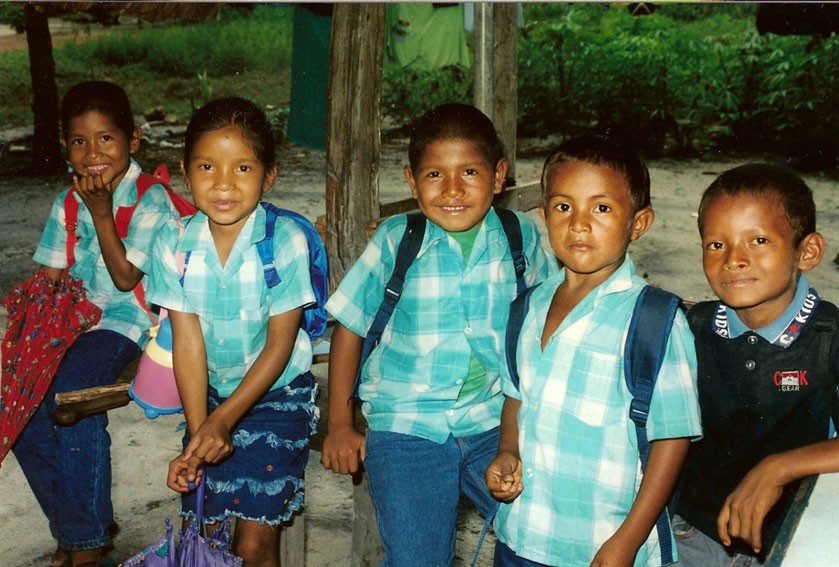
Most Surinamers live in and around the city of Paramaribo in the north. Around one third of the population are “East Indian”: their ancestors came to Suriname from northern India in the 19th century to work on plantations. Other large groups are Creoles, who have mixed African and European ancestry, and Javanese people from another former Dutch colony, Indonesia. As well as Dutch, the official language, most people speak Sranan: a mixture of English, Dutch, Portuguese and African languages.
Mining
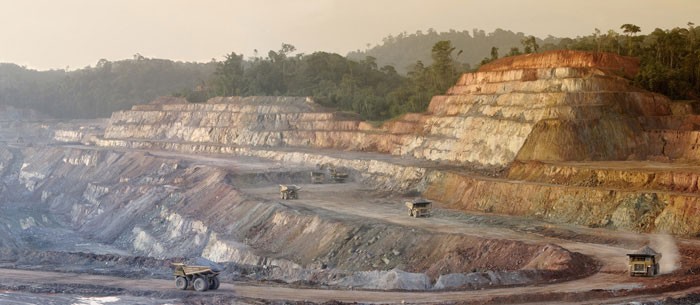
For nearly a century, Suriname has been a major producer of bauxite: the ore from which the metal aluminium is extracted. Bauxite is processed in factories to make alumina (aluminium oxide); it is relatively cheap to produce in Suriname because much of the country’s electricity comes from hydro-electricity and costs are low. The alumina is then exported. Recently, oil and gold have been discovered, adding to the country’s mining wealth.
Consultant: Nicholas Harris
Facts about Suriname
Population 632,638 (2022 estimate)
Area 156,000 sq km
Highest point Juliana Top 1230 m (4034 ft)
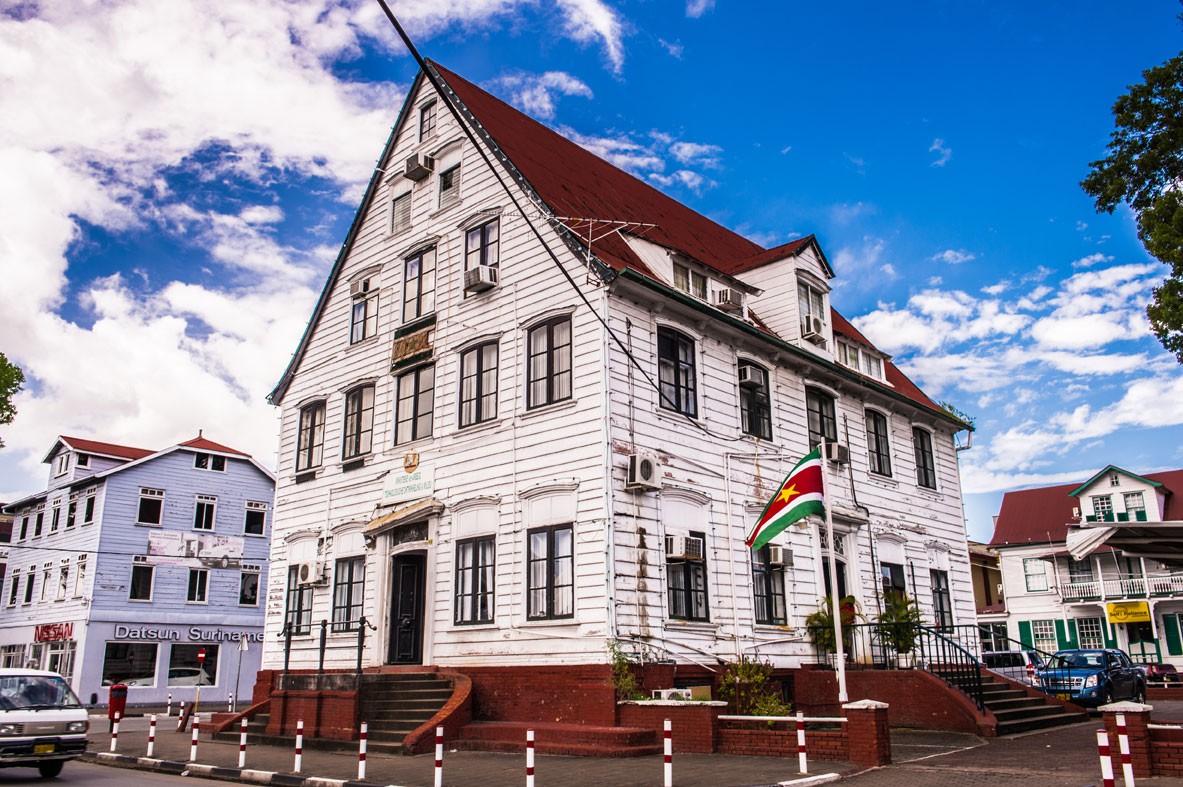
Capital Paramaribo, population 237,923 (2024 estimate)
Other major cities Lelydorp (pop. 18,223)
Languages Dutch, English, Sranan, Hindi, Javanese
Religions Christian (Protestant) 25%, Christian (Roman Catholic) 23%, Hindu 22%, Muslim 14%, others 16%
Ethnicity Hindustani 37%, Creole (mixed white/black) 31%, Javanese 15%, Maroon 10%, native American 2%, Chinese, white and others 3%
Currency Surinamese dollar (SRD)
Chief exports alumina, gold, crude oil, wood, shrimp, rice, bananas
History of Suriname
1st century
Arawak and Carib tribes live on Suriname’s coast and savannah, hunting and fishing
1498
On a Spanish expedition, explorer Christopher Columbus first catches sight of Suriname’s coast
1630
English settlers attempt to found a colony in Suriname, but run out of money and the colony fails
1650
The British governor of Barbados sets up a colony in Suriname, naming it Surinam or “Willoughbyland” after himself. Sugar plantations are set up with forced labour carried out by indigenous Indians and 3000 African slaves.
1667
During Second Anglo-Dutch War (which broke out in March 1665) Surinam is captured by the Dutch and the main settlement renamed Fort Zeelandia, before it is recaptured by the English months later. By Treaty of Breda it is returned to the Dutch in exchange for New Amsterdam, now New York City, confirmed by the Treaty of Westminster in 1674
British agree to hand over their part of Suriname to the Dutch Empire in exchange for New Amsterdam (modern-day New York City)
1683
The Society of Suriname is founded in Amsterdam. Dutch planters set up coffee and sugar cane plantations, and import thousands of enslaved Africans to work on them.
18th century
Hundreds of Africans escape slavery and flee to the central rainforests; they become known as Maroons
1799–1816
British occupy Suriname for two periods, 1799–1802 and 1804–16
1863
Slavery abolished. New workers are brought from British India and the Dutch East Indies (now Indonesia)
1916
Aluminium Company of America begins to mine bauxite, the ore of the metal aluminium
1954
Suriname gains its own government but the Netherlands continues to control its defence and foreign affairs
1975
Suriname becomes fully independent
1980
Armed forces seize power, resulting in violent conflict. US and Netherlands cut off aid to the country
1986–92
Surinamese Interior War: fought by the Tucayana Amazonas and the Jungle Commando (a Maroon group) against the National Army. More than 10,000 Surinamese people, mostly Maroons, flee to French Guiana.
2006
Torrential rain causes severe flooding and leaves over 20,000 people homeless
2023
Protests against rising living costs and government corruption in Paramaribo
pics
Without in any way limiting Q-files Ltd’s exclusive rights under copyright, any use of this publication to “train” generative artificial intelligence (AI) technologies to generate text is expressly prohibited. Q-files Ltd reserves all rights to license use of this work for generative AI training and development of machine learning language models.