
South America

CITE
We have made every effort to follow citation style rules, but there may be some minor differences. If in doubt, please refer to the appropriate citation style manual.
Colombia. (2026). In Q-files Encyclopedia, Geography, South America. Retrieved from
https://www.q-files.com/geography/south-america/colombia
"Colombia." Geography, South America, Q-files Encyclopedia, 1 Apr. 2026.
https://www.q-files.com/geography/south-america/colombia.
Accessed 6 Aug. 2026.
Colombia 2026. Geography, South America. Retrieved 6 August 2026, from
https://www.q-files.com/geography/south-america/colombia
Geography, South America, s.v. "Colombia," accessed August 6, 2026.
https://www.q-files.com/geography/south-america/colombia


Colombia
Colombia lies in the northern reaches of the Andes Mountains, where three branches, or cordilleras, meet. Most of the country’s population lives in the cooler climates of these high valleys. Colombia’s lowlands have a hot, tropical climate; grassy plains stretch across the northeast, while much of the south lies in the Amazon Basin, covered by rainforest. Although Colombia has areas of desert, its western coast experiences some of the highest yearly rainfall on Earth. Such a wide range of habitats has made Colombia one of the world’s most biodiverse countries, home to thousands of animal and plant species.


People
Colombia’s population is made up mostly of indigenous Amerindian people, descendants of Spanish colonists, and Africans who were brought to the country as slaves from the 16th century. People of mixed Amerindian and Spanish origin are known as “mestizo”. Around 99% of Colombians speak Spanish, but indigenous peoples usually also speak one of about 68 Amerindian languages.
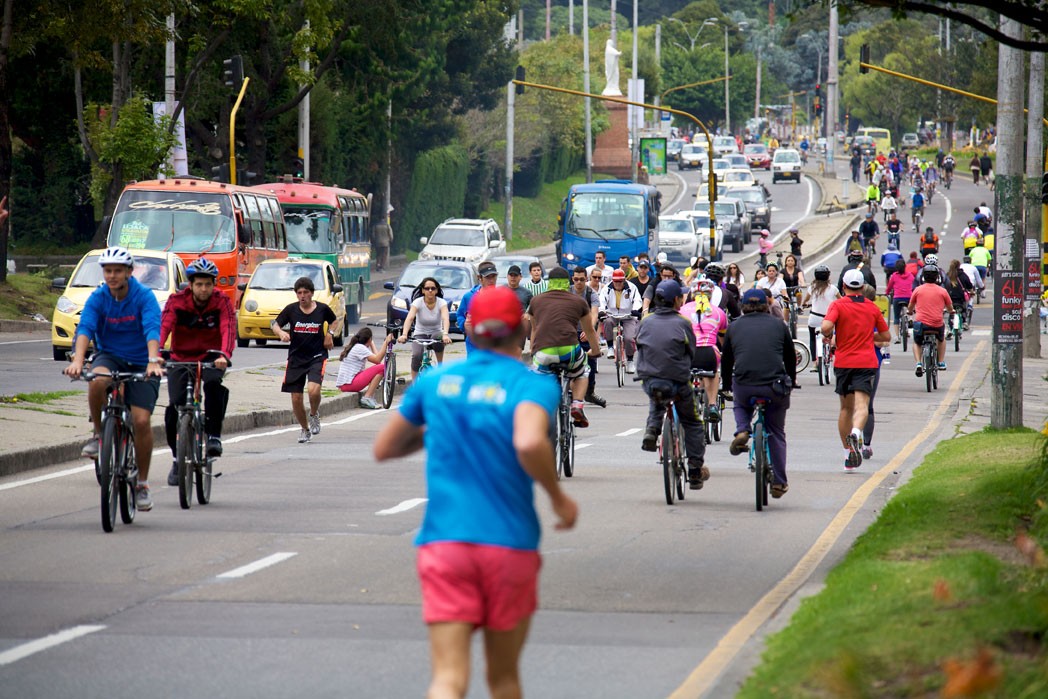
Around a third of the country’s land is covered by reserves, protected land where around half of Colombia’s 1.6 million indigenous people live. The largest group, the Wayuu, live in small communities called rancherias, and sleep in hammocks. Most Colombians are Christians, with around 70% of Christians being members of the Catholic Church.

Coffee
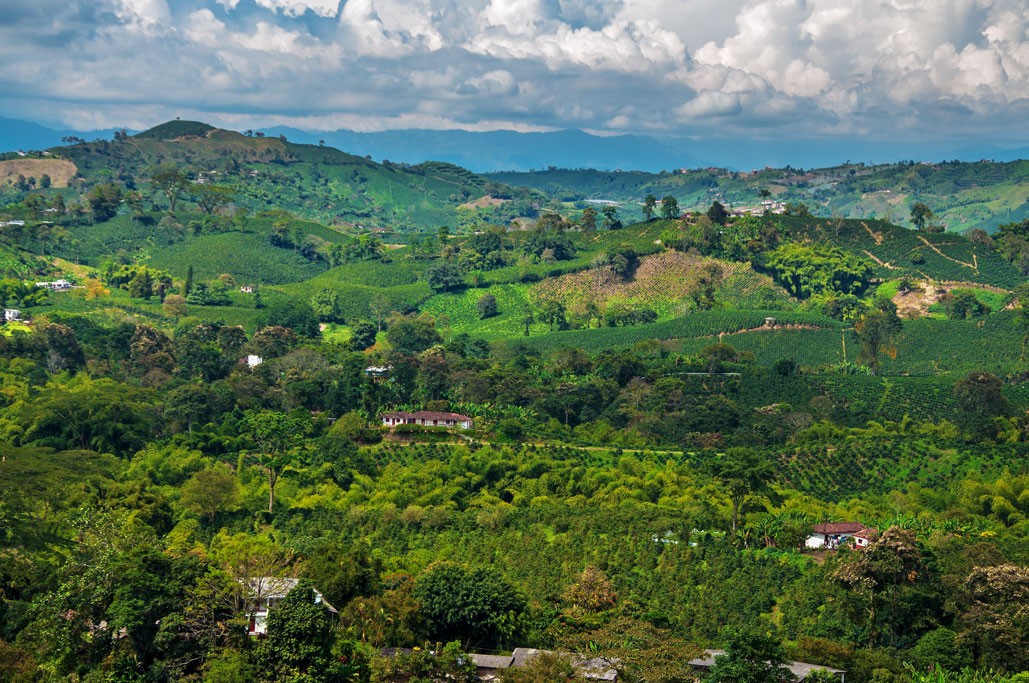
Coffee was first exported from Colombia in 1835. By the end of the 19th century, it had become the country’s main export. Today, Colombia is the second largest producer of coffee in the world after Brazil. Nearly all of its coffee is grown on small farms high in the valleys of the Andean cordilleras. In the northern region called the Zona Cafetera, around half of Colombia’s coffee crop is produced on just 1% of the country’s land area.
Economy
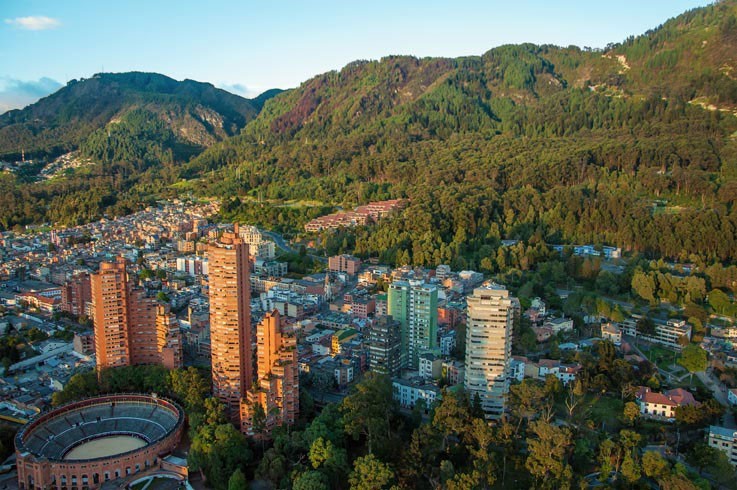
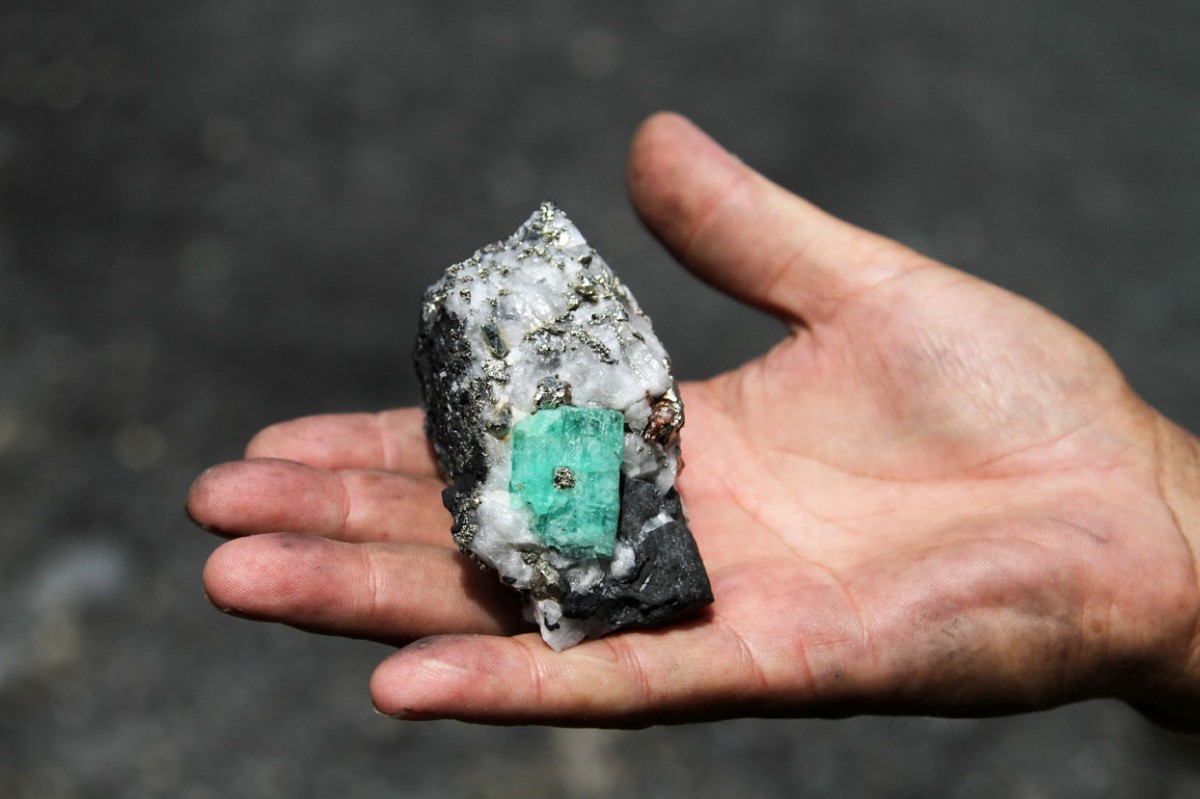
Agriculture employs around a fifth of Colombia’s workforce. Cotton, sugar cane and bananas are grown in the hot lowlands, while cereals and potatoes are cultivated in higher, cooler regions. Colombia has large reserves of oil, gas and coal. Since key oil reserves were discovered in Colombia in the 1980s, petroleum has become an important industry. Today, most of Colombia’s oil exports are to the United States. Colombia is the world’s largest producer of emeralds. These precious green gemstones are mined in the eastern ridges of the Andes Mountains.

Around one in five Colombians is employed in manufacturing industries such as food processing, textiles and chemicals. More than half of Colombia’s workforce makes a living in service industries, such as banking, tourism, and science and technology research.
Consultant: Nicholas Harris
Facts about Colombia
Area 1,141,748 sq km (440,830 sq miles)
Population 52,695,952 (2024 estimate)
Highest point Pico Cristóbal Colón 5775 m (18,942 ft)
Capital Bogotá (metro area population 11,658,211)
Other major cities Medellín (pop. 3,731,447), Calí (2,890,433), Barranquilla (2,370,000), Bucaramanga (1,304,288), Cartagena (1,028,736)
Languages Spanish (official language), Chibchan, Arhuaco, Cariban
Religions Christian (Catholic) 70%, Christian (other) 18%, none or other 12%
Ethnicity Mestizo (mixed Amerindian and white) 49%, white 37%, black 11%, Amerindian 3%
Currency Colombian peso (COP)
Chief exports Oil and petroleum products, coal, nickel, emeralds, coffee, cut flowers, bananas, textiles

History of Colombia
15–20,000 years ago
The first settlers arrive in Colombia, having crossed the land bridge from Asia into North America thousands of years previously.
13,000 years ago
People are living in the cave system at El Abra in Colombia.
c.1500 BC
Muisca people are farming and making pottery in the region.
AD 700
The Muisca become the main power in the region.
1499
Spanish explorers reach Colombia’s coast. By 1510, the first Spanish settlement on the continent, Santa María la Antigua del Darién, is founded by Vasco Núñez de Balboa.
1536–38
Spanish conquistador Gonzalo Jiménez de Quesada leads an expedition to the interior, which he names "New Kingdom of Granada". He founds its capital which he calls Santa Fe. This becomes Santa Fe de Bogotá (present-day Bogotá).
16th century
Under the asiento system, in which Spain awards merchants from other European nations the licence to import enslaved peoples to Spanish overseas territories, Africans are shipped in to Colombia to work on farms and in mines.
1717
The Spanish make Bogotá the capital of their northern South American territories, known as the Viceroyalty of New Granada.
1739
Spanish forces successfully repel a British attack on Cartagena
1810
Colombian Declaration of Independence is announced on 20th July (the day is celebrated as the nation's Independence Day in present-day Colombia). The United Provinces of New Granada (known as la Patria Boba or "the Foolish Fatherland") is established the following year, but it is retaken by Spain in 1816.
1819
Forces led by Simón Bolívar defeat the Spanish and declare independence for Gran Colombia. The union includes the modern territories of Colombia, Panama, Venezuela and Ecuador, as well as parts of Guyana, Peru and Brazil. Bolívar becomes the first President of Colombia in 1821.
1831
The union of Gran Colombia dissolves, but Panama remains joined with Colombia.
1851
Slavery is abolished in Colombia.
1860–62
Colombian Civil War: United States of Colombia is formed under leadership of Tomás Cipriano de Mosquera. This becomes the present-day Republic of Colombia in 1886.
1899–1902
Thousand Days War: a bloody civil war between Colombia’s government and rebels.
1903
Panama separates from Colombia.
1932–33
Colombia–Peru War: conflict over territory in the Amazon rainforest
1964–2016
Conflict between the Colombian government, left-wing guerrillas (including Farc), right-wing paramilitary groups and crime families. Between 50,000 and 200,000 people have died.
2012
A UN survey shows that Colombia’s production of the illegal drug cocaine has decreased, and it is no longer the largest producer of cocaine in the world.
2015
Deal announced (September) between the Colombian government and Farc left-wing rebels on issues of justice and reparations to victims of the long-running conflict; it is widely believed this agreement will clear the path for a final peace deal to be signed.
2016
The Colombian government and Farc guerrillas sign a ceasefire agreement (June) to end more than 50 years of civil war. Violent clashes between armed groups persist, however, resulting in millions of Colombians being forced to flee their homes.
2024
Nearly 3 million people have emigrated to Colombia from its crisis-torn neighbour Venezuela
pics

Without in any way limiting Q-files Ltd’s exclusive rights under copyright, any use of this publication to “train” generative artificial intelligence (AI) technologies to generate text is expressly prohibited. Q-files Ltd reserves all rights to license use of this work for generative AI training and development of machine learning language models.