
Pirates & galleons

CITE
We have made every effort to follow citation style rules, but there may be some minor differences. If in doubt, please refer to the appropriate citation style manual.
Spanish treasure fleet. (2025). In Q-files Encyclopedia, History, Pirates & galleons. Retrieved from
https://www.q-files.com/history/pirates-galleons/spanish-treasure-fleet
"Spanish treasure fleet." History, Pirates & galleons, Q-files Encyclopedia, 29 Jul. 2025.
https://www.q-files.com/history/pirates-galleons/spanish-treasure-fleet.
Accessed 22 Sep. 2026.
Spanish treasure fleet 2025. History, Pirates & galleons. Retrieved 22 September 2026, from
https://www.q-files.com/history/pirates-galleons/spanish-treasure-fleet
History, Pirates & galleons, s.v. "Spanish treasure fleet," accessed September 22, 2026.
https://www.q-files.com/history/pirates-galleons/spanish-treasure-fleet


Spanish treasure fleet
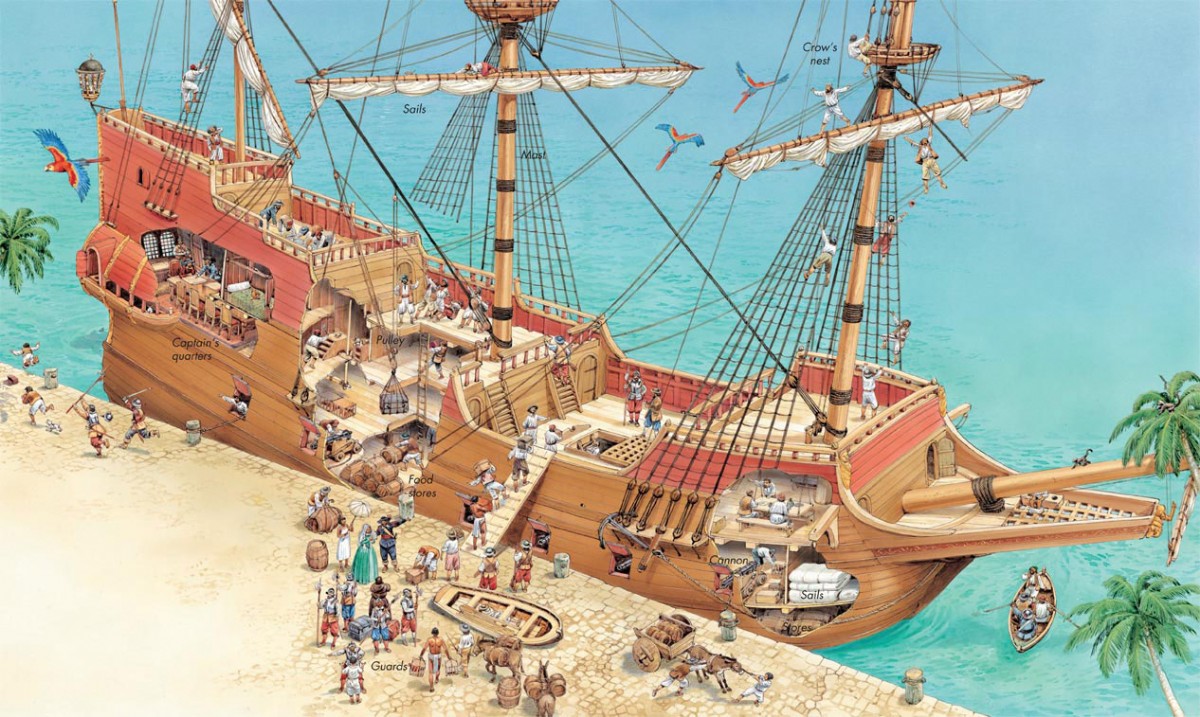
Christopher Columbus, in the service of Spain, first landed in the Americas in 1492. Soon Spanish seamen began to explore the “New World”, beginning with the Caribbean Sea and moving on to the mainland—a region that became known as the Spanish Main. Spain claimed much of Central and South America as its own. The empires of two great American peoples, the Aztecs and the Incas, were conquered and their vast stocks of gold and silver shipped back to Spain. Then in 1545, silver was found at Potosí in modern-day Bolivia. The ships the Spanish used to carry their treasure were called galleons. They formed a fleet known as the Spanish treasure fleet. The sea journey to Europe was threatened by privateers, who were men employed to steal Spain’s treasure by enemy governments, and pirates, thieves who stole for their own gain.
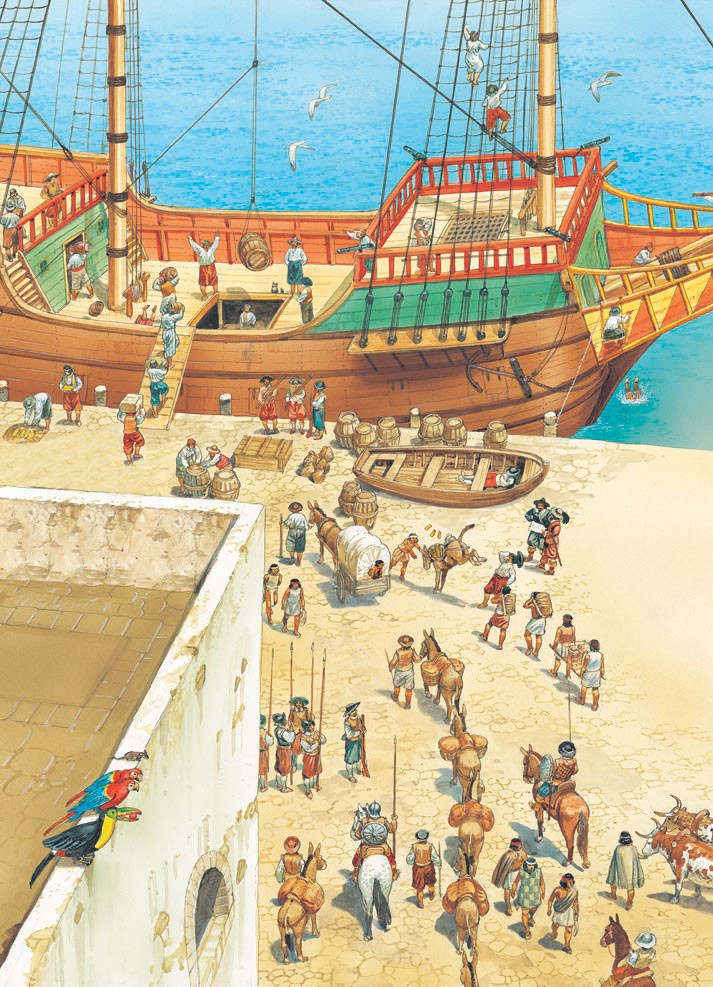

The Spanish Main
The Spanish Main was the name given to the mainland coast around the Caribbean Sea. This region became part of the Spanish Empire from the 16th century. From here, a fabulous amount of goods were shipped to Spain by the treasure fleet. Goods included gold, silver, gemstones, spices, hardwoods and animal hides. The Spanish Main was a magnet for pirates and privateers, so Spain guarded the fleet with war galleons.
The discovery of silver
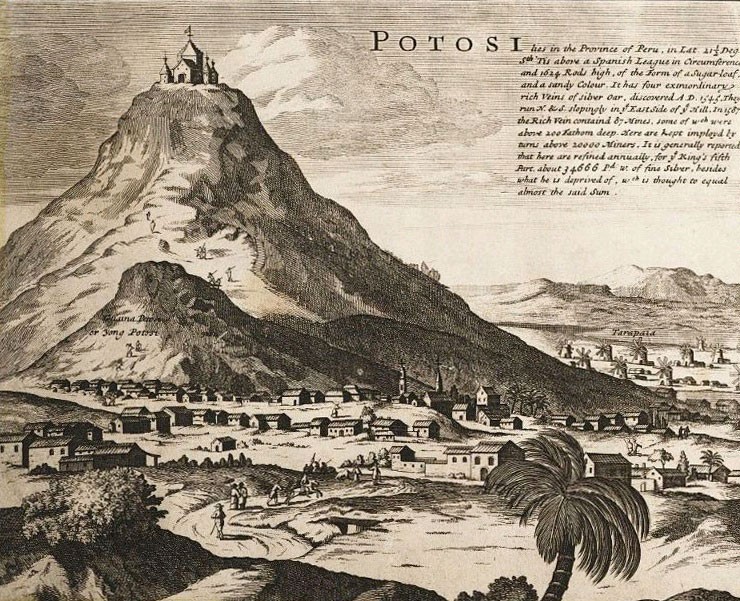
The conquistadores had travelled to the American continent in search of riches. Following the conquest of the Aztec and Inca empires, they went in search of the Seven Cities of Gold in North America and El Dorado in South America—both mythical places. The Spanish adventurers found little gold, but they did discover the silver mines of Zacatecas in Mexico, and, in 1545, the richest of them all, Potosí, in the Andes south of Peru.
The silver came from rich ores inside the Cerro Rico (“Rich Mountain”). The mining town of Potosí soon grew up in the neighbourhood and grew to be one of the largest cities in the Americas. Some 45,000 tonnes of silver was mined between 1546 and the end of the 17th century. The mine labourers, originally local peoples and later imported African slaves, died in their thousands due to the extremely poor working conditions and to poisoning by mercury, a substance used in the process of separating silver from the natural ore.

Treasure and coins
The native peoples of Central and South America made beautifully crafted ornaments, statues and jewellery from precious metals. The Spanish melted down most of the gold and silver they seized from native peoples and turned it into coins or ingots. Their historical value was lost forever.
Gold coins were called “doubloons”. Silver coins were called “pesos”. Pesos de ocho reales were silver coins worth eight reales (real means “royal” in Spanish). They came to be known among pirates as “pieces of eight”.
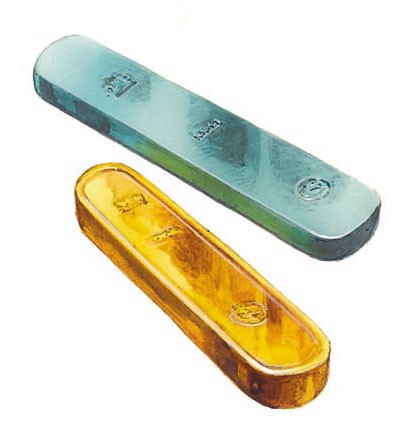
Ingots
About one fith of the silver and gold was made into coins. The rest was shipped in the form of large ingots. These ingots, or bars, were stamped with both a unique serial number and an additional mark to indicate that the 20% royal tax (quinto) had been paid.
The fleet

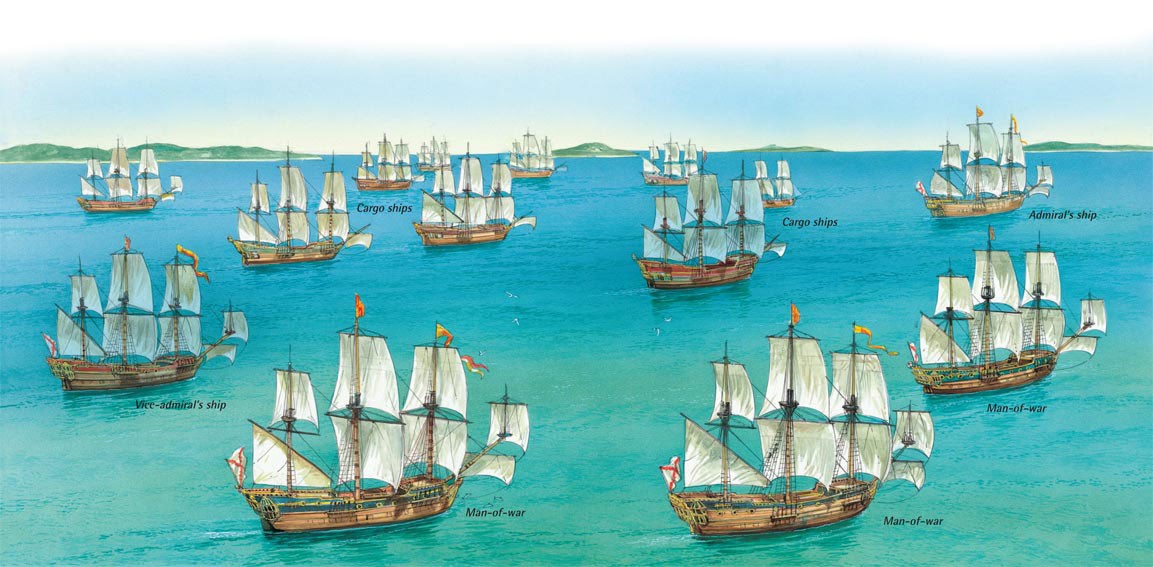
Each year the Spanish treasure fleet sailed in convoy to the Americas to collect gold, silver and other treasures from Spain’s new colonies. The Flota de Indias ("Fleet of the Indies"), as it was known (the lands around the Caribbean are still called the Indies after Columbus’s mistaken belief he had landed in East Asia), was made up of the Nueva España Flota and the Tierra Firme Flota (later known as Los Galeones).
The Atlantic crossing

The Flota de Indias took advantage of prevailing winds across the Atlantic Ocean. The outward route from Spain ran southwest to the Canaries before crossing the Atlantic. The return route picked up the fast-flowing Gulf Stream current back to Europe. The route across the Atlantic and back was known as the Carrera de Indias ("Highway of the Indies").
Nueva España Flota
The Nueva España Flota sailed in April to the port of Veracruz in Mexico (called Nueva España, or New Spain). Another fleet, known as the Manila Galleons, crossed the Pacific Ocean from the Philippines bringing goods such as porcelain, silks, ivory and spices (as well as enslaved Filipinos) from China and Japan to Acapulco, on the Pacific coast of Mexico. From here, mule trains shipped the goods overland to Veracruz. The yearly arrival at Acapulco of the Manila Galleons drew pirates to the Pacific coast of Mexico. The galleons, sometimes more than 50 metres (165 feet) long, were the largest ships in the Spanish fleet.
The Nueva España Flota collected both the Manila Galleons cargo and silver from the Zacatecas mines and overwintered in Veracruz. In the spring, it made the three-week journey to Havana on the island of Cuba. There the ships underwent repairs and took on cargoes of tobacco and sugar.
Tierra Firme Flota
Silver from Potosí travelled on the second of Spain's Indies Flotas. Llama trains carried the silver mined in Potosí across the Andes Mountains and the Atacama Desert to Arica (in present-day Chile) on the Pacific coast of South America. Ships of the South Seas Fleet transported the cargo as far as Panama City. It was then hauled overland across the isthmus (a narrow neck of land) to Porto Bello, an 80-kilometre (50-mile) trek known as the Spanish Silver Train—and a prime target for English, Dutch and French privateers.
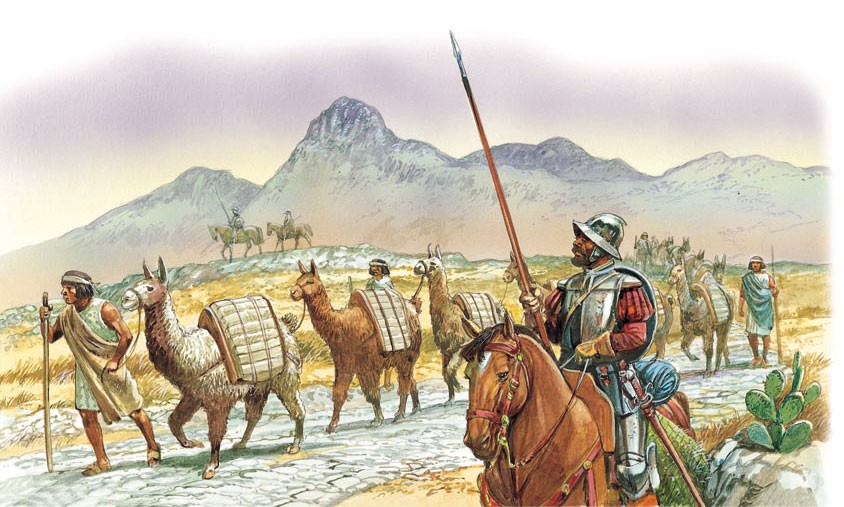
At Porto Bello the silver was collected by ships of the Tierra Firme Flota which had arrived from the port of Cartagena, and returned there to spend the winter. In the spring, the Tierra Firme Flota sailed for Havana to rendezvous with the Nueva España Flota before setting sail for Spain.
Royal galleons

The galleons escorting the treasure fleet formed what was known as the Armada de la Guardia ("Guard Fleet"). They left the fleet on arriving in the Caribbean and sailed on to Havana, from where they returned to Spain with the previous year’s fleet. This meant they did not have to spend winter in the region. These ships, known as the royal galleons, were originally escort man-of-wars, but later transported the most valuable treasures in their own holds.

Return to Spain
The Nueva España Flota and the Tierra Firme Flota met up in Havana in the spring to embark on the voyage home to Spain. The combined fleet sailed between the coast of Florida and the Bahamas. Laden with cargo, the galleons were vulnerable to storms, running aground on reefs and the threat of pirate attack. Most made it back to Seville in Spain by October or November.
Consultant: Philip Parker
pics

Without in any way limiting Q-files Ltd’s exclusive rights under copyright, any use of this publication to “train” generative artificial intelligence (AI) technologies to generate text is expressly prohibited. Q-files Ltd reserves all rights to license use of this work for generative AI training and development of machine learning language models.