
Age of Discovery

CITE
We have made every effort to follow citation style rules, but there may be some minor differences. If in doubt, please refer to the appropriate citation style manual.
Conquest of the Incas. (2026). In Q-files Encyclopedia, History, Age of Discovery. Retrieved from
https://www.q-files.com/history/age-of-discovery/conquest-of-the-incas
"Conquest of the Incas." History, Age of Discovery, Q-files Encyclopedia, 20 Mar. 2026.
https://www.q-files.com/history/age-of-discovery/conquest-of-the-incas.
Accessed 6 Aug. 2026.
Conquest of the Incas 2026. History, Age of Discovery. Retrieved 6 August 2026, from
https://www.q-files.com/history/age-of-discovery/conquest-of-the-incas
History, Age of Discovery, s.v. "Conquest of the Incas," accessed August 6, 2026.
https://www.q-files.com/history/age-of-discovery/conquest-of-the-incas


Conquest of the Incas
Following the discoveries made by the explorer Christopher Columbus, the Spanish crown backed further expeditions to explore and conquer new territories in the Americas. In 1532, a small band of Spanish soldiers under the command of the conquistador Francisco Pizarro (c.1475–1541) arrived in South America. They were in search of a land rumoured to be rich with silver and gold. Pizarro had won approval from the Spanish king to venture south to the region of modern Peru, the heart of the Inca Empire. They found a land riven by civil war and ravaged by an epidemic of smallpox—a disease that had been introduced to the Americas by the Spanish themselves only a few years earlier.
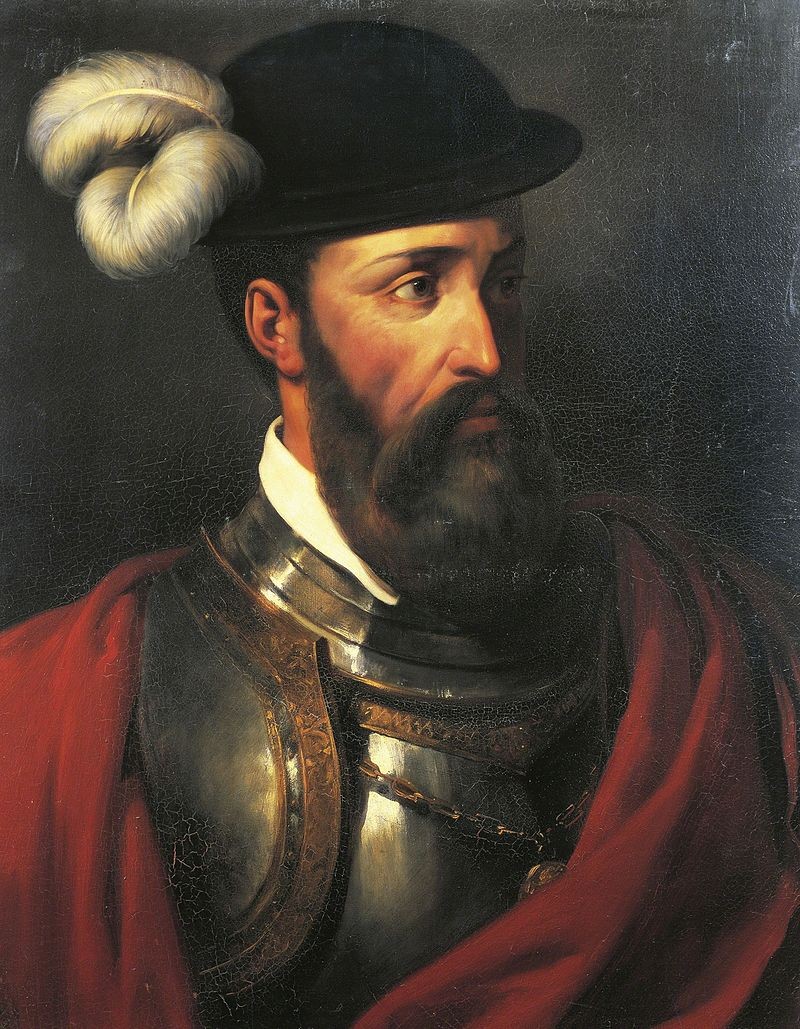
The Inca Empire

The Incas were originally chiefs of a small mountainous area in what is now Peru, South America. By around AD 1200, they had fought and raided neighbouring enemy villages, making themselves the most powerful people in the region. They ruled from their capital, Cusco. The Inca emperors claimed they were descended from the Sun and that this gave them the right to rule. In the 15th century, the Incas began to conquer surrounding territories. By 1493 they ruled over 10 million subjects in a 4000-kilometre (2500-mile) stretch of the Andes Mountains.

The march to Cajamarca
Leading a force of just 177 men, Pizarro crossed the Andes to confront the Inca emperor Atahualpa and his army of 80,000 men in Cajamarca. With their horses (which the Inca forces had never seen before) and superior weaponry—guns, steel armour and swords—the Spanish soldiers held the advantage, despite being vastly outnumbered.
Slaughter in the square
Pizarro had devised a plan to defeat the much greater forces of the Inca army. He invited Emperor Atahualpa, accompanied by about 3000 unarmed attendants, to meet with him in the square at Cajamarca. But on hearing a signal from their leader, Pizarro’s horsemen charged from their hiding places around the square and slaughtered the Inca forces.

The execution of Atahualpa
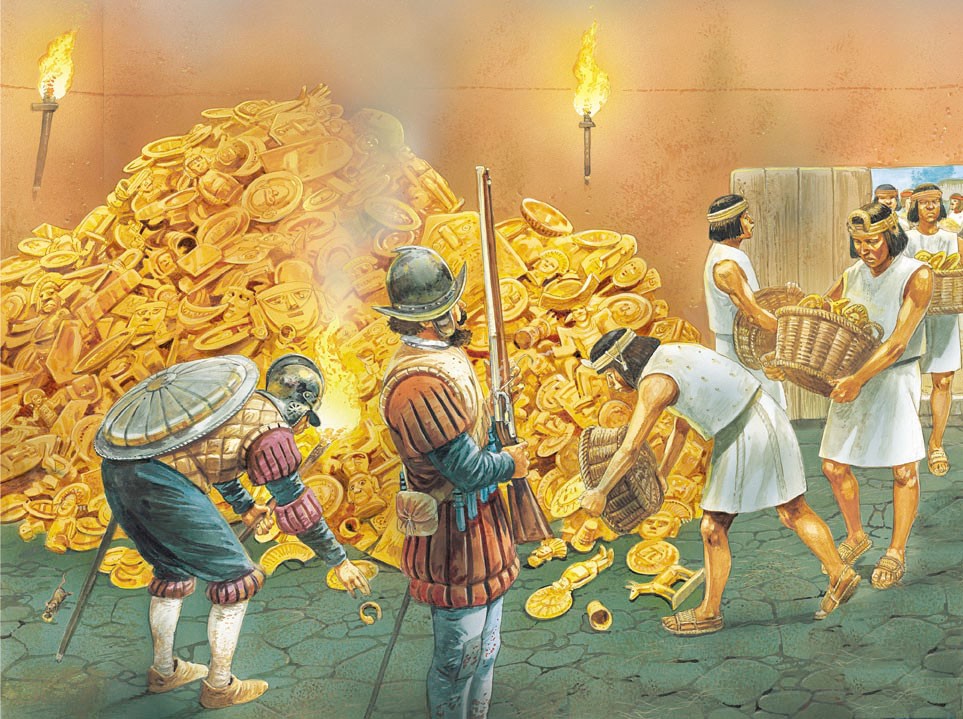
The Spanish won the "battle" easily and captured Atahualpa. Although they demanded, and received, a ransom of more than 20 tonnes of gold and silver (enough to fill a room) for his release, the Spaniards decided to execute their noble prisoner in August 1533. Pizarro and another conquistador, Hernando de Soto, then set off for the Inca capital, Cusco.

The defeat of the
Inca Empire
The Spaniards fought off attacks by Inca warriors at Jauja and elsewhere. Many warriors died trying to defend Cusco, which Pizarro captured in November 1533. The Spanish installed a new “puppet” ruler, Manco Inca, and set about plundering the empire of all its treasures. Some Inca warriors kept up resistance, but the last rebels were finally overcome in 1572.
Consultant: Philip Parker
pics
Without in any way limiting Q-files Ltd’s exclusive rights under copyright, any use of this publication to “train” generative artificial intelligence (AI) technologies to generate text is expressly prohibited. Q-files Ltd reserves all rights to license use of this work for generative AI training and development of machine learning language models.