
Aztec, Inca & Maya

CITE
We have made every effort to follow citation style rules, but there may be some minor differences. If in doubt, please refer to the appropriate citation style manual.
Incas. (2026). In Q-files Encyclopedia, History, Aztec, Inca & Maya. Retrieved from
https://www.q-files.com/history/aztec-inca-maya/incas
"Incas." History, Aztec, Inca & Maya, Q-files Encyclopedia, 30 Mar. 2026.
https://www.q-files.com/history/aztec-inca-maya/incas.
Accessed 6 Aug. 2026.
Incas 2026. History, Aztec, Inca & Maya. Retrieved 6 August 2026, from
https://www.q-files.com/history/aztec-inca-maya/incas
History, Aztec, Inca & Maya, s.v. "Incas," accessed August 6, 2026.
https://www.q-files.com/history/aztec-inca-maya/incas


Incas
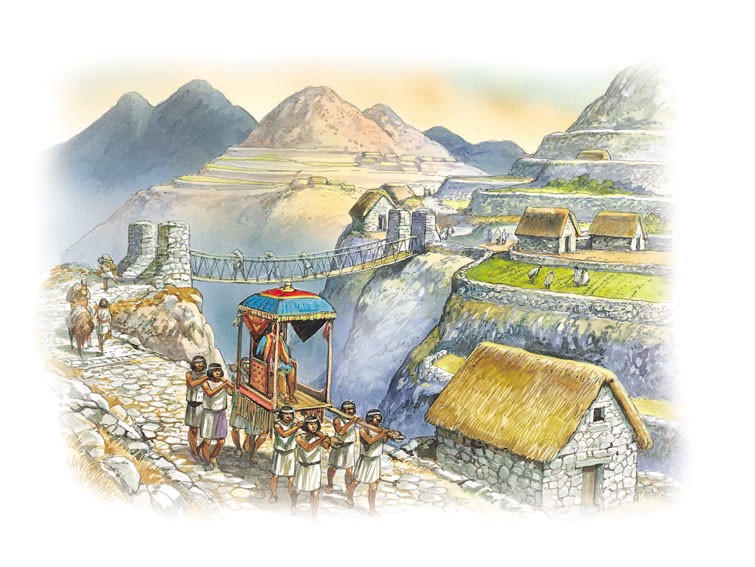
About 500 years ago, the Incas ruled an empire in the Andes Mountains of South America. Until the Spanish arrived in the 16th century, it was the greatest empire South America had ever seen. The Incas built a network of roads across their mountain empire. Bridges made out of twisted vines crossed deep ravines. Messengers and troops walked along the roads, but important people were carried in litters by servants. The Incas were great craftspeople. They cut and shaped blocks of stone until they fitted together exactly. Many of their sturdy buildings, walls and roads still stand today.

The rise of the
Inca Empire
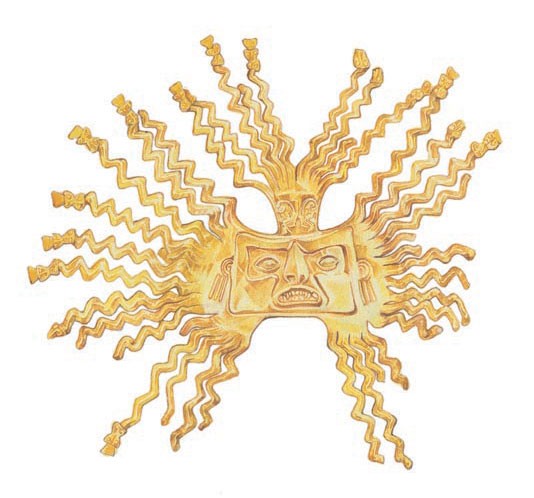
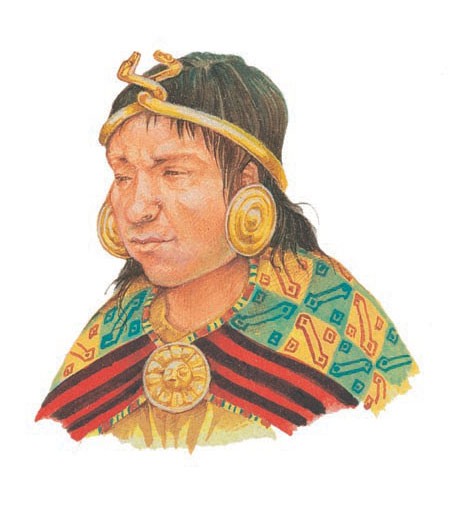
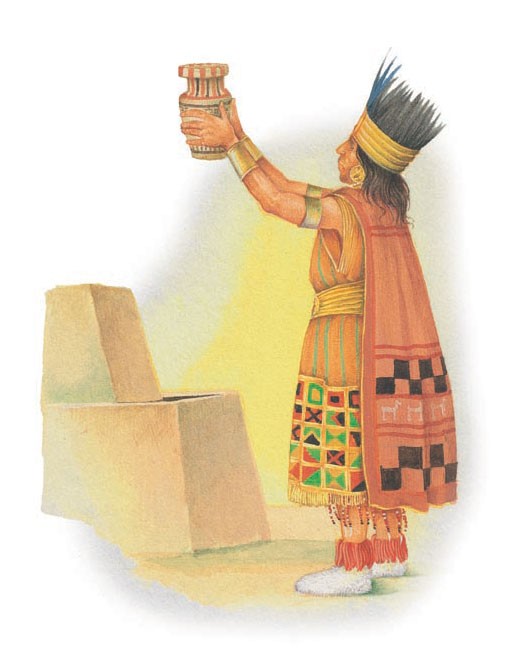
The Incas were originally chiefs of a small mountainous area in what is now Peru, South America. By about AD 1200, after they had fought and raided neighbouring enemy villages, the Incas were the most powerful people in the region. They ruled from their capital, Cusco. Many legends tell the story of the first emperor of the Inca, Manco Cápac, but it is possible he was a real person who ruled in around AD 1200. The later Inca emperors claimed they were descended from the Sun and that this gave them the right to rule.
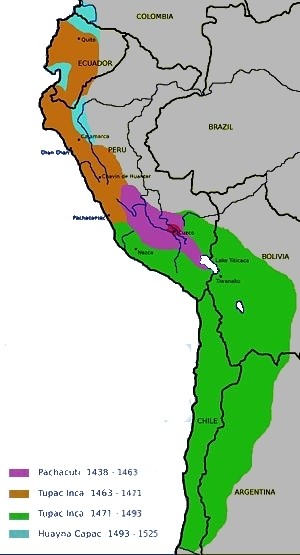
It was not until 1438 that the Inca rulers began to conquer surrounding territories. Then the ninth Inca emperor, Pachacuti (“Earth Shaker”), refused to retreat from invading rivals. Instead, his armies defeated them and swept across their lands. Pachacuti made all his conquered peoples speak Quechua, the Inca language. Pachacuti’s son, Tupac Inca, who took the title Yupanqui (“Unforgettable”), continued the Inca expansion. He conquered the lands of the powerful Chimu Empire to the north, then surged southwards into what is now Chile and Argentina.
By 1493, the Incas ruled over 10 million subjects in a 4000-kilometre (2500-mile) stretch of the Andes Mountains. But the Incas’ great empire was to be shortlived, because the Spanish conquistadores arrived in 1532.
Machu Picchu

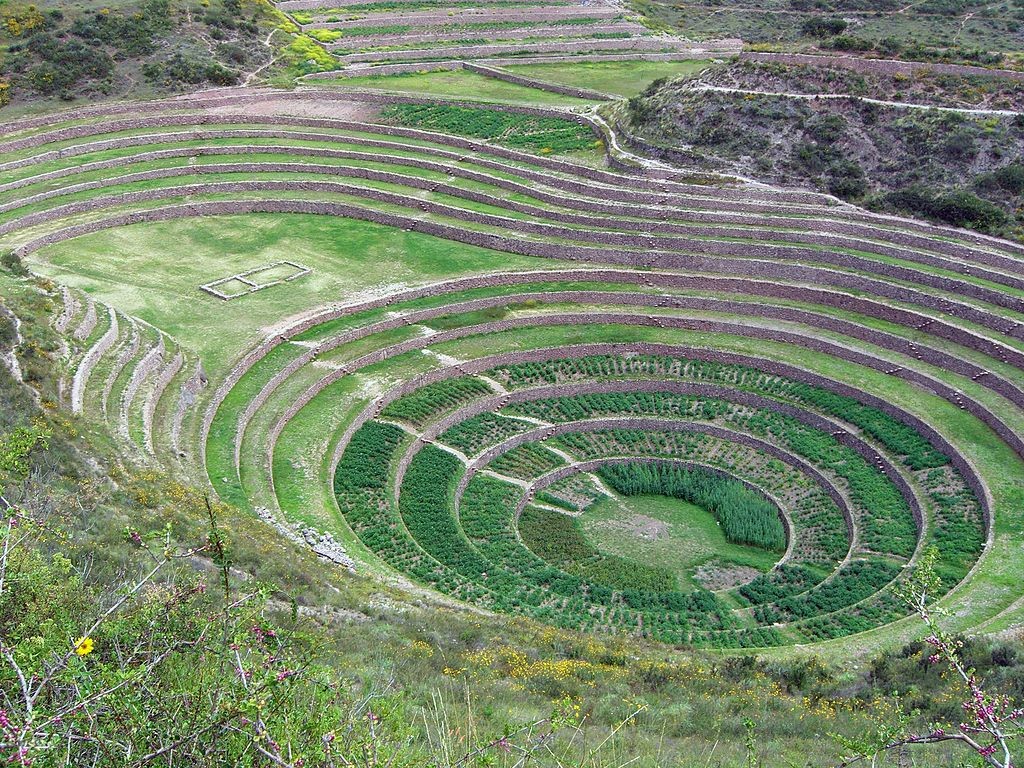
Machu Picchu was built in around 1450 as a royal residence. It was constructed on a mountaintop, surrounded by towering peaks. To the Incas, Machu Picchu was a sacred place. From here, they worshipped the Sun as a god. The mountain peaks all around had, the Incas believed, supernatural powers. Machu Picchu was built to last a long time: massive walls and giant steps called terraces kept it from sliding down to the valley below.
After the Spanish conquered the Inca Empire in 1532, they pillaged and destroyed most of the Inca cities in their search for gold. But the Spaniards never found Machu Picchu, high up in the mountains. It was not until 1911 that US explorer Hiram Bingham first came across the overgrown but intact “Lost City”, built from massive blocks of stone.

Cusco
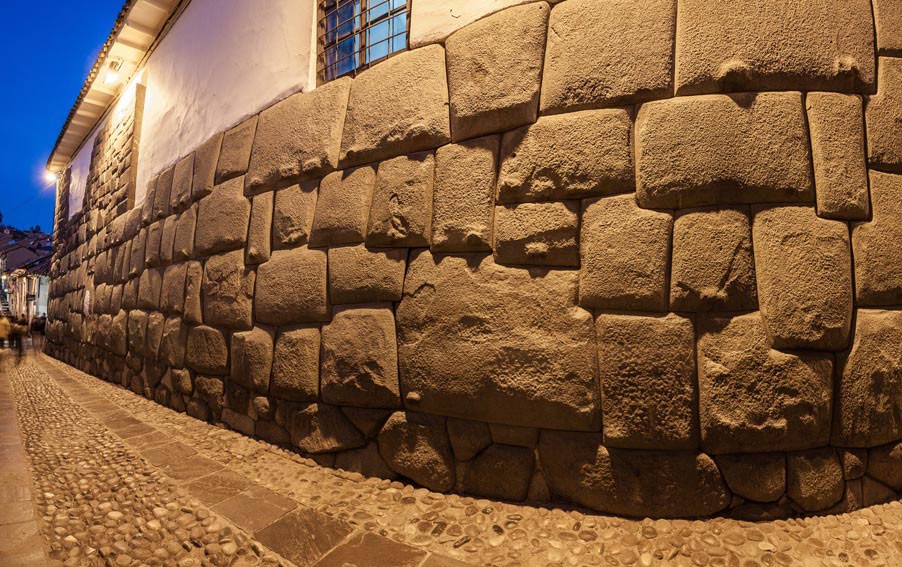
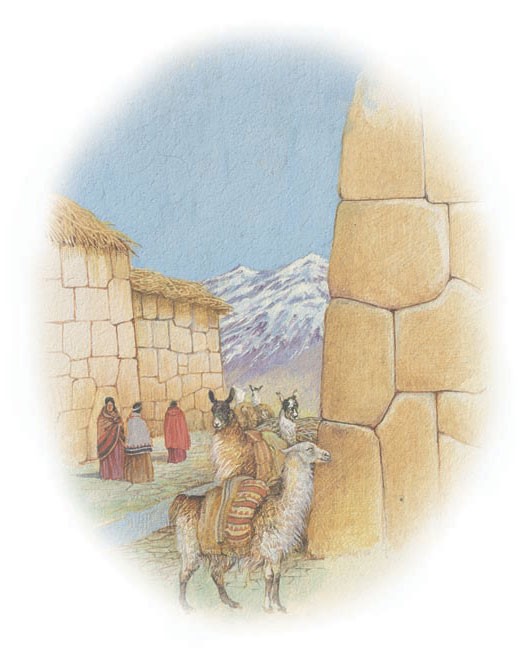
Cusco, built high in the mountains, was the Inca capital. Cusco means “navel of the world” in Quechua, the language of the Incas. The thatch-roofed buildings were skilfully made out of stone, their walls constructed in a “polygonal” style, in which irregular shapes interlock with great precision. Cusco’s palaces, temples and warehouses bulged with treasures and goods.
Sacsahuaman, an Inca fortress, lay on a hill just to the west of Cusco. It was enclosed by immense, zigzagging walls more than 16 metres (50 feet) high. Around 10,000 people could have found refuge inside it. It did not save Cusco from capture by the Spanish, however. The Spaniards then used Sacsahuaman as a source of stones for building a new Spanish town at Cusco.


Roads
In order to rule their huge territory, which they called Tahuantinsuyu (Land of the Four Quarters), the Incas built a system of roads leading out from their capital, Cusco, in all directions. The main road, running from Quito in the north to Lake Titicaca in the south, was known as the Royal Road. All the Inca roads, many of which ran across rugged mountains, were built with great skill. The builders sometimes cut into a rockface or built steps in steep sections. To cross deep gorges, they hung rope bridges.
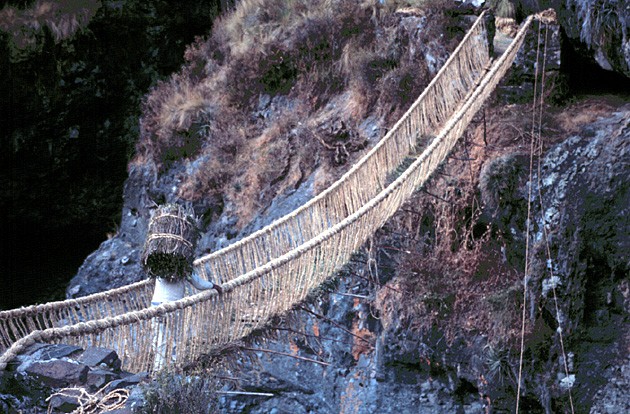
The Inca roads were used by armies, llama pack-trains and messengers, called chasquis. The Spanish conquistadores found them especially helpful in their march on Cusco.
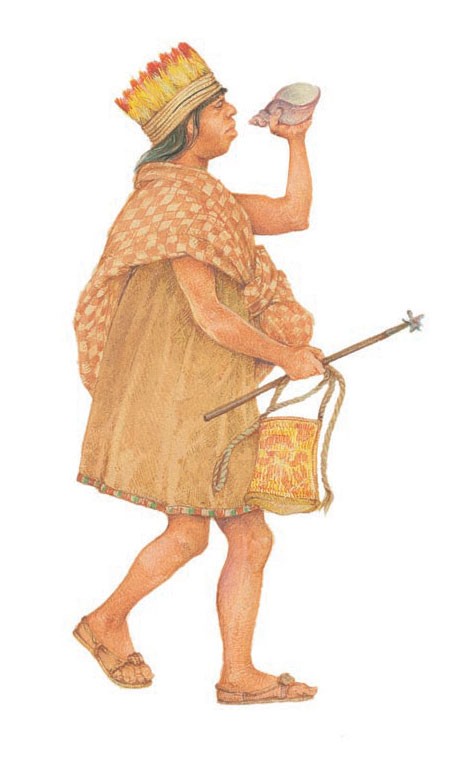
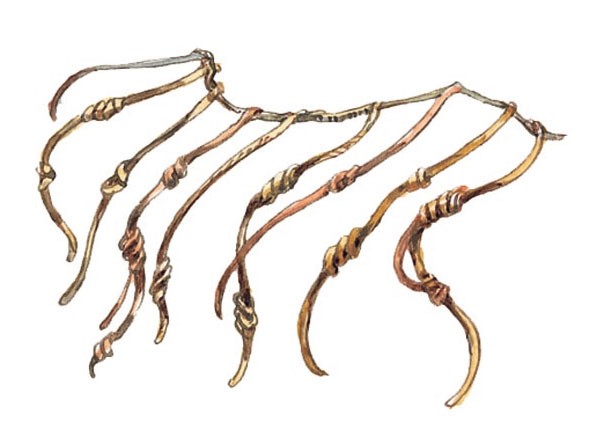
A tampu, or post-house, was built every 20 or 30 kilometres (12–18 miles), roughly one day’s journey, along the Royal Road. A chasqui ran from one tampu to the next, where he handed over a message, recorded on knotted strands of llama hair called quipus, to another chasqui. He carried a trumpet, or pututu, made from a conch shell, to warn people of his arrival, and a quëpi, or backpack, to hold objects that he had to deliver.
Consultant: Philip Parker
Timeline
AD 1200
According to legend, the first Inca emperor, Manco Cápac, begins his rule. The capital city of Cusco is founded.
1438
Pachacuti begins his expansion of the Inca Empire by conquering neighbouring lands.
1471–93
During Tupac Inca’s reign, the Inca Empire expands southward to Chile and Argentina.
1525
Tupac Inca’s son, Huayna Capac, dies from smallpox.
1530–32
Civil war between Tupac Inca’s sons, Huascar and Atahualpa, for the Inca throne. Atahuallpa is the victor.
1532
Francisco Pizarro, Spanish conquistador, arrives in the Inca Empire. His soldiers crush the Inca army at Cajamarca, killing some 3000 men. Atahualpa is put to death by the Spaniards.
1572
Inca resistance is finally crushed when Spanish forces take Vilcabamba.
pics







Without in any way limiting Q-files Ltd’s exclusive rights under copyright, any use of this publication to “train” generative artificial intelligence (AI) technologies to generate text is expressly prohibited. Q-files Ltd reserves all rights to license use of this work for generative AI training and development of machine learning language models.