
Aztec, Inca & Maya

CITE
We have made every effort to follow citation style rules, but there may be some minor differences. If in doubt, please refer to the appropriate citation style manual.
Olmecs. (2026). In Q-files Encyclopedia, History, Aztec, Inca & Maya. Retrieved from
https://www.q-files.com/history/aztec-inca-maya/olmecs
"Olmecs." History, Aztec, Inca & Maya, Q-files Encyclopedia, 30 Mar. 2026.
https://www.q-files.com/history/aztec-inca-maya/olmecs.
Accessed 22 Sep. 2026.
Olmecs 2026. History, Aztec, Inca & Maya. Retrieved 22 September 2026, from
https://www.q-files.com/history/aztec-inca-maya/olmecs
History, Aztec, Inca & Maya, s.v. "Olmecs," accessed September 22, 2026.
https://www.q-files.com/history/aztec-inca-maya/olmecs


Olmecs
The Olmecs lived in the swampy lands near the Gulf of Mexico in the region of modern-day Mexico. Their civilization, the first in Central America, thrived from about 1400 BC to 300 BC. The people were artists and traders who did not seek to conquer other parts of America. They worshipped gods and built pyramid temples, a style that was adopted by later Mexican civilizations. The Olmecs are also believed to have been the first American people to play the ball game, which was later taken up by civilizations such as the Aztec and Maya.
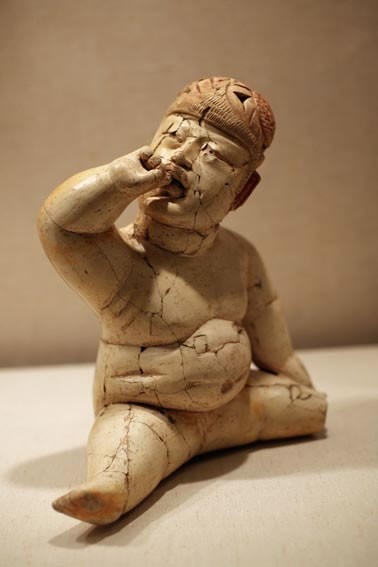

Trade
Olmec traders travelled far and wide within Mexico, searching for raw materials, such as jade, clay, basalt and greenstone, for their craftwork, and trading in the finished products. Their travels brought them into contact with other peoples, who were influenced by their beautiful art. The Olmecs carved and moulded extremely natural-looking sculptures of people and animals, from fish to jaguars.
Stone heads
The Olmecs are particularly famed for the giant heads that they carved from stone. The heads all wear helmets. Seventeen heads have been found so far. They all look similar to each other but have different facial features and are believed to be portraits of Olmec rulers. The pattern on the helmet probably shows who the ruler is. Each head weighs up to 20 tonnes. The largest is 3.4 metres (11 feet) high.

Consultant: Philip Parker
pics
Without in any way limiting Q-files Ltd’s exclusive rights under copyright, any use of this publication to “train” generative artificial intelligence (AI) technologies to generate text is expressly prohibited. Q-files Ltd reserves all rights to license use of this work for generative AI training and development of machine learning language models.