
Aztec, Inca & Maya

CITE
We have made every effort to follow citation style rules, but there may be some minor differences. If in doubt, please refer to the appropriate citation style manual.
Ancient America. (2026). In Q-files Encyclopedia, History, Aztec, Inca & Maya. Retrieved from
https://www.q-files.com/history/aztec-inca-maya/ancient-america
"Ancient America." History, Aztec, Inca & Maya, Q-files Encyclopedia, 30 Mar. 2026.
https://www.q-files.com/history/aztec-inca-maya/ancient-america.
Accessed 22 Sep. 2026.
Ancient America 2026. History, Aztec, Inca & Maya. Retrieved 22 September 2026, from
https://www.q-files.com/history/aztec-inca-maya/ancient-america
History, Aztec, Inca & Maya, s.v. "Ancient America," accessed September 22, 2026.
https://www.q-files.com/history/aztec-inca-maya/ancient-america


Ancient America
The civilizations of the Aztecs, Incas and Maya were the towering achievements of the peoples that arrived in Central and South America thousands of years earlier. The Olmecs created the first great civilization in what historians call Mesoamerica (Mexico and Central America), around the coast of the Gulf of Mexico from about 1400 to 300 BC. They built pyramid temples and played the ball game, later adopted by both the Maya and the Aztecs. The Maya flourished from 300 BC to 900 AD. The Aztecs dominated what is now central Mexico from 1200 to 1519. In the 15th and 16th centuries, the Incas ruled over a vast empire that stretched more than 2000 kilometres (1200 miles) in the Andes Mountains of South America.

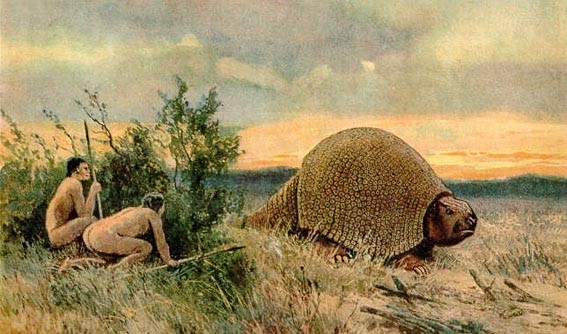
First settlers
People first crossed into North America from Asia during the Ice Ages, between 35,000 and 15,000 years ago. Because so much water was frozen in icecaps, the sea levels were much lower than they are today. What is now the Bering Strait between Alaska and Russia was then dry land.
About 12,000 years ago, the ice melted and sea levels rose, cutting America off from Asia. The American settlers gradually spread southwards across the continent, all the way to the tip of South America.
In parts of modern-day Mexico, Central America and Peru, people learned to farm, and started to settle down to work the land. Villages grew up, some eventually becoming the centres of civilization, such as that of the Olmecs in Mesoamerica and the Norte Chico people of Peru.
Norte Chico
Around 3000 BC some settlers began to create a complex irrigation system in the desert valleys of the Norte Chico region of Peru. They also constructed stone pyramids (some as high as 26 metres / 85 feet) at sacred sites, such as Caral. Some archaeologists think it was probably the first civilization to emerge in the Americas.
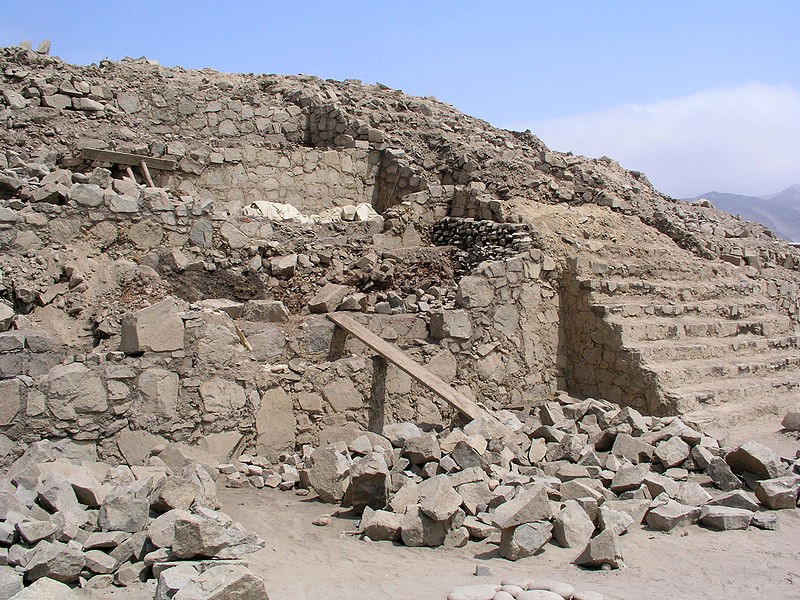
The people grew cotton in their irrigated fields, which their coastal neighbours used to make fishing nets. The settlements were abandoned from about 1800 BC as the people went off to live in other parts of Peru.
Consultant: Philip Parker
Ancient America Timeline
35,000–15,000 years ago
The first people cross the land bridge from Asia into North America.
10,000 years ago
The earliest farmers learn to grow crops in the Americas.
3000–1800 BC
The Norte Chico civilization grows up in Peru.
1400–300 BC
The Olmec civilization thrives in Mexico.
200 BC–AD 600
The Nazca culture flourishes in southern Peru.
200 BC–AD 750
The city of Teotihuacán is powerful in Mexico.
AD 100–800
The Moche civilization flourishes in northern Peru.
250–900
The Maya build stone cities and temples in Mexico, Guatemala and Belize.
c.1200
The Inca capital of Cusco is founded in Peru.
1325
The Aztecs found their city of Tenochtitlán in Mexico.
1521
The Aztec Empire is defeated by the Spanish, led by Hernán Cortés.
1542
The Maya fall under Spanish control.
1572
The final Inca resistance to Spanish rule is crushed.
pics

Without in any way limiting Q-files Ltd’s exclusive rights under copyright, any use of this publication to “train” generative artificial intelligence (AI) technologies to generate text is expressly prohibited. Q-files Ltd reserves all rights to license use of this work for generative AI training and development of machine learning language models.