
Age of Mammals

CITE
We have made every effort to follow citation style rules, but there may be some minor differences. If in doubt, please refer to the appropriate citation style manual.
Ice Ages. (2026). In Q-files Encyclopedia, Prehistoric, Age of Mammals. Retrieved from
https://www.q-files.com/prehistoric/age-of-mammals/ice-ages
"Ice Ages." Prehistoric, Age of Mammals, Q-files Encyclopedia, 2 Sep. 2026.
https://www.q-files.com/prehistoric/age-of-mammals/ice-ages.
Accessed 21 Sep. 2026.
Ice Ages 2026. Prehistoric, Age of Mammals. Retrieved 21 September 2026, from
https://www.q-files.com/prehistoric/age-of-mammals/ice-ages
Prehistoric, Age of Mammals, s.v. "Ice Ages," accessed September 21, 2026.
https://www.q-files.com/prehistoric/age-of-mammals/ice-ages


Ice Ages
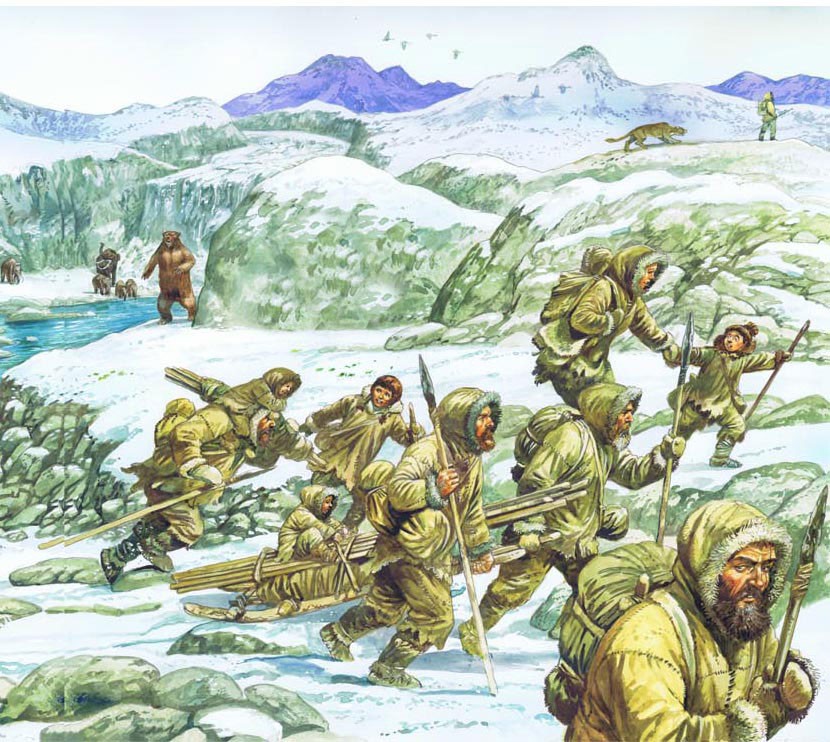
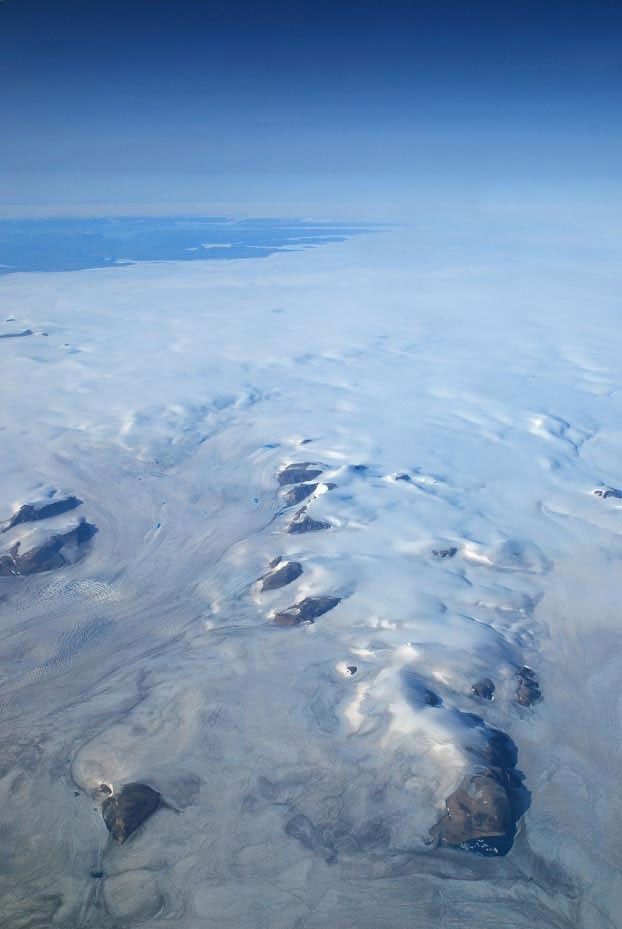
Ice ages have occurred frequently throughout the Earth’s history. They are times when the climate cools down so much that ice caps form at the poles and spread out. The most recent, the Pleistocene Ice Ages, began around 2.6 million years ago. Since then, on at least four occasions, great ice sheets spread southwards and obliterated much of northern Europe, North America and Asia for tens of thousands of years. These events are known as glacial periods. In between, there were warmer periods called interglacials. The last glacial period ended only about 11,500 years ago. Today’s climates are cooler than many past eras, so it is likely that we are living through an interglacial. A fifth glacial period may one day grip the world.
Possible causes
Various causes have been suggested for why ice ages occur. It may be that the Earth’s angle of rotation changes slightly, tipping the poles further away from the Sun’s rays. Other possible causes include changes in the Earth’s orbit around the Sun, the position of the continents or the chemical composition of the atmosphere.
Last Glacial Maximum
The last glacial period of the Pleistocene Ice Ages, which is often known (incorrectly) simply as the “Ice Age”, took place between 126,000 and 11,500 years ago. It reached its peak during what scientists call the Last Glacial Maximum, when ice sheets started advancing 33,000 years ago and reached their maximum extent 26,500 years ago. Large areas of North America, northern Asia and northern Europe were covered with ice, up to 3 kilometres (nearly 2 miles) thick in places.
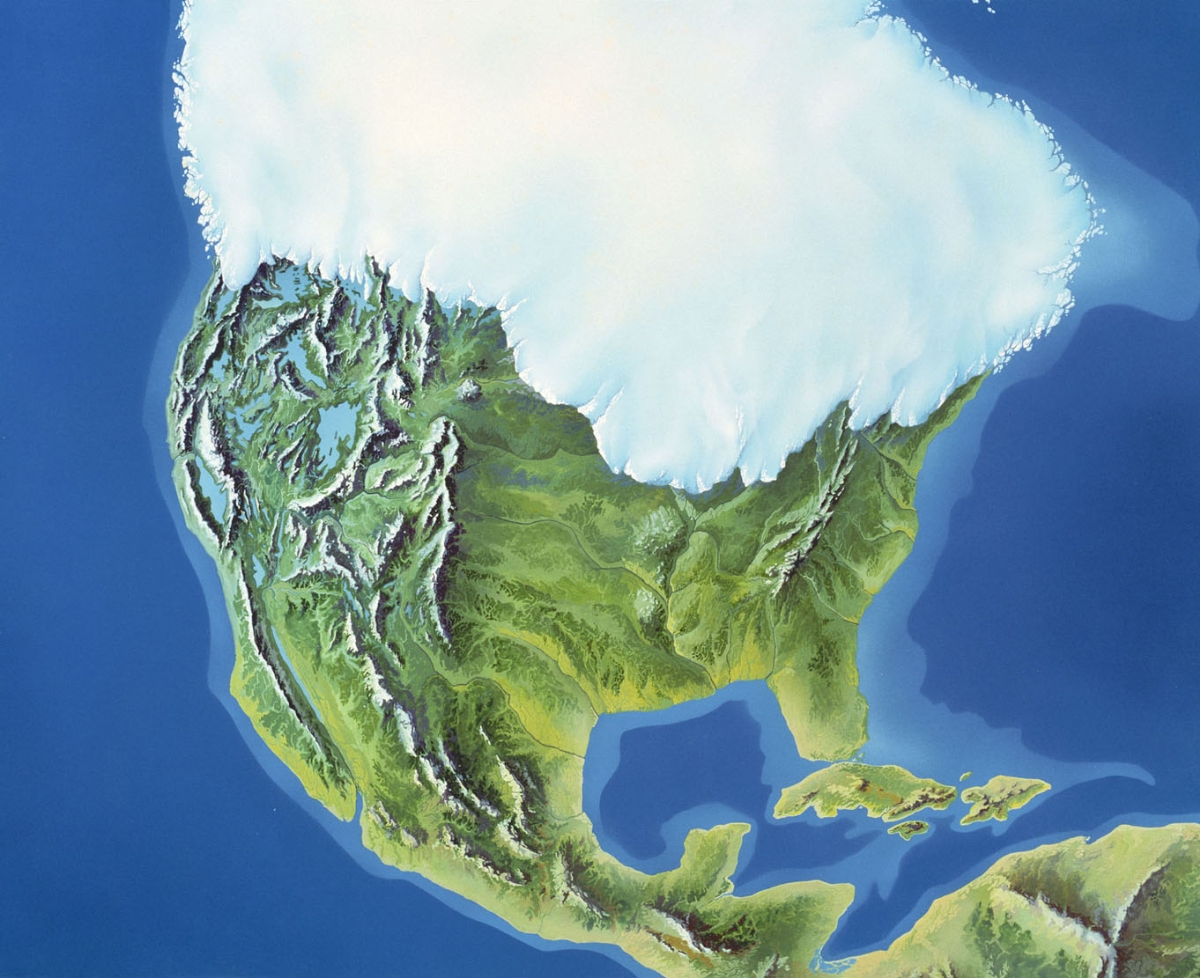
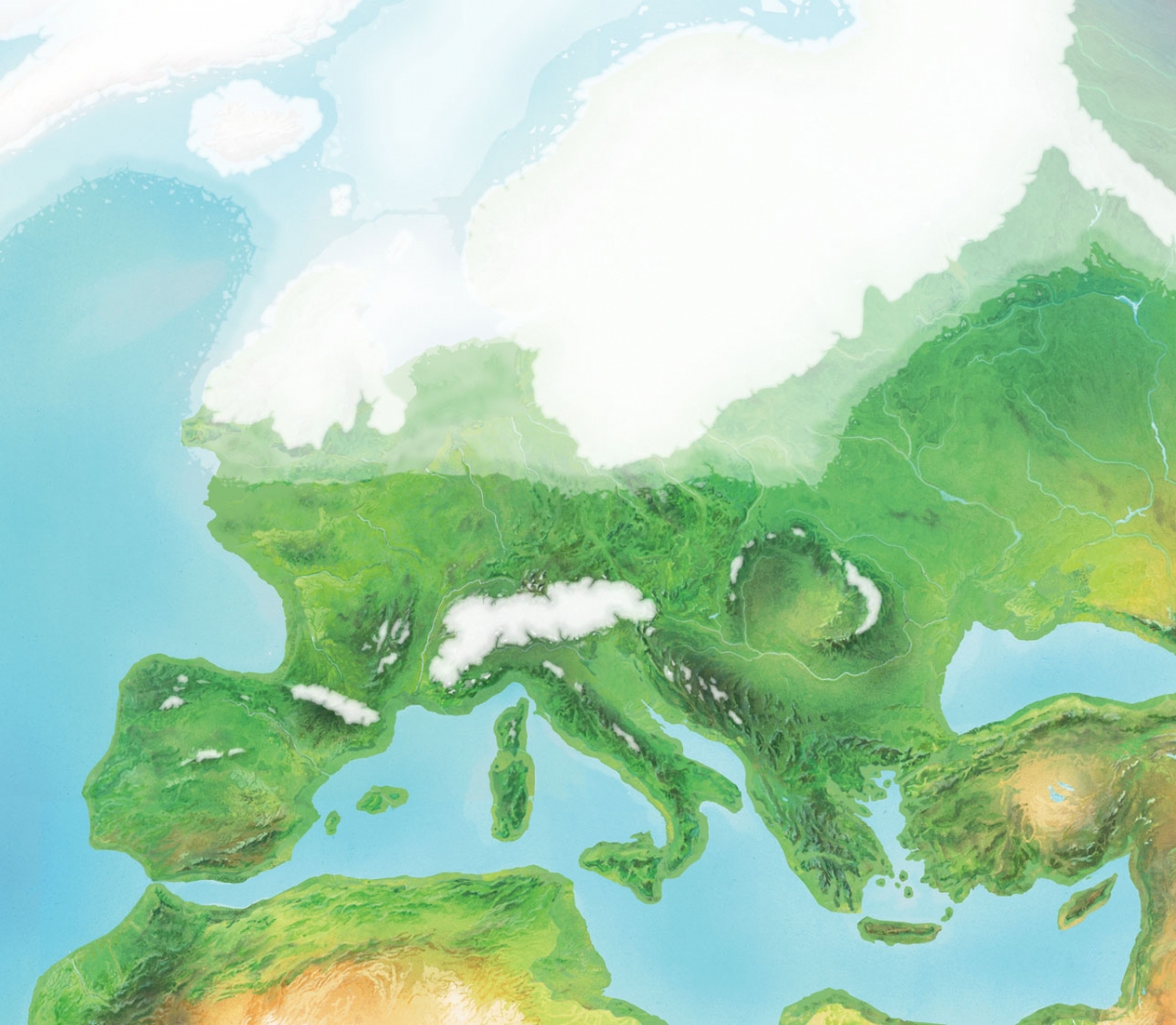
During this time, because so much water that would normally circulate between the oceans and the atmosphere was frozen, or “locked up”, in the ice, sea levels across the globe fell dramatically. Many islands—and even the continents of Asia and North America—became linked by “land bridges”, tracts of dry land that were once covered by seas.
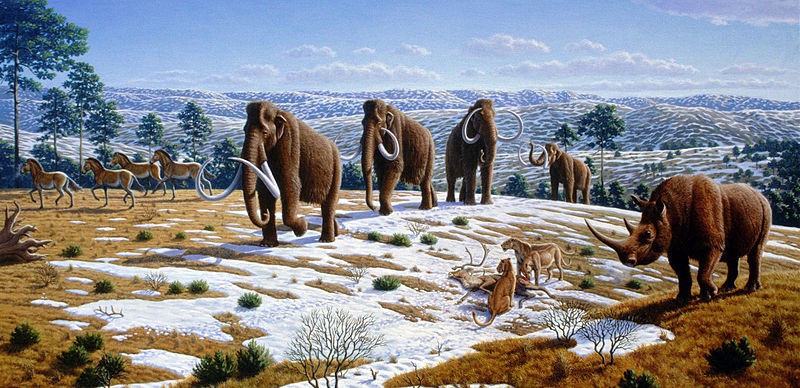
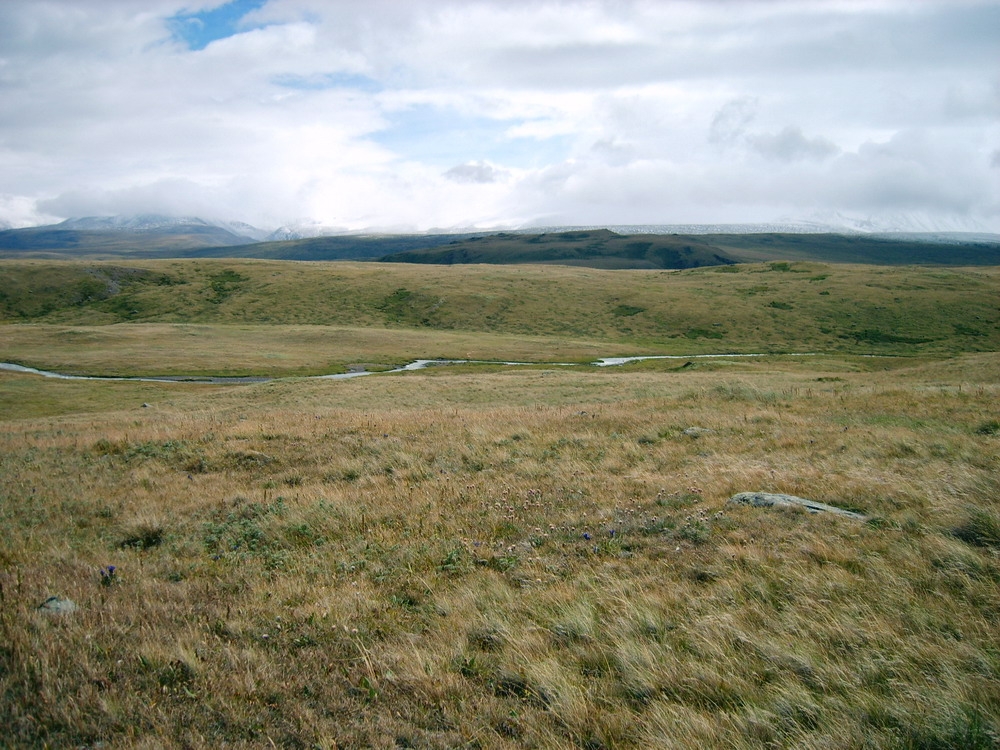
During the Last Glacial Maximum, the “mammoth steppe”, a vast, cold, dry grassland lying to the south of the ice sheets, stretched from Spain across Europe and Asia (as far south as China) and over the Beringia land bridge into Alaska and the Yukon.
The ice sheets started to retreat in the Northern Hemisphere around 19,000 years ago, reaching their current extent in the Arctic polar region(Greenland, together with ice caps in Iceland and on some of the islands of northern Canada) about 11,500 years ago. When the ice melted, sea levels began to rise, flooding the land bridges.
Across large parts of the Northern Hemisphere, the advancing ice had gouged out valleys and smoothed over mountains. When they melted, the meltwaters filled rock basins forming lakes.
Effects on wildlife
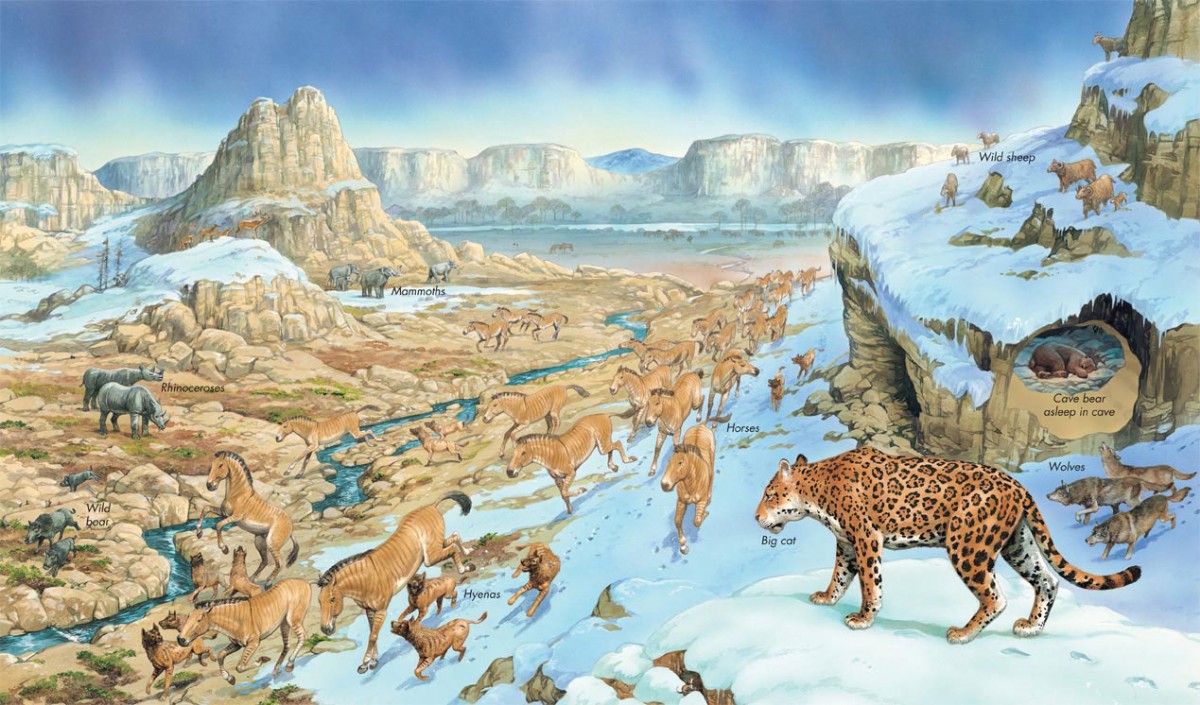
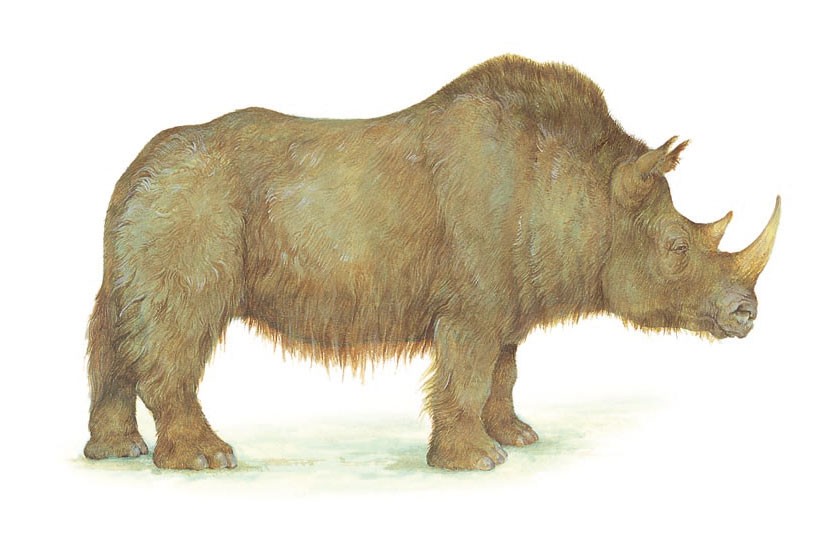
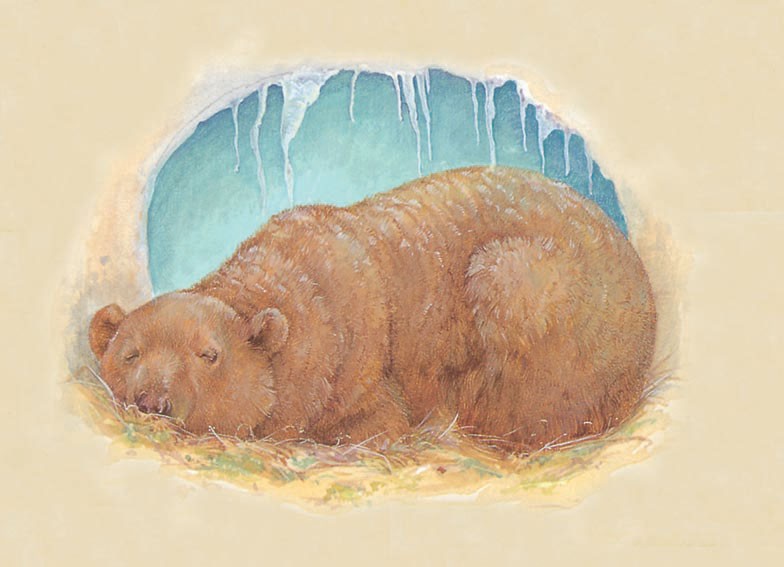
The Ice Ages had a major effect on the world’s climate, and its wildlife experienced major changes, too. During the warmer interglacials, animals like elephants, hippos and hyenas could migrate northwards. When the ice sheets spread southwards, mammoths, rhinoceroses, reindeer and bears adapted to life in the vast regions of tundra, treeless areas of low grasses and frozen soils. Some migrated south in winter, while others stayed and hibernated.
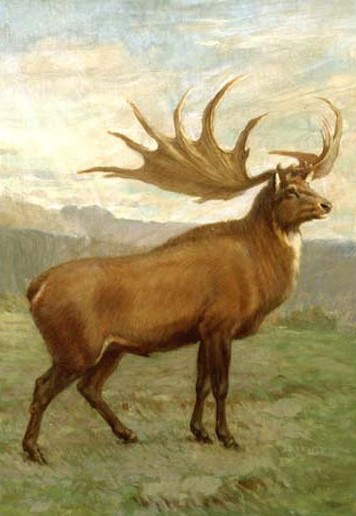
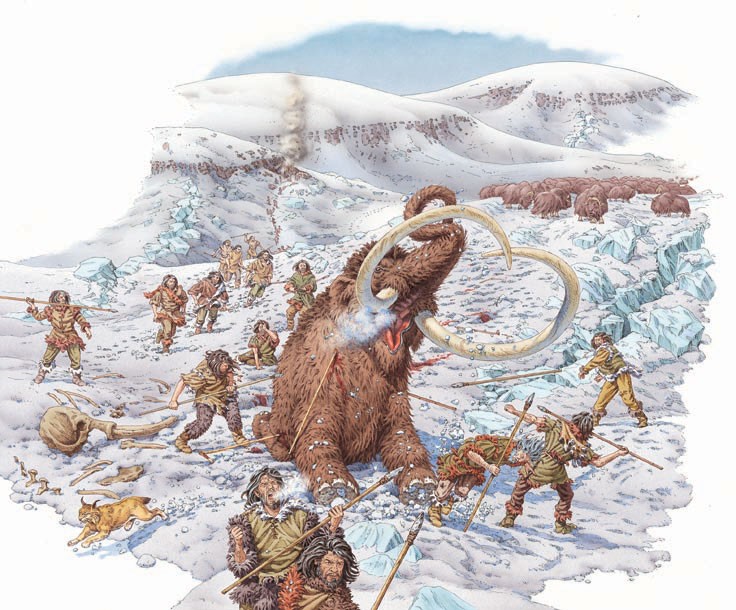
In many parts of the world, giant species of mammal evolved. Enormous elephants, rhinos, camels, deer—even rodents—roamed the continents. By the end of the Pleistocene, however, nearly all of them had become extinct. They may have suffered at the hands of new, hunting mammals: humans.
Mammoths
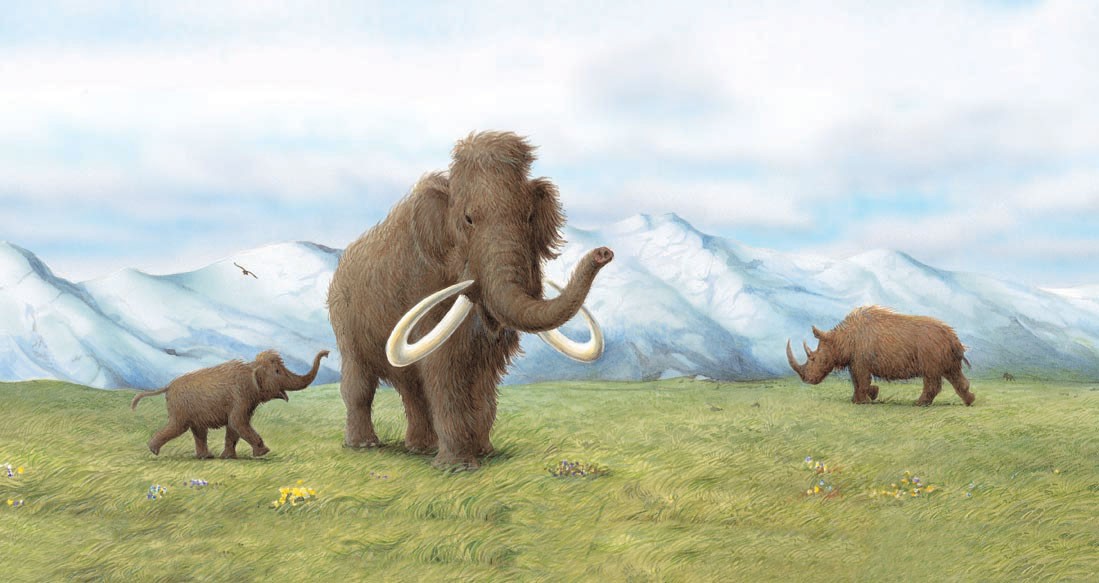
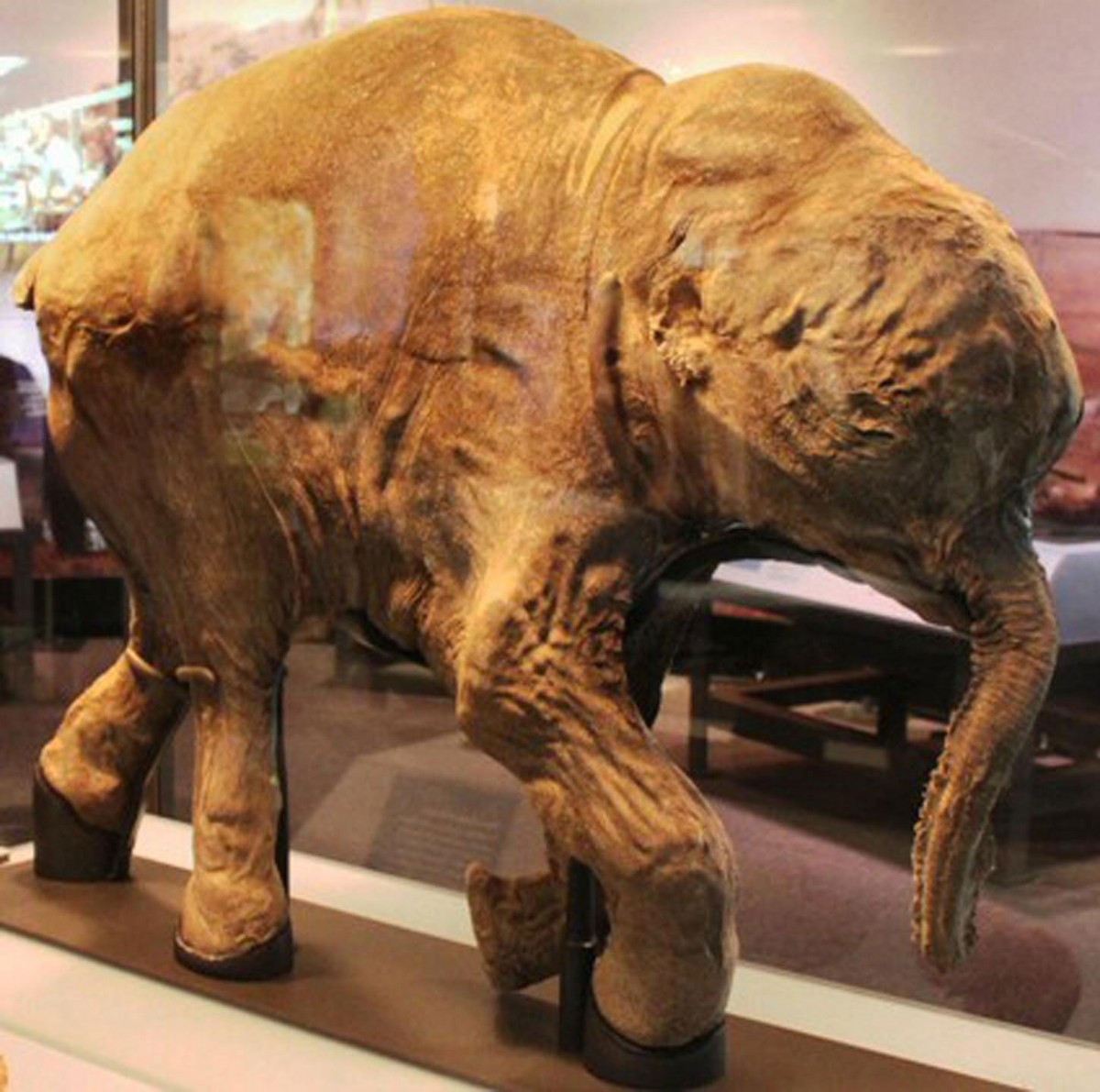
Mammoths are the best-known Ice Age mammals. One of several mammoth species, the woolly mammoth, with its shaggy coat and layers of body fat, was well suited to the cold, summer-less environments of the far north. It evolved around 400,000 years ago and roamed the northern tundra lands until about 11,500 years ago—although a small number survived on a Siberian island until just 3700 years ago. Complete carcasses, preserved in ice, are still found today. Climatic change probably finished it off, but it may have been hunted to extinction by humans.
South America
in the Pleistocene
Not everywhere in the world suffered freezing ice age conditions during the Pleistocene. South America was, as it is today, a land of dry savanna grasslands and rainforest, although the great Amazon rainforest, which today fills much of lowland northern South America, was less extensive at that time.
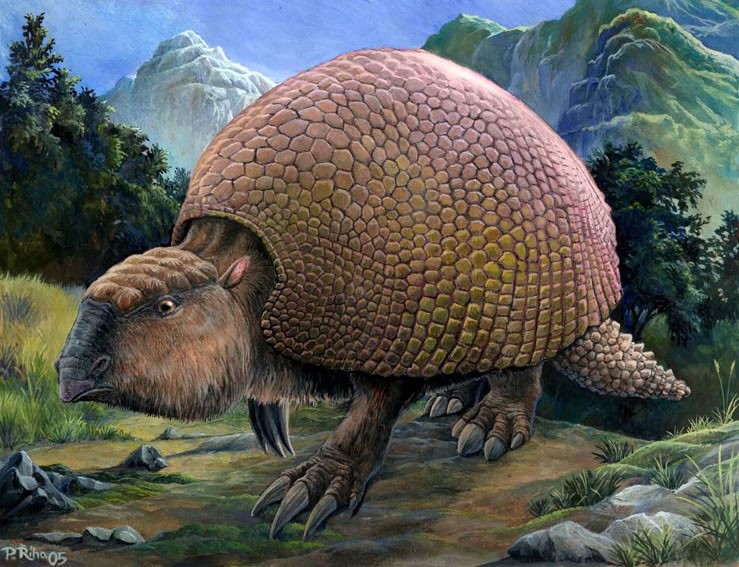
Glyptodon, an ancestor of the armadillo, lived in South America, 2 million years ago. It was about the size and shape of the Volkswagen Beetle car. A plant-eater, it had dome-shaped body armour, made of bony plates. Prehistoric humans hunted them and used their giant hard shells as shelters in bad weather.
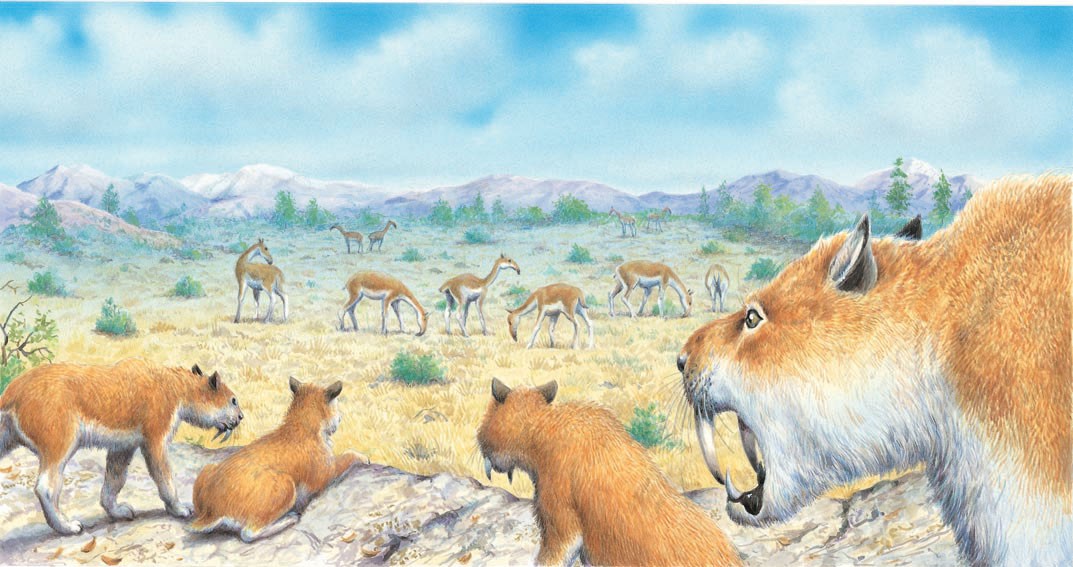
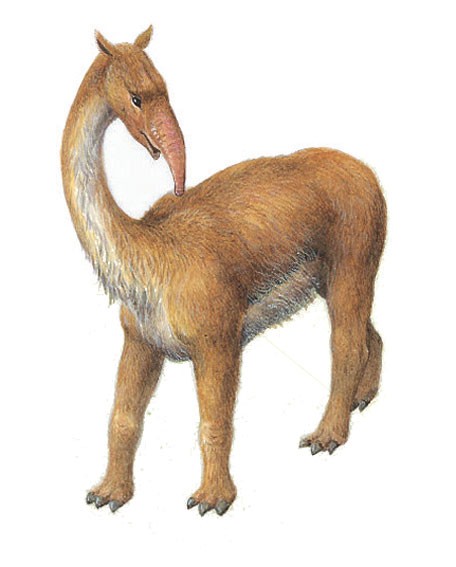
Macrauchenia lived on the grassland plains of South America, grazing in herds. It looked like a humpless camel with a short trunk. Smilodon, the sabre-toothed cat, used its massive canines for stabbing the throats of its victims. It lived in both North and South America, 2.5 million years ago, and probably preyed on Macrauchenia.
Giant ground sloths called Megatherium, about 6 metres (20 feet) long and one of the largest mammals that ever lived, also roamed the grasslands and woodlands of Pleistocene South America. It had large hooked claws and powerful limbs.
La Brea tar pits
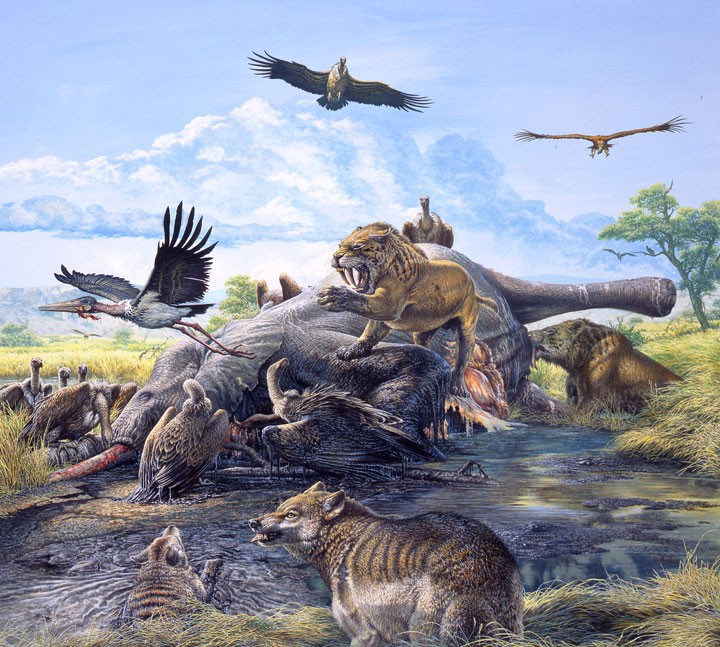
The La Brea tar pits in Los Angeles contain fossils of many animals that lived in Pleistocene California between 40,000 and 8000 years ago. They include at least 59 species of mammal and more than 135 species of bird. Tar pits form when oil seeps to the surface through cracks in the Earth's crust; the lighter portion of the oil evaporates, leaving behind the heavy tar, or asphalt, in sticky pools. Among the extinct large animal species whose fossils have been found at La Brea are: native horses, camels, mammoths, mastodons, long-horned bison, dire wolves, ground sloths and sabre-toothed cats (Smilodon).
About 90% of the mammal fossils are carnivores. Most of the bird fossils are also those of predators or scavengers such as vultures. This is because scavenging animals, drawn to feed on animals trapped in the sticky tar, would probably get trapped themselves.
Consultant: Chris Jarvis
pics

Without in any way limiting Q-files Ltd’s exclusive rights under copyright, any use of this publication to “train” generative artificial intelligence (AI) technologies to generate text is expressly prohibited. Q-files Ltd reserves all rights to license use of this work for generative AI training and development of machine learning language models.