
Weather and climate

CITE
We have made every effort to follow citation style rules, but there may be some minor differences. If in doubt, please refer to the appropriate citation style manual.
Water cycle. (2026). In Q-files Encyclopedia, Earth, Weather and climate. Retrieved from
https://www.q-files.com/earth/weather-and-climate/water-cycle
"Water cycle." Earth, Weather and climate, Q-files Encyclopedia, 6 Mar. 2026.
https://www.q-files.com/earth/weather-and-climate/water-cycle.
Accessed 6 Aug. 2026.
Water cycle 2026. Earth, Weather and climate. Retrieved 6 August 2026, from
https://www.q-files.com/earth/weather-and-climate/water-cycle
Earth, Weather and climate, s.v. "Water cycle," accessed August 6, 2026.
https://www.q-files.com/earth/weather-and-climate/water-cycle


Water cycle
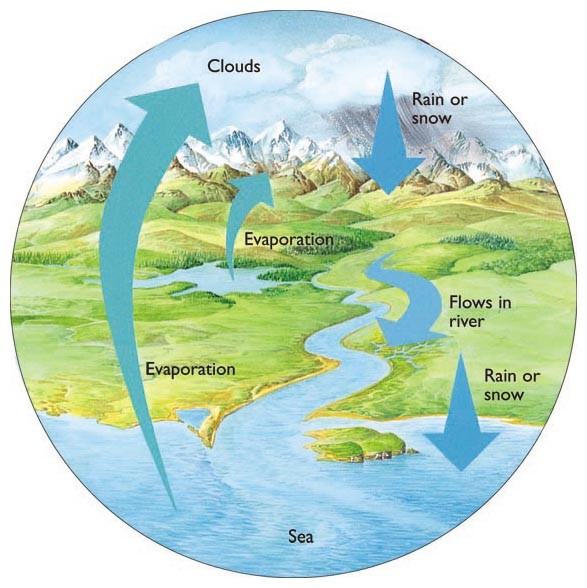
On Earth, water is neither created nor destroyed. The same water goes round and round in an endless cycle between the oceans, the air and the land. This is called the water cycle. About 97% of all the world’s water is held in the oceans. Driven by the heat of the Sun, water is evaporated from the ocean into atmosphere, where it cools, condenses and falls back to Earth again as rain or snow. It falls either directly back into the oceans, or on to land, from where it eventually flows back into the ocean.
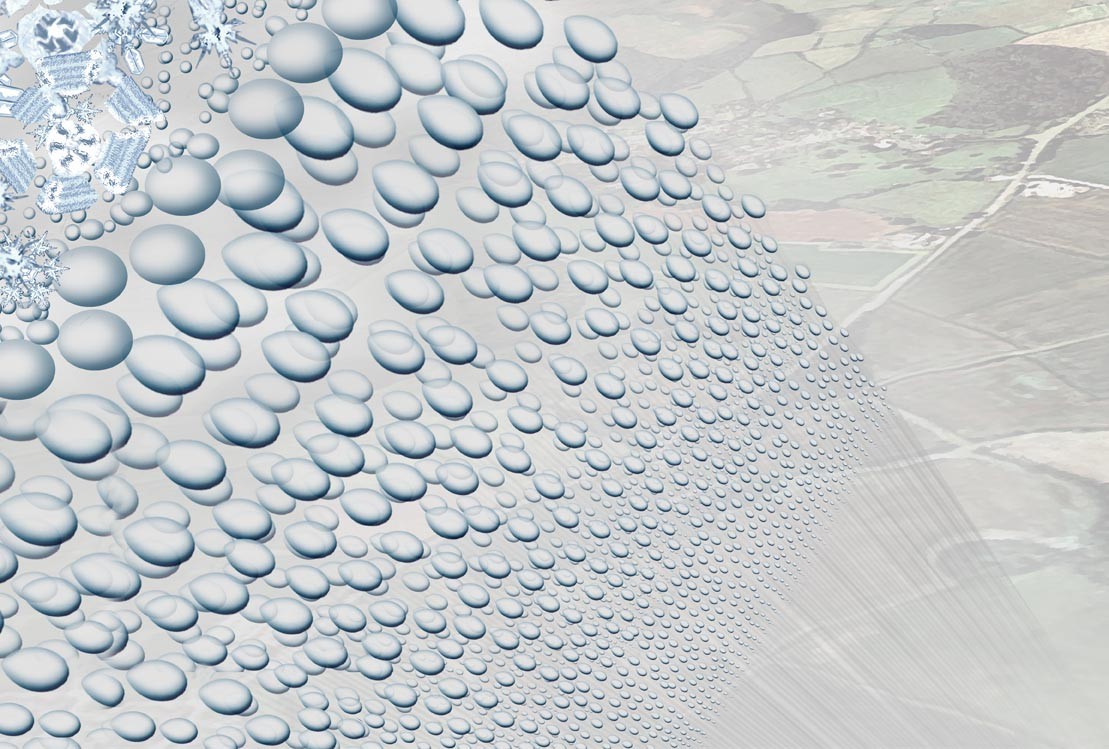
Evaporation and condensation
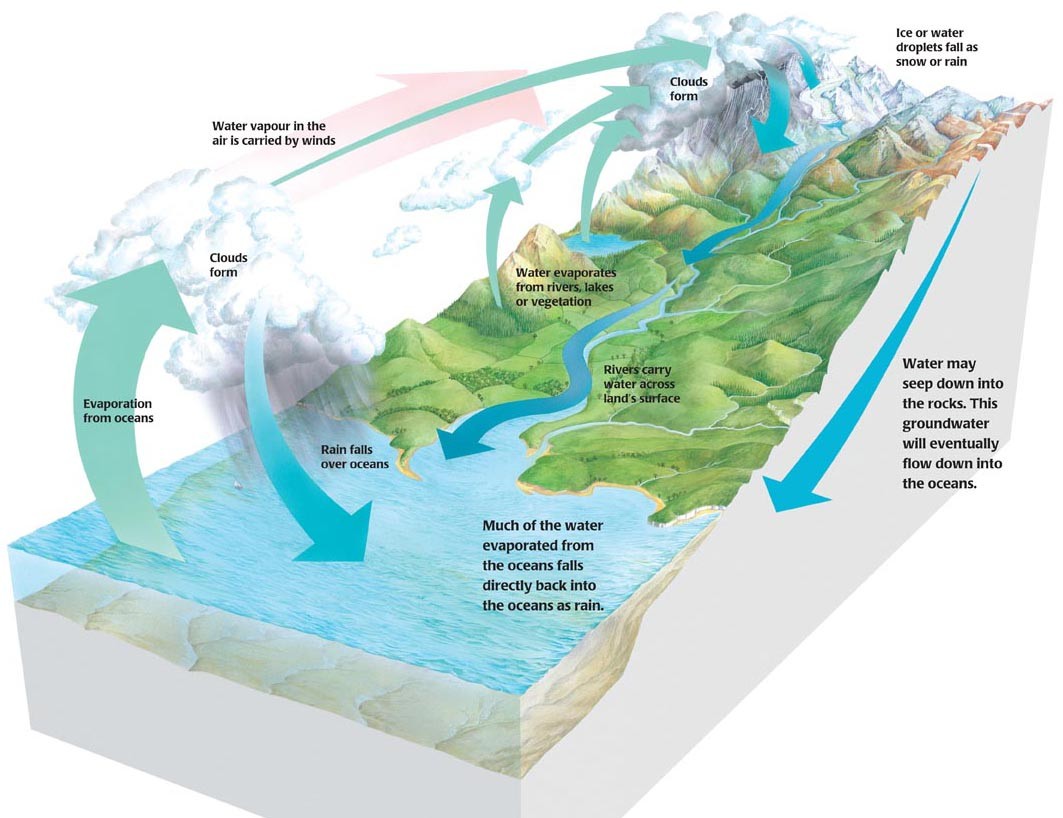
The Sun’s heat causes water from the oceans—along with lakes, rivers, plants and the ground itself—to evaporate (turn into vapour). The water lost to the atmosphere from both evaporation and transpiration, the release of water vapour through a plant's leaves, is called evapotranspiration. The warm water vapour rises high into the atmosphere. Moist air may be also forced to rise as it moves across high land. As the air starts to cool, the water vapour may then turn to liquid water or ice. It begins to condense (turns back to liquid) around tiny particles in the air, such as sea salt or dust. Millions of these tiny droplets gather together to form clouds. In the highest clouds, the water freezes into ice.

Precipitation
When the ice or water droplets become too heavy to stay up, they fall as rain—or snow if the air below is freezing. This is called precipitation. Much rain or snow falls directly back into the ocean. But winds may carry the warm air or clouds across the land. The rain or snow falls to the ground, and the water finds its way into streams and rivers. On land, the water may be frozen in ice in the form of ice caps or glaciers for many years.
Rivers carry the water back to the oceans. Some water seeps into the ground and flows very slowly through cracks or pores (tiny holes) in the rocks themselves. This is called groundwater.
Dew and frost
You can watch the water cycle happening in miniature whenever dew forms. At night, the land cools faster than the air. Water vapour in the warmer air that touches the cooler land condenses. This covers everything with drops of water known as dew. As the air warms up in the sunshine, the dew evaporates once more.
If surface temperatures are below freezing, the water vapour turns into a layer of sparkling ice crystals called frost.

Consultant: Ian Fairchild
pics



Without in any way limiting Q-files Ltd’s exclusive rights under copyright, any use of this publication to “train” generative artificial intelligence (AI) technologies to generate text is expressly prohibited. Q-files Ltd reserves all rights to license use of this work for generative AI training and development of machine learning language models.