
Weather and climate

CITE
We have made every effort to follow citation style rules, but there may be some minor differences. If in doubt, please refer to the appropriate citation style manual.
Monsoons. (2026). In Q-files Encyclopedia, Earth, Weather and climate. Retrieved from
https://www.q-files.com/earth/weather-and-climate/monsoons
"Monsoons." Earth, Weather and climate, Q-files Encyclopedia, 6 Mar. 2026.
https://www.q-files.com/earth/weather-and-climate/monsoons.
Accessed 6 Aug. 2026.
Monsoons 2026. Earth, Weather and climate. Retrieved 6 August 2026, from
https://www.q-files.com/earth/weather-and-climate/monsoons
Earth, Weather and climate, s.v. "Monsoons," accessed August 6, 2026.
https://www.q-files.com/earth/weather-and-climate/monsoons


Monsoons
Billions of people depend on the arrival of the monsoon every summer to the parched lands of southern Asia. Monsoons are winds that reverse direction each year. This happens when there are great differences in temperature between the oceans and the land. Cool, dry winds are replaced in the summer by warm, moist winds from the Indian Ocean. Heavy rains then arrive.
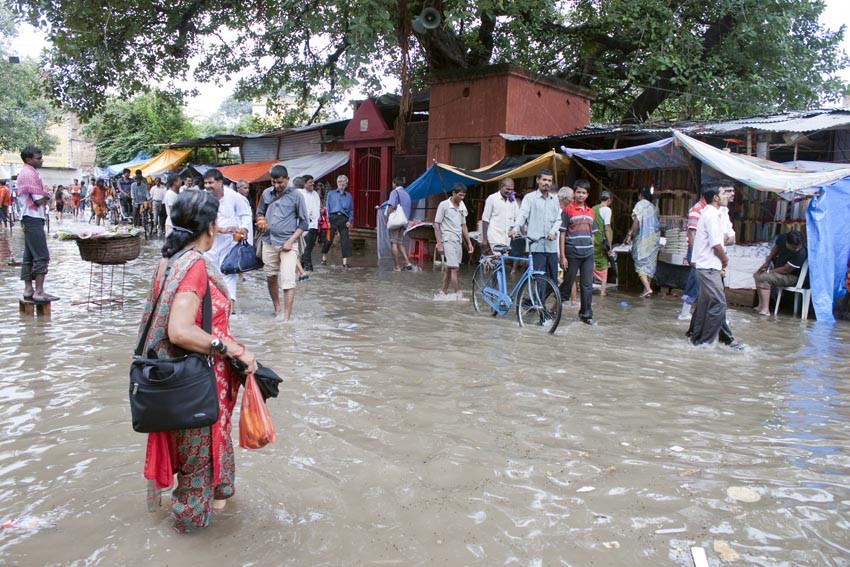
How monsoons occur
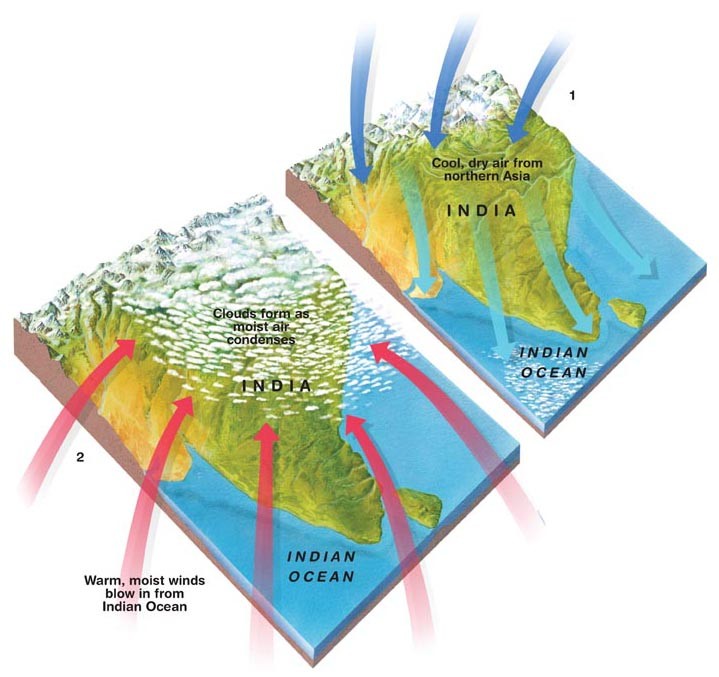
During the winter, cool, dry air flows southwards from northern Asia. For six months, India has a drought as there are no moist winds blowing in from across the Indian Ocean (1). Eventually, the land heats up in the summer sun and the air above it becomes warmer than the air over the ocean. Moist air now flows in, bringing heavy rains (2).
Consultant: Ian Fairchild
pics
Without in any way limiting Q-files Ltd’s exclusive rights under copyright, any use of this publication to “train” generative artificial intelligence (AI) technologies to generate text is expressly prohibited. Q-files Ltd reserves all rights to license use of this work for generative AI training and development of machine learning language models.