
Age of Mammals

CITE
We have made every effort to follow citation style rules, but there may be some minor differences. If in doubt, please refer to the appropriate citation style manual.
Evolution of elephants. (2026). In Q-files Encyclopedia, Prehistoric, Age of Mammals. Retrieved from
https://www.q-files.com/prehistoric/age-of-mammals/evolution-of-elephants
"Evolution of elephants." Prehistoric, Age of Mammals, Q-files Encyclopedia, 11 Mar. 2026.
https://www.q-files.com/prehistoric/age-of-mammals/evolution-of-elephants.
Accessed 3 Oct. 2026.
Evolution of elephants 2026. Prehistoric, Age of Mammals. Retrieved 3 October 2026, from
https://www.q-files.com/prehistoric/age-of-mammals/evolution-of-elephants
Prehistoric, Age of Mammals, s.v. "Evolution of elephants," accessed October 3, 2026.
https://www.q-files.com/prehistoric/age-of-mammals/evolution-of-elephants


Evolution of elephants
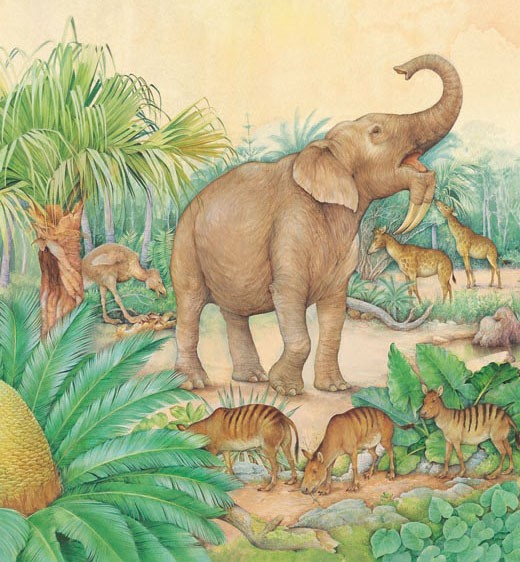
The three species of elephant alive today—the African savannah, African forest and Asian—are all that remain of a once large and magnificent family of animals. An early elephant was Moeritherium, a pig-sized animal that rooted around in North African swamps during the Eocene Epoch, 37 million years ago. As elephants evolved they tended to grow bigger. Their legs needed to be long and pillar-like to support their massive weight. At the same time, the elephants' mouths became further and further from the ground. To take up water and food, the animals needed longer and longer trunks.
Elephant family tree
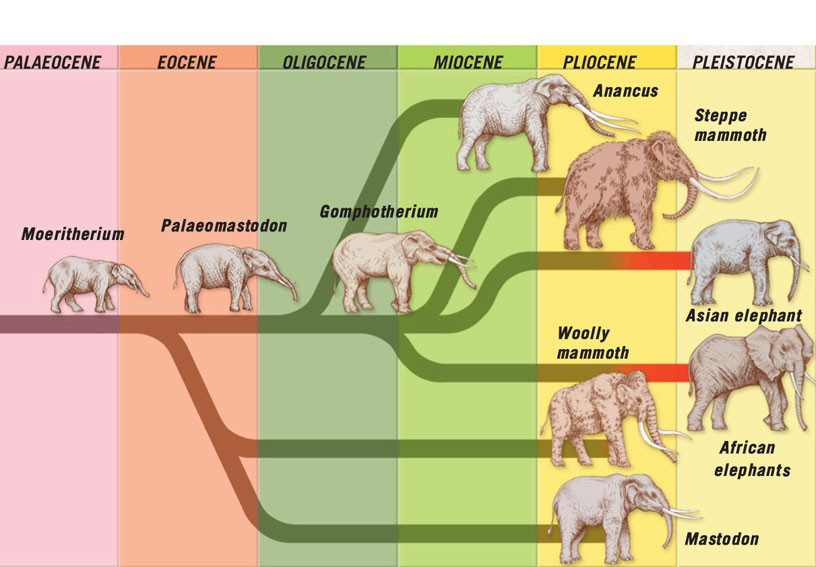
A very early ancestor was Moeritherium, a swamp-dwelling, pig-sized animal. Palaeomastodon’s legs needed to be long and pillar-like to support its massive weight, and a trunk became necessary to take up water and food. Huge animals like Gomphotherium, together with others that had weirdly shaped tusks like Platybelodon, spread to different parts of the world during the Miocene. Steppe mammoths more than 4 metres (13 feet) tall roamed the tundras of Europe during the Ice Ages.
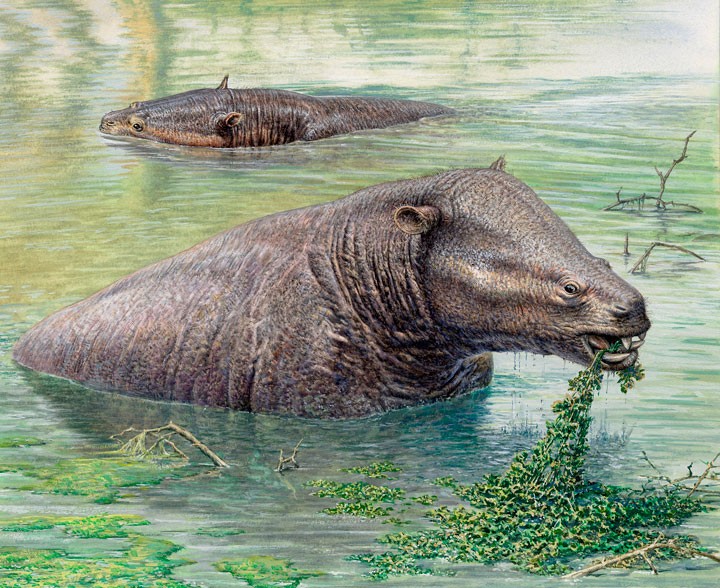
First elephants
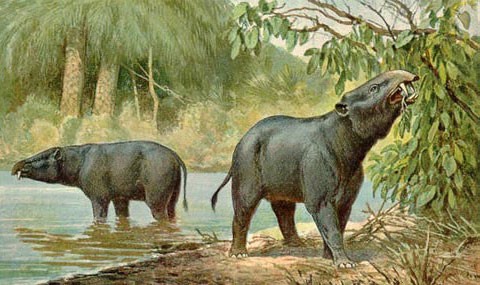
The first elephants were more like pygmy hippos than elephants. Although its trunk was only short and stubby, like that of a modern tapir, Moeritherium did have several elephant-like features: a long, low skull, strong neck muscles and tusks—a small pair on both upper and lower jaws. Living alongside Moeritherium was Palaeomastodon, the first mastodon, a forest browser, and a much larger animal. It had four tusks and a short, slightly flattened trunk.
Trunk and tusks
Gomphotherium, a large, long-tusked elephant, evolved around 13 million years ago. Its heavy head was supported by a short neck with powerful neck muscles. But it could only reach the ground to eat and drink by using its trunk. This long, flexible “arm” could pick up food and water and transfer both to its mouth. Gomphotherium had four tusks. It may have used them to forage for food.
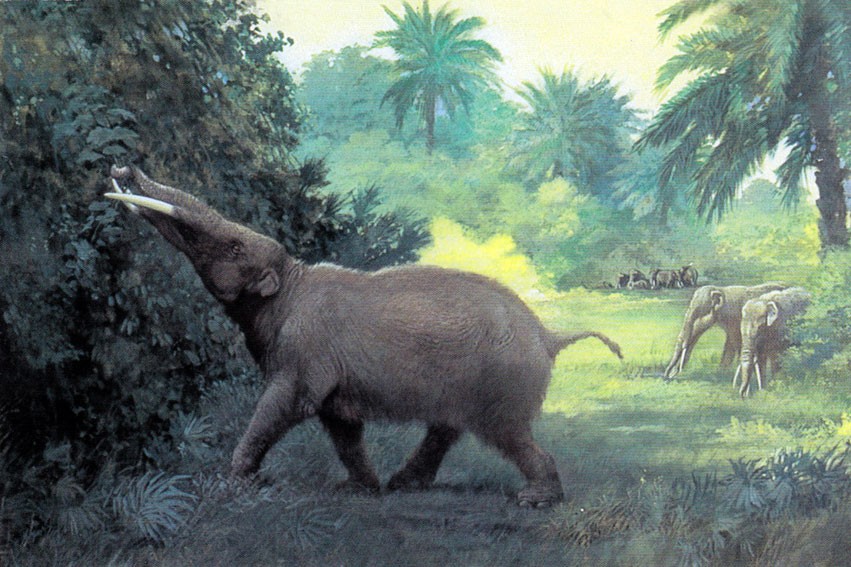

Platybelodon, living about 8 million years ago, lived off soft water plants from the swamps. It used its lower, shovel-like tusks to dig them up from the muddy river bottom. Its flat trunk probably worked as a scoop.
Mammoths
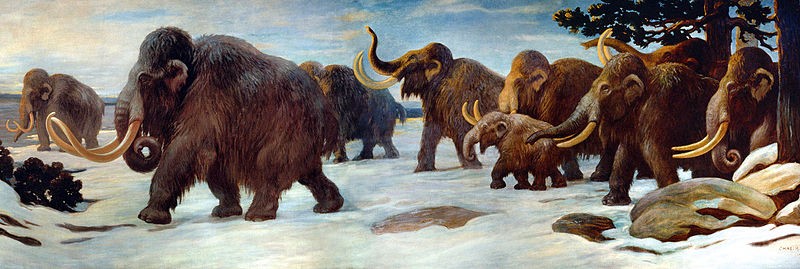
The steppe mammoth lived in the middle of the Ice Ages, roaming across cold, bleak grasslands eating coarse grasses. It was the first elephant to develop a hairy coat. Its spiral tusks were 5 metres (16 feet) long. The steppe mammoth, which evolved around 1.5 million years ago, was the largest of all the mammoths.
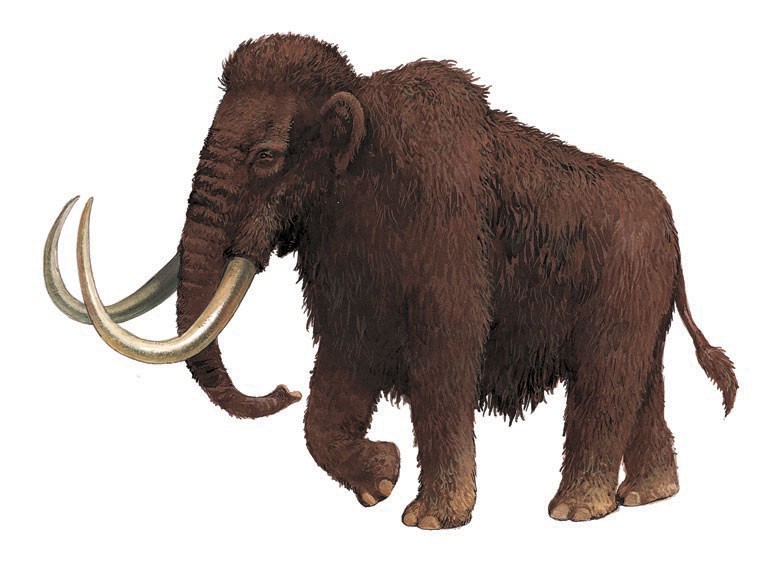
Woolly mammoths, with their shaggy coats and layers of body fat, were well suited to the cold, summer-less environments of the far north. They evolved around 400,000 years ago and roamed the northern tundra lands until about 11,500 years ago—although a small number survived on a Siberian island until just 3700 years ago. Complete carcasses, preserved in ice, are still found today. Climatic change probably finished them, but they may have been hunted to extinction by humans.
Consultant: Chris Jarvis
pics

Without in any way limiting Q-files Ltd’s exclusive rights under copyright, any use of this publication to “train” generative artificial intelligence (AI) technologies to generate text is expressly prohibited. Q-files Ltd reserves all rights to license use of this work for generative AI training and development of machine learning language models.