
Ecosystems

CITE
We have made every effort to follow citation style rules, but there may be some minor differences. If in doubt, please refer to the appropriate citation style manual.
Grasslands. (2026). In Q-files Encyclopedia, Life, Ecosystems. Retrieved from
https://www.q-files.com/life/ecosystems/grasslands
"Grasslands." Life, Ecosystems, Q-files Encyclopedia, 23 Mar. 2026.
https://www.q-files.com/life/ecosystems/grasslands.
Accessed 31 Oct. 2026.
Grasslands 2026. Life, Ecosystems. Retrieved 31 October 2026, from
https://www.q-files.com/life/ecosystems/grasslands
Life, Ecosystems, s.v. "Grasslands," accessed October 31, 2026.
https://www.q-files.com/life/ecosystems/grasslands


Grasslands
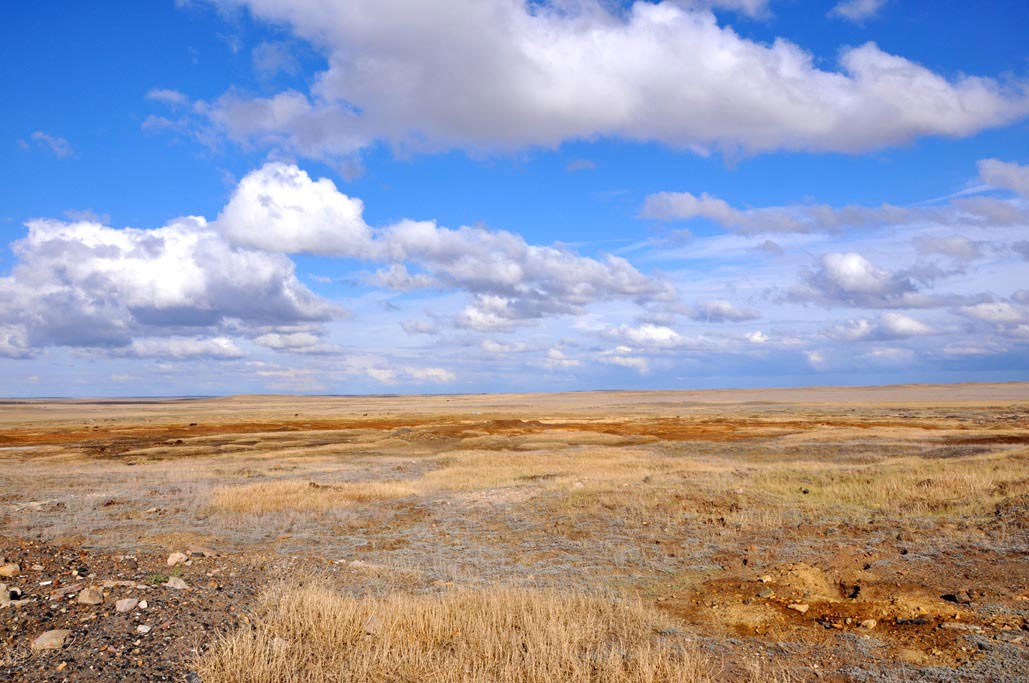
Grassland is the name given to large areas of wild grass, with small plants and sometimes scattered trees. Grasslands are found in areas where there is enough rainfall to stop the land becoming a desert, but not enough to support woodland or forest. Grasslands are found in the central regions of all the continents. They are known as prairies in North America, steppes in Asia and pampas in South America. In Africa, the savanna, a mixture of grasses and trees, is rich with wildlife.

Plant life
Areas of grassland are found in the continental interior, far from the cool, moist winds of coastal areas. This gives them a warm, dry climate in summer, but many also endure cold winters. Because of the lack of rain in the summer, hardy grasses are the main plant life, although trees can also be found where water gathers during spring. The steppes of Asia and the prairies and pampas of North and South America are dominated by grasses, while the African savanna and Australian grasslands, with their tropical climates, have more trees.
Animal life
Grasslands all over the world make ideal environments for plant-eating animals of all sizes, from huge bison to small rodents. The large grazing animals are preyed upon by wolves, coyotes, foxes and other members of the dog family. Even swift kangaroos sometimes fall victim to packs of wild dogs called dingoes. Smaller plant-eaters, such as rabbits or prairie dogs, are a quick meal for larger hunters, but are also hunted by weasels, badgers and birds of prey.
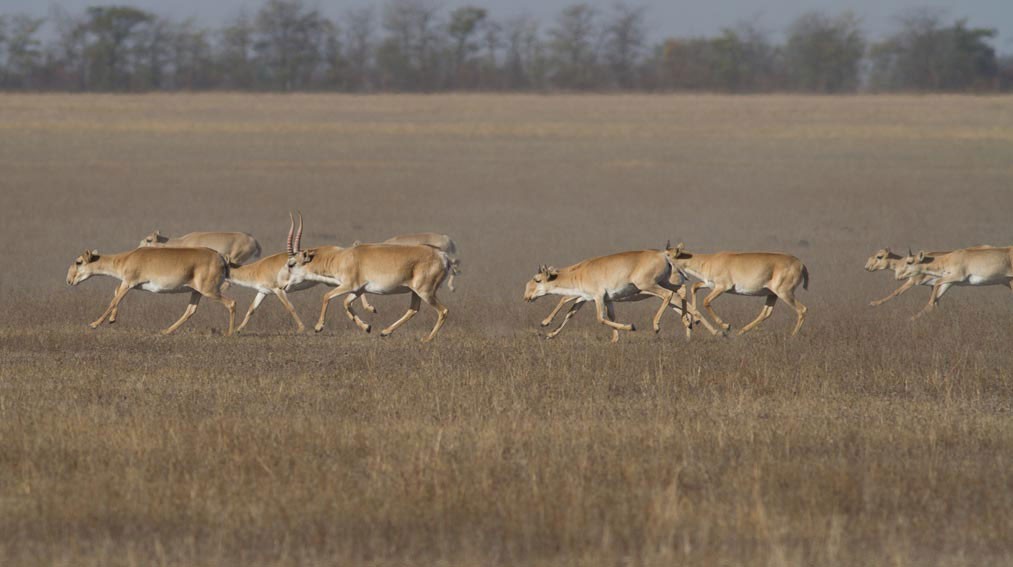
In the warm summer months, new varieties of flowering plants and grasses grow on the grasslands, attracting many insects. These provide extra food for small mammals, such as ground squirrels, as well as for animals that are primarily insect-eaters, such as armadillos.

During the past hundred years or so, large areas of grassland have been converted to pasture and farmland. This is most evident in North America, where the prairies have been greatly damaged and reduced in size by crop and cattle farming. Animals such as the North American bison and its European relative were hunted almost to extinction.
Winter on the prairie
In the Yellowstone National Park, Wyoming, USA, herds of bison come to feed around hot-water springs in the depths of winter. The water is heated by hot rocks deep inside the earth. The springs warm the ground, enabling grass to grow here, despite freezing temperatures. Bison and other grazing animals gather round the springs each winter. Once they have stripped the region of plants, they move on in search of food elsewhere. Bison are well-adapted to the cold, with thick winter coats and broad noses for shovelling snow to reach the grass beneath it.

Below ground
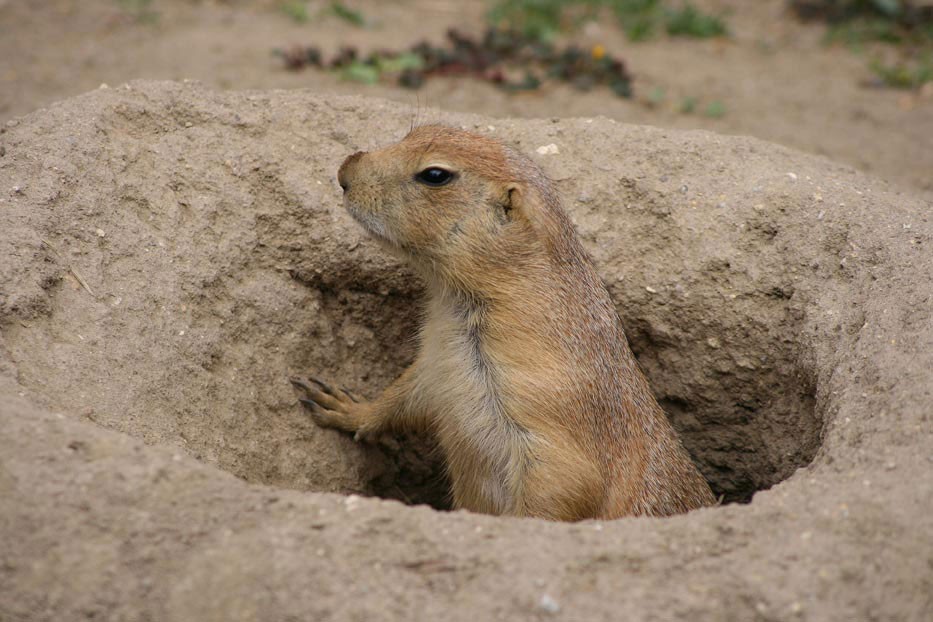
On the open grassland, where there are few places to hide, the larger grassland animals protect themselves against predators by living in herds. Others rely on their speed to carry them away from danger. For the smaller animals, however, the best defence is to live underground. Rabbits, ground squirrels and cavies burrow networks of holes and tunnels, which they use to sleep in, to escape from predators and to keep their young safe. As they dig, they also help to mix the nutrients in the soil, and keep the grassland healthy.
Prairie dogs
On the North American prairie, a kind of ground squirrel called the prairie dog lives in a vast network of burrows. Thousands of prairie dogs may live together in one underground “town”. Friendly greetings are made by touching noses. A high warning bark from one of the group at the sight of a predator such as a coyote or bird of prey will send the others rushing down into their burrows. Old prairie dog burrows are often used by other animals such as burrowing owls and rattlesnakes.

Consultant: Chris Jarvis
pics

Without in any way limiting Q-files Ltd’s exclusive rights under copyright, any use of this publication to “train” generative artificial intelligence (AI) technologies to generate text is expressly prohibited. Q-files Ltd reserves all rights to license use of this work for generative AI training and development of machine learning language models.